Garlic has been sitting in kitchens and medicine cabinets for thousands of years. But eating garlic at night — specifically as the last thing before you sleep — is a more specific habit that a lot of people swear by, and one that actually has some decent science behind it.
The eating garlic at night benefits range from cardiovascular support and immune function to better gut health and improved sleep quality. None of it is magic. It’s mostly about timing, bioavailability, and what your body does with nutrients during rest.
In this article, you’ll learn:
- Why nighttime is a particularly good time to eat garlic
- 8 science-backed benefits of eating garlic at night
- The right way to eat it (raw vs cooked, dosage, what to avoid)
- Who should be careful and when to skip it entirely
Why Nighttime Is a Good Time to Eat Garlic
Your body doesn’t shut down when you sleep. It repairs tissue, regulates hormones, consolidates immune memory, and processes nutrients. A lot of garlic’s active compounds do their best work during this lower-activity, repair-focused window.
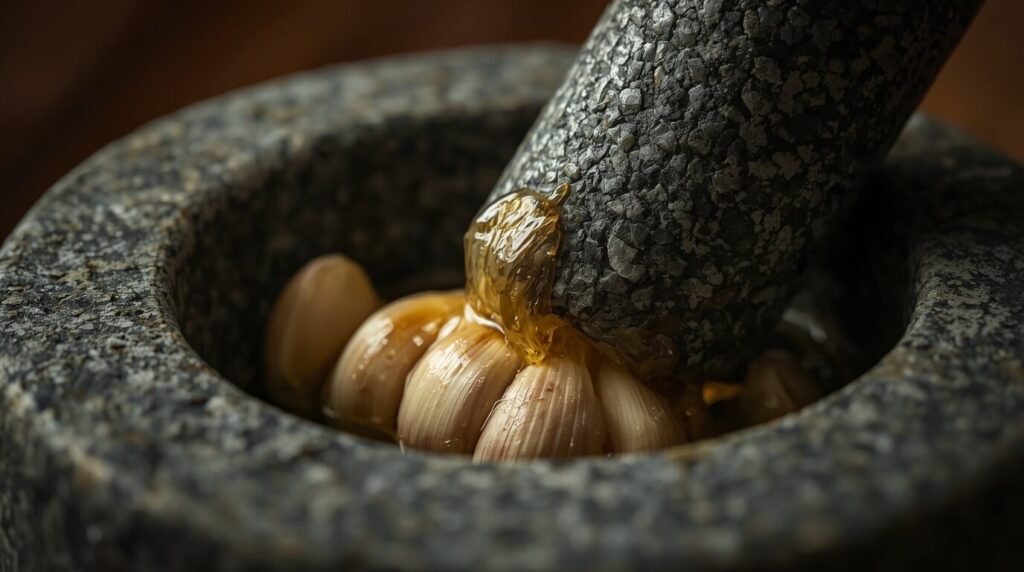
The main bioactive compound in garlic is allicin — formed when a clove is crushed or chopped and the enzyme alliinase converts alliin. Allicin is unstable and starts degrading quickly, so consuming garlic on an empty stomach or close to bedtime means fewer competing digestive processes and potentially better absorption.
Research published in the Journal of Nutrition and other peer-reviewed sources has consistently linked garlic consumption to reduced inflammation markers, improved lipid profiles, and antimicrobial activity. Timing those effects during sleep may amplify them.
Raw Garlic vs Cooked Garlic at Night
Raw garlic contains more allicin than cooked. Heat destroys a significant portion of the alliinase enzyme before it can do its job, reducing allicin formation. If you’re eating garlic specifically for health benefits at night, raw is more effective — though harder for many people to stomach.
A practical middle ground: crush or chop the clove and let it sit for 10–15 minutes before eating or lightly heating it. This gives the alliinase reaction time to complete before heat exposure, preserving more allicin even in cooked preparations. Nutritionists often call this the “crush and wait” method.
8 Proven Eating Garlic at Night Benefits
1. Supports Heart Health While You Sleep
Garlic has one of the strongest evidence bases in nutrition research for cardiovascular benefits. A 2016 meta-analysis published in the Journal of Nutrition found that garlic supplementation produced a small but measurable reduction in systolic and diastolic blood pressure across multiple trials.
Allicin promotes the production of hydrogen sulfide, which relaxes blood vessels and improves circulation. At night, when your body is already in a lower-stress cardiovascular state, this effect may work with your natural nocturnal blood pressure dip rather than against it. People with hypertension often see slightly better overnight readings when they make garlic a consistent evening habit.
2. Boosts Immune Function During the Repair Phase
Sleep is when your immune system is most active. Natural killer cells, T-cell proliferation, cytokine production — these processes peak during deep sleep stages. Garlic’s sulfur compounds, particularly allicin and its derivatives, have demonstrated antimicrobial and antiviral properties in laboratory studies.
A 2016 randomised controlled trial published in the journal Advances in Therapy found that participants who took an aged garlic extract supplement had significantly fewer cold days and milder symptoms compared to a placebo group. Eating garlic at night means those immune-supporting compounds are present in your system during the exact window your body most needs them.
3. Improves Gut Microbiome Health Overnight
Garlic is a prebiotic. It contains fructooligosaccharides (FOS) — fibres that feed beneficial bacteria like Lactobacillus and Bifidobacterium in the gut. Your gut microbiome is most active during fasting periods, including overnight. Feeding it garlic before sleep gives beneficial bacteria a substrate to work with during those quiet hours.
A healthier gut microbiome connects to better digestion, stronger immune signalling, and even improved mood regulation via the gut-brain axis. It’s not a quick fix, but consistent garlic consumption does measurably shift microbiome composition over weeks, according to research reviewed in the journal Nutrients.
4. Helps Regulate Blood Sugar Levels
For people managing blood sugar — whether dealing with prediabetes, insulin resistance, or just post-meal glucose spikes — garlic shows consistent results in clinical literature. Allicin appears to inhibit the enzyme disaccharidase, slowing carbohydrate digestion and reducing post-meal glucose spikes.
A review in the journal Complementary Therapies in Medicine found that garlic supplementation significantly reduced fasting blood glucose levels in patients with type 2 diabetes over 12-week periods. Eating garlic at night could theoretically help moderate the fasting blood glucose reading you get the next morning, though this works best as part of a balanced diet rather than as a standalone fix.
5. Has Natural Antibacterial and Antifungal Properties
Allicin is a broad-spectrum antimicrobial. It disrupts the lipid membranes of bacteria, fungi, and some viruses, making it harder for pathogens to survive. While your body isn’t under siege every night, low-level microbial imbalances are common — particularly in the gut and respiratory tract.
Eating garlic regularly before bed gives those antimicrobial compounds consistent overnight exposure to your digestive system. This can be helpful during cold and flu season, or when you feel something coming on. Ayurvedic practitioners have used garlic this way for centuries, and the modern research on allicin’s antimicrobial activity largely supports the mechanism, even if the clinical applications are still being studied.
6. Reduces Inflammation Markers
Chronic low-level inflammation is connected to a wide range of health issues — joint pain, cardiovascular disease, metabolic disorders, and accelerated ageing. Garlic’s organosulfur compounds, including diallyl disulfide (DADS) and S-allylcysteine, have shown anti-inflammatory effects in multiple studies.
Research published in the journal Food and Chemical Toxicology found that garlic extract reduced pro-inflammatory cytokine levels, including TNF-alpha and IL-6, in cell and animal models. Human studies are more limited, but the consistent finding across laboratory research suggests regular garlic consumption contributes meaningfully to lower overall inflammation load over time.
7. May Help You Sleep Better
This one surprises people. Garlic is not a sedative, but it contains compounds — particularly zinc and N-acetyl-cysteine — that support the production of melatonin and serotonin, both of which regulate sleep cycles. Some naturopathic practitioners have recommended garlic with warm milk as a traditional sleep remedy for generations.
Beyond the biochemistry, garlic also supports the nervous system via its B6 content. Pyridoxine (vitamin B6) is a cofactor in serotonin and dopamine synthesis. Better serotonin levels in the evening can smooth the transition into sleep, particularly for people whose sleep quality is affected by stress or anxiety.
8. Supports Liver Detoxification at Night
The liver is most active between 1–3am in traditional Chinese medicine — and Western research agrees that hepatic detoxification processes are particularly robust during sleep. Garlic’s sulfur compounds activate liver detox enzymes, including glutathione-S-transferase, which helps neutralise free radicals and environmental toxins.
Eating garlic at night means those sulfur compounds are available during the liver’s peak processing window. A small study published in the International Journal of Medical Sciences found garlic extract helped protect against liver damage markers in participants exposed to hepatotoxic substances, suggesting a meaningful hepatoprotective effect.
How to Eat Garlic at Night: The Right Way
Not all garlic consumption at night is equally effective — or equally comfortable. Here’s what actually works.
Best Ways to Eat Garlic Before Bed
| Method | Allicin Retained | Ease | Notes |
| Raw, crushed (eaten alone) | Highest | Hard | Most potent. Chase with water. |
| Crush and wait 10 min, then eat raw | High | Moderate | Good balance of potency and tolerance |
| Minced in warm milk or honey | Moderate | Easy | Traditional remedy, gentler on stomach |
| Lightly cooked (added last minute to food) | Moderate | Easy | Crush first, then add to warm dish |
| Aged garlic extract (supplement) | High (odourless) | Very Easy | Research-backed, no smell |
| Garlic powder | Low | Very Easy | Significantly less allicin than fresh |
Dosage: Most research uses 1–2 raw cloves daily (roughly 3–6g) or the equivalent in aged garlic extract. One clove before bed is a reasonable starting point. More isn’t always better — excess raw garlic can cause digestive irritation.
Timing: 30–60 minutes before bed is the common recommendation. This gives digestion time to begin without disrupting sleep with bloating or reflux.
Who Should Be Careful With Nighttime Garlic
Garlic is safe for most people. But there are situations where you should think twice or check with a doctor first.
Blood thinners: Garlic has mild anticoagulant properties. If you take warfarin, aspirin, or other blood-thinning medications, regular high-dose garlic consumption can increase bleeding risk. Talk to your doctor before making it a daily habit.
GERD or acid reflux: Raw garlic is a known reflux trigger for many people. If you already struggle with acid reflux at night, eating garlic right before bed can make it worse. Cooked or aged garlic extract is a gentler option.
IBS and FODMAP sensitivity: Garlic is high in fructans — a type of FODMAP — which can cause significant digestive distress in people with irritable bowel syndrome. If garlic typically gives you bloating, cramping, or gas, nighttime consumption will likely do the same.
Pregnancy: Moderate culinary garlic use is generally considered safe during pregnancy, but high-dose garlic supplementation hasn’t been adequately studied in pregnant women. Stick to normal dietary amounts and check with your OB.
Pre-surgery: Surgeons typically recommend stopping garlic supplements 1–2 weeks before any scheduled surgery due to the anticoagulant effect.
Frequently Asked Questions About Eating Garlic at Night Benefits
Q: Is it better to eat garlic at night or in the morning? Both have benefits, but nighttime has specific advantages. Your digestive system slows down during sleep, potentially allowing for better absorption of garlic’s compounds. Your immune system is also more active during sleep, so having garlic’s antimicrobial and immune-supporting compounds present overnight may be more effective than morning consumption for those specific benefits.
Q: Can I eat garlic on an empty stomach at night? Yes, and many practitioners recommend it. Eating garlic on an empty stomach increases allicin absorption. However, raw garlic on a completely empty stomach can cause nausea or mild gastric discomfort in some people, especially those with sensitive digestion. If that’s you, a small amount of food first or switching to aged garlic extract solves the problem.
Q: How many garlic cloves should I eat at night? One to two raw cloves (roughly 3–6g) is the most commonly studied and recommended amount. More than that doesn’t necessarily produce more benefit and increases the likelihood of digestive discomfort, bad breath, and body odour. Start with one clove and see how your body responds over a week.
Q: Does eating garlic at night cause bad breath the next morning? It can. Garlic’s sulfur compounds are absorbed into the bloodstream and expelled through the lungs, which is why garlic breath persists long after brushing your teeth. Eating garlic earlier in the evening (1–2 hours before bed) and brushing thoroughly helps. Aged garlic extract supplements are nearly odourless and produce significantly less breath odour.
Q: Can garlic help with sleep problems? Garlic won’t knock you out, but it does contain compounds that support melatonin and serotonin production, including zinc and vitamin B6. Some people report improved sleep quality with regular garlic consumption, particularly when combined with warm milk. The evidence is mostly indirect — supporting sleep-regulating pathways rather than acting as a sedative directly.
Conclusion: A Small Habit Worth Trying
The eating garlic at night benefits aren’t dramatic. No single food is. But the cumulative effect of consistent garlic consumption — better heart health markers, stronger immune response, improved gut microbiome diversity, lower inflammation — adds up meaningfully over months.
One clove before bed is cheap, accessible, and backed by a reasonable body of research. If you can handle the taste and your stomach agrees, it’s one of the simplest additions you can make to your evening routine.
Start with one raw clove, crushed and eaten 30–45 minutes before sleep. Do it for two weeks. See if you notice anything different.
For further reading on garlic’s health evidence, the National Institutes of Health Office of Dietary Supplements has a thorough review of the clinical literature. The Linus Pauling Institute at Oregon State University also maintains an updated summary of garlic research for those who want to go deeper.
Try one clove tonight. Your gut — and your heart — may thank you in a few weeks.