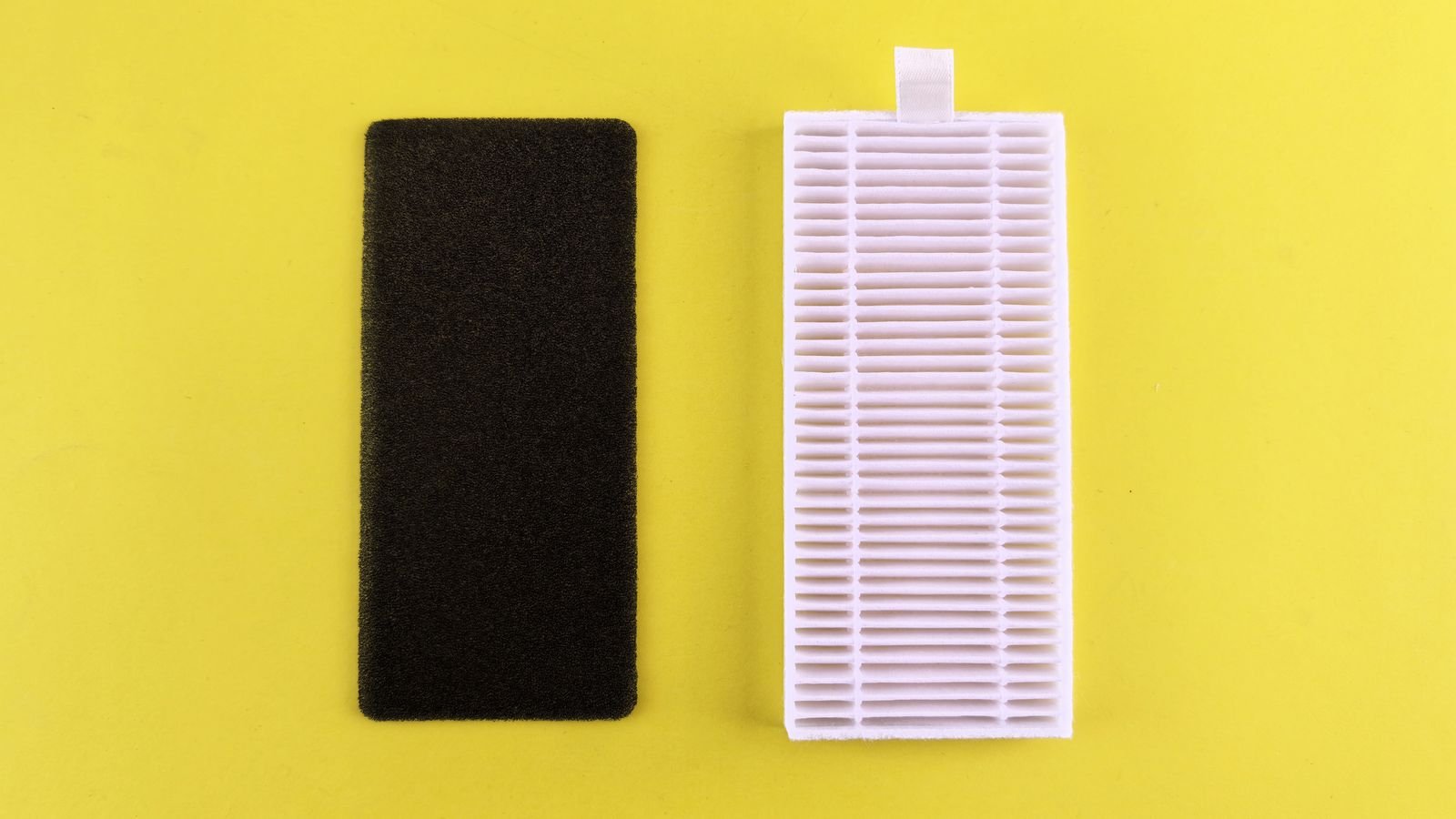
Delhi’s air is turning “poor” this week, and ads for every air purifier for home are suddenly everywhere. Here’s the short version: the most useful number on the box is the CADR (clean air delivery rate), and for a typical 10×12 ft Indian bedroom you want at least about 80 CFM, or 135 m³/h. Most other features are nice to have.
But a purifier only cleans the air it can reach, and research in real homes points to a catch most buyers never hear about. It’s in section 5.
⚡ Key takeaways
- Check the CADR first. The US EPA’s sizing chart works out to roughly 0.65 CFM per square foot of floor space.
- A 120 sq ft bedroom needs about 78 CFM (133 m³/h). A 200 sq ft living room needs about 130 CFM (221 m³/h). Go higher in Delhi winters.
- Buy a true HEPA filter, and avoid models that make ozone on purpose.
- Keep windows shut while it runs, put it in the room you sleep in, and budget for filter changes.
- Who should skip it: if you can’t keep the room closed, a purifier won’t help much.
Does an Air Purifier for Home Actually Work?
Yes, with limits. A 2022 study of HEPA air cleaners in real homes, published in the International Journal of Environmental Research and Public Health, found indoor PM2.5 dropped from an average of 33.5 to 17.2 µg/m³ when the cleaners ran. That’s roughly half.
The same study found four things decided how well it worked: outdoor pollution, the number of machines, the fan speed, and whether windows were open. Remember those four. Every buying decision below comes back to them.
Delhi has its own data. An experiment with air purifiers in Delhi homes in winter 2015–16, published in PLOS ONE, found affordable purifiers gave substantial reductions in fine particles indoors. But the authors also found that on the worst days, indoor air with a purifier running was often still worse than outdoor air in moderately polluted cities.
So yes, it helps a lot. It just doesn’t turn a Delhi bedroom in November into a hill station.
CADR: The One Number to Check First
CADR stands for clean air delivery rate. According to the US EPA’s guide to air cleaners, most portable purifiers are rated by it, and a higher CADR means the unit removes more particles and can handle a bigger room. It’s usually measured at the highest fan speed.
How much CADR does your room need?
The EPA’s chart puts 100 sq ft at 65 CFM and 600 sq ft at 390 CFM. That’s about 0.65 CFM for every square foot, for a room with an 8-foot ceiling.
Many brands in India list CADR in m³/h instead of CFM. To convert, multiply CFM by 1.7. So 100 CFM is about 170 m³/h.
How to measure your room
Multiply length by width in feet. A 10×12 ft bedroom is 120 sq ft. If your ceiling is higher than 8 feet, or the room opens into a hall, size up. The EPA says to consider the whole connected space in open layouts.
💡 Pro tip
Measure the room before you open Amazon or Flipkart. Then compare models by CADR, not by “suitable for up to X sq ft”. Room-size claims vary from brand to brand; CADR is the number you can compare.
 Also readBest Smart Home Devices India 2026: Top 15 Picks
Room size vs CADR: quick table
Here’s the EPA-based minimum for common Indian room sizes. Treat it as a floor, not a target.
| Room | Size | Minimum CADR (CFM) | Minimum CADR (m³/h) | Our take for smog season |
|---|---|---|---|---|
| Small bedroom | 10×10 ft (100 sq ft) | 65 | 110 | Aim higher, around 100 CFM |
| Standard bedroom | 10×12 ft (120 sq ft) | 78 | 133 | 100–150 CFM |
| Master bedroom | 12×12.5 ft (150 sq ft) | 98 | 166 | 150 CFM or more |
| Living room | 12×16.5 ft (200 sq ft) | 130 | 221 | 200 CFM or more |
| Large hall | 15×20 ft (300 sq ft) | 195 | 331 | 300 CFM, or two units |
Why go above the minimum? The EPA chart is a baseline, and the Delhi study showed purifiers struggle more as outdoor pollution climbs. Extra CADR also lets you run the unit on a quieter, lower speed and still clean enough air. That matters at 2 a.m.
HEPA, Carbon and Ozone: What the Filter Labels Mean
True HEPA
The EPA explains that a HEPA filter can theoretically remove at least 99.97% of airborne particles at 0.3 microns. That size is the hardest to catch, so bigger and smaller particles are trapped even better. For smog season, this is the filter that matters.
Watch for vague words like “HEPA-type” or “HEPA-like”. If the box doesn’t say the filter is HEPA, ask the seller or pick another model.
Activated carbon
The EPA notes that the CADR rating is for particles only. For smells and gases, you need an activated carbon filter, and it works best when there’s a lot of carbon in it. A thin carbon sheet does little. If cooking smells or incense are your problem, look for a thick carbon layer.
Ozone: skip it
The EPA is blunt here: avoid air cleaners that intentionally produce ozone, because ozone irritates the lungs. Ionisers, electrostatic precipitators, some UV units and “plasma” cleaners may also give off ozone. If a model’s big selling point is an “ioniser” or “ozone purification”, that’s a reason to skip it, not buy it.
The Catch: Open Windows and Cheap Filters
This is the part that ads don’t mention. Your purifier fights the outside air every time it leaks in. The 2022 home study found window ventilation was one of the factors that decided whether a HEPA cleaner worked well.
So if your bedroom has a gap under the door, a window that doesn’t shut tight, or a window AC with a loose seal, the purifier is cleaning air that keeps getting replaced.
⚠️ Watch out
Run it with the windows open and it’s mostly cleaning the street. On bad AQI days, keep doors and windows shut while it runs. Open them for a short while when the outdoor AQI improves.
Filters cost money, every few months
The EPA says manufacturers typically recommend replacing filters every 60 to 90 days, and sooner if they look dirty. In heavy smog, check the filter more often. Before buying, check the price and availability of the replacement filter on Amazon or Flipkart. Cheap purifiers with expensive or hard-to-find filters aren’t cheap.
How to Buy and Use It Right: A Checklist
- Measure the room and work out the minimum CADR from the table above.
- Check the CADR in CFM or m³/h. If a brand hides it, that’s a red flag.
- Confirm true HEPA, not “HEPA-type”.
- Avoid ozone and ozone-producing ionisers.
- Check the filter cost and whether it’s in stock.
- Check the noise. The EPA says about 50 decibels is like a modern fridge. For a bedroom, see how loud it is on low speed.
- Place it right. The EPA suggests the room you spend most time in, away from curtains or anything blocking airflow.
- Run it longer. The longer it runs and the higher the speed, the more air it cleans. Switch it on an hour before bedtime with the door shut.
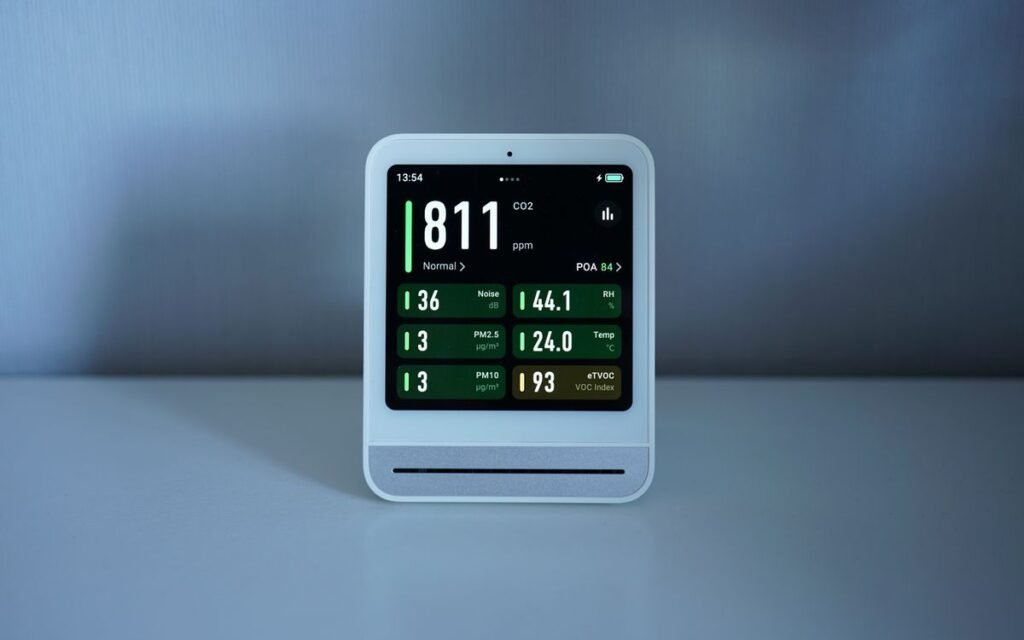
- Keep a rough check. An inexpensive PM2.5 monitor, or the purifier’s own display, shows whether the room is actually getting cleaner.
 Also readHow to Choose Budget Gadgets Under 1000 in 2026 | Smart Guide
Who Should Buy One, and Who Should Skip It
✅ Our verdict
Buy one if you live in north India, have kids, older parents or someone with asthma at home, and can keep a bedroom closed at night. Size it by CADR, insist on true HEPA, and skip anything that sells “ozone” or ionisers. Skip it, or wait, if your rooms can’t be closed or you can’t afford regular filter changes.
Purifiers also aren’t a fix for everything. The EPA says air cleaners don’t replace controlling pollution at the source or ventilation, and they can’t fix mould problems. So also skip incense and mosquito coils indoors on bad days, use the kitchen exhaust, and fix damp walls.
And for anyone with asthma, COPD or heart disease, an air purifier for home is a helper, not a treatment. Keep following your doctor’s advice and medicines.
Frequently Asked Questions
What CADR do I need for a 10×12 room?
About 78 CFM, or roughly 133 m³/h, using the EPA’s sizing chart. For smog season in north India, choosing 100–150 CFM gives you headroom and quieter running.
Is a HEPA air purifier worth it in India?
For polluted cities in winter, yes, if you use it in a closed room. A real-home study found HEPA cleaners cut indoor PM2.5 roughly in half on average, but results depend on outdoor pollution, airflow and closed windows.
Do air purifiers remove smell and gases?
Only if they have a decent activated carbon filter. The EPA says CADR covers particles only, and carbon filters work best with a lot of carbon.
How often should I change the air purifier filter?
Manufacturers usually recommend every 60 to 90 days, the EPA says, and more often if the filter looks dirty. Check your model’s manual.
Are ioniser air purifiers safe?
The EPA advises avoiding air cleaners that intentionally produce ozone, and warns that ionisers and some other electronic cleaners may produce ozone too. A plain HEPA purifier avoids the issue.
The Bottom Line
The right air purifier for home starts with a tape measure, not a brand. Work out your room’s minimum CADR, buy true HEPA, skip ozone, and keep the room closed while it runs. Measure your bedroom tonight, then shop by CADR.
Keep reading
 Read nextBest Gadgets Under 2000 Rupees 2026: Top 15 Picks India
 Read next15 Smartphone Privacy Settings You Probably Never Changed
 Read nextUseful Tech Gadgets for Students Under 1500 in 2026
Sources
- US EPA: Guide to air cleaners in the home (CADR, sizing chart, ozone, filters)
- US EPA: What is a HEPA filter?
- Int J Environ Res Public Health (2022): efficacy of HEPA air cleaners on indoor PM2.5
- PLOS ONE (2016): an experiment with air purifiers in Delhi, winter 2015–16