
Before you pay for gold jewellery today, open the free BIS Care app and type in the piece’s 6-character HUID. It shows the purity, the jeweller’s registration and the hallmarking date, so you can match them to the piece and the bill at the counter.
That’s the easy part. What most Dhanteras guides leave out is that several popular gold buys aren’t covered by mandatory hallmarking at all, including gold coins. Those four gaps are in section 3.
⚡ Key takeaways
- HUID is a unique 6-character alphanumeric code laser-marked on each hallmarked gold piece, and you can verify it free in the BIS Care app.
- Since 1 July 2021, a hallmark carries three marks: BIS logo, purity and HUID.
- BIS lists exemptions: pieces under 2 g, gold coins and bars, Kundan, Polki and Jadau, and jewellers with turnover below ₹40 lakh.
- 22K was about ₹13,385 a gram on 5 November (Goodreturns, before taxes). On our 10 g example, GST and making charges add about ₹20,900.
- Skip the purchase if the HUID is missing on a piece that should have one, or if the app doesn’t match the bill.
What a HUID Is and Why It Matters Today
HUID stands for Hallmark Unique Identification. BIS explains that its server generates a unique 6-digit alphanumeric code for each article after testing, and the assaying and hallmarking centre then laser-marks it on the piece.
Before July 2021, jewellery carried four marks, including the jeweller’s own. Now you should see just three:
- BIS logo: the triangle mark
- Purity: for example 22K916 or 18K750
- HUID: six letters and numbers
This is a big system by now. Upstox reported more than 40 crore pieces had been marked by November 2024, with mandatory hallmarking in 361 districts. If your town is outside those districts, ask the jeweller directly whether the piece is hallmarked.
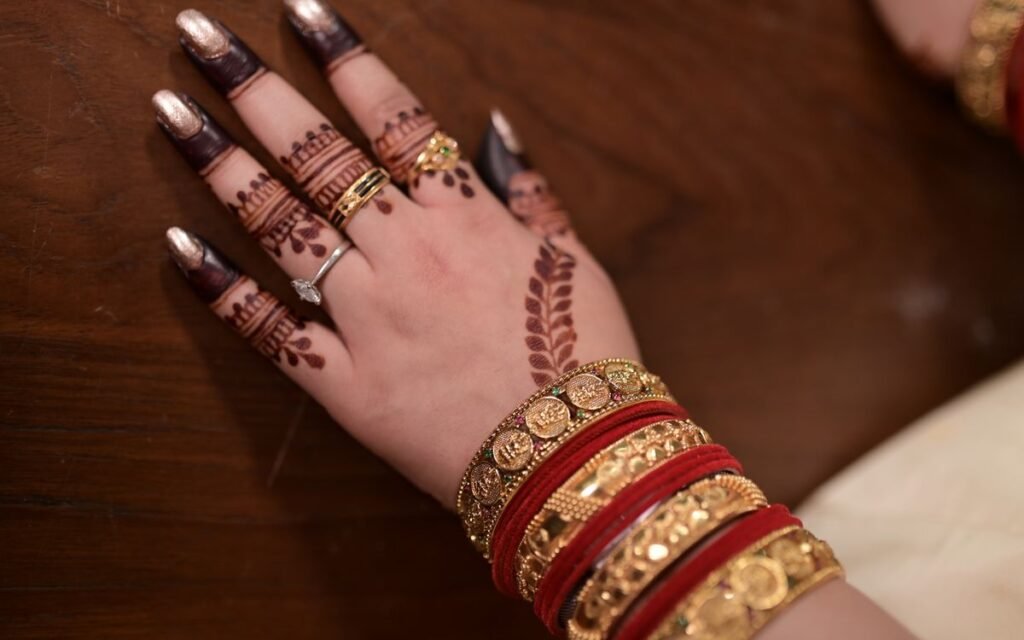
How to Do the HUID Check on BIS Care
It’s quicker to install the app at home, because shop Wi-Fi and a festive crowd don’t help anyone.
- Install BIS Care. It’s on both the Play Store and the App Store. Check the publisher is the Bureau of Indian Standards, because copycat apps are an obvious risk.
- Register. Angel One’s guide lists your name, phone number and email for the login.
- Tap Verify HUID. Ask the salesperson to show you the code on the piece. The marks are tiny, and BIS’s FAQ says a registered shop should keep at least a 10x magnifier for customers.
- Enter the 6 characters. A mistyped 0 or O is the likeliest error, so try again before you panic.
- Match the screen to the piece. You should see the purity, the jeweller’s registration number, the hallmarking centre, the type of article and the date.
💡 Pro tip
Look at the article type. If the app says “ring” and you’re holding a chain, that’s the mismatch to worry about, and it’s easy to miss when you’re only checking the purity number.
 Also readDigital Gold vs Gold Coins This Dhanteras: The Costs Nobody Shows
The 4 Gold Buys a HUID Check Won’t Cover
Here’s the catch. BIS’s mandatory hallmarking FAQ lists exemptions, and four of them matter for ordinary Dhanteras shoppers.
| Exempt from the rule | Why you might be buying it | What to do instead |
|---|---|---|
| Pieces under 2 g | Small earrings, nose pins, light gifts | Ask if it’s voluntarily hallmarked, and get purity on the bill |
| Gold coins and bars | The classic Dhanteras coin | Buy sealed from a known seller, with purity and weight on the bill |
| Kundan, Polki, Jadau | Wedding and festive sets | Get a detailed bill listing gold and stone weight separately |
| Jewellers under ₹40 lakh turnover | Your small local shop | They can register voluntarily, so ask to see the BIS certificate |
So a coin with no HUID isn’t automatically a fake. It just means the app can’t help you, and your protection shifts to the seller and the bill.
⚠️ Watch out
Exempt doesn’t mean verified. On these purchases there’s nothing for BIS Care to check, so keep your bill and don’t accept a handwritten slip. Our digital gold vs coins guide covers buyback questions to ask first.
What If the App Says Something Different?
Don’t argue at the counter for long. Stop, and work through this:
- No record found: retype the code first. If it still fails, ask for another piece or leave.
- Purity differs: if the piece is stamped 22K and the app says 18K, don’t buy it.
- Jeweller doesn’t match: ask why before paying. The piece may have come through another registered jeweller, so get a clear answer.
- Old jewellery with no HUID: this is common. BIS says you can still sell old unhallmarked gold to a jeweller, who may melt and remake it, so your grandmother’s bangles are fine. They just can’t be verified in this app.
Already bought something and now you’re suspicious? BIS’s FAQ says anyone can have a hallmarked item tested at a recognised assaying and hallmarking centre, and lists the fee at ₹200. That FAQ page is older, so confirm the charge first.
BIS’s consumer page says you’re entitled to compensation if the piece tests below its marked purity. Outlook Money describes it as twice the value of the shortfall plus testing charges, though BIS’s page words the formula differently. Treat that as a claim to confirm when you file, and use the complaint section in the app.
Is the Making Charge Discount a Real Deal?
The HUID tells you about purity. It says nothing about whether you’re paying a fair price, and that’s where most festive offers live.
Start with the day’s rate, then look at what’s added on top. Goodreturns showed 22K at about ₹13,385 a gram on 5 November, excluding taxes. This is our own calculation for a 10 g chain, using an example making charge of 12%, with GST at 3% on gold and 5% on making charges.
| Bill line | Normal price | With “25% off making” |
|---|---|---|
| Gold value (10 g at ₹13,385) | ₹1,33,850 | ₹1,33,850 |
| Making charges (12%, then 9%) | ₹16,062 | ₹12,047 |
| GST on gold (3%) | ₹4,016 | ₹4,016 |
| GST on making (5%) | ₹803 | ₹602 |
| Total | ₹1,54,731 | ₹1,50,515 |
So that banner saves about ₹4,216, which is real money. But if another jeweller’s normal making charge is 9%, the “discount” is simply their regular price.
Three questions get you a straight answer:
- What’s your gold rate per gram today, for this purity?
- What’s the making charge as a percentage, before any discount?
- Will the bill show gold value, making charges and GST on separate lines?
BIS’s FAQ says the bill must list each hallmarked item with its net weight, carat and fineness, and hallmarking charges. You’ll need that bill for any complaint later. Our Dhanteras bill checklist is written for electronics, but the habit is the same.
Paying Safely at a Busy Jewellery Counter
Dhanteras counters are crowded, and big-ticket UPI payments can go wrong in simple ways. A failed payment that still debits your account is annoying but fixable, and our UPI failed payment guide walks through the steps.
Before you leave the shop, do these:
- Make sure the payment shows as received on the jeweller’s side.
- Photograph the piece’s marks and your bill together.
- Note the seller’s GSTIN and registration number from the bill.
- If you’re ever on the receiving end, say selling old gold privately, watch out for fake UPI payment screenshots.
 Also readFake UPI Payment Screenshot? How Shops Can Check in Seconds
Our Verdict: Do the Check, but Don’t Stop There
✅ Our verdict
Do the HUID check on every piece of jewellery above 2 g, every time. It’s free and takes a minute. But treat it as a purity check, not a price check: compare making charges at two shops, and demand a split bill. For coins, Kundan and Polki, the bill and the seller’s reputation do the job the app can’t.
- Buying a chain, ring or bangle: no HUID, no sale.
- Buying a small coin for puja: no HUID is normal, so buy from a known seller and check purity on the pack.
- Rushing at the last minute: buy lighter. A rushed ₹1.5 lakh purchase is where mistakes get expensive.
Frequently Asked Questions
Is HUID mandatory on all gold jewellery?
No. It applies to hallmarked jewellery under the mandatory rules, but BIS exempts items under 2 g, coins and bars, Kundan, Polki and Jadau, and jewellers with turnover below ₹40 lakh. Hallmarking is mandatory in notified districts, which reached 361 by November 2024.
Does the BIS Care app cost anything?
The guides we checked describe a free download on Android and iPhone, with a simple registration. Look for the Bureau of Indian Standards as the publisher.
What does a HUID number look like?
It’s six characters mixing letters and numbers, laser-marked next to the BIS logo and purity. It’s small, so ask for the shop’s magnifier.
Can I verify old jewellery with no HUID?
Not through this feature, since HUID started on 1 July 2021. BIS says hallmarking centres can test old pieces for a fee, and that you can still sell old gold to a jeweller.
Does a valid HUID mean the price is fair?
No. It relates to purity and traceability. Making charges, wastage and the gold rate decide your final price, so compare them separately.
The Bottom Line
A HUID check takes a minute and catches the mismatch you can’t see by eye. Install BIS Care before you leave home, verify the code at the counter, and ask for a split bill. And remember the four gaps, because a coin or Kundan set won’t show up in that app at all.
Keep reading
Read nextDigital Gold vs Gold Coins This Dhanteras: The Costs Nobody Shows Read nextDhanteras Electronics Shopping: 7 Bill Checks Before You Pay
 Read nextUPI Payment Failed but Money Debited? The T+1 Rule and ₹100 a Day
Sources
- BIS: hallmarking of gold jewellery, HUID and marks
- BIS: mandatory hallmarking FAQ, exemptions and old jewellery
- BIS: hallmarking FAQ, invoice details, magnifier and testing fee
- BIS: consumer protection, testing and compensation
- Outlook Money: BIS Care steps and compensation (1 May 2025)
- Angel One: what the BIS Care screen shows (4 May 2025)
- Upstox: 40 crore pieces and 361 districts (November 2024)
- Goodreturns: gold rate on 5 November 2026
- TallySolutions: GST on gold and making charges