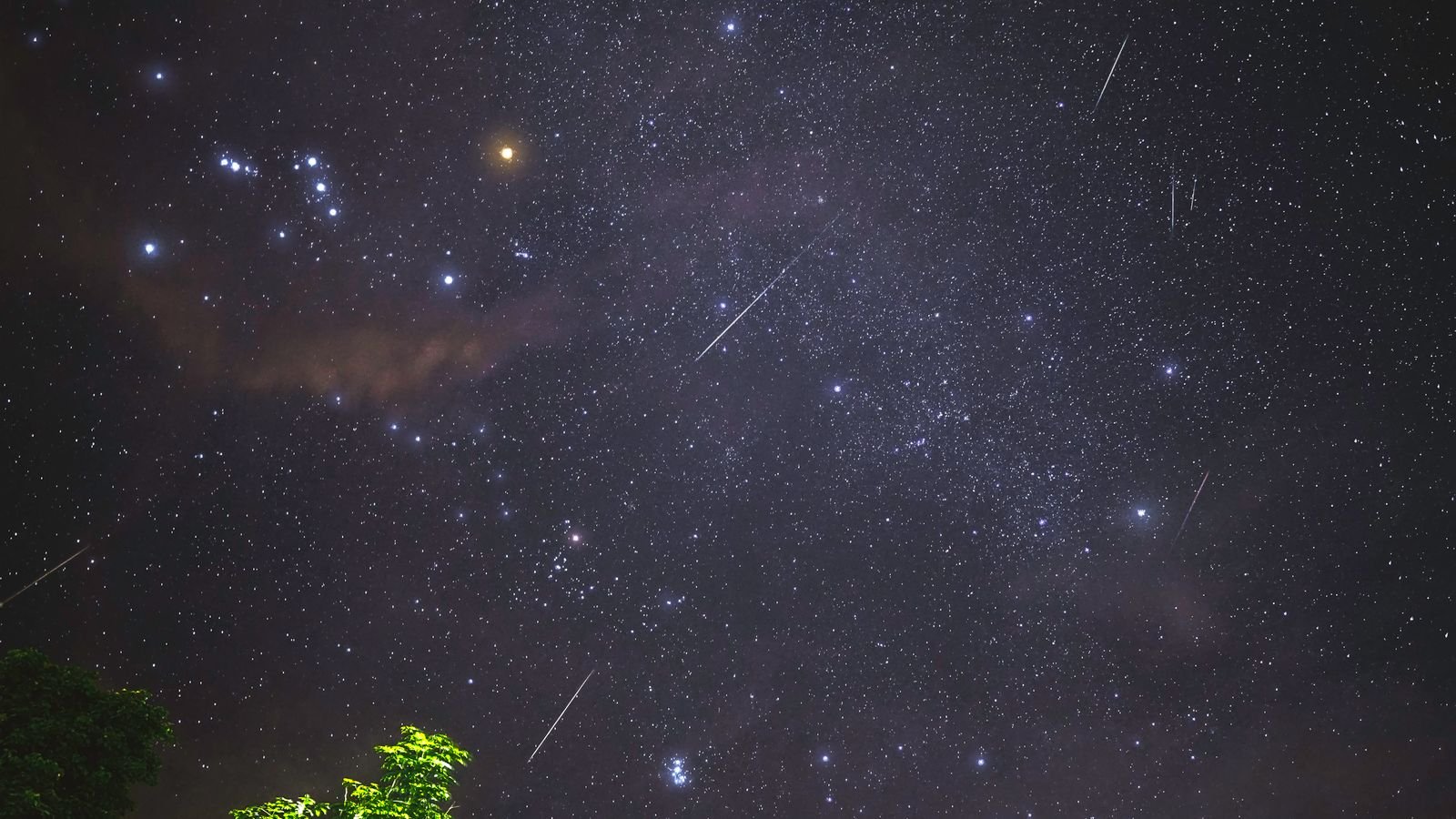
The Orionid meteor shower peaks on the night of 21-22 October, and the best views in India come in the dark hours before dawn on 22 October. You don’t need a telescope, and with the right settings your phone can capture a streak or two.
The catch? The normal night mode on many phones can blend a meteor right out of the picture. That fix is in section 4, along with the exact settings to use.
⚡ Key takeaways
- Peak: the night of 21-22 October, per NASA. The shower has a broad peak, so the nights just before and after are worth a try too.
- Best time: after the moon sets and before dawn. Check your city’s moonset time.
- Expect roughly 10-20 meteors an hour under a dark sky. From a city, fewer.
- Phone settings: tripod, manual focus at infinity, ISO around 1600, 15-25 second exposures, self-timer on.
- Skip the telescope. Your eyes and a wide view of the sky work better.
When to Watch the Orionid Meteor Shower in India
NASA puts the peak on the night of 21 October going into 22 October, Business Today reports. EarthSky quotes a predicted peak of 18:00 UTC on 21 October (11:30 PM IST), but adds that the shower has a broad, plateau-like maximum lasting several nights.
So don’t stress about one exact hour. If the 21st is cloudy, try the 22nd or 23rd morning.
The moon is the real problem this year
A bright waxing gibbous moon is up around the peak, and the full moon follows on 26 October. Moonlight washes out the fainter meteors. EarthSky says the moon sets several hours before dawn, which leaves a dark window between moonset and first light.
💡 Pro tip
Search “moonset [your city] 22 October” or check timeanddate.com the evening before. Set an alarm for just after moonset, then watch until the sky starts to brighten.
What You’ll Actually See (and Why It’s Halley’s Comet)
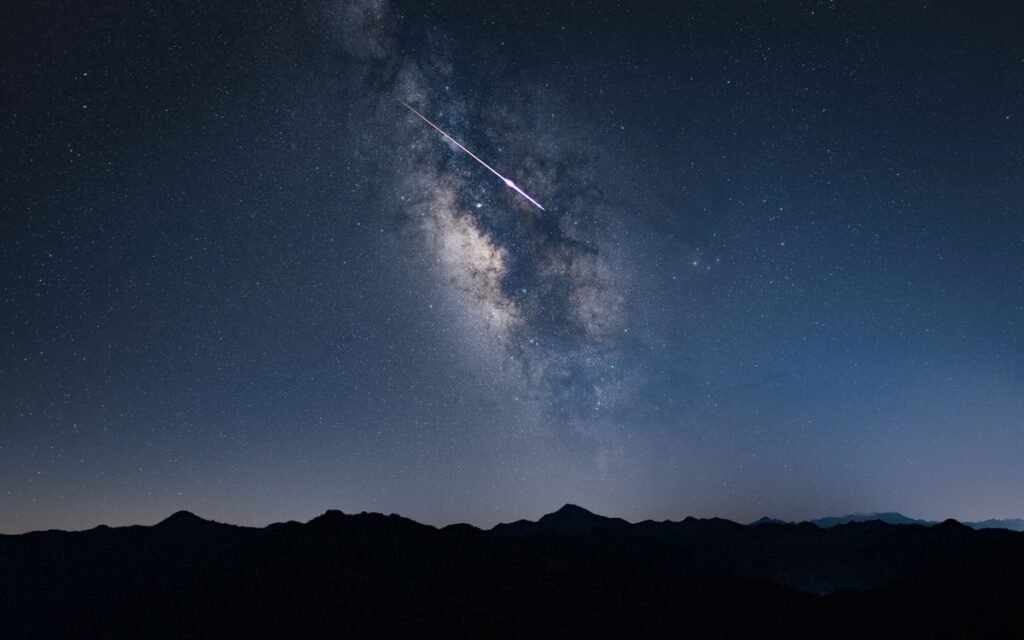
The Orionids are dust left behind by Halley’s Comet. Each October, Earth passes through that trail, and the bits burn up in our atmosphere as streaks of light. The comet itself won’t be back near the Sun until 2061, so this is the closest most of us will get to it for a while.
These meteors are fast. EarthSky puts their speed at about 66 km per second, and many leave a glowing trail that hangs for a second or two. Now and then a bright fireball shows up.
How many meteors to expect
Under a dark, moonless sky, expect about 10 to 20 meteors an hour at the peak, per EarthSky and Business Today. That’s one every few minutes, not fireworks. From a city terrace with streetlights and haze, you might see a handful in an hour.
That’s the honest part most posts skip. Go in with patience and a comfortable chair, and you’ll enjoy it more.
 Also readStop Wasting Battery Life! Do These 3 Things to Make Your Phone Last Longer
Where to Look, and How to Set Up
The meteors seem to come from near Orion’s raised club, just north of the reddish star Betelgeuse. Orion rises before midnight and climbs higher towards dawn. But EarthSky stresses that meteors can appear anywhere in the sky, so you don’t need to stare at Orion.
A simple setup for an Indian city
- Go up or go out. A terrace, an open ground or a highway dhaba away from lights all beat a balcony facing a lit road.
- Face away from the brightest glow. City light is your enemy, and in north India the smog adds a haze layer on top.
- Lie back. A mat or a reclining chair lets you take in most of the sky.
- Give your eyes 30 minutes. That’s Business Today’s advice, and it works better if you keep your phone screen dim in the meantime.
Taking kids? Pick a safe, familiar spot and carry a torch with a red cloth over it. It’s a lovely way to show children something real in the sky, even if they only spot two or three meteors.
Why Night Mode Can Erase a Meteor (and What to Do)
Here’s the catch from the top. Your phone’s automatic night mode isn’t one long exposure.
On iPhones, night mode’s longest setting captures several shorter exposures and blends them together, Gulf News explains. A meteor lasts a fraction of a second, so it shows up in only one of those frames. When the phone averages them, the streak can fade or vanish.
⚠️ Watch out
Night mode is great for a pretty starry sky over trees or a temple. For hunting meteors, switch to Pro (manual) mode or a long-exposure app that adds frames together instead of averaging them.
What to use instead
| Phone | Best option for meteors | Notes |
|---|---|---|
| Android with Pro mode (Samsung, Xiaomi, Vivo, Oppo, Realme) | Pro / Manual mode | Set shutter, ISO and focus yourself |
| Samsung Galaxy (Expert RAW app) | Astrophoto mode for the sky, Pro mode for meteors | Gulf News suggests using both |
| Google Pixel | Night Sight with Astrophotography | Turns on when the phone is steady, per Google’s help page |
| iPhone | Apps like NightCap or Slow Shutter Cam | These can stack frames so bright streaks stay |
The Phone Settings That Work
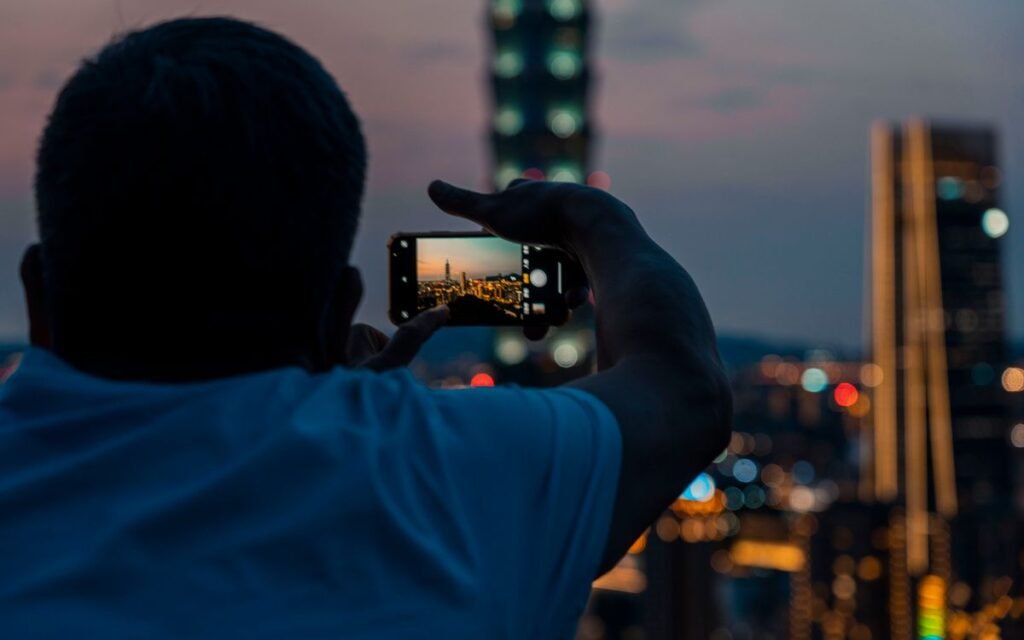
These starting points come from photography guides at FOX Weather and Gulf News. Treat them as a first try, then adjust.
- Steady the phone. A tripod is best. No tripod? Prop the phone on a wall or a bag and wedge it so it can’t move. Any shake blurs a long exposure.
- Turn on a self-timer of 2 to 5 seconds, so tapping the shutter doesn’t shake the frame.
- Turn off flash and HDR.
- Focus manually at infinity. Autofocus hunts in the dark.
- Set ISO to about 1600. Too dark? Try 3200. Too grainy or washed out? Drop to 800.
- Set the shutter to 15-25 seconds. Much longer and stars start to trail.
- White balance around 4000K stops the sky turning a fake swimming-pool blue.
- Shoot RAW + JPEG if your phone allows it. RAW gives you more room when editing.
Then keep shooting
Meteors are random. Point the phone at a wide, dark patch of sky (not straight at the moon) and keep taking shots for 30 to 60 minutes.
Most frames will be empty. That’s normal. The one with a streak is the keeper.
A full night of long exposures drains the battery fast, so carry a power bank.
 Also readBest Power Banks Under 1500 Rupees 2026: Top Picks That Actually Deliver
Our Take: Is It Worth Waking Up at 3 AM?
✅ Our verdict
Yes, if you can get to a dark spot and the sky is clear. Even a few Orionids are a memorable sight, especially for kids. From a bright city with smog, set your expectations low: try one night, enjoy whatever you see, and don’t feel you’ve missed out if you don’t get the photo.
Who should try the photo part
- Anyone with a phone that has Pro mode, Night Sight Astrophotography or a long-exposure app
- People who can get a tripod or a stable wall and some patience
Who should just watch
- If your phone has no manual controls and you’re on an iPhone without a stacking app, watch with your eyes instead. The memory beats a blurry grey frame.
Practice tonight, before the peak. FOX Weather recommends a few test shots at night so you know your settings before it matters.
Frequently Asked Questions
When is the Orionid meteor shower in 2026?
The peak is the night of 21-22 October, per NASA, with a broad maximum over several nights. In India, the best time is the pre-dawn hours after moonset on 22 October. The shower stays active into November at lower rates.
Can I see the Orionid meteor shower from Delhi or Mumbai?
Yes, but you’ll see fewer meteors because of city lights and haze. Go to a terrace or open ground away from streetlights and look at the darkest part of the sky.
Do I need a telescope?
No. A telescope shows only a tiny patch of sky. Meteors can appear anywhere, so your eyes and a wide view work best.
What are the best phone settings for meteor photos?
Use a tripod, manual focus at infinity, ISO around 1600, a 15-25 second shutter, a self-timer and flash off. Keep shooting for a while, because most frames will be empty.
Why didn’t my iPhone night photo show the meteor?
Night mode blends several shorter exposures, so a meteor that appears in one of them can get averaged out. A long-exposure app that stacks frames gives you a better chance.
The Bottom Line
The Orionid meteor shower peaks on the night of 21-22 October, and the hours after moonset on 22 October are your best shot. Get away from lights, give your eyes time, and if you want a photo, use Pro mode instead of night mode. Set that alarm tonight and charge the power bank.
Keep reading

 Read nextHow to Clear Cache on Your iPhone: 5 Powerful Hacks to Instantly Boost Speed!
 Read next15 Smartphone Tricks You Can’t Afford to Miss
Sources
- Business Today: Orionid meteor shower peaks on 21-22 October, tips for Indian families
- EarthSky: Orionid meteor shower 2026, peak time, moon, radiant and speed
- Gulf News: How to catch a meteor on an iPhone or Android phone
- FOX Weather: How to photograph a meteor shower with your phone
- Google Pixel Camera Help: Night Sight and Astrophotography