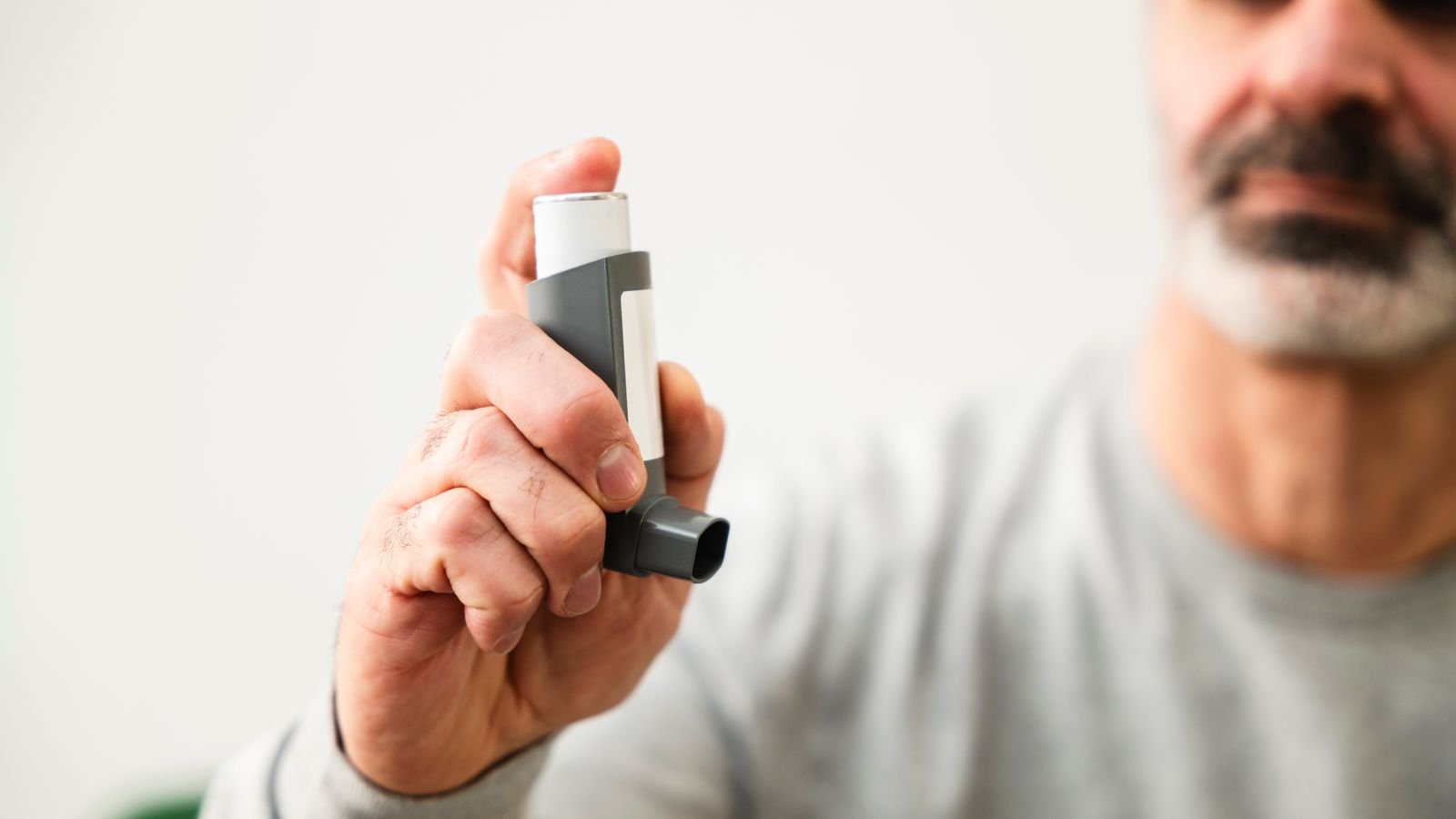
If someone at home has asthma, October to January is the stretch to plan for, because asthma and air pollution are a bad mix. The WHO calls air pollution an important risk factor that both causes new asthma and makes existing asthma worse, and India’s smog season is when that shows up as night coughs, wheezing and emergency visits.
The good news: a few habits make a real difference, and most of them cost nothing. One common mistake is with the inhaler itself, and it’s in section 3.
This article is for information only and isn’t medical advice. Please consult a doctor for a treatment plan that fits you or your child.
⚡ Key takeaways
- Air pollution worsens asthma, the WHO says. On “poor” AQI days and worse, people with lung disease are the first to feel it.
- Check the AQI every morning and plan outdoor time around it.
- Keep taking the daily preventer inhaler (if prescribed) even when you feel fine. Don’t stop it in smog season.
- Learn the attack steps now: sit up, use the reliever, and call for help if it isn’t working.
- Ask your doctor for a written asthma action plan before Diwali.
Asthma and Air Pollution: Why Smog Season Hits Hardest
About 363 million people had asthma in 2023, and it caused 442,000 deaths, according to the WHO. Most of those deaths happen in low- and lower-middle-income countries. Triggers include smoke, dust, fumes, colds and weather changes, which is exactly the mix north India gets every October and November.
Children are especially exposed. A 2026 study in npj Clean Air, summarised by Stanford, linked daily PM2.5 levels across India to over 1.1 million children’s ambulance dispatch records. Higher PM2.5 went with more ambulance calls, and children under five saw the biggest rise.
The same study estimated that cutting annual PM2.5 to India’s own standard of 40 µg/m³ could reduce those dispatches by just over 10%. That gives you a sense of how much everyday air shapes children’s health.
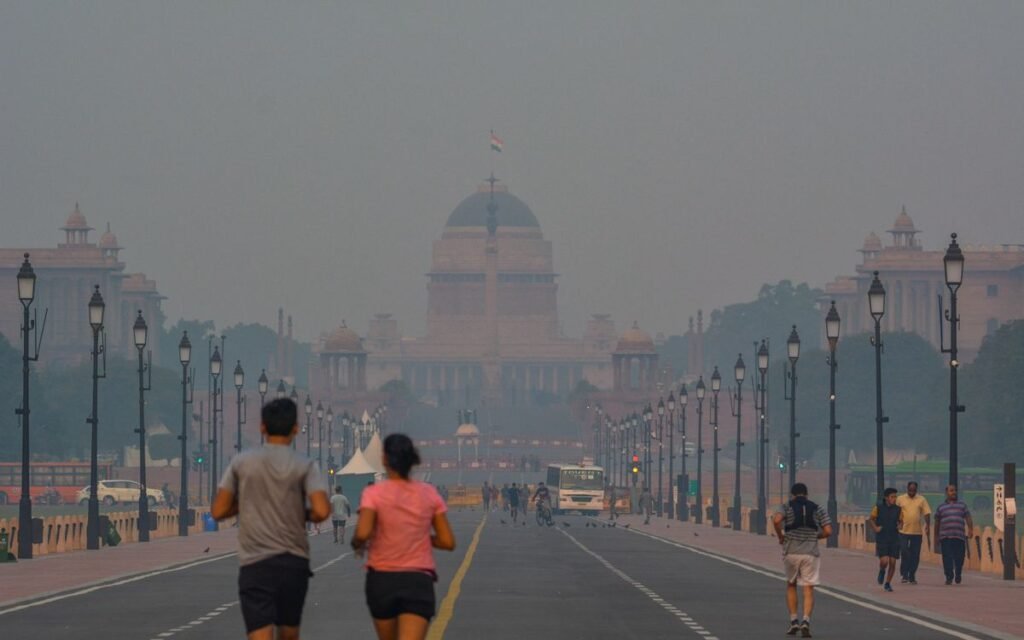
Read the AQI Like a Plan, Not a Number
India’s AQI from the Central Pollution Control Board (CPCB) has six bands. Here’s what CPCB says each one can do to health, as summarised by The Quint, and what that means for a family with asthma.
| AQI | Band | CPCB health note | What to do if you have asthma |
|---|---|---|---|
| 0-50 | Good | Negligible impact | Normal day |
| 51-100 | Satisfactory | Breathing issues in some | Normal day, carry the reliever |
| 101-200 | Moderate | Breathing issues for people with lung and heart disease, children, older people | Shorten hard outdoor exercise |
| 201-300 | Poor | Breathing issues on long exposure, and for heart and lung patients | Exercise indoors, mask outside |
| 301-400 | Very poor | Respiratory illness on long exposure | Stay indoors as much as you can |
| 401-500 | Severe | Affects even healthy people, serious for lung and heart patients | Stay in, purifier on, call your doctor if symptoms rise |
Check the reading for your area, not the city average. The CPCB’s Sameer app and most weather apps show the nearest station.
💡 Pro tip
If your child has an outdoor sports class, ask the school whether it can move indoors on “poor” days and worse.
 Also readN95 Mask for Pollution: The AQI Number Where It Starts to Matter
The Inhaler Mistake to Fix First
This is the open loop from the top. Many families treat the inhaler as an emergency-only tool. But asthma treatment usually has two jobs, and the WHO describes both.
Reliever vs preventer
- Reliever (bronchodilator, such as salbutamol): opens the airways and eases symptoms quickly.
- Preventer (inhaled steroid, such as beclometasone): calms inflammation in the airways. The WHO says this improves symptoms and lowers the risk of severe attacks.
- Combination inhalers contain both.
If your doctor has prescribed a daily preventer, smog season is the worst time to skip it because “the cough is better”. Talk to your doctor before stopping or changing any dose.
Technique matters as much as the medicine
The WHO notes that inhalers are hard to use, especially for children and during emergencies. A spacer helps the medicine reach the lungs instead of the back of the throat.
No spacer at home? The WHO says a homemade spacer made from a 500 ml plastic bottle can work as well as a commercial one. Ask your doctor or pharmacist to show you how to make and use one.
Asthma Attack: What to Do, Step by Step
Write this on a card and keep it near the medicines. These steps follow NHS advice, so if your own doctor’s action plan says something different, follow your plan.
- Sit up straight and try to stay calm.
- Use the blue reliever inhaler: 1 puff every 30 to 60 seconds, up to 10 puffs. Shake it between puffs and use a spacer if you have one.
- Call for emergency help (112 or 108 in India) if you feel worse at any point, aren’t better after 10 puffs, or don’t have an inhaler.
- If help hasn’t arrived after 10 minutes, repeat the inhaler steps.
- Don’t drive yourself to hospital during an attack.
⚠️ Watch out
Common signs of an attack include wheezing, coughing, chest tightness and struggling to breathe, the NHS says. If the reliever isn’t helping, don’t wait it out at home.
After any attack, even a mild one, see your doctor within two days, the NHS advises. An attack is a sign the current plan needs a review.
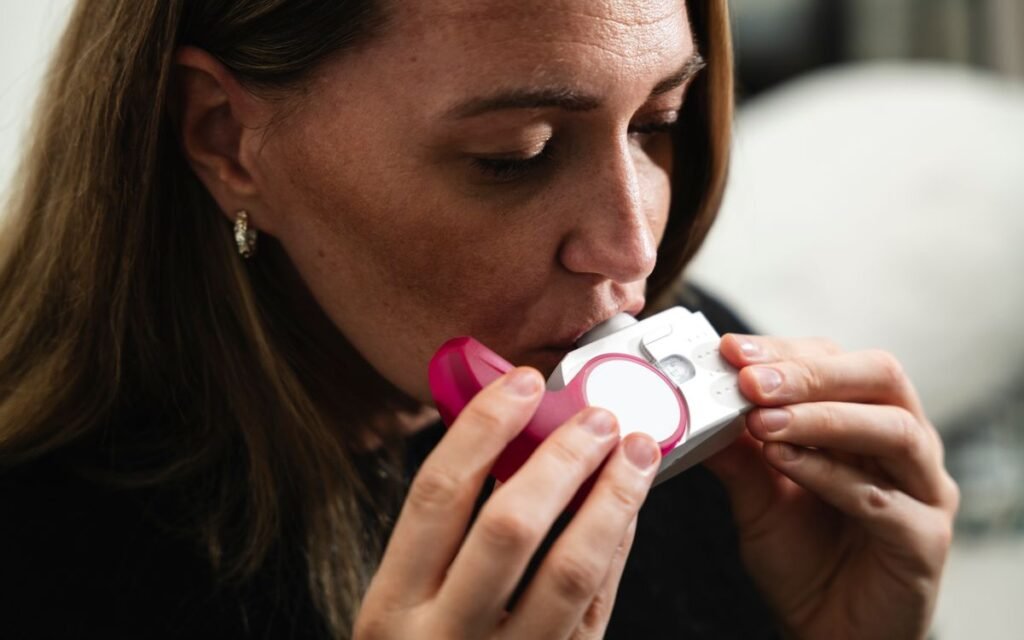
Asthma and Air Pollution at Home: 7 Habits for Bad-Air Days
None of these replace medicine, but together they cut how much smoke and dust reaches the lungs.
- Keep windows shut when the AQI is poor or worse, and open them for a short while when the reading drops.
- Run an air purifier in the bedroom if you have one. Our guide to choosing an air purifier by room size explains CADR in plain terms.
- Use a well-fitting N95 outdoors. A loose cloth mask does little against fine particles.
- Avoid smoke at home. No smoking indoors, and cut down on agarbatti, mosquito coils and dhoop on bad-air days.
- Wet-mop instead of sweeping, so dust doesn’t fly back up.
- Move exercise indoors on poor days. Yoga or a home workout beats a smoggy morning walk.
- Watch for colds. The WHO lists colds as a common trigger. Handwashing and the flu shot (ask your doctor) help.
 Also readHow to Improve Your Sleep Quality and Wake Up Refreshed Every Morning
Children, Older Parents and Diwali Week
Children
The Stanford-linked study saw the biggest rise in ambulance calls among under-fives, so young children need the closest watch. Tell the school about the asthma, make sure an inhaler and spacer go in the school bag, and teach older kids the attack steps.
Older parents
In many joint families, grandparents have COPD, heart disease or asthma together. They’re in the vulnerable group on every CPCB band above “satisfactory”. Stock up on their medicines before Diwali week, when many shops close for the festival.
Diwali itself
Firecracker smoke adds to the smog on Diwali night. Plan an indoor evening for anyone with asthma, keep doors and windows shut during the peak hours, and keep the reliever within reach.
Our Take: The One Thing to Do This Week
✅ Our verdict
Book a short visit with your doctor before Diwali and ask for a written asthma action plan. It tells you what to take daily, what to add when symptoms rise and exactly when to go to hospital. That one sheet of paper is worth more than any gadget you buy for smog season.
Questions to ask at the visit
- Is my (or my child’s) inhaler technique correct? Ask them to watch you use it.
- Should I use a spacer?
- What should I do differently on “very poor” or “severe” AQI days?
- Am I due for a flu vaccine?
Frequently Asked Questions
What is the link between asthma and air pollution?
The WHO says air pollution is an important risk factor that can cause new cases of asthma and worsen existing asthma. Smoke, dust and fumes are common triggers.
At what AQI level should asthma patients stay indoors?
CPCB’s bands say people with lung disease can have breathing trouble from “moderate” (101-200) upwards. On “poor” (201-300) days and worse, move exercise indoors and limit time outside. Your doctor can give you limits specific to you.
Do N95 masks help people with asthma?
A well-fitting N95 filters fine particles better than cloth or surgical masks. If a mask makes breathing feel harder, take it off once you’re indoors and mention it to your doctor.
What should I do during an asthma attack?
Sit upright, use the blue reliever (NHS advice is 1 puff every 30-60 seconds, up to 10 puffs) and call 112 or 108 if you get worse or don’t improve. Follow your own action plan if you have one.
Is it safe to stop my preventer inhaler when I feel better?
Don’t stop it on your own. Preventers lower the risk of severe attacks, the WHO says, and smog season is when you need that protection most. Speak to your doctor first.
The Bottom Line
Asthma and air pollution are a hard mix, but smog season is predictable, so you can prepare. Check the AQI each morning, keep the preventer going, learn the attack steps and get a written action plan. Start with the doctor’s visit this week, before Diwali smoke arrives.
Keep reading
 Read nextDrinking Too Much Water Can Harm You: How Much Is Actually Right?

 Read nextAlways Tired? It Could Be Vitamin B12 Deficiency (Signs to Check)
Sources
- WHO: Asthma fact sheet
- NHS: Asthma attacks, what to do
- Stanford Global Health: PM2.5 and pediatric emergency care in India (npj Clean Air, 2026)
- The Quint: How India’s AQI is calculated, CPCB bands and health impacts