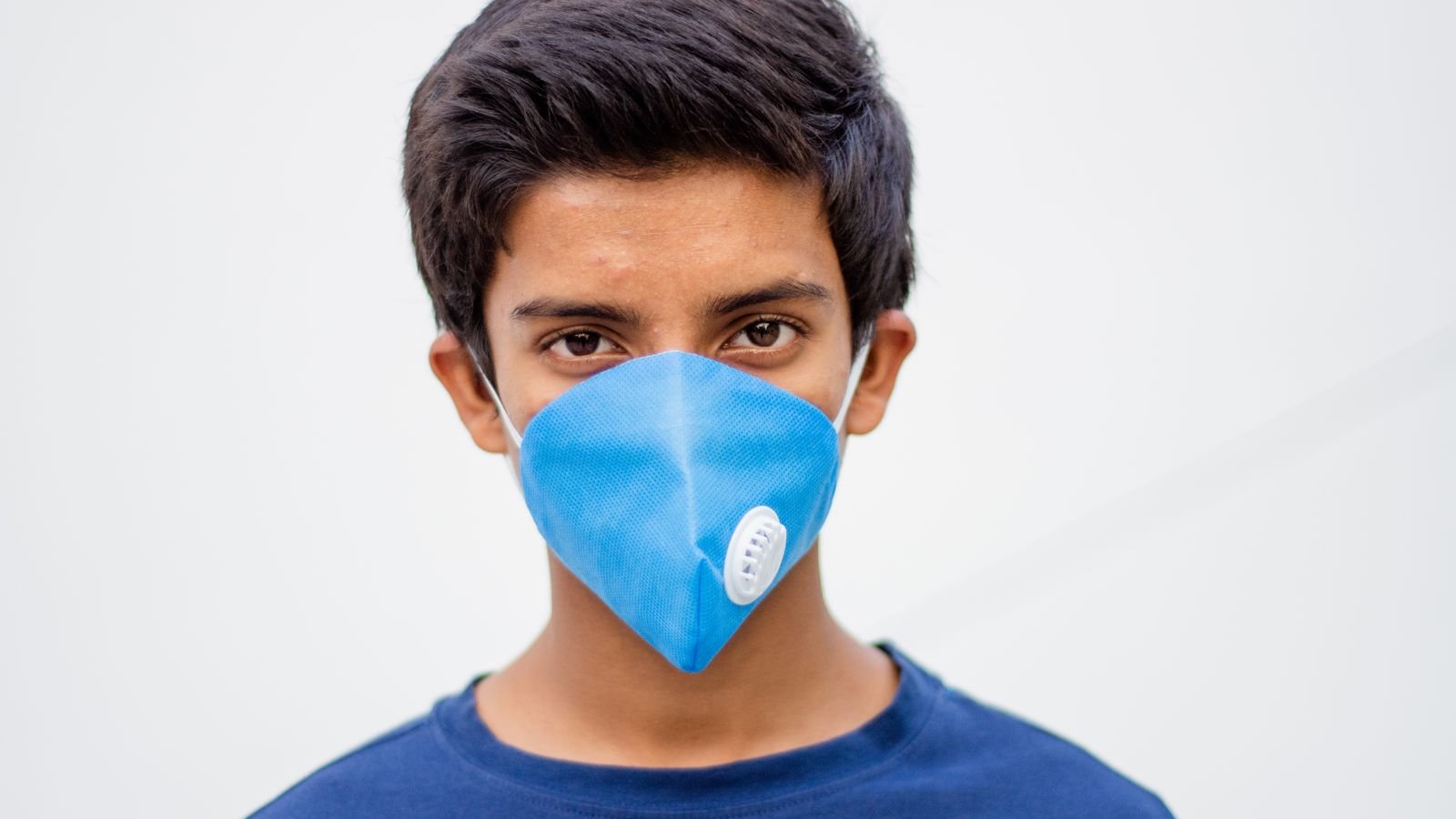
Delhi’s air is slipping into the “poor” zone for the first time this season, and the mask question is back in every family WhatsApp group. The short answer: an N95 mask for pollution starts to make real sense once your local AQI crosses 200, and sooner if you have asthma, heart disease or a small child at home.
But a mask only helps if air goes through it, not around it. A lab study found that many masks sold to the public leak around the edges, and the reason is in section 4.
This article is for information only and isn’t medical advice. If you have a heart or lung condition, are pregnant, or are buying a mask for a child, please consult a doctor first.
⚡ Key takeaways
- Delhi’s AQI was 187 on Sunday, with 22 stations already “poor”, and is expected to cross 200 on Monday.
- AQI 0–100: no mask needed for most people. 101–200: sensitive groups should cut long outdoor exposure. 201 and above: a fitted N95 is worth wearing outdoors.
- Fit matters more than the brand. In one study of masks sold to the public, only 1 of 4 kept leakage under 10%.
- Indoors, keep windows shut on bad days and run a purifier sized for your room. A mask isn’t a substitute for that.
Delhi’s Air Is Turning Poor: What the Numbers Say
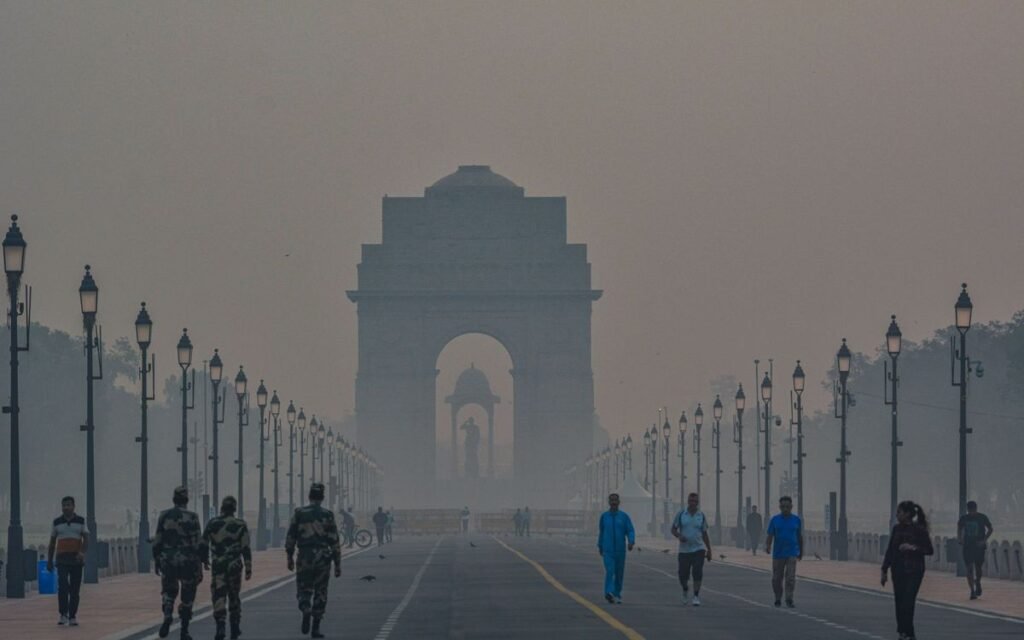
On Sunday, 18 October, Delhi’s city-wide AQI was 187. That’s still “moderate” on paper, but 22 monitoring locations were already in the poor range, and the overall reading is expected to tip into “poor” on Monday. Dry weather, no rain and slow winds mean pollution from traffic and construction just sits over the city.
This season also started early. Delhi’s average AQI for 1–7 October was 171, the worst first week of October since 2023, according to a CREA analysis of CPCB data reported by PTI. And Diwali is still nearly three weeks away.
Not in Delhi? It still matters. A study in The Lancet Planetary Health, funded partly by ICMR, estimated that air pollution was linked to 1.67 million deaths in India in 2019. That’s 17.8% of all deaths in the country that year.
The WHO-air-quality-and-health) says most deaths from outdoor air pollution come from heart disease and stroke (68%), not just lung problems. So this matters even if your lungs feel fine.
How to Read the AQI Number on Your Phone
Most of us glance at the AQI the way we glance at the temperature. A number, a colour, done. But two things change what that number means for you.
The AQI is the worst pollutant, not an average
India’s National Air Quality Index tracks eight pollutants, including PM2.5, PM10, ozone and nitrogen dioxide, per the Centre for Science and Environment. Each one gets its own score, and the highest score becomes the AQI you see. In smog season, PM2.5 is the one to watch: the WHO links most outdoor pollution deaths to these fine particles.
Your app may not be using India’s scale
Some popular apps and websites show the US AQI, which uses different cut-offs from India’s CPCB index. The same air can show two different numbers. Neither is “wrong”, but don’t compare a US AQI number with the Indian bands in the table below.
💡 Pro tip
For the Indian number, use CPCB’s official Sameer app or the CPCB website. Check your nearest station, not just the city average. On Sunday, Delhi’s average said “moderate” while 22 stations said “poor”.
Check at the right time of day
Readings can change a lot within a few hours. If you go for an early-morning walk, check the number right before you step out, not the one from last evening.
 Also readBest Smart Home Devices India 2026: Top 15 Picks
When an N95 Mask for Pollution Actually Helps
Here’s the CPCB’s own description of each AQI band, with a practical mask rule next to it. The health impact column is CPCB’s; the mask column is our reading of it, based on who CPCB says is affected at each level.
| AQI (India) | Category | What CPCB says | Practical mask rule |
|---|---|---|---|
| 0–50 | Good | Negligible impact | No mask needed |
| 51–100 | Satisfactory | May cause breathing issues for some | No mask for most people |
| 101–200 | Moderate | Breathing issues for people with lung or heart disease, children and older people | Sensitive groups: limit long outdoor time; N95 on long commutes |
| 201–300 | Poor | Breathing issues on long exposure, and for heart and lung patients | Everyone outdoors for long: wear a fitted N95 |
| 301–400 | Very poor | Respiratory illness on long exposure | N95 outdoors; cut outdoor exercise |
| 401–500 | Severe | Affects even healthy people; serious for heart and lung patients | Stay indoors where you can; N95 for any trip out |
AQI 201 is also where Stage I of Delhi-NCR’s Graded Response Action Plan begins. So the government’s own alarm and the “start wearing one” point line up.
What does an N95 add that a regular mask doesn’t? N95 respirators are built to seal to your face so that air has to pass through the filter. The CDC puts it plainly: they must form a seal to work properly. A loose cloth or surgical mask doesn’t do that, so polluted air slips in around the sides.
The Catch: Most Masks People Buy Leak
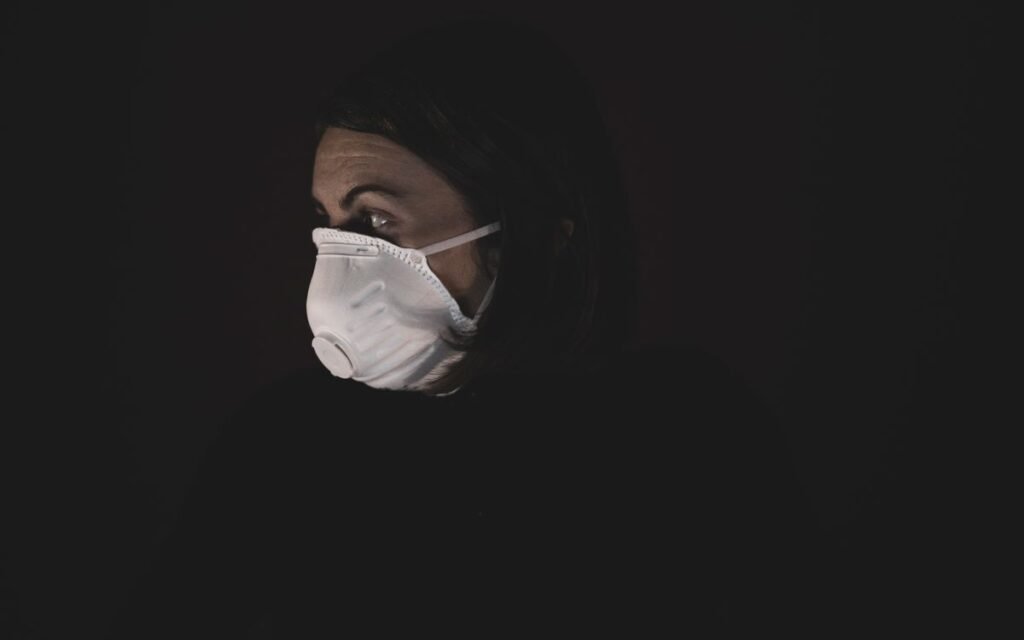
Most mask advice skips this bit. In 2018, researchers led by John Cherrie bought nine masks from regular shops in Beijing, all claiming to protect against PM2.5. Then they tested them in two ways.
First, they tested just the filter material. Some materials blocked almost everything, letting through as little as 0.26% of particles. Then they put four of those masks on volunteers in a chamber filled with diesel exhaust.
The numbers, published in Occupational and Environmental Medicine, aren’t comforting. Total leakage into the mask ranged from 3% to 68% while people sat still, and 7% to 66% while they moved around. Only one of the four kept average leakage under 10% in both tests.
⚠️ Watch out
The filter can be excellent and the mask can still fail. The authors blamed “poor facial fit” for most of the problem. A gap at the nose or cheeks lets unfiltered air straight in, every breath.
What does that mean for you in Lucknow or Ludhiana? The label on the pack matters less than how the mask sits on your face. A cheaper N95 that seals well will beat an expensive one that gaps at the nose. And if your glasses fog up the moment you breathe out, that’s your sign of a leak.
How to Wear an N95 So It Works
The CDC’s guide to using an N95 is short, and once you’ve done it a couple of times it becomes a habit.
- Check it first. Don’t use one that’s damaged, dirty or damp.
- Place it under your chin with the metal nose strip at the top.
- Pull the straps over your head. Top strap high on the back of the head, bottom strap at the neck below the ears. Don’t cross them.
- Press the nose strip with fingertips of both hands so it moulds to your nose. Don’t pinch with one hand.
- Do a seal check. Cover the mask with both hands and breathe out. If air leaks at the edges or your glasses fog, adjust and try again. Still leaking? Try a different size or style.
When to replace it
Replace it when the straps get stretched, it stops fitting snugly, or it gets wet, dirty or damaged. The CDC also says not to wash an N95 or try to “sterilise” it in an oven or microwave. That wrecks the filter.
Who should be extra careful
- If you have a beard, expect leaks. The CDC says an N95 works better on a clean-shaven face.
- With heart or lung disease, an N95 can make breathing harder, and the CDC advises talking to your doctor before using one.
- For children, the CDC notes that kids aged 2 and above can wear masks, but certified respirators don’t come in sizes for very young children. For toddlers, cleaner indoor air is the better plan.
- The CDC also lists people with asthma, COPD, diabetes, kidney disease or heart disease, plus pregnant people and children, as more likely to get sick from smoke.
 Also readImmune Boosting Foods in Winter: Unlock the Secret to Staying Healthy and Energized!
Indoors: Windows, Purifiers and Timing
A common mistake in big households: on a bad day, opening every window “for fresh air” can let the smog straight into the house.
The US EPA’s advice for smoky days is practical. Keep windows and doors shut when the outdoor air is bad. Then open them when the air improves, even for a short time. Check the AQI first, because the time of day when air is cleanest changes with the weather.
If you’re buying an air purifier
- Pick one sized for the room you’ll use it in. The EPA suggests choosing a model with a known clean air delivery rate (CADR).
- Put it in the room where the family spends the most time, often the bedroom at night.
- Avoid any purifier that produces ozone.
- Can’t afford one? The EPA says simple DIY units, a box fan with a good filter taped to it, can lower indoor particles. Change the filter when it looks dirty.
If you have a window AC, make sure the gap between the unit and the window frame is sealed. That gap lets outdoor air in around the edges.
✅ Our verdict
Skip the cloth “pollution mask” with a pretty print. It looks nice and does little. Check your nearest station’s AQI each morning. Above 200, wear a fitted N95 outdoors and do the seal check. Indoors, shut the windows and run a purifier in the room you sleep in. If anyone at home has asthma or heart disease, start being careful at 100, not 200.
Frequently Asked Questions
Does an N95 mask protect against PM2.5?
A properly fitted N95 is designed to filter fine particles like PM2.5, and the CDC says the seal is what makes it work. The study above found the filter material itself can block most particles. Leaks around the edges are the weak point, so fit matters most.
Is a surgical or cloth mask enough for pollution?
Not for bad days. Neither is built to seal to your face, so polluted air goes around the sides. They’re better than nothing for a quick errand, but not for an hour-long commute when the AQI is above 200.
Can I reuse an N95 mask?
The CDC says to replace it when the straps stretch, it stops fitting snugly, or it gets wet, dirty or damaged. Don’t wash it or heat it to clean it. Until then, a clean mask that still seals can be worn again.
Should I stop my morning walk when AQI is poor?
If the AQI is above 200, move your walk indoors or to a later time when the reading drops. Hard exercise makes you breathe in more air. People with heart or lung conditions should ask their doctor what’s safe for them.
Why does my app show a different AQI from the news?
Many apps use the US AQI scale, while Indian news and CPCB use India’s National AQI. They have different cut-offs. Use CPCB’s Sameer app or website for the Indian number.
The Bottom Line
The AQI turns into “poor” at 201, and that’s the point where an N95 mask for pollution stops being optional for long outdoor trips. Sensitive groups should start earlier, at 100. And get the fit right, because a sealed N95 does what a leaky one can’t. Before you step out tomorrow morning, open the Sameer app and check your nearest station.
Keep reading
 Read nextAlways Tired? It Could Be Vitamin B12 Deficiency (Signs to Check)

 Read nextNormal Blood Sugar Levels: What Your Test Report Actually Means
Sources
- National Herald: Delhi AQI 187 on 18 Oct, 22 stations poor, poor expected Monday
- ThePrint (PTI): Delhi’s most polluted October first week since 2023, CREA analysis of CPCB data
- The Lancet Planetary Health (2021): health and economic impact of air pollution in Indian states
- WHO: ambient (outdoor) air quality and health fact sheet-air-quality-and-health)
- Cherrie et al., Occupational and Environmental Medicine (2018): effectiveness of face masks against particulate pollution
- CDC NIOSH: how to use your N95 respirator
- CDC: wildfire smoke safety and masks for children
- CDC: who is at higher risk from smoke
- US EPA: wildfires and indoor air quality
- The Quint: how India’s AQI is calculated, CPCB categories and health impacts
- Centre for Science and Environment: National Air Quality Index pollutants
- Careerindia: GRAP Stage I begins at AQI 201