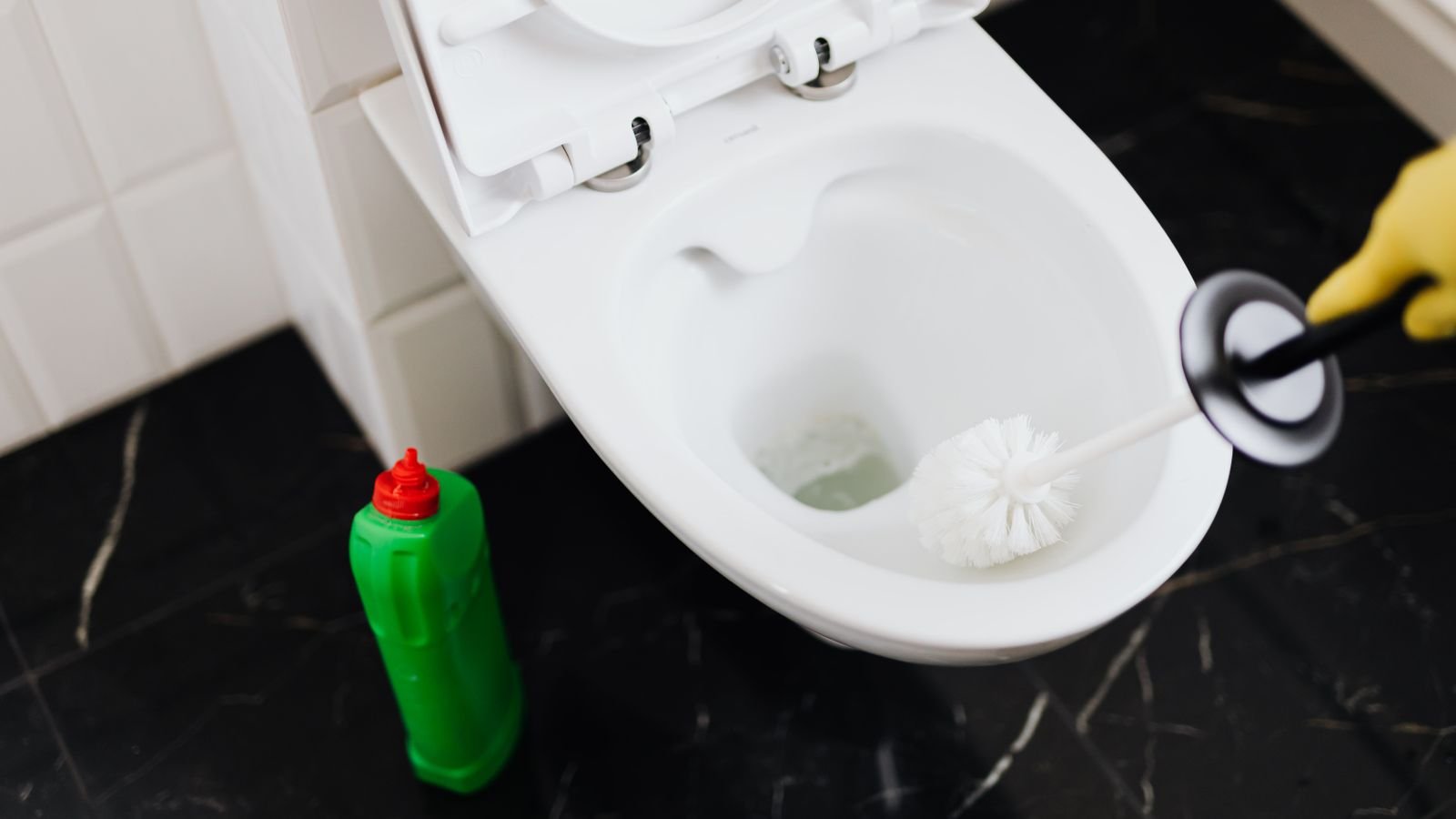
Diwali cleaning week is when a lot of us pour “one more cleaner” on a stubborn toilet stain. Don’t. Mixing cleaning products like an acid toilet cleaner and a bleach-based one can release chlorine gas, and it happens in seconds in a small, closed bathroom.
The rule is simple: one product at a time, rinse well, then the next. But there’s a smog-season twist that makes this harder in North India, and it’s in section 4.
⚡ Key takeaways
- Bleach (sodium hypochlorite, as in Domex) plus any acid (Harpic Power Plus lists 10.5% hydrochloric acid, plus vinegar and “tejab”) can release chlorine gas.
- Bleach plus ammonia, found in some glass cleaners, makes chloramine gases. Both irritate eyes, throat and lungs.
- Use one cleaner, flush or rinse with plenty of water, and wait before using another.
- Keep a window open or the exhaust fan on, even on high-AQI days: a short airing beats breathing fumes.
- Never store leftover diluted bleach in an unmarked bottle.
Why Mixing Cleaning Products Is Riskier at Diwali
In most Indian homes, Diwali means a deep clean: bathrooms, kitchen tiles, grills, windows. Several family members clean at once, with whatever bottles are under the sink. One person uses Harpic on the toilet, someone else follows with Domex “to be sure”. That’s the exact mix to avoid.
Bathrooms make it worse. They’re small, often with one tiny ventilator, and you’re bent over the bowl, close to where the gas forms. Health Canada’s advisory warns that these gases can cause burning eyes and light-headedness, “but can also be deadly”.
This article is for information only; consult a doctor if anyone in your home has trouble breathing after using cleaning products.
The Two Combinations That Make Toxic Gas
Bleach + acid = chlorine gas
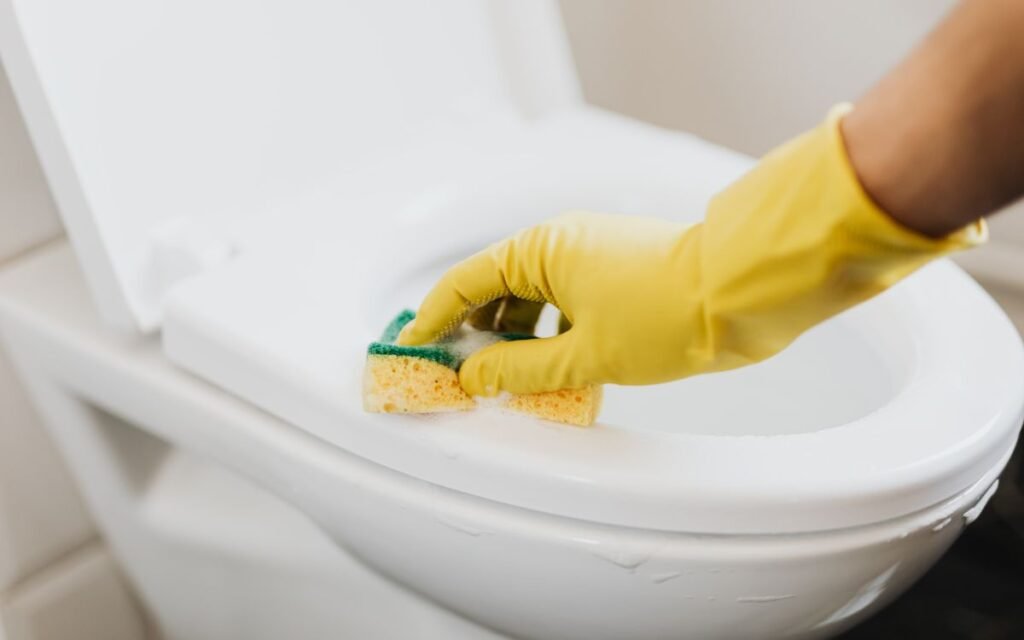
Bleach is a solution of sodium or calcium hypochlorite. McGill University’s Office for Science and Society explains that when it meets any acid, it releases “highly toxic chlorine gas”. Common acids at home:
- Acid toilet cleaners. Harpic Power Plus lists hydrochloric acid 10.5% on its Indian retail listing, with the label line “Do not mix… with anything else”.
- “Tejab” or muriatic acid, which many families still use on bathroom tiles.
- Vinegar, which many people add for a “natural” boost.
- Some rust removers and drain cleaners.
Domex lists sodium hypochlorite as its active ingredient. Its product page on Apollo Pharmacy says: “Do not mix with other products like acids, detergents, etc.”
Bleach + ammonia = chloramine gas
Some glass and multi-surface cleaners contain ammonia. Health Canada says bleach “will react with any cleaning product containing ammonia or an acid, including vinegar.” Check the label of your glass cleaner before you use it near a bleach-cleaned surface.
💡 Pro tip
Read the back label for two words: “hypochlorite” (bleach) and “acid”. If one bottle has the first and another has the second, they should never meet, not even one after the other in the same toilet bowl without a thorough flush in between.
 Also readMosquito Coil Smoke at Home: Is It Safe, and What Works Better
Common Indian Cleaners: What’s Inside
Here’s a quick guide to what’s in the bottles you probably own. Always go by the label on your own bottle, since formulas change.
| Product type | Usual active ingredient | Mix with bleach? | Our take |
|---|---|---|---|
| Acid toilet cleaner (e.g. Harpic Power Plus) | Hydrochloric acid | Never | Use alone, flush twice before anything else |
| Bleach / hypochlorite cleaner (e.g. Domex) | Sodium hypochlorite | It’s the bleach itself | Don’t combine with any other cleaner |
| Tejab / muriatic acid | Hydrochloric acid | Never | Best avoided at home; very corrosive |
| Vinegar | Acetic acid | Never | Fine alone for glass and taps |
| Some glass cleaners | May contain ammonia | Never | Check the label |
| Dishwash liquid | Detergent | Domex says don’t mix | Rinse surfaces before switching |
The Smog-Season Catch: Ventilation vs AQI
This is where North India gets tricky. Every safety guide says to air out the room. The CDC’s cleaning guidance puts it plainly: open windows or doors when using any cleaning products, and “never mix bleach with ammonia or any other cleanser.” Health Canada adds: air out the room during and after cleaning by opening windows or doors and running exhaust fans. But in late October, many families in Delhi-NCR keep windows shut because of smog.
For a cleaning job, short airing still wins. Chlorine or chloramine fumes in a closed bathroom are a far more concentrated hit than ten minutes of outdoor air coming in.
⚠️ Watch out
Don’t skip ventilation because the AQI is high. Run the exhaust fan, open the bathroom door, and air the room for a few minutes after cleaning. If you can, do the heavy cleaning at the time of day your AQI app shows the lowest reading.
If you’re unsure which app to trust for that reading, our explainer on why AQI apps show different numbers helps.
A Safe Diwali Cleaning Routine, Step by Step
- Pick one cleaner per job. For toilets, use either the acid cleaner or the bleach cleaner, not both on the same day.
- Wear rubber gloves. Health Canada also recommends goggles when using bleach. Kitchen gloves are fine.
- Switch on the exhaust fan first, and keep the door open.
- Rinse or flush thoroughly before using any other product on the same surface.
- Mix bleach only with plain water, and only as much as you need. Health Canada advises against storing leftover solution “as you may forget that it contains bleach.”
- Keep products in their original bottles. Never pour cleaner into a used water or cold-drink bottle.
- Store them high up, away from children and pets.
- Don’t send kids or elders into a freshly cleaned bathroom until it has aired out.
💡 Pro tip
If the stain doesn’t go with one cleaner, a stronger scrub works better than a stronger chemical. Give the same cleaner its full contact time on the label, then use a stiff brush. That’s safer than adding a second product.
Our Take: Is Bleach Even Needed?
✅ Our verdict
For most Diwali cleaning, one good toilet cleaner and a detergent for floors and tiles is enough. Keep bleach for disinfecting, use it alone, and never “boost” it with Harpic, vinegar or tejab. If a smell makes your eyes water, leave the room and air it out.
Honestly, the riskiest moment is usually several people cleaning together, each with a different bottle, in the same bathroom. A quick “who is using what” before you start solves it.
If you’re also burning mosquito coils or diyas indoors this week, our guide to mosquito coil smoke and the N95 mask guide cover indoor air from other angles.
Frequently Asked Questions
Can I use Harpic and Domex together?
No. Harpic Power Plus lists hydrochloric acid and Domex is a sodium hypochlorite (bleach) cleaner. Acid plus bleach can release chlorine gas. Use one, flush well, and don’t follow with the other.
Is mixing cleaning products with vinegar safe?
Vinegar is an acid. Mixed with bleach, it can release chlorine gas. Vinegar is fine on its own for glass, taps and mild limescale.
What should I do if a cleaner’s fumes sting my eyes?
Stop, leave the room and air it out with the door open and the exhaust fan on. Health Canada lists burning eyes and light-headedness as warning signs. Anyone with breathing trouble should get medical help.
Can I mix bleach with hot water?
Dilute bleach only in plain water, as the label directs. Don’t add any other cleaner to the bucket.
Is phenyl safe with bleach?
We couldn’t find reliable data on that combination, so the safe answer is the general rule: don’t mix bleach with any other cleaner.
The Bottom Line
The rule for mixing cleaning products is: don’t. One cleaner per job, rinse well, keep the fan running, and store bottles in their original containers. Before you start this weekend, spend two minutes reading the back labels of the bottles under your sink.
Keep reading
Read nextWhy AQI Apps Show Different Numbers (and Which One to Trust)Read nextMosquito Coil Smoke at Home: Is It Safe, and What Works Better Read nextN95 Mask for Pollution: The AQI Number Where It Starts to Matter
Sources
- Health Canada advisory: Never mix bleach with other cleaning products
- CDC: Never mix bleach with ammonia or any other cleanser; ventilate when cleaning
- McGill Office for Science and Society: Bleach and toilet bowl cleaners
- Harpic Power Plus listing (PharmEasy): hydrochloric acid 10.5%, do not mix
- Domex Disinfectant Toilet Cleaner (Apollo Pharmacy): sodium hypochlorite, do not mix with acids