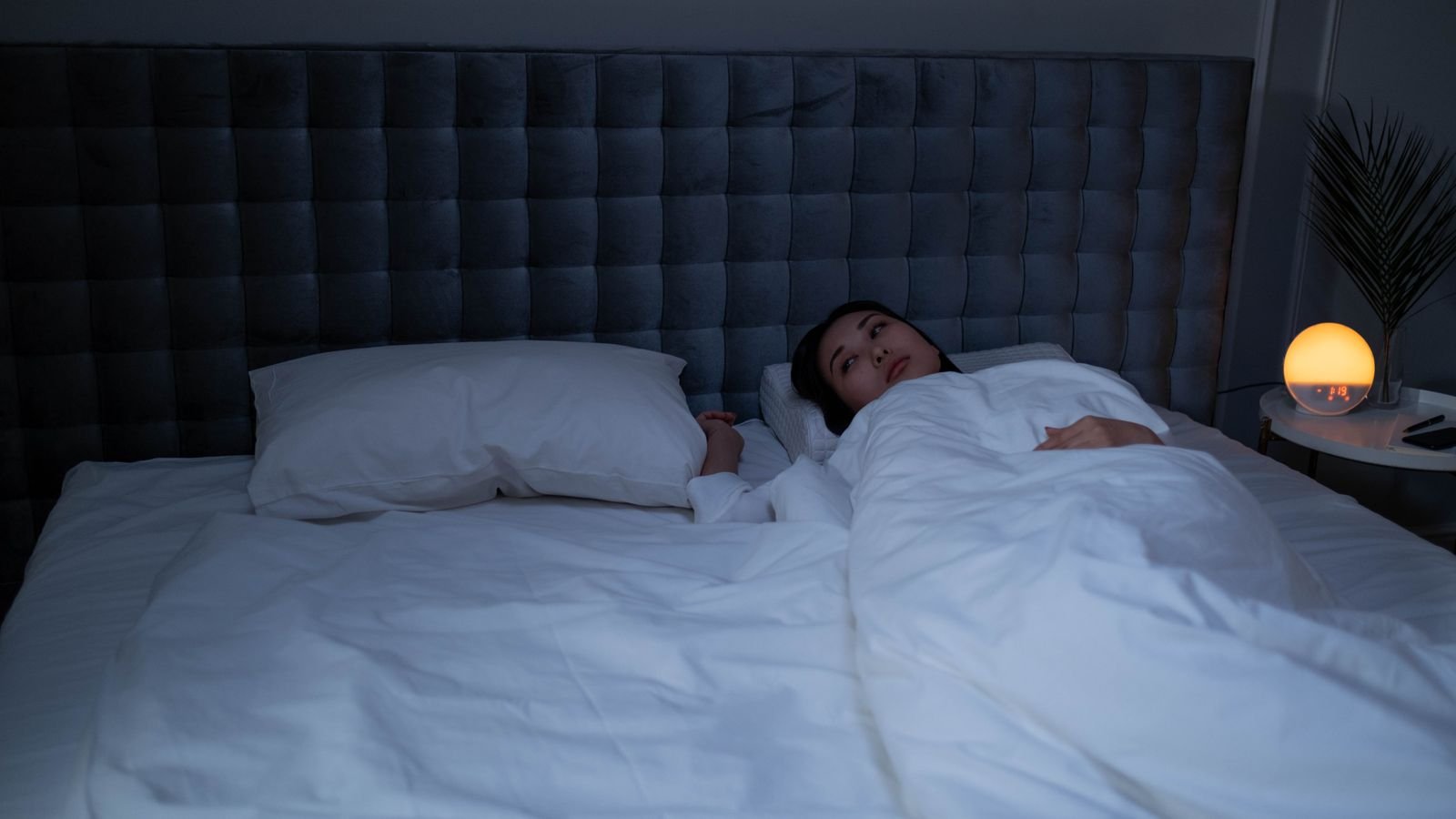
Air purifier in bedroom, door shut, running all night: yes, that’s the right call through smog season. A new trial from NYU Langone, presented on 8 November, adds one more reason: a month of filtered bedroom air cut fine particles by 36% and was linked to steadier blood sugar readings in the adults it studied.
It’s an early result from New York, so don’t read it as a health promise for your home. There’s also a catch with the quiet “sleep mode” button that decides how much cleaning you get at 2 a.m. It’s in section 4.
⚡ Key takeaways
- The trial: about 150 adults in New York City used a real or a dummy HEPA air cleaner in the bedroom for four weeks. Real filters cut tiny particles by 36%.
- It’s a short, early study in one group of people in US homes. It does not show that a purifier treats or prevents any illness.
- The clean-air habit still makes sense in an Indian winter: door and windows closed, purifier running through the night, nothing blocking it.
- Sleep mode is quiet because the fan slows down, so it cleans less air. Run it on high for an hour before bed.
- Running cost is small. Xiaomi says its 4 Lite needs about 0.8 units of electricity for 24 hours at full speed. Filters are the real expense.
What the New Bedroom Air Trial Found
The study comes from NYU Langone Health in New York. The team presented it on 8 November 2026 at the American Heart Association’s Scientific Sessions, according to NYU Langone’s own news release.
The design is the interesting part. More than 150 adults with prediabetes were each given a portable air cleaner for the bedroom. Half got a machine with a working HEPA filter. The other half got a “sham” unit that ran but did not clean the air, and the trial is described as double-blind in its title, so people weren’t told which one they had.
After about a month, the homes with real filters had 36% lower levels of tiny airborne particles. The volunteers wore continuous glucose sensors for a week before and a week after. In the real-filter group, daily blood sugar swings were nearly 8% smaller, and the rise after breakfast was lower too.
The lead author, Dr Sharine Wittkopp, called HEPA filters “an easy, low cost tool” in the release. I’d read that as a researcher’s hope and a reason for bigger studies, nothing more.
What the Study Does Not Prove
Most headlines skip this part.
- It’s small and short. The trial registry entry (NCT05994937) lists 150 participants and calls it a pilot study. Four weeks of filtering is not a year.
- It’s one group of people. Everyone had prediabetes. People with diabetes were excluded, and so were smokers’ households.
- It measured sensor readings, not illness. Nobody knows yet if those smoother readings turn into fewer people falling ill. The team says longer studies are planned to find out.
- It’s New York air. Senior author Dr Jonathan Newman cautioned that the results may not apply in regions with different pollution types and levels. Delhi in November is a different planet from Manhattan.
- It’s a conference result. I could find the press release and the registry entry, but no full journal paper yet. Numbers can shift once other scientists review them.
So please don’t buy a purifier as a blood sugar gadget, and don’t change any medicine, diet or routine because of this news. If you have a health condition, your doctor’s advice comes first.
What the trial does support is simpler. Cleaning the air where you sleep is practical, people stuck with it for a month, and it lowered what they breathed. That part travels well to India.
 Also readAir Purifier for Home: The CADR Number That Matters for Your Room
Why the Bedroom Is the Room to Clean First
You spend more hours in the bedroom than in any other room, and you spend them with the door shut. That makes it the easiest room in the house to keep clean. The US EPA’s guide to air cleaners gives the same advice: put the unit where you spend the most time.
North India needs the help right now. Delhi’s AQI was 299 at 7 am on Wednesday, 11 November, in the “poor” band, according to CPCB data reported by ANI. PTI reported 303, “very poor”, for the same day. Either way, that’s a long way from clean.
For scale, the WHO’s 2021 air quality guidelines recommend a PM2.5 limit of 15 µg/m³ averaged over 24 hours, and 5 µg/m³ over a year. Delhi’s winter air is nowhere near those numbers.
Does a purifier get you there? Not fully. In a 2022 study of real homes in Taiwan, HEPA cleaners brought average indoor PM2.5 down from 33.5 to 17.2 µg/m³.
A winter experiment in Delhi homes found big reductions too, but also that indoor air stayed worse on the days outdoor pollution was highest. So expect a purifier to roughly halve the problem. It won’t delete it.
The Sleep Mode Catch: Quiet Means Less Cleaning
⚠️ Watch out
Sleep mode is quiet because the fan spins slower. A slower fan moves less air through the filter, so the room gets cleaned more slowly. The EPA puts it simply: lower fan speeds filter less air, and higher speeds with longer run times filter more.
Look at the gap on one popular model. Xiaomi’s India page for the Smart Air Purifier 4 lists noise of up to 64 dB(A), and 32.1 dB(A) in Night Mode. The EPA says about 50 decibels is like a modern fridge. So full speed is a machine you’d notice, and night mode is far quieter than that fridge.
The headline CADR number on the box (400 m³/h for that Xiaomi) describes the machine working hard. I couldn’t find a night-mode CADR on Xiaomi’s page, and most brands don’t print one. So you’re trusting a number that doesn’t describe how the machine runs while you sleep.
The Taiwan study backs this up from the other side. Airflow setting was one of four things that decided how clean the room got, along with outdoor pollution, the number of machines and open windows.
What to do about it
- Blast first, then go quiet. Run it on high for about an hour before bed with the door closed, then switch to sleep or auto mode.
- Buy more CADR than the room needs. The EPA’s chart works out to roughly 78 CFM (about 133 m³/h) for a 10×12 ft bedroom. A unit rated two or three times that still does useful work at a low, quiet speed.
- Try auto before sleep mode. If the auto setting is quiet enough for you, it will speed up when the air gets worse at 4 a.m. Sleep mode is built to stay quiet.
- Be honest about noise. A purifier you switch off at midnight because it hums cleans nothing.
Air Purifier in Bedroom: The Night Setup, Step by Step
You don’t need a new gadget for any of this. It’s a five-minute routine.
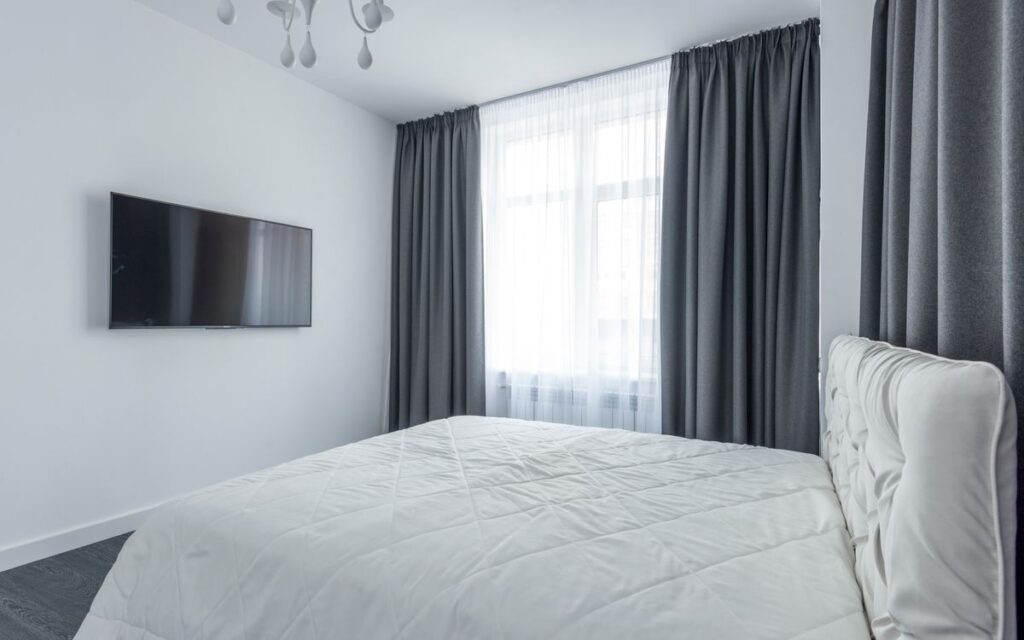
- Shut the windows and the door before you switch it on. The Taiwan study found window ventilation was a key factor in how well HEPA cleaners worked. A gap under the door? A rolled towel does the job.
- Give it breathing room. The EPA says to keep air cleaners away from curtains and anything that blocks airflow. So don’t tuck it behind the bed or squeeze it between the almirah and the wall.
- Point the draft away from you. If the clean-air stream feels cold on your face in December, the EPA’s tip is to redirect it. Don’t switch the unit off.
- Start early. High speed for an hour before bedtime, while you’re still watching TV in the other room.
- Then drop to auto or sleep mode when you get into bed.
- Keep smoke out of that room. No agarbatti, mosquito coil or candle in the bedroom at night. They put smoke into the one room you’re trying to clean, as we covered in our piece on agarbatti smoke and indoor air.
- Air the room when outside air improves. Check the number before you open up, and here’s why AQI apps show different readings.
💡 Pro tip
Switch off the display light or use the child lock if the glow or beeps bother you. On Xiaomi’s models, Sleep Mode turns the display off. A dark, quiet machine is one you’ll leave running.
One more thing on sizing. If you haven’t bought a purifier yet, match the CADR to the room with our air purifier for home guide before you look at any other feature.
 Also readOpen Windows in Pollution? What to Do at Home When AQI Tops 400
What It Costs to Run All Night
Electricity is the small part. Filters are where the money goes.
Electricity
Xiaomi’s India page for the Smart Air Purifier 4 Lite says the machine draws 33 W at maximum, which is about 0.8 units (kWh) for a full 24 hours. That’s the worst case, since night mode uses a slower fan.
| How you run it (33 W model, full speed) | Units a day | Units a month | At ₹8 a unit (example rate) |
|---|---|---|---|
| 8 hours, nights only | 0.26 | about 8 | about ₹63 |
| 24 hours | 0.8 | about 24 | about ₹190 |
The ₹8 is only an example to show the scale. Check your own bill, because the rate depends on your state and slab. Either way, it’s a small line on the bill.
Filters
What I could check on 11 November 2026:
- Philips FY1700/30 (for the AC1711 and AC1715): around ₹4,495 on the Philips India store, against an MRP of ₹4,995. The purifier itself is listed there at ₹14,995, so one filter is nearly a third of the machine’s price.
- Xiaomi recommends replacing its Smart Air Purifier 4 and 4 Lite filters every 6 to 12 months. Check the genuine filter’s price in the Xiaomi store before you buy the machine.
How long a filter lasts depends on your air. The EPA notes that makers typically suggest 60 to 90 days for many filters, and says to change them sooner if they look heavily soiled. With the machine running all night through a Delhi winter, I’d expect to land at the short end of Xiaomi’s 6 to 12 months. A choked filter is a fan that makes noise and does little, so don’t stretch it to save money.
Should You Run It All Night? My Take
✅ Our verdict
Yes, if you already own a purifier and live where winter AQI stays above 200. Run it all night in a closed bedroom, on high for an hour first and then on auto or sleep mode. Do it for cleaner air while you sleep. One early trial is no reason to expect a blood sugar result at home.
Who gains the most from the habit? Homes with small children, grandparents, or anyone who already struggles on bad-air days. Our guide to asthma and air pollution in smog season covers planning for that.
Who can skip buying one? If your bedroom can’t be closed, with a window that won’t shut or a cooler vent open to the street, a purifier will mostly clean the neighbourhood. Fix the gaps first. And if a ₹4,000 to ₹5,000 filter every year is a stretch, spend on sealing the room and cutting indoor smoke, which cost almost nothing.
This article is for information only; consult a doctor for advice about prediabetes, diabetes or any other health condition. An air purifier is not a treatment, and nothing here is medical advice.
Frequently Asked Questions
Is it safe to keep an air purifier in bedroom all night?
A HEPA purifier is built for continuous running, and the NYU trial had people use one in the bedroom for four weeks. Avoid models that produce ozone on purpose. The EPA says ozone is a lung irritant, and lists ionisers and some UV and plasma cleaners among devices that may emit it.
Does sleep mode clean the air properly?
It cleans, but more slowly, because the fan runs at a lower speed. That’s fine once the room is already clean. Run the purifier on high for about an hour before bed, then switch to sleep or auto mode.
How much electricity does an air purifier use at night?
Not much. Xiaomi says its 33 W Smart Air Purifier 4 Lite needs about 0.8 units for 24 hours at maximum speed. Eight hours a night works out to roughly 8 units a month at full power, and less in night mode.
Should the bedroom door stay closed with the purifier on?
Yes. A purifier is sized for one room. With the door or a window open, polluted air keeps coming in and the machine can’t keep up.
Did the study show that air purifiers help with diabetes?
No. It was a four-week pilot trial in adults with prediabetes in New York, and it measured short-term glucose sensor readings. The researchers themselves say longer studies are needed, and the results may not apply elsewhere.
The Bottom Line
Running an air purifier in bedrooms overnight is a sensible smog-season habit, and the new trial is one more nudge in that direction. The setup matters more than the machine. Close the room, keep the airflow clear, give it an hour on high and then let it go quiet. Tonight, shut the bedroom door an hour before bed and switch it to full speed.
Keep reading
 Read nextCar AC in Pollution: The One Button That Cuts Smog Inside

 Read nextFix Your Sleep Schedule After Diwali: Why Sleeping In Backfires
Sources
- NYU Langone Health news release, 8 Nov 2026: trial design, 36% particle cut, glucose findings, researchers’ cautions
- EurekAlert copy of the release: double-blind, sham-controlled title
- Trial registry record NCT05994937: 150 participants, pilot, 4 weeks, who was excluded
- US EPA: Guide to Air Cleaners in the Home (placement, fan speed, noise, filters, ozone)
- WHO air quality database page: 2021 guideline levels for PM2.5
- Chen et al., Int J Environ Res Public Health (2022): HEPA cleaners in real homes
- Vyas, Srivastav and Spears, PLOS ONE (2016): air purifiers in Delhi homes in winter
- ANI, 11 Nov 2026: Delhi AQI 299 at 7 am, CPCB data
- PTI via The Patriot, 11 Nov 2026: Delhi AQI 303
- Xiaomi India: Smart Air Purifier 4 (noise, CADR) and 4 Lite (33 W, 0.8 kWh a day)
- Xiaomi India: Smart Air Purifier 4 filter, 6 to 12 month replacement
- Philips India store: FY1700/30 filter price