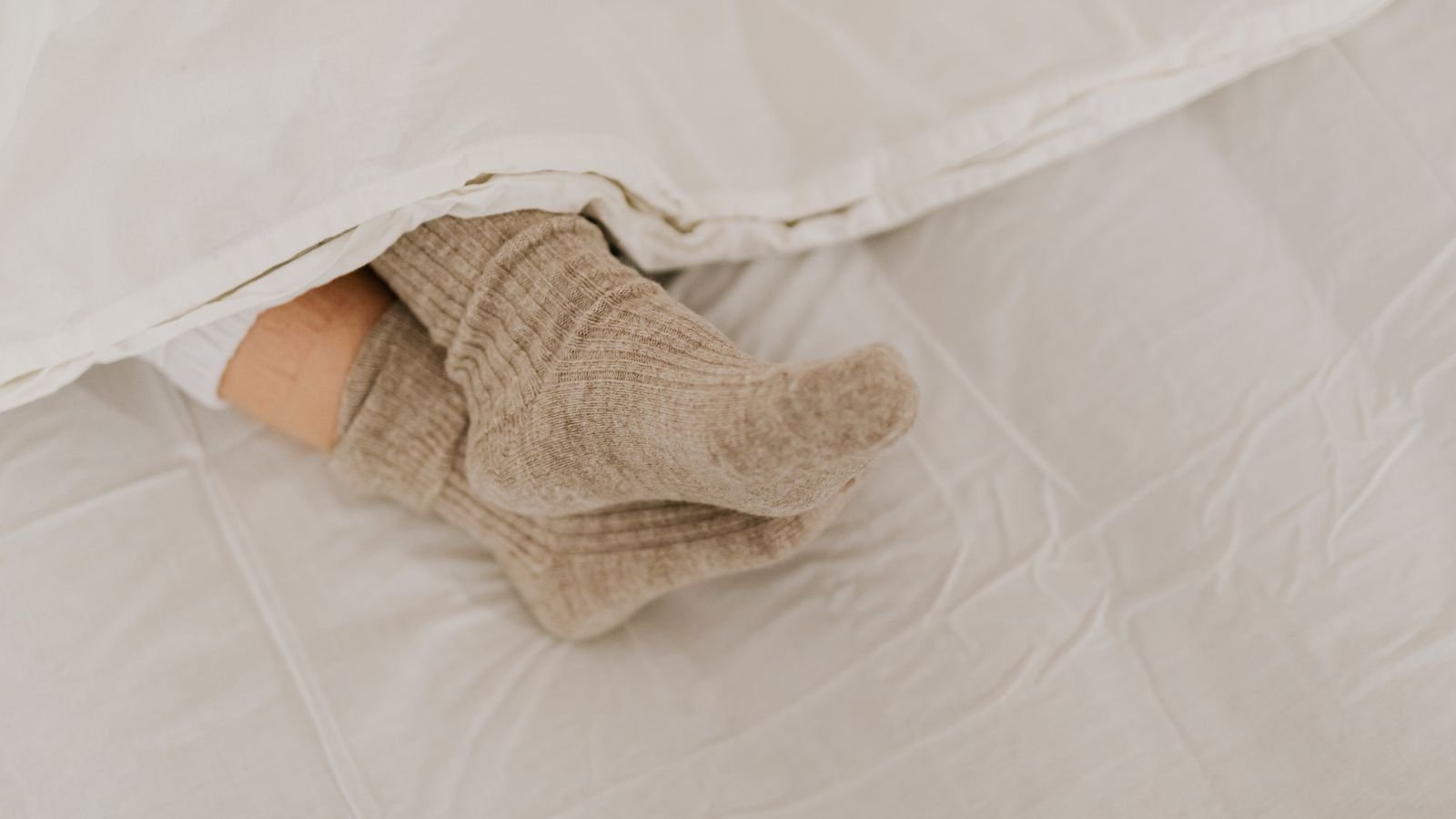
Sleeping with socks on is one of those winter habits people either swear by or laugh at. The research leans towards the believers: in a small 2018 study, people who wore bed socks fell asleep 7.5 minutes faster, slept 32 minutes longer and woke up far less often.
That’s a real effect, and the reason behind it is neat (warm feet help your body cool down inside). But the study was tiny, and for one group of people warm socks and hot water bottles need real care. That part is in section 4.
⚡ Key takeaways
- What the study found: bed socks cut the time to fall asleep by 7.5 minutes and added 32 minutes of sleep, in a Seoul National University study of 6 young men.
- Why it may work: warm feet release heat, which helps your core temperature drop, and that drop is part of falling asleep.
- Cheaper than a heater: socks cost nothing to run. Warm the person, then switch the heater off before sleep.
- A warm bath also helps: a review found a 40-42.5°C bath or shower 1-2 hours before bed shortened the time to fall asleep.
- Take care if you have diabetes: if your feet are numb, you may not feel a hot water bottle or electric blanket burning you.
Sleeping With Socks On: What the Study Actually Found
The best-known study on this comes from Seoul National University. Researchers Ko and Lee published it in the Journal of Physiological Anthropology in 2018. Bed socks are a common winter habit in Korea, and they wanted to know if it helps.
Six young men slept for 7 hours on two nights, once with feet-warming bed socks and once without. The room was 23°C with 50% humidity. A wrist tracker (actigraphy) measured their sleep.
With socks on, compared with no socks:
- Fell asleep 7.5 minutes faster on average
- Slept 32 minutes longer in total
- Woke up far less often: the paper reports 7.5 times fewer awakenings
- Sleep efficiency was 7.6% higher
- Feet stayed about 1.3°C warmer
Their core body temperature and heart rate didn’t change. And here’s the honest bit: when the men filled in a sleep questionnaire in the morning, they didn’t rate their sleep as better. The tracker saw a difference; the sleepers didn’t feel one.
So treat this as a promising small result, not proof. Six people is a very small group, and all of them were young, healthy men.
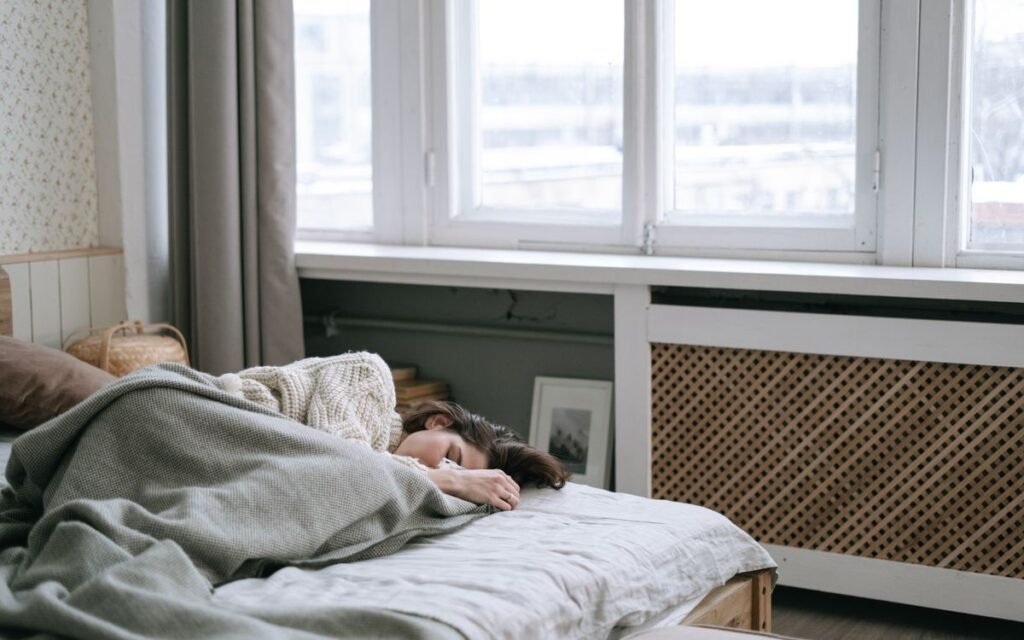
Why Warm Feet Help You Fall Asleep
It sounds backwards. You’d think warming up would keep you awake.
The trick is where the heat goes. Your core temperature starts to drop around bedtime as part of your body clock. The Sleep Foundation explains that warm hands and feet at night come from blood carrying heat out to the skin, where it can escape.
Warm feet mean wide-open blood vessels in the feet. That helps the body dump heat faster, so the core cools sooner. Cold, clenched feet do the opposite. The Sleep Foundation also notes that chronically cold feet are linked to a higher risk of trouble falling asleep.
What other studies add
- Kräuchi and colleagues, 1999: a Basel sleep lab published a short paper in Nature with a title that says it all: “Warm feet promote the rapid onset of sleep.”
- Raymann and colleagues, 2008: a Dutch team used a special suit to warm volunteers’ skin by just 0.4°C, without changing core temperature. People woke less at night and slept more deeply. The effect was strongest in older adults, whose deep sleep almost doubled.
That second study matters for Indian homes. Grandparents who complain of waking at 3 am in December may be the ones who gain most from warmer feet. Just don’t expect socks to do what a thermosuit did in a lab.
 Also readRoom Heater Running Cost: What 4 Hours a Day Adds to Your Bill
Socks, Warm Bath or Heater: What Works for Sleep?
Socks aren’t the only way to warm your feet before bed. Here’s how the common options compare, based on the research and safety advice above.
| Option | What the evidence says | Running cost | My take |
|---|---|---|---|
| Loose bed socks | Faster sleep onset, fewer wake-ups (small study) | Zero | Try this first |
| Warm bath or shower 1-2 h before bed | 40-42.5°C for as little as 10 minutes shortened time to fall asleep (review of studies) | Geyser units | Good if you already bathe at night |
| Hot water bottle | Warms the bed; no sleep trials cited here | Almost zero | Fine with a cover; remove before getting in if feet are numb |
| Electric blanket | Warms the bed; no sleep trials cited here | Low | Switch off before you get in |
| Room heater all night | Not advised for sleep | High | Warm the room, then switch it off |
The bath finding comes from a 2019 review by Haghayegh and colleagues at the University of Texas, published in Sleep Medicine Reviews. They pooled 17 studies. A bath or shower at 40-42.5°C improved self-rated sleep quality, and when taken 1-2 hours before bed, even 10 minutes shortened the time to fall asleep.
It works the same way as socks. Warm water sends blood to your hands and feet, and the heat then leaves your body as you cool down. If you’re heating a geyser anyway, a late evening bath may be worth it; our guide to geyser electricity cost shows what that bath really costs.

The Catch: When Socks and Hot Water Bottles Need Care
⚠️ Watch out
If you have diabetes with nerve damage in your feet (neuropathy), you may not feel heat properly. Diabetes UK warns that hot water bottles, electric blankets and heaters can burn numb feet without you noticing.
Diabetes UK’s cold-weather advice is specific:
- Hot water bottle: fill it with hot, not boiling, water and use a cover. Take it out of the bed before you get in.
- Never combine a hot water bottle with an electric blanket.
- Electric blanket: switch it off before getting into bed, and follow the maker’s instructions.
- Check your feet daily, even in winter when they’re always under socks.
Plain socks are the gentlest choice here. Even so, if you have diabetes, poor circulation or swollen feet, ask your doctor what’s right for you.
Other small problems
- Tight elastic can leave deep marks. Pick socks with a loose top.
- Sweaty feet mean the socks are too thick or the quilt is too heavy. If your feet get hot and you wake up, just pull them off.
- Damp socks feel colder, not warmer. Change into a dry pair at night.
And the bigger safety point for Indian winters is the heater, not the socks. Our room heater safety guide explains why you shouldn’t sleep with one running.
How to Wear Socks to Bed the Right Way
A simple routine for cold nights, using what the studies and health services suggest:
- Pick loose, soft socks. Cotton or a soft wool blend. Keep a separate pair just for bed.
- Warm your feet first. A 10-minute warm bath 1-2 hours before bed, or a quick foot soak, then dry well.
- Moisturise, then socks. If you use a foot cream, bedtime is a handy slot, since socks keep it off the sheets. Our winter dry skin routine covers which creams work.
- Keep the room comfortable, not hot. The NHS suggests heating the rooms you use to at least 18°C, and the Sleep Foundation puts the sweet spot for sleep around 18°C too.
- Close the bedroom window at night, as the NHS advises in cold weather. On high-AQI nights in north India, that also keeps smog out.
- Switch heaters off before you sleep. Let the quilt and socks do the work.
- Don’t eat heavy food right before bed. A late, heavy dinner can undo a good routine; see what research says about late dinners.
💡 Pro tip
If you wake up at 3 am with hot feet, that’s fine. Pull the socks off under the quilt and go back to sleep. Their job was to help you drift off, and that’s done.
 Also readLate Dinner at 10 PM? What Studies Say It Does to Your Body
Who Should Try It and Who Should Skip It
Socks in bed suit a lot of people in an Indian winter. They’re free and quiet. They’re also safer than leaving a heater on.
Worth trying if:
- Your feet feel icy when you get into bed
- You take a long time to fall asleep on cold nights
- You’re an older adult who wakes in the small hours (the Raymann study saw the biggest effect in older people)
- You share a room and can’t run a heater all night
Think twice or ask a doctor if:
- You have diabetes, numb feet or poor circulation
- Your feet swell or the socks leave deep marks
- Your feet sweat heavily under socks and quilts
✅ Our verdict
Try it. Sleeping with socks on is free, and the small studies point the same way: warmer feet, faster sleep, fewer wake-ups. Pick loose, clean socks, keep the room around 18°C and switch the heater off. If you have diabetes or numb feet, check with your doctor first.
Frequently Asked Questions
Is it good to sleep with socks on?
For most healthy people, yes. In a small Seoul National University study, bed socks helped people fall asleep 7.5 minutes faster and sleep 32 minutes longer. Use loose, clean socks and take them off if your feet get too hot.
Why do warm feet help you sleep?
Warm feet release heat through the skin. That helps your core temperature fall, which is part of the body’s normal switch into sleep. The Sleep Foundation links chronically cold feet to trouble falling asleep.
Are woollen socks or cotton socks better for sleeping?
The studies don’t compare materials. Choose whatever is soft, loose and doesn’t make your feet sweat. Many people find a thin cotton or soft wool blend works best.
Is it safe for people with diabetes to sleep with socks on?
Plain loose socks are usually the gentlest way to keep feet warm. Diabetes UK warns that hot water bottles, electric blankets and heaters can burn feet with lost sensation, and advises checking your feet every day. Ask your doctor about your own situation.
Can I use a hot water bottle instead?
Yes, with care. Diabetes UK advises hot, not boiling, water and a cover, and taking the bottle out of the bed before you get in if your feet have lost feeling. Never use one with an electric blanket.
The Bottom Line
Sleeping with socks on isn’t an old wives’ tale. Warm feet help your body cool its core, and small studies found faster sleep and fewer wake-ups. Tonight, try a loose pair after a warm wash, switch the heater off, and see how you sleep.
This article is for information only and is not medical advice. Please consult a doctor if you have ongoing sleep problems, diabetes or circulation issues.
Keep reading
 Read nextWinter Weight Gain Is Real but Small. The Catch Is It Stays
 Read nextHaldi Doodh in Winter: What the Research Actually Says

Sources
- Ko & Lee 2018, J Physiol Anthropol: bed socks and sleep in a cool room (PubMed)
- Haghayegh et al. 2019, Sleep Med Rev: warm bath or shower before bed, meta-analysis (PubMed)
- Raymann et al. 2008, Brain: skin warming and sleep depth (PubMed)
- Kräuchi et al. 1999, Nature: Warm feet promote the rapid onset of sleep (PubMed)
- Sleep Foundation: best temperature for sleep
- NHS: Keep warm, keep well
- Diabetes UK: cold weather and diabetes