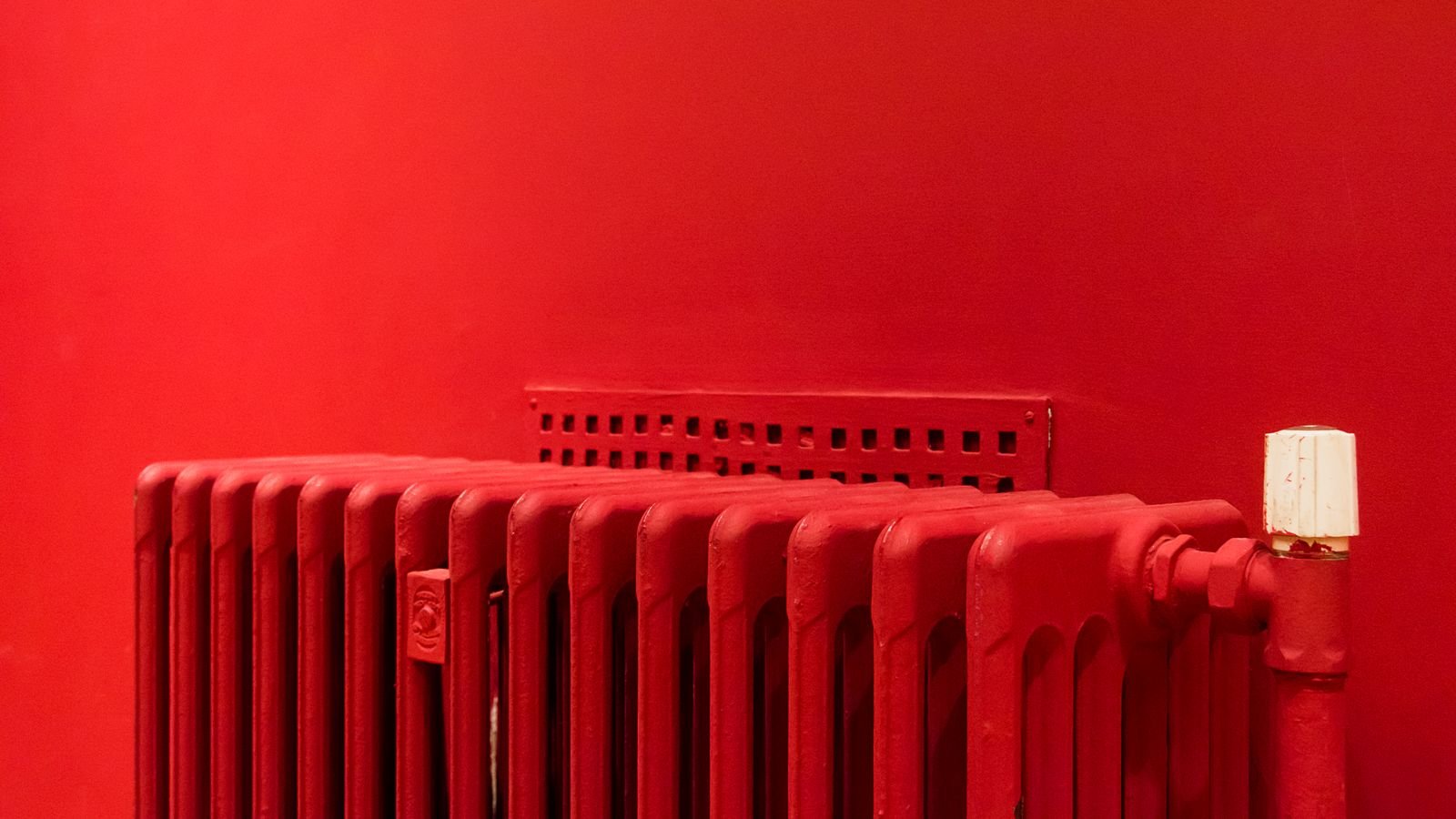
A 2,000-watt room heater uses 2 units of electricity every hour. Run it 4 hours a night and that’s 240 extra units a month, or roughly ₹1,400 to ₹2,400 depending on what your state charges per unit. The sticker price of the heater is the small part of what it costs you.
The bigger surprise is how those units get billed, and it’s why two families with the same heater pay different amounts. That’s in section 3.
⚡ Key takeaways
- Units per hour = watts ÷ 1,000. An 800W heater uses 0.8 units an hour; a 2,500W one uses 2.5.
- At 4 hours a day, a 2,000W heater adds about 240 units a month. At ₹8 a unit, that’s ₹1,920.
- A basic fan or quartz heater costs about ₹800 to ₹3,000; oil-filled ones run ₹6,000 to ₹12,000, per India TV’s price check.
- Every electric room heater sold in India must meet IS 302-2-30 and carry the ISI mark.
- Plug it into a 16-amp wall socket, keep it 3 feet from bedding and curtains, and don’t sleep with it on.
How to Work Out What Your Room Heater Costs
You only need one number from the heater’s box or rating sticker: the wattage.
Units used = (watts ÷ 1,000) × hours. One unit is one kilowatt-hour, the same “unit” your electricity bill counts.
So a 1,000W heater running for 1 hour uses 1 unit. A 2,000W heater uses 2. The small 800W quartz rod uses 0.8.
Unlike a fridge or an inverter AC, a simple heater has no clever trick to use less. Almost all the power it draws becomes heat, so more warmth always means more units.
Next, find your rate. Open your last electricity bill and look for the energy charge per unit in the slab you usually land in. For most homes it sits somewhere between ₹5 and ₹10. Multiply, and you have your answer.
Room Heater Bill Maths: 800W to 2,500W
Here’s the maths done for you, assuming 4 hours a day for 30 days with the heater running flat out. The rupee figures are simple multiplication, not a quote from any electricity board.
| Heater wattage | Units per hour | Units per month | At ₹6/unit | At ₹8/unit | At ₹10/unit |
|---|---|---|---|---|---|
| 800W | 0.8 | 96 | ₹576 | ₹768 | ₹960 |
| 1,000W | 1.0 | 120 | ₹720 | ₹960 | ₹1,200 |
| 1,500W | 1.5 | 180 | ₹1,080 | ₹1,440 | ₹1,800 |
| 2,000W | 2.0 | 240 | ₹1,440 | ₹1,920 | ₹2,400 |
| 2,500W | 2.5 | 300 | ₹1,800 | ₹2,400 | ₹3,000 |
Two things change your real number. Run it 8 hours and everything doubles. And heaters with a thermostat switch themselves off once the room is warm, so they don’t draw full power the whole time. Treat the table as the upper end.
Look at the 2,000W row again. A ₹1,500 fan heater can add more than its own price to your bill every single month. Over a three-month winter, the electricity costs several times what the heater did.
💡 Pro tip
Most heaters have two settings, often 1,000W and 2,000W. Warm the room on high for 15 to 20 minutes, then drop to low. You’ve just halved the units for the rest of the evening.
 Also readDhanteras Electronics Shopping: 7 Bill Checks Before You Pay
The Slab Effect: Why the Same Heater Costs Some Homes More
This is the surprise from the top. Most states don’t charge one flat rate. They bill in slabs, and the per-unit rate climbs as your monthly use goes up.
Say your home normally uses 180 units a month. Add 240 heater units and you’re at 420. Those extra units don’t get billed at your usual low rate. They land in the higher slabs, where each unit costs more.
Some states also give a subsidy or a lower rate only up to a certain monthly limit, and a heater can push you past it.
So the honest way to estimate is this:
- Check your bill for last winter, or your normal monthly units.
- Add the heater’s units from the table above.
- See which slab the new total falls in, and use that slab’s rate for the heater’s share.
I’m not printing a state-by-state tariff table here, because rates and surcharges change and the sources I found for this year disagreed with each other. Your own bill is the reliable source. The slab table is usually printed on the back or in your discom’s app.
Which Room Heater Type Costs Less to Run
Watt for watt, they all cost the same per hour. A 2,000W oil heater and a 2,000W fan heater both use 2 units when they’re on. The difference is in how they deliver the heat and how long they need to stay on.
| Type | How it heats | Typical buy price | Best for |
|---|---|---|---|
| Quartz / halogen rod | Radiant heat straight at you; silent | About ₹800–3,000 | One person at a desk or sofa |
| Fan (convector) heater | Blows air over a hot element; quick, some noise | About ₹800–3,000 | Warming a small room fast |
| Oil-filled radiator | Heats oil in fins; slow, even, near-silent | About ₹6,000–12,000 | Bedrooms, long hours, kids and elders |
The descriptions follow Vijay Sales’ buying guide from February 2026. Price bands are from India TV’s comparison, so check current prices before you buy.
Match the wattage to the room
Vijay Sales suggests 800 to 1,200W for rooms up to 100 sq ft, 1,200 to 2,000W for 100 to 150 sq ft, and 2,000 to 2,400W for 150 to 200 sq ft. Your typical 10×12 ft bedroom falls in the middle band.
My take
If only you need the warmth, at a study table or while watching TV, a small 800W radiant heater pointed at you is the cheapest to run. Don’t heat a whole room for one person.
For a bedroom used by children or grandparents for hours, I’d pay more for an oil-filled radiator with a thermostat. India TV notes it takes 10 to 15 minutes to warm up and has no exposed coil. The fan heater is the middle choice: cheap to buy, fast, and best in short bursts.

Seven Safety Rules Before You Switch It On
Every winter brings news of heater fires, and the pattern repeats. Consumer-affairs writer Pushpa Girimaji, in The Tribune, describes a Delhi fire that began where a heater had been left on, and a Rajasthan family whose quilt caught fire as they slept.
Her checklist is the best short one I’ve read:
- Buy only ISI-marked heaters. All electric room heaters must meet the safety standard IS 302-2-30 under a government quality control order. Uncertified ones are still sold, so look for the mark.
- Use a 16-amp wall socket. The plug should fit snugly. A loose plug overheats and sparks.
- Skip the extension board. If you can’t avoid one, it must be a 16-amp ISI-marked board with nothing else heavy on it.
- Keep 3 feet clear. That means bedding, curtains, sofas, clothes and walls. Place the heater on a flat floor, not on a stool, table or carpet.
- Never dry clothes on it or cover it.
- Switch it off when you leave the room or go to sleep.
- Keep it out of the bathroom and away from water.
Before the first use each winter, check the wire and plug for cracks or burn marks. If the cord needs replacing, the new one should also be 16-amp and ISI-marked. Our guide to checking a product on the BIS Care app shows how to verify a licence number in a minute.
⚠️ Watch out
An angithi, coal sigri or gas heater in a closed room is a different and more serious risk. The NHS warns that coal, wood and gas fires can produce carbon monoxide, which has no smell or colour. Never burn fuel indoors with the doors and windows shut.
 Also readWinter Dry Skin: The Hot-Water Bath Habit Making It Worse
Five Ways to Cut the Heater Bill
- Seal the room first. Shut the door, draw the curtains and block the gap under the door with an old towel. Heat you don’t lose is heat you don’t pay for.
- Use the thermostat and the low setting. Vijay Sales’ guide points to thermostats and multiple heat levels as the way to avoid running at full power all the time.
- Try the ceiling fan on its lowest speed. The same guide says it spreads the warm air, so you can run the heater lower.
- Heat the person when you can. A quilt, warm socks and a hot water bottle cost almost nothing to “run”.
- Set a phone timer. Twenty minutes before bed is usually enough to take the chill off, and it stops the heater running all night.
Heaters also dry out the air in the room, which your skin notices by January. Our winter dry skin routine covers the simple fixes.
✅ Our verdict
For one person, buy a small ISI-marked 800W to 1,000W heater and point it at yourself. For a family bedroom used for hours, an oil-filled radiator with a thermostat is worth the higher price. Whatever you choose, do the units maths with your own bill first, and switch it off before you sleep.
Frequently Asked Questions
How many units does a 2,000W room heater use in 1 hour?
Two units. Divide the wattage by 1,000 to get units per hour. At ₹8 a unit, that’s ₹16 an hour while it runs at full power.
Is an oil-filled heater cheaper to run than a fan heater?
Not per hour at the same wattage. An oil heater with a thermostat cycles off once the room is warm and stays warm for a while, which can help over long hours. For short bursts, a fan heater is fine.
Can I leave a room heater on all night?
It’s not advised. The Tribune’s safety checklist says never to run a heater while sleeping or leave it unattended. Warm the room before bed, then switch it off.
Which room heater is best for a small room?
For a room up to 100 sq ft, Vijay Sales suggests 800 to 1,200W. A quartz or small fan heater suits short use, and an oil-filled one suits long hours.
Does a room heater need a special socket?
Yes, use a 16-amp wall socket, the larger kind used for geysers and ACs. Avoid ordinary extension boards, which can overheat with a high-wattage heater.
The Bottom Line
A room heater is cheap to buy and costly to run, so do the two-minute maths before winter sets in. Find the wattage, multiply by your hours, and check which slab it pushes you into. Then give the plug and wire a quick look before the first cold night.
Keep reading
Read nextDhanteras Electronics Shopping: 7 Bill Checks Before You Pay
 Read nextAmazon vs Flipkart Return Policy: What You Can Still Send Back
Sources
- The Tribune (Pushpa Girimaji): room heaters must conform to IS 302-2-30; safety checklist
- Vijay Sales: room heater buying guide, types and wattage by room size (Feb 2026)
- India TV: oil heater vs normal room heater, price bands
- NHS: carbon monoxide poisoning, causes and prevention