
You’ve probably seen the tech neck graphic: bend your head to look at your phone and your neck carries 27 kg. The number is real in the sense that it comes from a published model. What it doesn’t tell you is whether looking down at a phone leads to neck pain, and the best study so far says it didn’t.
That doesn’t mean posture habits are pointless. It means the useful ones are different from what the scary posts suggest, and one of them has nothing to do with your neck. It’s in section 4.
⚡ Key takeaways
- Cleveland Clinic says a phone held near the lap can load the neck like a 60-pound weight, which is about 27 kg.
- A 12-month study of 457 adults found that neck-bending angle during phone use did not raise the chance of neck pain.
- In that study, poor sleep quality and too little physical activity did raise it.
- The habits that make sense: change position every 20 minutes, lift the phone, set screens at eye level, and don’t sit for more than an hour at a stretch.
- This is everyday wellness advice. Ongoing pain needs a doctor, not a blog post.
What Tech Neck Means
Tech neck, also called text neck, is the name given to the head-down, shoulders-forward position most of us slip into with a phone. Cleveland Clinic describes it as a repetitive-use problem from tilting the head forward to look at a handheld device.
Researchers don’t fully agree on what the term covers. A 2023 scoping review in the European Spine Journal went through 41 papers that used “text neck” or “tech neck” and found the definitions varied. Posture was the common thread, appearing in about 93% of them. Only about a third mentioned symptoms at all.
So when someone says “you have tech neck”, they may mean a posture, an ache, or both. Keep that in mind for the next two sections.

Where the 27 kg Number Comes From
Your head weighs roughly as much as a bowling ball. Cleveland Clinic’s chiropractor Andrew Bang puts it at 10 to 12 pounds, or about 4.5 to 5.5 kg. Balanced upright, your neck handles that easily.
Tilt it forward and the effective load goes up, because the weight is now hanging in front of the spine. These are the figures Cleveland Clinic lists:
| Head position | Load on the neck (lb) | About (kg) |
|---|---|---|
| Upright | 10–12 | 4.5–5.5 |
| Slight glance down | 27 | 12 |
| 30-degree tilt | 40 | 18 |
| Phone near the lap | Up to 60 | 27 |
The kg column is my conversion. Numbers like these trace back to a 2014 computer-model paper by a US spine surgeon, listed on PubMed. A model estimates force. It doesn’t follow real people for years to see who ends up with pain.
That’s the gap. A big number on an infographic feels like proof. It’s actually a starting question.
💡 Pro tip
Try this once: hold your phone in your lap for five minutes, then at chest height for five. Most people feel the difference at the back of the neck. That feeling of effort is real, even if long-term harm isn’t proven.
 Also readSitting All Day? Why 1 Hour at the Gym Doesn’t Fully Cancel It
What Studies of Real People Found About Tech Neck
Here the story changes.
The 150-student study
In 2018, Brazilian researchers looked at 150 young adults aged 18 to 21. Physiotherapists rated each person’s neck posture while texting. According to PainScience’s summary of the European Spine Journal paper, posture showed no association with neck pain or with how often pain occurred.
It was a small, one-time snapshot, and PainScience flags that it may have been too small to catch a modest effect.
The 12-month study
The stronger evidence came in 2025. The same research group followed 457 adults aged 18 to 65, none of whom had neck pain at the start. They measured each person’s neck-bending angle with an instrument while the person texted, standing and sitting.
A year later, 396 people completed the follow-up and 40 of them, about 10%, reported neck pain. The angle of the neck during phone use made no difference to who got it. The odds ratio was 1.0 standing and 1.01 sitting, which is as close to “no effect” as these numbers get.
What the reviewers concluded
The 2023 scoping review put it bluntly: there is “no scientific evidence linking text neck with neck pain regardless of the definition used”. The authors even suggest dropping words like “incorrect” for phone posture.
A fair caveat from me: these are studies of adults over one year, mostly from one country. Nobody has tracked a generation of teenagers for 20 years. “Not proven harmful” isn’t the same as “proven harmless”.
The Two Things That Did Predict Neck Pain
Now the part I promised. In the 12-month study, two everyday factors did raise the chance of neck pain a year later:
- Low sleep quality: about 1.8 times the odds.
- Too little physical activity: about 2.4 times the odds.
Think about what that means for a typical evening. Two hours of reels in bed is less a posture problem than a sleep and movement problem. The phone keeps you still, and it keeps you up.
It fits what we found when writing about sitting all day. Long, unbroken stillness is the common thread, whatever position you’re in. A “perfect” posture held for three hours isn’t a win.
So I’d spend less energy policing your neck angle and more on two boring basics: moving more in the day and protecting your sleep. If late-night scrolling has wrecked your bedtime, our sleep schedule reset is a good place to start.
Six Posture Habits That Make Sense
None of these need equipment worth more than a few hundred rupees. They’re about comfort and variety, which is where the evidence points.
- Change position every 20 minutes. Cleveland Clinic’s Dr Bang says staying in one pose for over 20 minutes can cause aches. Shift, stand, lean back, switch hands.
- Keep handheld sessions short. The same article suggests about 15 to 30 minutes at a time before a break.
- Lift the phone. Bring it towards eye level instead of dropping your chin. Resting your elbows on a table or on your ribs makes this easy to hold.
- Prop it up for long videos. A ₹150 phone stand, or a stack of books, puts a web series at eye level. For long calls, use earphones or the speaker so your neck isn’t clamping the phone.
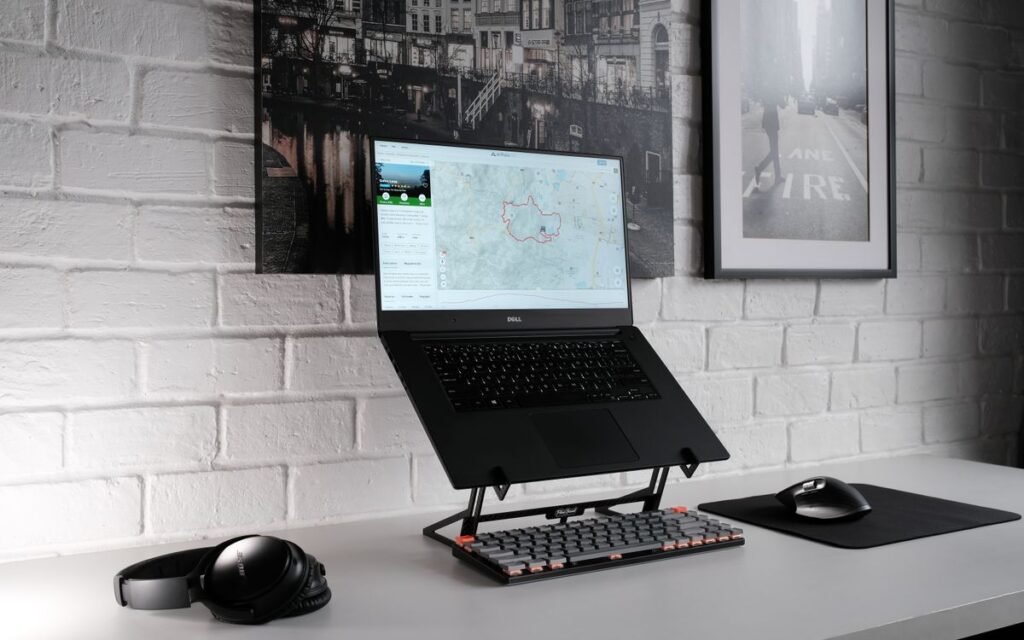
- Fix the laptop height. A Cambridge University Hospitals NHS leaflet says the screen should be at arm’s length and at eye level. For a laptop, that means raising it on a stand or books and adding a separate keyboard if you work on it all day.
- Don’t sit for more than an hour. The same NHS leaflet is firm: “No one should sit for more than one hour.” Refill your water bottle, take the call standing, walk to a colleague’s desk.
A quick chair check
The NHS leaflet also suggests sitting back so the chair supports you, feet flat on the floor, with a small rolled towel at the base of your back. It takes a minute to set up at a home desk or dining table.

Kids, Teens and Long Commutes
Children and teenagers
The studies above are on adults, so I won’t pretend they settle things for kids. The practical approach is the same, though. Break up long stretches, get them moving, and keep screens out of the last hour before bed.
For online classes or homework, put the tablet on a stand at eye level on a table. A child curled on the bed with a tablet for two hours is missing both movement and sleep-friendly habits.
Metro and bus commutes
A 45-minute metro ride with your chin on your chest, twice a day, adds up. You can’t prop a phone on a stand in a crowded coach, but you can:
- Hold the phone higher, with your elbow tucked against your side.
- Switch to a podcast or music for half the ride and look up.
- Stand when you can; you’ll shift your weight without thinking about it.
⚠️ Watch out
Posture gadgets, braces and “neck hump” correctors are heavily advertised online. Given that research hasn’t linked phone posture to neck pain, I’d skip them unless a doctor or physiotherapist has recommended one for you.
✅ Our verdict
Don’t panic about the 27 kg graphic. It comes from a model, and a year-long study of real adults found phone posture didn’t predict neck pain. Build variety instead: move every 20 minutes, lift your screens, sleep well and stay active. Those habits help whether or not tech neck turns out to be a real threat.
This article is for information only and isn’t medical advice. If you have neck pain that persists, or any symptom that worries you, consult a doctor.
Frequently Asked Questions
What is tech neck?
It’s a common name for the head-forward posture people adopt while using phones and tablets, and for the neck and shoulder discomfort some link to it. A 2023 review of 41 papers found researchers define it in different ways.
Is it true that looking at a phone puts 27 kg on your neck?
That figure, 60 pounds, is an estimate of load when the phone is held near the lap, quoted by Cleveland Clinic. It comes from modelling. It measures force, not whether people develop pain.
Does tech neck cause neck pain?
The best current evidence says phone posture alone doesn’t predict it. A 12-month study of 457 adults found neck-bending angle didn’t raise the odds of neck pain, while poor sleep and low physical activity did.
How should I hold my phone?
Closer to eye level, with your elbows supported, and not for too long in one go. Cleveland Clinic suggests keeping handheld sessions to about 15 to 30 minutes and changing position every 20 minutes.
How often should I take a break from sitting?
An NHS hospital leaflet says nobody should sit for more than one hour without getting up. Shorter, more frequent breaks are easier on the body.
The Bottom Line
Tech neck makes a dramatic infographic, but the research on real people is calmer than the posts. Lift your phone, change position often, and put more effort into sleep and daily movement. Start with one thing today: prop your phone up for the next long video.
Keep reading
Read nextSitting All Day? Why 1 Hour at the Gym Doesn’t Fully Cancel ItRead nextSteps Per Day: Do You Really Need 10,000? What Studies Say Read nextDopamine Detox: What Science Says, and a Version That Works
Sources
- Cleveland Clinic: Tech Neck, load figures and posture tips (Nov 2025)
- Correia et al., Brazilian Journal of Physical Therapy (2025): 12-month study of 457 adults
- Grasser et al., European Spine Journal (2023): Defining text neck, a scoping review
- PainScience summary of Damasceno et al., European Spine Journal (2018)
- Hansraj, Surgical Technology International (2014): PubMed record
- Cambridge University Hospitals NHS: seating and ergonomics leaflet