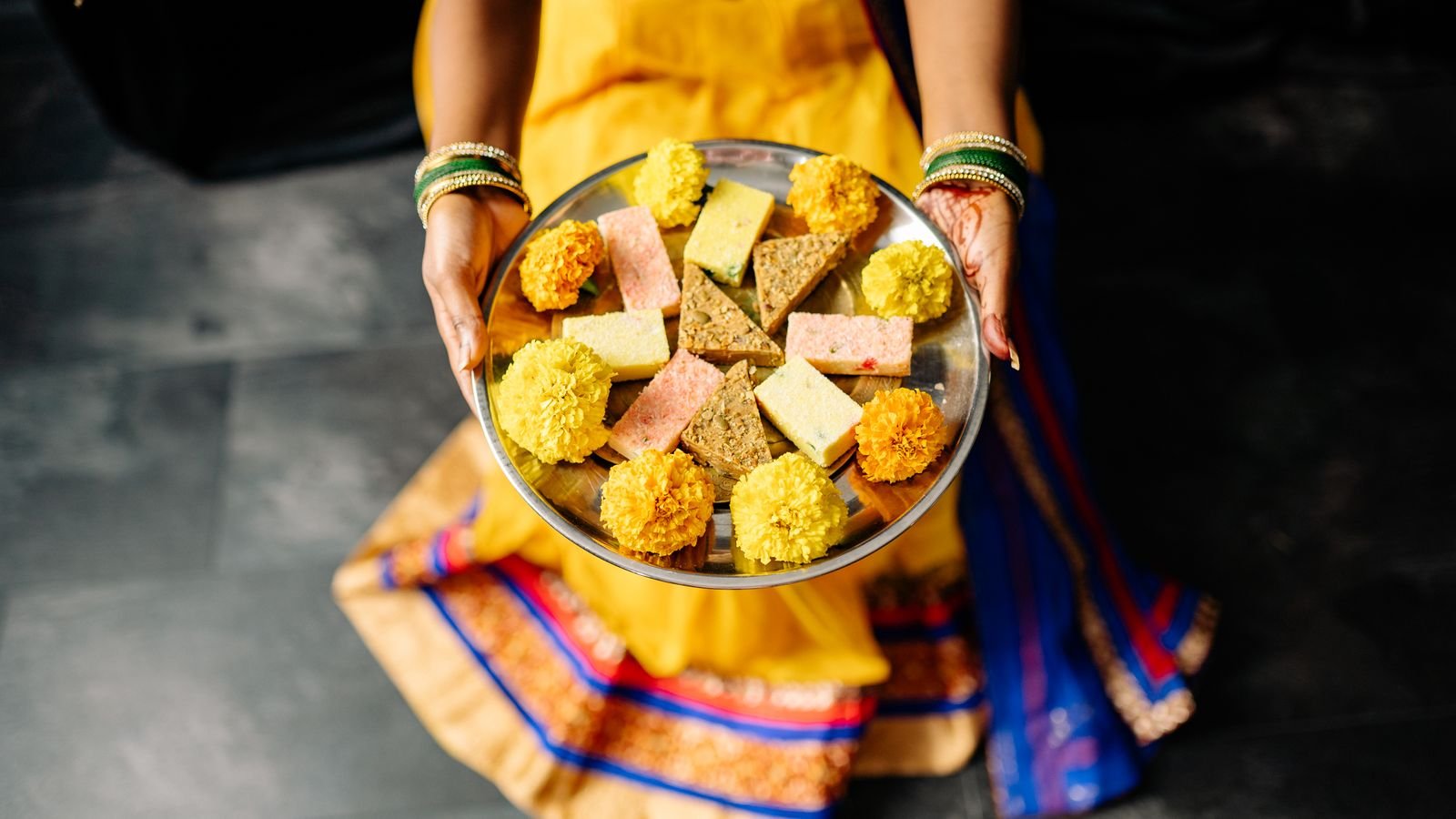
Festive eating makes you sleepy mostly because of how much you eat in one sitting, and when, more than any single sweet. Keep portions a little smaller, walk for a few minutes after the meal, and you can still have your kaju katli without losing the afternoon.
You don’t need a detox, and I wouldn’t try one. But one sum about gulab jamun may change how you fill your plate, and it’s in section 3.
⚡ Key takeaways
- Large meals and high-fat or high-carb food make post-meal sleepiness more likely, per the Sleep Foundation.
- A medium gulab jamun has about 18 to 22 g of sugar. On a 2,000-calorie day, WHO’s 10% limit is about 50 g, so three can take you past it.
- A 2 to 5 minute walk after eating helps blood sugar rise and fall more gently, according to a 2022 review.
- Delhi’s AQI is near severe this weekend, so take that walk indoors if you’re in the NCR.
- Keep your regular meals. Skipping them to “save up” for the party is what backfires.
Why Festive Eating Makes You Sleepy
If you’ve ever needed a nap after a Diwali lunch, you’re not unusual. The Sleep Foundation explains that large meals, high-fat and high-carb food, and quick blood sugar swings can all add to the feeling. It also notes that no one food is to blame.
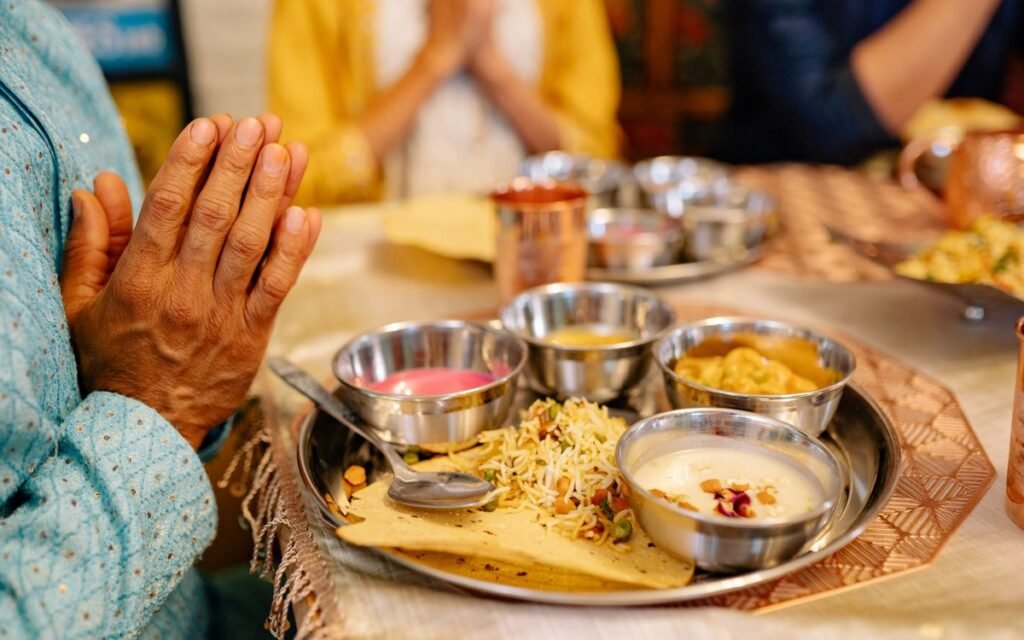
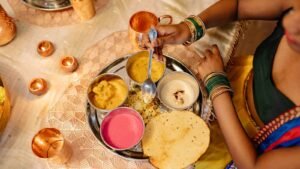
Look at a typical festive plate: puri, sabzi cooked in plenty of oil, pulao, then mithai. That’s most of those triggers in one sitting, often eaten at an odd hour after a morning of cleaning and rangoli.
And the afternoon doesn’t help, since the body’s wakefulness signals dip around then anyway. Add a poor night’s sleep, which the Sleep Foundation also lists, and you’ve got a slump that no extra chai will fully fix.
7 Festive Eating Habits That Actually Help
None of these ask you to refuse food at your aunt’s house. Pick three and see which ones stick.
- Eat a normal breakfast. The NHS’s healthy eating tips say not to skip it. I’d add that arriving starving is how a second puri happens.
- Start with the sabzi, dal or salad. Fibre helps you feel full for longer, per the NHS, so the fried food has less room.
- Take a smaller first helping. You can always go back. People rarely take less after they’ve served themselves.
- Choose one sweet you love. A small piece of your favourite beats three pieces of whatever’s on the tray.
- Drink water through the day. The NHS suggests 6 to 8 glasses of fluid. Tea and coffee count, though watch the sugar in them.
- Walk after your meal. Even a few minutes helps. There’s more on this in section 4.
- Don’t “make up for it” the next day. Go back to your normal meals. A fast after a feast can set up the next overeat.
💡 Pro tip
Carrying a box of mithai to someone’s home? Pack fruit or roasted makhana alongside. You’ll give the family something lighter to reach for, and nobody thinks of it as “diet food”.
 Also readHow Many Almonds a Day? The Handful Rule for Diwali Dry Fruits
The Sweets Sum: How Fast Sugar Adds Up
The WHO advises keeping free sugars under 10% of your daily energy, and ideally under 5%, which is about 25 g or 6 teaspoons. On a 2,000-calorie day, 10% works out to about 50 g. In India, NIN’s director has suggested trying to stay around 30 g a day.
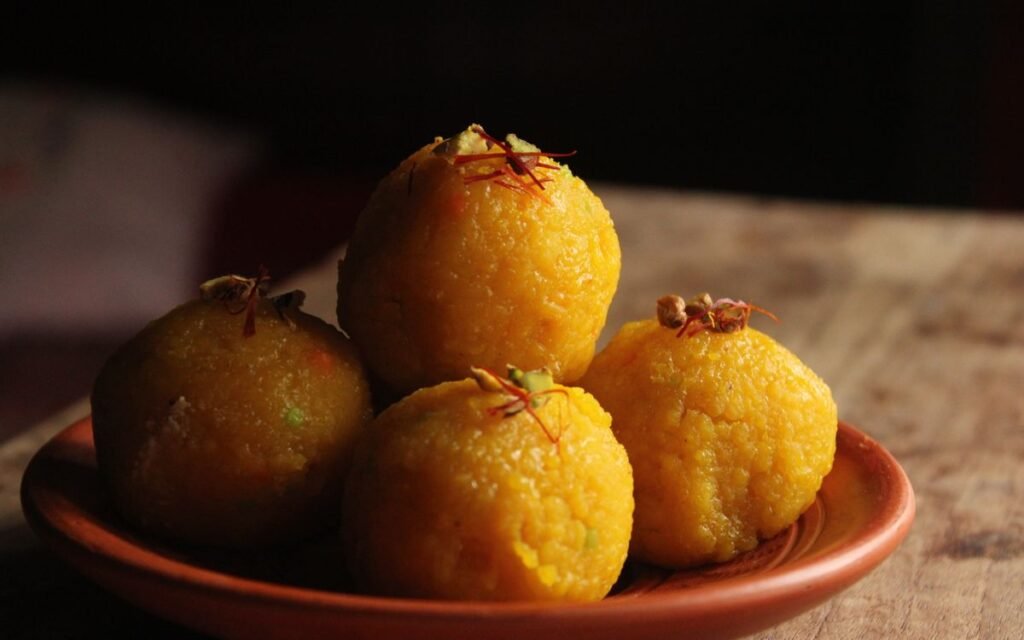
Here’s how that plays out. Tap Health estimates a medium gulab jamun at about 18 to 22 g of sugar, and syrup can add more. These are rough figures, since homemade and shop sizes differ a lot.
| What you eat in a day | Sugar (my estimate) | Against the 50 g mark |
|---|---|---|
| 1 medium gulab jamun | About 18 to 22 g | Under half |
| 2 medium gulab jamuns | About 36 to 44 g | Close |
| 3 medium gulab jamuns | About 54 to 66 g | Over |
| 2 gulab jamuns plus sweet chai | Depends on your spoon | Likely over |
I’m not saying you shouldn’t eat them. One festive day won’t undo a sensible year. The problem is that Diwali week runs from Dhanteras to Bhai Dooj, so “one day” easily becomes six.
Worth knowing too: sweet chai quietly adds up. Our chai guide has the sugar maths for your usual cups.
The Two-Minute Walk That’s Worth the Effort
This is my favourite tip because it costs nothing. A 2022 review in Sports Medicine looked at seven studies comparing sitting, standing and light walking. As reported, people who took short light walks through the day had about 17% lower glucose than those who sat for long stretches.
The walks were short, about 2 to 5 minutes, repeated through the day. Blood sugar tends to peak about 60 to 90 minutes after eating, so moving soon after a meal looks like the useful window.
To be fair about limits: most people in these studies didn’t have diabetes, and the review doesn’t prove this cures a slump. But a few minutes on your feet instead of the sofa is hardly a risky experiment.
⚠️ Watch out
Delhi’s AQI hit 391 on 6 November, and The Week reports the forecast is “severe” through Diwali. If your city’s air is bad, walk inside: laps of the house, stairs, or helping clear the table. Our AQI guide has more on smog days.
Festive Eating Myths to Skip
These do the rounds every year on family WhatsApp groups. I’d ignore all of them.
- “Detox water fixes it.” Water is fine, and that’s all it is. Your liver and kidneys handle the rest.
- “Fasting tomorrow cancels today.” It doesn’t work like a bank account, and you’re likely to feel worse.
- “Jaggery sweets are sugar-free.” They still count as added sugar, as our jaggery vs sugar check explains.
- “Sugar-free mithai means eat as much as you like.” It often still has plenty of fat and calories. Check the label.
- “Ghee in sweets is health food.” Ghee is fine in reasonable amounts, but read how much ghee a day before you pour.
 Also readHow Much Ghee a Day Is OK? The Spoon Maths for Winter Meals
A Simple Plan for Diwali Day
Here’s how I’d lay out a normal festive day. Adjust it for your own family’s timings.
| Time | What to do |
|---|---|
| Morning | Regular breakfast, plus water before the chai |
| Lunch | Sabzi and dal first, one puri less than usual, one sweet you actually want |
| After lunch | 5 minutes on your feet, and a short nap if you can |
| Evening | A small snack before the puja, so dinner isn’t a rush |
| Dinner | A smaller plate, finish a couple of hours before bed if you can |
| Next day | Normal meals, more vegetables, no punishment |
If you’re buying mithai from outside, it’s also worth doing the checks for adulterated sweets we covered earlier this season.
Who Should Take This More Seriously
✅ Our verdict
Most healthy adults don’t need rules this week, only smaller first helpings and a short walk after meals. Enjoy the food. If you have diabetes or another condition, or you’ve been told to watch your diet, your doctor’s advice comes first, and our Diwali sweets guide for diabetics is a better place to start.
And if sleepiness after meals keeps disrupting your day even with these changes, the Sleep Foundation says that’s worth raising with a doctor.
This article is for information only and isn’t medical advice. Consult a doctor if you have a health condition or concerns about your diet.
Frequently Asked Questions
Why do I feel so sleepy after a Diwali lunch?
Big meals, high-fat and high-carb food, and the body’s natural afternoon dip can all play a part, according to the Sleep Foundation. A late night the day before makes it more noticeable.
How many Indian sweets can I eat in a day?
There’s no official number for mithai. WHO’s 10% free-sugar limit works out to about 50 g on a 2,000-calorie day, and a medium gulab jamun can use 18 to 22 g of that. One or two small pieces is a sensible aim.
Does walking after a meal really help?
A 2022 review found short, light walks during the day lowered glucose compared with long sitting. The walks lasted only 2 to 5 minutes, so it’s an easy thing to try after meals.
Should I skip meals before a big festive dinner?
I wouldn’t. Arriving very hungry makes it harder to stop at a normal portion. Keep breakfast and a light lunch, and have a small snack if dinner will be late.
Do I need a detox after Diwali?
No. Go back to normal meals, vegetables, water and your usual activity. There’s no need for special drinks or fasting.
The Bottom Line
Festive eating doesn’t have to end in a slump. Serve yourself a smaller first helping, pick the sweet you love, and spend a few minutes on your feet after eating. Try the walk after tomorrow’s lunch, and you’ll know by evening if it helps.
Keep reading
 Read nextDiwali Sweets for Diabetics: Enjoy Mithai Without the SpikeRead nextHow Much Ghee a Day Is OK? The Spoon Maths for Winter Meals
 Read nextSitting All Day? Why 1 Hour at the Gym Doesn’t Fully Cancel It
Sources
- Sleep Foundation: Why do I get sleepy after eating?
- NHS: 8 tips for healthy eating
- WHO: Guideline on sugars intake for adults and children
- Down To Earth: NIN director on sugar limits and the 2024 Dietary Guidelines for India
- Tap Health: Calories and sugar in one gulab jamun
- Buffey et al., Sports Medicine (2022)
- KSL/CNN: Reporting on the walking review
- The Week: Delhi AQI forecast (6 November 2026)