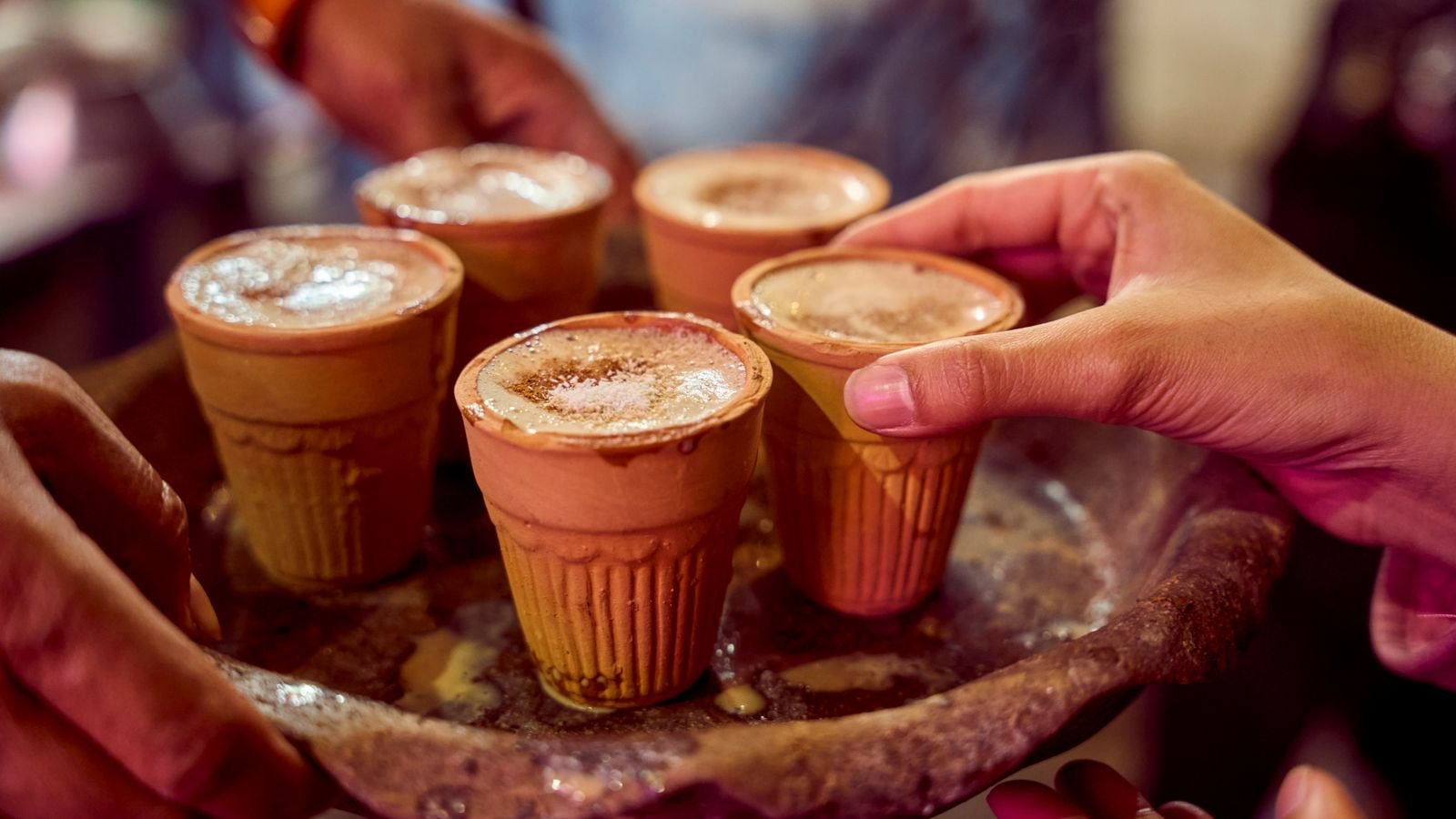
For most healthy adults, 3 to 4 cups of chai a day stays within ICMR’s 300 mg caffeine limit, as long as coffee isn’t adding to it. The usual cutting chai at the office isn’t what you need to fix first.
Two other numbers matter more than the cup count, and most chai drinkers have never thought about them. The sugar sum is in section 3, and it’s the one people rarely count.
⚡ Key takeaways
- ICMR’s tolerable caffeine limit is 300 mg a day, and it lists 30 to 65 mg for a serving of tea.
- That works out to about 4 strong cups, or more if your chai is weak. Coffee counts too.
- Leave an hour between chai and meals. ICMR’s reason is tannins, which can block iron absorption.
- Two teaspoons of sugar in 4 cups is about 33 g, roughly two-thirds of WHO’s upper limit for free sugars.
- Pregnant? The NHS says no more than 200 mg of caffeine a day, and counts a mug of tea as about 75 mg.
What ICMR Actually Says About Tea and Coffee
ICMR’s Dietary Guidelines for Indians came out in 2024, and the tea and coffee section got a lot of angry headlines. The actual advice is milder. Outlook India’s summary says the guidelines ask for moderation and don’t call for cutting chai out.
Three points are worth remembering:
- Limit: caffeine should stay within the tolerable limit of 300 mg a day.
- Timing: avoid tea and coffee at least one hour before and one hour after a meal.
- Why: caffeine stimulates the nervous system and can build dependence, and tannins can bind iron in your gut.
The guidelines also suggest tea without milk may have some benefits, including better circulation. That line is about plain tea. I wouldn’t give up milky chai because of it.

The Caffeine Sum: How Many Cups of Chai Is That?
The Free Press Journal’s report on the guidelines gives these caffeine figures. Our own maths is in the last column.
| Drink | Caffeine per serving | Servings to reach 300 mg |
|---|---|---|
| Tea, stronger end | 65 mg | About 4.6 |
| Tea, weaker end | 30 mg | 10 |
| Instant coffee | 50–60 mg | 5–6 |
| Brewed coffee (150 ml) | 80–120 mg | 2.5–3.75 |
So the safest way to read it is the strong end: about 4 cups of chai. The NHS estimates a mug of tea at about 75 mg, and four of those also gets you to 300 mg.
Remember that your chai may not match these figures. Chai that’s boiled long with extra patti could be stronger than a light cup, and a small cutting glass holds less. We didn’t find a measured figure for Indian boiled milk chai, so treat this as a working range.
Mix drinks and you’ll hit the limit faster
Most of us don’t drink only chai. Here’s a typical office day, using the top of each range:
- Morning chai: 65 mg
- Filter coffee at 11: 120 mg
- Afternoon chai: 65 mg
- Evening chai with a snack: 65 mg
That’s 315 mg, slightly over the limit, and you’d never think of it as a heavy day. If you also drink cola or energy drinks, count those too.
💡 Pro tip
Swap one cup rather than quitting. Replacing your 4 pm chai with plain water takes you down a whole cup without a fight with yourself.
 Also readIron Absorption: The Chai Timing Mistake Most Vegetarians Make
The Sugar Sum Most Chai Drinkers Skip
Caffeine gets the headlines, but the spoon may matter more. The WHO advises keeping free sugars below 10% of daily energy, which is about 50 g or 12 level teaspoons on a 2,000-calorie diet. Going down to 5% may bring extra benefits.
Using WHO’s own conversion of about 4 g a teaspoon, here’s our calculation:
| Cups a day | Sugar per cup | Sugar a day | Share of WHO’s 50 g |
|---|---|---|---|
| 2 | 1 tsp | About 8 g | 16% |
| 4 | 1 tsp | About 17 g | 33% |
| 4 | 2 tsp | About 33 g | 67% |
| 6 | 2 tsp | About 50 g | 100% |
That’s before a single Diwali sweet. Four sweet cups use up two-thirds of your upper limit for the day, and at this time of year, mithai and namkeen are sitting on every table.
And switching to gur doesn’t solve this. As we explained in jaggery vs sugar, your body doesn’t get a free pass from jaggery.

💡 Pro tip
Reduce by half a teaspoon every couple of weeks. It’s a much easier change than going cold turkey, and elaichi or adrak gives flavour without adding any sugar.
When to Drink Your Chai: Meals and Bedtime
The cup count matters less if the timing is wrong. There are two times to think about.
Around meals
ICMR’s one-hour gap exists because tannins can bind iron and make it harder to absorb, which matters a lot if you’re vegetarian. Chai right after a dal-roti lunch is the classic Indian habit to change. Our iron and chai timing guide goes into this.
Before bed
A 2013 study in the Journal of Clinical Sleep Medicine gave 12 healthy sleepers 400 mg of caffeine at 0, 3 or 6 hours before bedtime. Even at six hours, it cut measured sleep by over an hour, and people often didn’t notice.
That’s a small study and a big dose, far more than one chai. But the authors’ suggestion to generally avoid caffeine after 5 pm is an easy rule. If you sleep badly and drink chai at 9 pm, test a week without it before blaming anything else.
Here’s a practical day that fits all of it:
| Time | What to do |
|---|---|
| After waking | First chai, an hour before breakfast if you can manage |
| Around 11 am | Second cup, well clear of meals |
| Around 4 pm | Third cup, your last for the day if sleep is a problem |
| After 5 pm | Plain water, or a caffeine-free drink |
 Also readJaggery vs Sugar: Is Gur Really Healthier? What NIN Says
Who Should Cut Back on Chai
The 300 mg figure is a general limit. Some people need a lower number, or a chat with their doctor.
- Pregnant women: the NHS says no more than 200 mg of caffeine a day. At about 75 mg a mug, that’s fewer than three mugs, and coffee and cola count too.
- People with low iron or anaemia: keep the one-hour gap, and ask your doctor about your diet.
- Anyone with high blood pressure or heart rhythm problems: ICMR notes high caffeine intake can raise blood pressure and cause abnormal heartbeat, so ask what’s right for you.
- People with sleep problems: move your last cup earlier before cutting the total.
⚠️ Watch out
This article is for information only. Please consult a doctor for personal advice, especially during pregnancy or if you have a heart, blood pressure or iron-related condition.
Our Verdict: Cup Count Is the Wrong First Fix
✅ Our verdict
Keep your chai. Three to four small cups a day is reasonable for most healthy adults, so count coffee too, cut the sugar first, keep chai an hour away from meals, and stop by evening. If you only change one thing, make it the spoon.
Honestly, the person drinking 3 sweet cups after every meal has more to fix than the person drinking 5 weak, unsweetened cups through the day. That’s why I’d rank the changes this way:
- Reduce sugar by half a spoon.
- Move chai away from meals.
- Make your last cup earlier.
- Only then, think about total cups.
Frequently Asked Questions
Is 5 cups of chai a day too much?
It could be if your chai is strong, since the upper figure of 65 mg a serving reaches 325 mg at five cups. If it’s weak and you’re not drinking coffee, you may stay under 300 mg, but sugar can still add up.
Is it bad to drink chai on an empty stomach?
We didn’t find a clear ICMR rule on this. Its timing advice is about leaving a gap around meals. If chai first thing bothers your stomach, have it after a light snack, and ask your doctor if it continues.
Does milk reduce caffeine in chai?
We didn’t find a good measurement for Indian milk chai. A cup that’s half milk naturally has less brewed tea in it, but how long you boil it and how much patti you use also matter.
Does ICMR say to stop drinking milk tea?
No. Reports say ICMR asks for moderation and notes that tea without milk may have benefits. It doesn’t call for cutting tea out altogether.
What’s the best time to have the last chai?
The authors of the 2013 sleep study suggested generally avoiding caffeine after 5 pm. Move it earlier if you still sleep badly.
The Bottom Line
The answer to how many cups of chai is about 3 to 4 for most healthy adults, counting coffee in that total. Sugar and timing will likely do more for you than obsessing over the count. Tomorrow, take half a spoon less, and have your next cup an hour after lunch.
Keep reading
Read nextIron Absorption: The Chai Timing Mistake Most Vegetarians MakeRead nextJaggery vs Sugar: Is Gur Really Healthier? What NIN Says Read nextHow Much Ghee a Day Is OK? The Spoon Maths for Winter Meals
Sources
- Outlook India: ICMR guidelines on tea and coffee (14 May 2024)
- Free Press Journal: ICMR caffeine figures per serving (15 May 2024)
- WHO: healthy diet fact sheet, free sugars
- NHS: caffeine limit in pregnancy and caffeine per drink
- American Academy of Sleep Medicine: Drake et al. 2013, caffeine 0, 3 or 6 hours before bed