In the jaggery vs sugar debate, the honest answer is that gur is only slightly better. It keeps small amounts of minerals like iron and potassium that white sugar loses in refining, but your body still treats it as sugar. Nutrition scientists at India’s National Institute of Nutrition (NIN) put jaggery and honey in the same bucket as sugar: added sugar.
So switching your chai from sugar to gur won’t make it a health drink. The “gur is full of iron” claim falls apart once you do the maths per teaspoon, which section 3 does.
⚡ Key takeaways
- Jaggery is still mostly sugar. A NIN scientist who helped draft India’s 2024 dietary guidelines called jaggery, honey and sugar “nothing but added sugars”.
- Gur does keep some minerals. The best palm jaggery has up to about 11 mg of iron per 100 g, but a 5 g teaspoon gives at most around half a milligram.
- WHO says to keep free sugars under 10% of daily energy, and ideally under 5%, about 25 g or 6 teaspoons a day. Jaggery counts.
- If you like the taste of gur, use it. Just use less of it, the same as sugar.
- This is about everyday eating; it isn’t medical advice. People with diabetes should follow their doctor’s advice on sugar.
Why Jaggery vs Sugar Is a Winter Question in India
Winter is gur season. Fresh jaggery arrives in markets, and it goes into til-gur laddoos, gajak, chikki, gur ki chai and gur rotis. Many families also believe gur keeps the body warm and helps digestion, and it’s often recommended as the “healthy sugar”.
Packaged food has noticed. You’ll see biscuits, cookies and breakfast cereals labelled “made with jaggery” or “no refined sugar”. That label suggests the product is healthy. It doesn’t tell you how much sugar is inside.
So it’s worth asking plainly: does swapping sugar for gur make a real difference to your health?
How Jaggery and Sugar Are Made
Both start from the same plant in most of India. A 2026 review in the Journal of Food Science and Technology by researchers at NIFTEM-Thanjavur notes that over 90% of jaggery made in India comes from sugarcane. The rest comes from palm sap: coconut, palmyra and date palm.
Jaggery (gur)
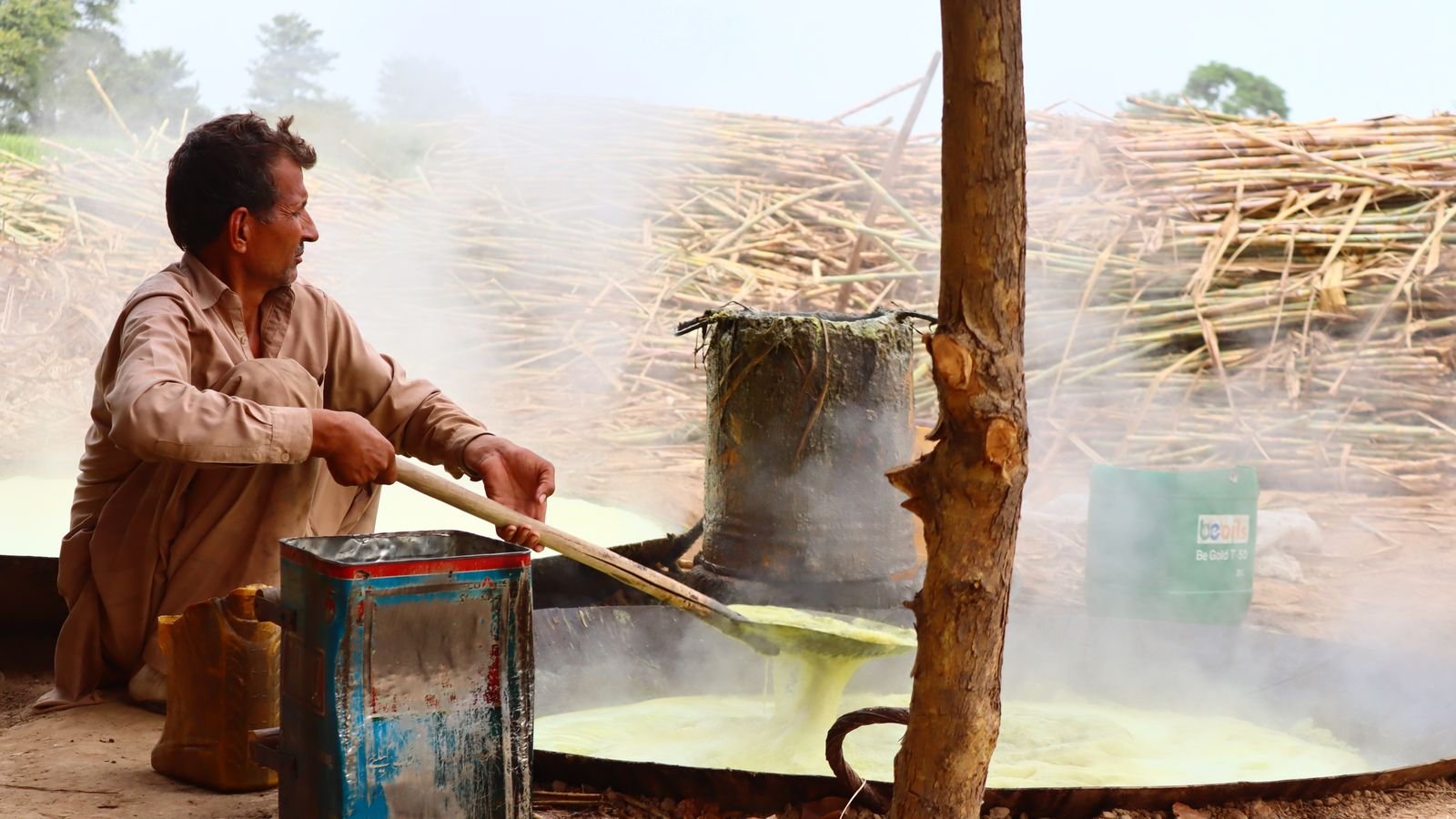
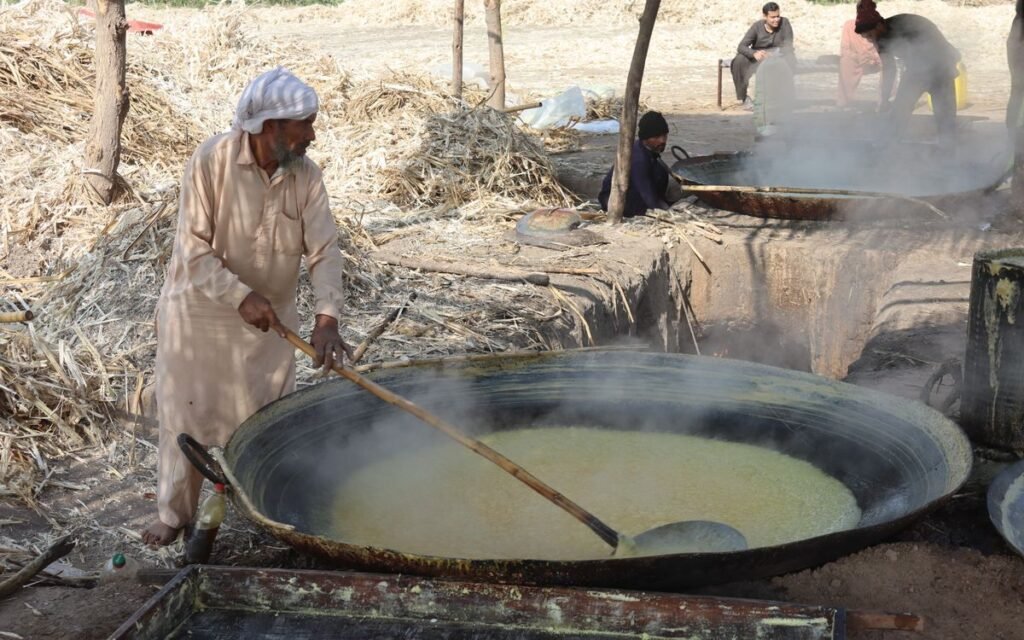
Cane juice is boiled in large open pans until it thickens, then poured into moulds and set. Nothing is spun off, so jaggery keeps some of the cane’s minerals along with its sugars.
White sugar (chini)
Cane juice is boiled and refined, and the sugar crystals are separated from the molasses. What’s left is almost pure sucrose with no meaningful minerals.
A 2025 study by CSIR-CFTRI in Mysuru, published in Food Research International, profiled the sugars in honey, jaggery, date syrup and coconut sugar. All of them are made mostly of sucrose, glucose and fructose. Those are the same sugars found in the white stuff.
💡 Pro tip
On a packet that says “made with jaggery”, check the nutrition label for “Total sugars” or “Added sugars” per 100 g. That number matters more than which sweetener was used.
 Also readDiwali Sweets for Diabetics: Enjoy Mithai Without the Spike
The Iron Claim: Real Numbers
Jaggery’s biggest selling point is iron. The NIFTEM review says palm jaggery can contain up to about 11.4 mg of iron, 2.5 mg of zinc and 1,050 mg of potassium per 100 g. Sugarcane jaggery is often lower, and the amount varies with how it’s made.
Now look at what you actually eat.
| Amount of jaggery | Iron (at the best-case 11.4 mg/100 g) | Sugar load |
|---|---|---|
| 1 teaspoon (about 5 g) | Up to about 0.6 mg | About the same as a teaspoon of sugar |
| 2 teaspoons in chai | Up to about 1.1 mg | Two teaspoons of added sugar |
| 25 g of gur | Up to about 2.9 mg | Your whole WHO “ideal” daily limit |
| 100 g (a large block) | Up to about 11.4 mg | Four times WHO’s ideal daily limit |
To get a meaningful amount of iron from gur, you’d have to eat far more sugar than is good for you. Better iron sources are dals, green leafy vegetables, and for non-vegetarians, meat and eggs.
What India’s Nutrition Experts Say
When ICMR-NIN released the Dietary Guidelines for Indians in May 2024, the institute’s scientists were clear about gur. The Federal reported that Dr Subba Rao, a NIN scientist involved in drafting them, rejected the idea that jaggery and honey are better than sugar. “They are all nothing but added sugars.”
NIN’s director at the time, Dr R Hemalatha, was quoted by Down to Earth saying that if you consume sugar, at least try to keep it to around 30 grams a day.
The World Health Organization uses the term “free sugars”. It covers sugars added to food and drink, plus the sugars in honey, syrups and fruit juices. WHO strongly recommends keeping them under 10% of daily energy, and suggests under 5%, about 25 g or 6 teaspoons a day, for extra benefit. Jaggery added to your food falls inside that limit.
⚠️ Watch out
The catch: “healthy” labels make people eat more. A gur laddoo feels virtuous, so it’s easy to have two. Your body sees roughly the same sugar either way.
Where Jaggery Does Make Sense
None of this means you have to give up gur. It has real points in its favour.
- Taste and tradition. Gur has a deeper, caramel flavour. You may find you need less of it to feel satisfied.
- A little extra minerals. It’s not a supplement, but it isn’t empty either.
- Fewer processing steps. Some people simply prefer a less refined product.
Buying good jaggery
Very bright yellow gur can be a sign of added colour. FSSAI’s Check Adulteration at Home section includes simple home tests for common adulterants in foods like jaggery. Darker, natural-looking gur from a trusted shop is usually the safer pick.
 Also read9 Signs You Are Eating Way Too Much Sugar
Smart Swaps This Winter
If you want the gur flavour without the sugar overload, try these:
- Halve it. Use one teaspoon of gur in chai where you’d use two of sugar. Most people adjust in a week or two.
- Make smaller laddoos. Same recipe, half the size. Nobody counts laddoos, they count pieces.
- Lean on nuts and seeds. In til or peanut chikki, a higher nut-to-gur ratio means more protein and less sugar per bite. Our guide to eating peanuts in winter covers why peanuts suit the season.
- Don’t add gur to everything. Keep it for one or two foods you really enjoy, not every cup.
- Read labels on “jaggery” snacks. Compare total sugar per 100 g with the regular version.
If you have diabetes, gur raises blood sugar much like sugar does. Our guide to Diwali sweets for diabetics explains portion tricks that work for festive sweets too.
✅ Our verdict
Jaggery vs sugar isn’t a contest between healthy and unhealthy. Gur is sugar with a few minerals attached. Choose it for taste if you like, but count it as sugar and keep the total low. The real win is using less of either.
Frequently Asked Questions
Is jaggery healthier than sugar?
Only slightly. Jaggery keeps small amounts of minerals like iron and potassium, but it’s still mostly sugar. NIN scientists call jaggery, honey and sugar all added sugars, so the amount you eat matters more than which one you pick.
Is jaggery good for people with diabetes?
Jaggery raises blood sugar much like sugar does, so it isn’t a safe swap. People with diabetes should follow their doctor’s or dietitian’s advice on all added sugars, including gur and honey.
How much jaggery can I eat in a day?
Count jaggery as part of your added sugar. WHO recommends keeping free sugars under 10% of daily energy, ideally under 5%, about 25 g or 6 teaspoons a day in total.
Does jaggery give you iron?
A little. Palm jaggery can have up to about 11 mg of iron per 100 g, but a teaspoon gives you well under 1 mg. Dals, leafy vegetables, eggs and meat are much better iron sources.
The Bottom Line
In jaggery vs sugar, gur wins on flavour and a few minerals, but not by enough to eat more of it. Enjoy your til-gur laddoo this winter, just make it a smaller one.
This article is for information only; please consult a doctor or a registered dietitian for advice about your own diet.
Keep reading
Read nextDiwali Sweets for Diabetics: Enjoy Mithai Without the Spike Read nextDrinking Too Much Water Can Harm You: How Much Is Actually Right?
 Read nextAlways Tired? It Could Be Vitamin B12 Deficiency (Signs to Check)
Sources
- Agritha et al. (2026), Palmyra, date and coconut palm jaggery: nutritional value, Journal of Food Science and Technology
- Biswas et al. (2025), Quantitative NMR analysis of sugars in honey, jaggery, date syrup and coconut sugar, Food Research International
- WHO: Countries urged to reduce sugars intake (free sugars guideline)
- The Federal: NIN scientist on jaggery and honey as added sugars (10 May 2024)
- Down to Earth: Food labels misleading, India’s new dietary guidelines warn (9 May 2024)
- FSSAI: Check adulteration at home