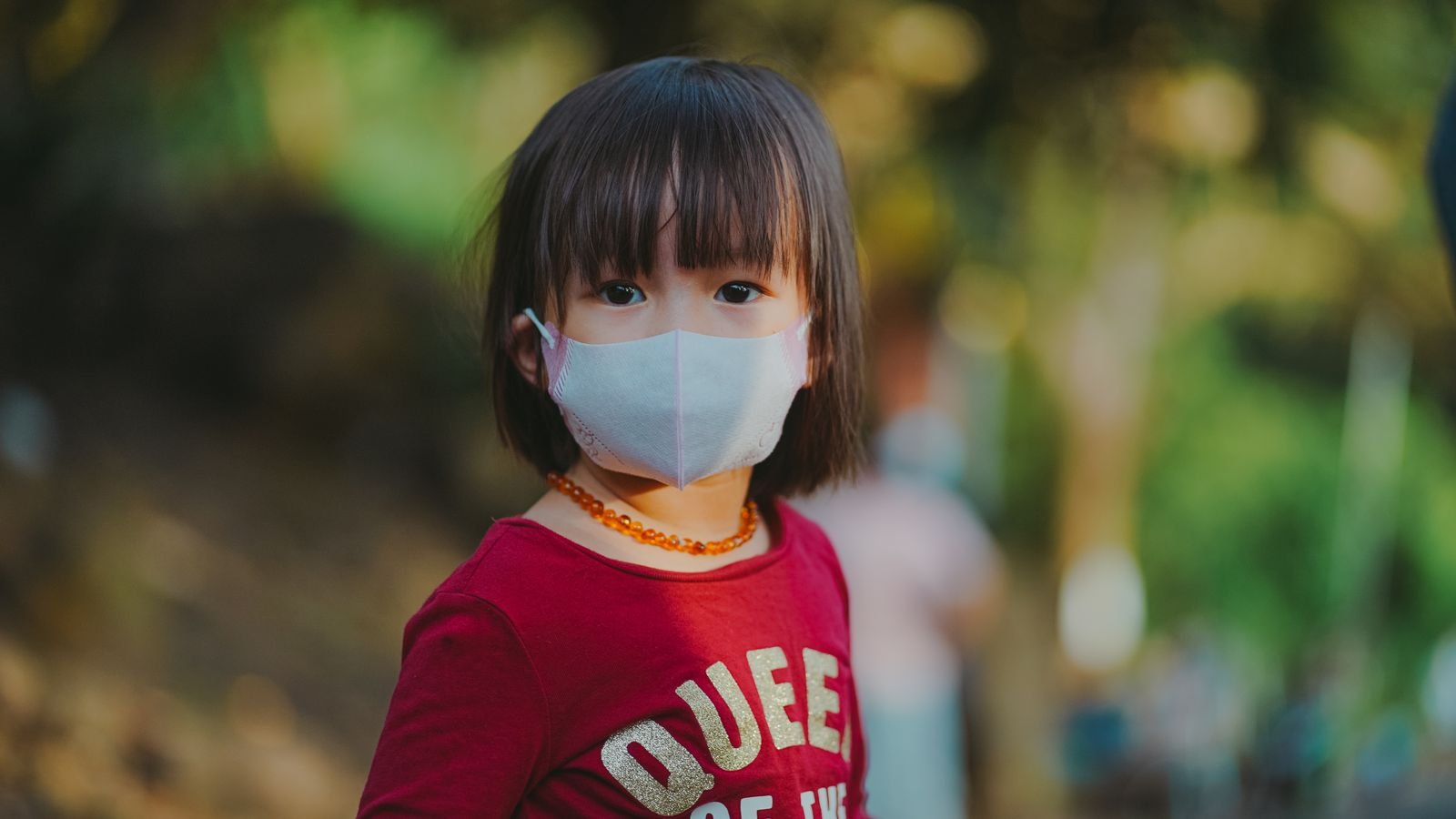
If you’re checking the AQI on a school day and wondering what to do, focus on three things you control: when and how your child travels, how hard they play outdoors, and how clean the air is at home. In Delhi this week, that’s no small question. The city woke up to “very poor” and worse on 4 November, with about a third of its stations in the severe range.
You can’t fix the sky, and most parents can’t keep a child home for two months. So let’s stay practical. There’s one mask mistake that gives false comfort, and we get to it in section 4.
⚡ Key takeaways
- Children are more exposed because they breathe faster, live closer to the ground and are still developing, says WHO.
- India’s AQI bands tell you the risk: Very Poor is 301–400 and Severe is 401–500.
- Cutting hard outdoor exercise on bad days is the easiest win, since heavier breathing means more pollution inhaled.
- Choose quieter roads when you can, and a well-fitted mask for the commute where the child can wear one.
- Keep one room cleaner at home. Skip incense, crackers and smoky cooking indoors.
This article is for information only and isn’t medical advice. If your child has asthma, allergies or another health condition, please consult a doctor about their plan for smog season.
How Bad Is the Air Right Now?
On Wednesday, 4 November, Delhi’s AQI was 377 at 8 am, its third straight “very poor” day, according to National Herald. Of 59 monitoring stations, 20 were severe, 33 very poor and 6 poor. PM2.5 was the main pollutant.
The Week reported a CPCB reading of 605 at 7:41 am, while an IITM reading was 379 and a private tracker showed 579. Don’t be thrown by those different numbers. Stations, timing and calculation methods differ, as we explained in why AQI apps show different numbers.
Stage II of GRAP was in force from 2 November, and the early-warning system expected “very poor” air till at least 6 November. Then comes Diwali on 8 November. If you’re in another city, the same logic applies whenever your local number climbs.
Why Children Take a Bigger Hit From Smog
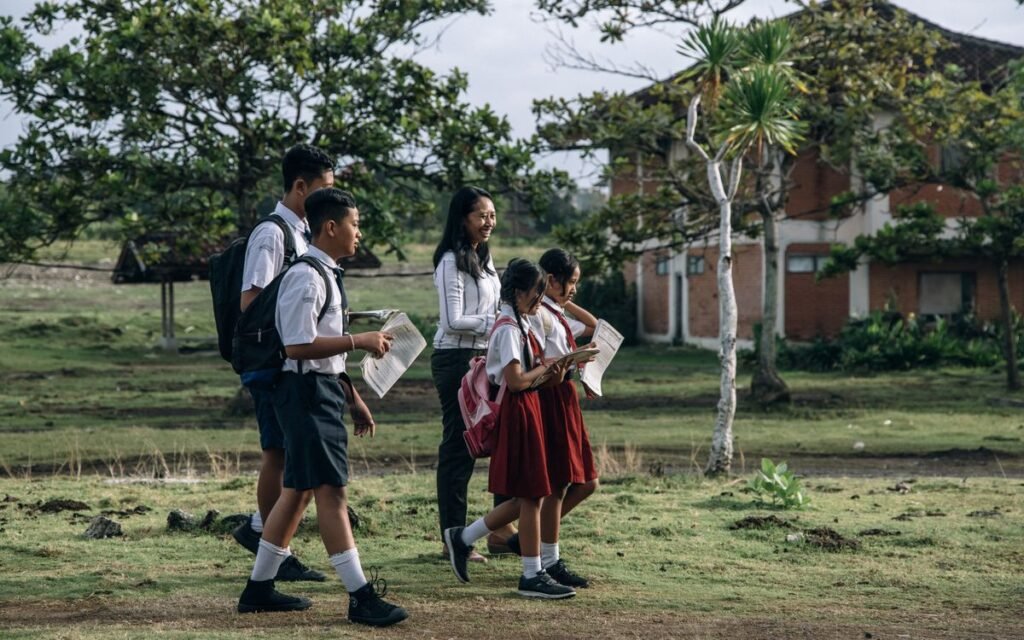
This is not parents being overprotective. WHO’s report on children and air pollution lists the reasons plainly:
- They breathe faster than adults, so they take in more pollutants.
- They live closer to the ground, where some pollutants are at their highest.
- Their brains and bodies are still developing.
WHO’s figures are from 2018, but they’re still sobering: 93% of children under 15 breathed outdoor air above its PM2.5 guidelines. WHO’s advice to governments includes locating schools and playgrounds away from busy roads and other major pollution sources.
You can’t move a school. But it’s a good reminder that where your child spends the 30 minutes before the first bell matters, and that a playground beside a main road is a different place from one in a quiet lane.
Read the AQI on a School Day: A Parent’s Table
India’s official bands come with health statements. Here’s the national AQI scale, with what I’d personally do at each level. The last column is practical judgment, not an official rule, so adjust it for your child and your school’s instructions.
| AQI | Category | What the official scale says | A sensible school-day plan |
|---|---|---|---|
| 101–200 | Moderate | Breathing discomfort for those with lung disease, heart strain, and for children and older adults | Normal school day. Sensitive kids take it easier during hard sport |
| 201–300 | Poor | Breathing discomfort on prolonged exposure | Go to school. Shorten long outdoor games, and avoid hanging around at the gate |
| 301–400 | Very Poor | Respiratory illness possible on prolonged exposure | Ask if PE can move indoors. Mask on the road. No long outdoor practice |
| 401–500 | Severe | Effects even on healthy people, possibly during light activity | Indoors as far as possible. Follow school and government orders, and ask about online classes |
What the government usually orders
School orders change, so go by your school’s message rather than last year’s memory. As a guide, Stage III last November meant hybrid classes up to Class 5 in Delhi. Under Stage IV in December 2025, India TV reported that local governments could also suspend physical classes for Classes VI to IX and XI.
💡 Pro tip
Ask your school one question now, before the next spike: “At what AQI do you move PE and assembly indoors?” A WhatsApp message from three parents gets a faster answer than one.
Masks for Kids: The Mistake That Gives False Comfort
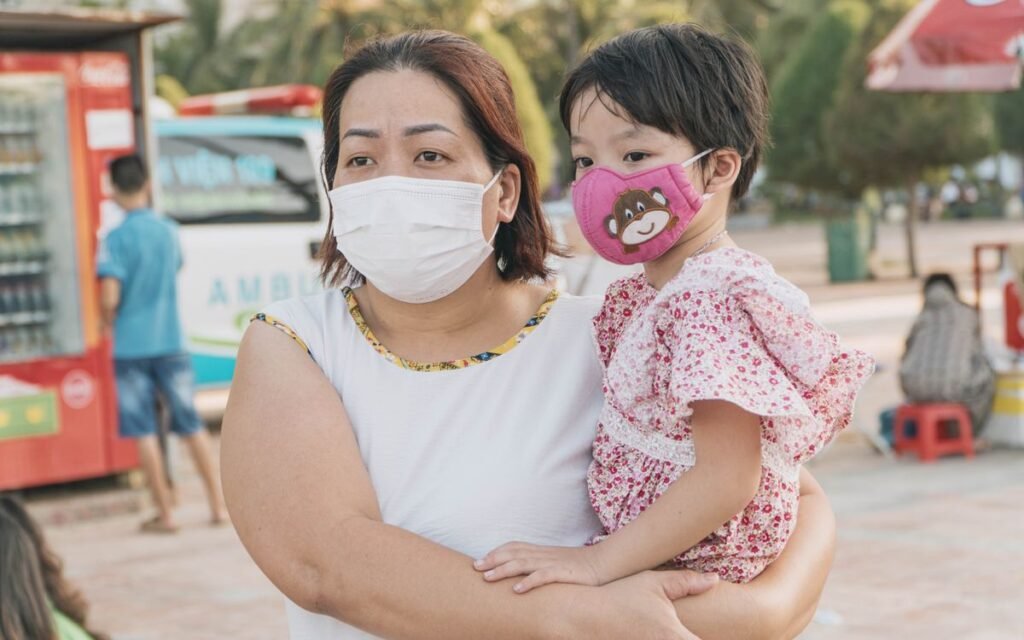
This is the catch from the top. A loose cloth or thin surgical mask on a child can make you feel better without doing much against PM2.5. What counts is filtration plus a seal around the face.
I couldn’t find a current Indian Academy of Pediatrics guideline on this, and doctors’ opinions in the news vary. A Punjab paediatrician told The Tribune in 2024 that masks should be compulsory for children under 12, while also saying that cutting pollution at the source matters more.
What’s clearer:
- The fit problem is real. Our N95 mask guide cites the CDC: children aged 2 and above can wear masks, but certified respirators don’t come in sizes for very young children.
- Toddlers and babies: cleaner indoor air is the better plan. Ask your paediatrician before putting anything on a very small child.
- School-age kids: a well-fitting child-size mask helps on the commute, if they’ll actually wear it. Let them try two or three at home first.
⚠️ Watch out
A mask a child keeps pulling down does little. It’s better to shorten the time outdoors than to fight over a mask they hate. And never let a mask replace medicines or a plan a doctor has already given your child.
The School Commute and Play Time: Small Changes That Add Up
For most kids, the road is the most polluted part of the day. A few things are worth trying, depending on where you live.
If your child takes a bus or van
Ask the driver to keep windows mostly shut on the worst stretches, and check whether the vehicle idles outside the school with children inside. Idling buses are a fair thing for parents to raise with the school.
If you drop them on a two-wheeler
This is India’s most common school run and the most exposed. On Very Poor days, ask whether a neighbour’s car or the school van could work for a week. If you must ride, a fitted mask matters most here.
If they walk or cycle
Walking is good for kids in general, and I wouldn’t give that up for the whole winter. On bad days, take the back lane rather than the main road, even if it adds five minutes. Our guide to exercising in pollution explains why route and intensity matter.
💡 Pro tip
Stop the “race to the gate”. Leave five minutes earlier so your child walks instead of running. Slower breathing on a smoggy road is a small, free win.
Sports practice and play time on bad air days
Kids need to run around, and two months of no play has its own costs, including screen time and bad sleep. So think in terms of swaps.
- Very Poor or worse: swap cricket practice for indoor games, skipping in a hall, or yoga at home.
- Better hours: check your AQI app in the afternoon. In many cities, readings shift through the day, so use your local number rather than assuming a time is safe.
- Coaching and tournaments: it’s fine to skip one. If a coach pushes, show them the official line that Severe air affects even healthy people during light activity.
Clean Air at Home: Give Your Child One Good Room
Your child sleeps 8 to 10 hours at home, so this is where you have the most control.
- Pick one room, usually where they sleep, and keep its doors and windows shut during the worst hours.
- Run a purifier if you can afford one. Size it to the room, using the CADR maths in our air purifier guide. Plants won’t do this job, as we found in our indoor plants check.
- Cut indoor smoke. Agarbatti, dhoop, mosquito coils and tadka in a closed kitchen all add particles. WHO warns that exposure from cooking smoke is highest for women and children near the hearth, so use the exhaust and keep kids out of the kitchen when it’s smoky.
- Plan Diwali night. Close windows before the crackers begin, not after.
 Also readAir Purifier for Home: The CADR Number That Matters for Your Room
✅ Our verdict
Don’t try to protect your child from every breath. Keep them in school unless the school or government says otherwise, skip hard outdoor exercise on Very Poor and Severe days, shorten the time on main roads, and make one room at home properly clean. Those four habits matter more than any “immunity” product someone forwards on WhatsApp.
Frequently Asked Questions
Should I send my child to school when AQI is above 300?
Most schools stay open at this level unless orders say otherwise. Consider sending them, limit time on main roads and ask about indoor PE. If your child has asthma or a similar condition, consult a doctor about what’s right for them.
Is the air inside a school classroom cleaner?
Not necessarily. Without filtration, indoor air can follow outdoor levels, especially with open windows. It usually helps to be indoors because kids breathe less hard, so ask your school what it does on bad days.
Do children need N95 masks for school?
A well-fitting child-size respirator can help on the road, but certified ones aren’t made for very young kids. Fit and willingness to wear it matter most, so ask your paediatrician for younger children.
What time of day is pollution lowest for outdoor play?
It depends on your city and weather, so check a local AQI reading rather than assuming. The Week reported a morning peak in Delhi on 4 November, but that’s one day, not a rule.
The Bottom Line
The AQI on a school day doesn’t have to decide everything. Check your local number before leaving, take the quieter road, swap hard outdoor play for indoor games on the worst days, and keep one clean room at home. Today, send that one WhatsApp to your school asking when PE moves indoors.
Keep reading
 Read nextN95 Mask for Pollution: The AQI Number Where It Starts to MatterRead nextAir Purifier for Home: The CADR Number That Matters for Your Room
 Read nextAsthma and Air Pollution: A Family Plan for Smog Season
Sources
- WHO: more than 90% of the world’s children breathe toxic air every day (2018)
- WHO: household air pollution and health fact sheet
- Indian Economic Service, Arthapedia: National Air Quality Index bands and health statements
- National Herald: Delhi AQI 377, 20 stations severe, 4 November 2026
- The Week: Delhi air quality severe despite GRAP II, 4 November 2026
- Business Today: GRAP III, hybrid classes up to Class 5 in Delhi, November 2025
- India TV: GRAP IV school measures in Delhi-NCR, 15 December 2025
- The Tribune: paediatrician on masks for children (ANI, November 2024)