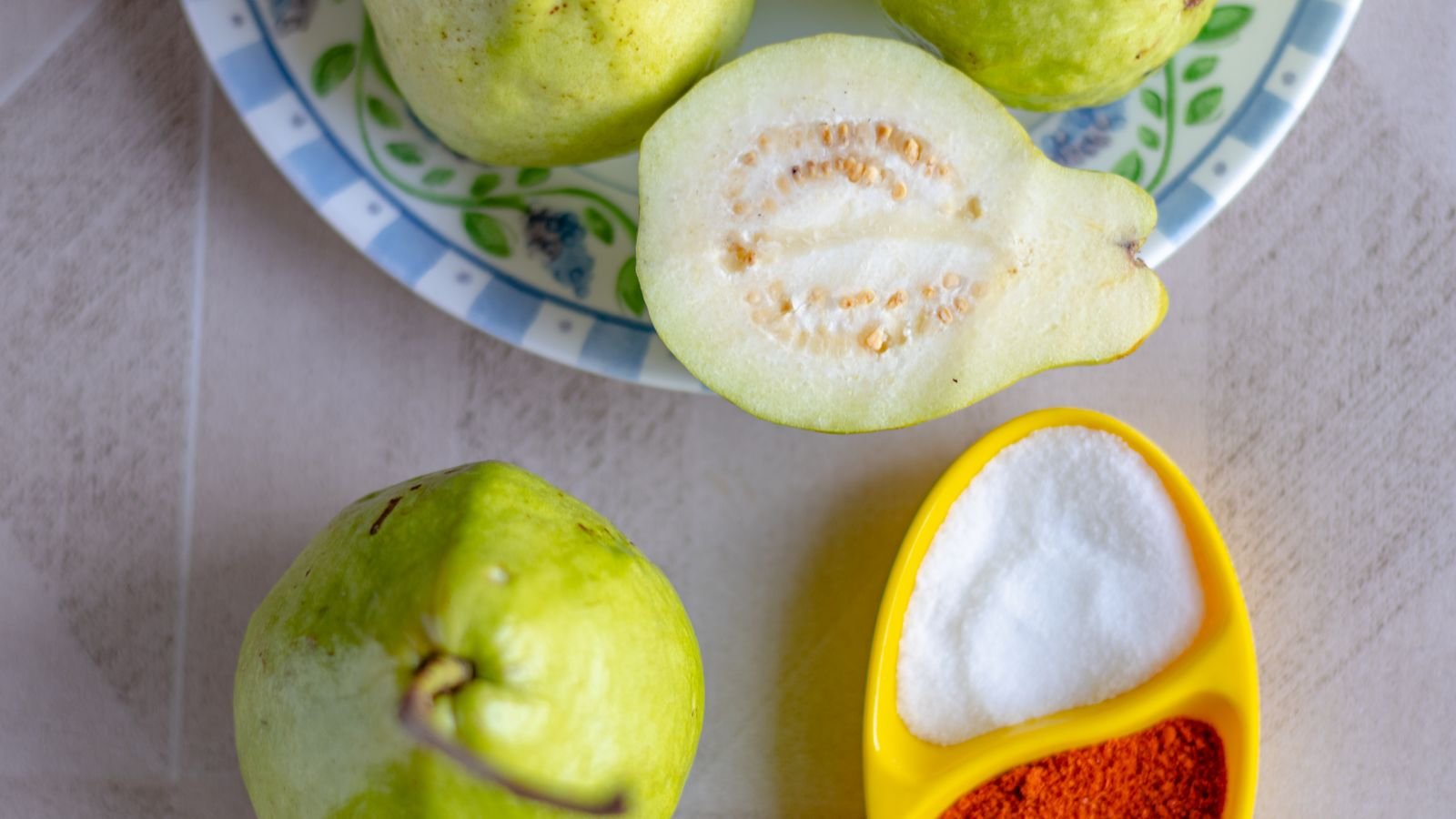
Guava in winter is one of the best-value fruits you can buy: per 100 g, it has about 228 mg of vitamin C against 53 mg in an orange, based on USDA food data. That’s more than four times as much, plus double the fibre, from a local fruit you can eat straight off the cart.
And no, eating amrood doesn’t give you a cold. But there’s one group of people who should eat it a little differently, and the reason has nothing to do with the weather (section 5).
⚡ Key takeaways
- Vitamin C: about 228 mg per 100 g of raw guava vs 53 mg in an orange (USDA FoodData Central). Adults need 40 mg a day, per the NHS.
- Fibre: 5.4 g per 100 g, more than twice an orange’s 2.4 g.
- Calories: about 68 kcal and 9 g of natural sugar per 100 g.
- The cold myth: colds are caused by viruses. No study shows guava causes one, and vitamin C doesn’t stop colds either.
- Blood sugar: guava scored a low glycaemic index (about 31 to 33) in a small Taiwanese study that included people with type 2 diabetes. Portion still matters.
- Go easy if: you have IBS (choose ripe fruit), or you add heaps of salt and chilli.
Why Guava in Winter Deserves a Place in Your Fruit Bowl
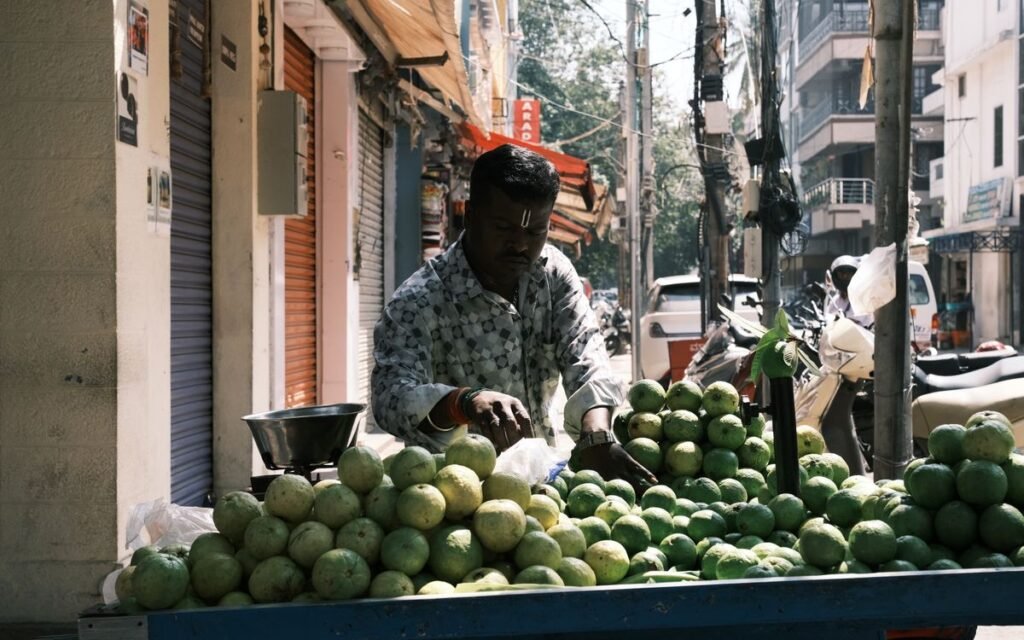
Right now the fruit carts outside most markets are piled with green and pink amrood. It’s local, easy to find and doesn’t need cooking. That alone makes it easier to eat every day than most “superfoods”.
The real case for it is in the numbers. Here’s what USDA FoodData Central lists for 100 g of raw common guava:
- Vitamin C: 228 mg
- Fibre: 5.4 g
- Potassium: 417 mg
- Total sugars: 8.9 g
- Energy: 68 kcal
- Folate: 49 µg
One caution: that’s a single lab average. Indian varieties differ in size, ripeness and how they’re grown, so your Allahabad Safeda won’t match the database to the milligram. The pattern holds, though: guava is mainly a vitamin C fruit, with a lot of fibre for few calories.
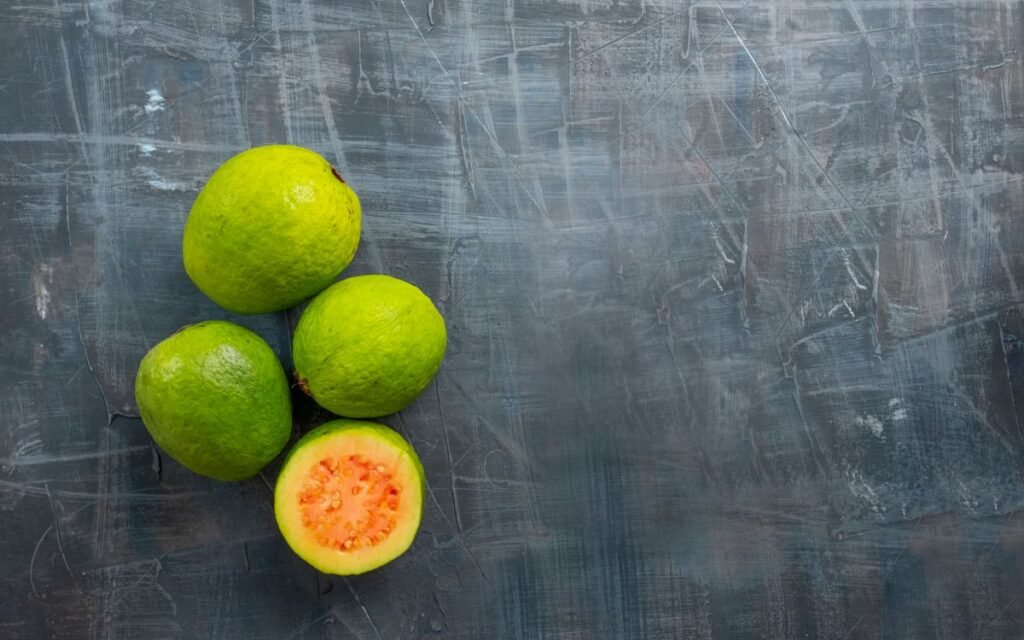
How Much Vitamin C Does Guava Really Give You?
The NHS says adults aged 19 to 64 need 40 mg of vitamin C a day. It also says your body can’t store it, so you need some every day. At 228 mg per 100 g, roughly 20 g of guava covers that. A couple of slices, basically.
So you don’t need a whole kilo. A single guava a day is far more than enough for vitamin C, and eating three won’t make you “extra immune”.
Can you get too much?
From fruit alone, it’s unlikely. The NHS says taking more than 1,000 mg a day, usually from supplements, can cause stomach pain, diarrhoea and wind. You’d have to eat close to half a kilo of guava to reach that, and the fibre would stop you long before.
Pair it with iron-rich food
Vitamin C helps your body absorb iron from plant foods. If you’re vegetarian, a guava after a meal of dal, rajma or chana is a smart habit. Our guide on iron absorption and chai timing explains why the tea after lunch can undo some of that.
💡 Pro tip
Vitamin C breaks down with heat and time. Eat guava raw and soon after cutting it. Guava jam, jelly and “guava drink” cartons have much more sugar and much less of what you bought the fruit for.
 Also readAmla in Winter: How Much to Eat and the Best Way to Have It
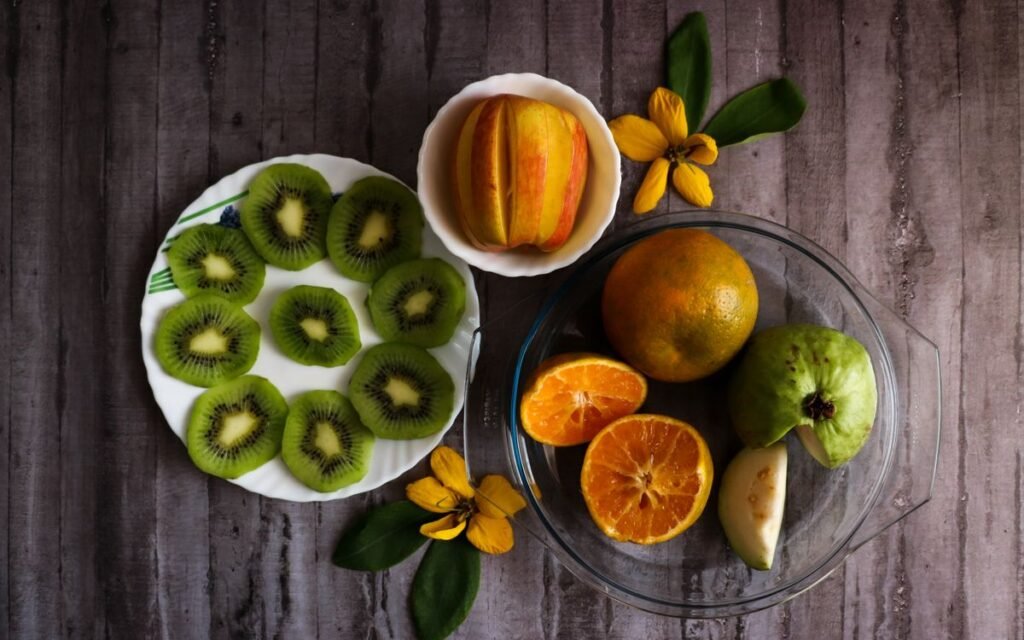
Guava vs Orange vs Amla: Which Winter Fruit Wins?
Oranges and amla are the other winter vitamin C fruits most Indian homes buy. Here’s how they compare per 100 g. The guava and orange numbers come from USDA FoodData Central; the amla range comes from studies of different cultivars, summarised in our amla in winter guide.
| Per 100 g | Guava | Orange | Amla |
|---|---|---|---|
| Vitamin C | 228 mg | 53 mg | 193 to 720 mg (varies by variety) |
| Fibre | 5.4 g | 2.4 g | Not compared here |
| Energy | 68 kcal | 47 kcal | Not compared here |
| Potassium | 417 mg | 181 mg | Not compared here |
| How people actually eat it | Raw, with namak | Raw or as juice | Pickle, murabba, candy |
| Our take | Best everyday snack | Fine, but juice loses the fibre | Most vitamin C, if eaten fresh |
So which should you buy?
Honestly, buy the one your family will eat. If that’s amla, our amla guide shows why fresh beats murabba. If it’s oranges, eat the segments instead of juicing them, because the fibre stays behind in the juicer.
But if you want one fruit that kids, grandparents and the person on a diet will all happily snack on, guava is hard to beat. It gives more vitamin C than an orange and more fibre, and it stays a whole fruit. Nobody turns it into a sugary drink at home.
Does Guava Cause a Cold? The Myth, Checked
Many of us grew up hearing “don’t eat amrood in the evening, you’ll catch a cold”. It’s a common belief in Indian homes. The science doesn’t back it.
The NHS is plain about it: colds are caused by viruses, and they spread through coughs, sneezes and germs on hands and surfaces. A fruit can’t hand you a virus. Being cold, or eating something cold, isn’t listed as a cause either.
Does guava prevent colds, then?
Not really. A 2013 Cochrane review pooled 29 trial comparisons with 11,306 people. Taking vitamin C regularly didn’t reduce how often people in the general population caught a cold. It shortened colds a little, by about 8% in adults and 14% in children.
The one exception was people under heavy physical stress, like marathon runners and soldiers in sub-arctic training, whose risk roughly halved. That’s not most of us sitting in office traffic.
⚠️ Watch out
Guava is a healthy fruit, not a cold remedy. If someone forwards a WhatsApp message saying amrood “cures cough” or “kills viruses”, it’s not true. If a cold doesn’t settle or you feel very unwell, see a doctor.
So eat guava in winter for the vitamin C and fibre, at any time of day you like. If cold fruit straight from the fridge bothers your throat, leave it out for an hour first. That’s about comfort, not medicine.
Guava and Blood Sugar: The Portion Catch
Here’s the catch from the top of the post. Guava looks perfect for people watching their sugar, and in one way it is: a 2011 study in the Journal of Clinical Biochemistry and Nutrition measured six fruits in 20 healthy adults and 17 people with type 2 diabetes in Taiwan. Guava’s glycaemic index was about 31 in the healthy group and 33 in the diabetes group. That puts it in the low range, lower than bananas, grapes and lychees in the same study.
But the test portion contained 25 g of carbohydrate. Using USDA’s 14.3 g of carbohydrate per 100 g, that’s roughly 175 g of guava. A low GI doesn’t mean you can eat four guavas after lunch and expect the same result.
How to eat it if you’re watching sugar
- Stick to one fruit at a time, as a snack between meals rather than straight after a heavy meal.
- Eat the whole fruit, not juice or jelly.
- Pair it with a few nuts or some curd if you want it to keep you full longer.
- Ask your doctor or dietitian how many fruit servings fit your plan, especially if you take diabetes medicines.
This was one small study of a Taiwanese variety, so treat it as a good sign, not a guarantee. Our World Diabetes Day habits guide covers the bigger everyday changes that matter more than any single fruit.
Who Should Go Easy on Guava
For most people, guava is safe and easy to digest. A few situations call for a little care.
If you have IBS
Monash University, which runs the main FODMAP research programme, found that a serve of well-ripened guava was low in FODMAPs, while the same serve of unripe guava was high. FODMAPs are fermentable carbs that can trigger bloating in people with irritable bowel syndrome. So if hard, green guavas leave you bloated, try fully ripe, soft ones instead.
If you’re adding fibre suddenly
At 5.4 g per 100 g, guava is a fibre-heavy fruit. The NHS says adults should aim for 30 g of fibre a day, and most get only about 20 g. Guava helps close that gap, but going from zero to three guavas a day can upset your stomach. Build up slowly and drink enough water.
If you love namak-mirch
Guava with salt and red chilli is half the joy of eating it. Just keep it to a pinch. If you’re already watching your salt or blood pressure, the fruit is the healthy part, not the masala.
If you take medicines or have a medical condition
Plain fruit amounts are fine for most people. If you’ve been told to limit potassium (some kidney conditions) or sugar, ask your doctor how guava fits, since it has 417 mg of potassium per 100 g.
 Also readWorld Diabetes Day 2026: 7 Everyday Habits That Lower Type 2 Risk
How to Eat Guava in Winter: A Simple Plan
You don’t need recipes. You need a habit that sticks through December and January.
- Buy 4 to 6 at a time so they ripen through the week. Firm ones ripen at room temperature in a few days.
- Pick by smell and feel. A ripe guava smells sweet and gives slightly when pressed.
- Wash it and keep the skin on. Guava skin is edible, so there’s no need to peel it. Cut out any bruised or wormy patches.
- Have one a day as your 4 pm snack instead of biscuits. It’s an easy swap that adds fibre and vitamin C to an ordinary afternoon.
- Send one in the kids’ tiffin, cut just before leaving so it doesn’t brown too much.
- Skip guava juice and candy. Packaged versions often add sugar; our guide on how to read food labels shows how to check.
If winter snacking is your weak spot, guava’s 68 kcal per 100 g makes it one of the easiest swaps you can make. Our piece on winter weight gain explains why the small swaps add up over a season.
✅ Our verdict
Eat one guava a day this winter. It gives you several times your daily vitamin C, a solid chunk of fibre and a low-calorie snack that beats a packet of biscuits. Ignore the “it gives you a cold” warning, choose ripe fruit if you have IBS, and keep portions sensible if you’re watching your sugar.
Frequently Asked Questions
Is it good to eat guava in winter?
Yes. Guava is in season, cheap and rich in vitamin C, with about 228 mg per 100 g per USDA data. Adults need 40 mg a day, so a little guava covers it. It’s also high in fibre and low in calories.
Does eating guava at night cause a cold?
No. Colds are caused by viruses that spread through coughs, sneezes and touch, per the NHS. No study shows guava, or eating fruit at night, causes a cold. If cold fruit irritates your throat, let it reach room temperature first.
Which has more vitamin C, guava or orange?
Guava, by a wide margin. USDA FoodData Central lists about 228 mg of vitamin C per 100 g of raw guava against about 53 mg for an orange, so guava has more than four times as much.
Can people with diabetes eat guava?
Many can, in sensible portions. A small 2011 study found guava had a low glycaemic index of about 33 in people with type 2 diabetes. Eat the whole fruit rather than juice, one at a time, and ask your doctor or dietitian how it fits your diet plan.
How many guavas can I eat a day?
One is plenty for vitamin C. Two is fine for most healthy adults. More than that mostly adds fibre, which can cause bloating if you’re not used to it.
The Bottom Line
Guava in winter is one of the simplest healthy habits you can pick up: one fruit a day covers your vitamin C several times over and adds real fibre. It won’t cure or cause a cold, so eat it whenever you like. Pick ripe ones if your stomach is sensitive, and buy a few on your next market run.
This article is for information only; consult a doctor or a registered dietitian for advice about your own health, especially if you have diabetes, IBS or kidney disease.
Keep reading
 Read nextTil in Winter: How Much a Day, and Which Kind Has the Calcium

 Read nextMillets in Winter: Which to Eat and the Label to Check First
Sources
- USDA FoodData Central: Guavas, common, raw (FDC 173044)
- USDA FoodData Central: Oranges, raw, all commercial varieties (FDC 169097)
- NHS: Vitamin C (40 mg a day, not stored, over 1,000 mg side effects)
- NHS: Common cold (caused by viruses, how colds spread)
- Cochrane review, Hemilä and Chalker 2013: Vitamin C for preventing and treating the common cold
- Chen et al. 2011, J Clin Biochem Nutr: Glycemic index of six fruits in healthy and type 2 diabetes subjects
- Monash University FODMAP: Ripe vs unripe guava
- NHS: How to get more fibre into your diet (30 g a day)