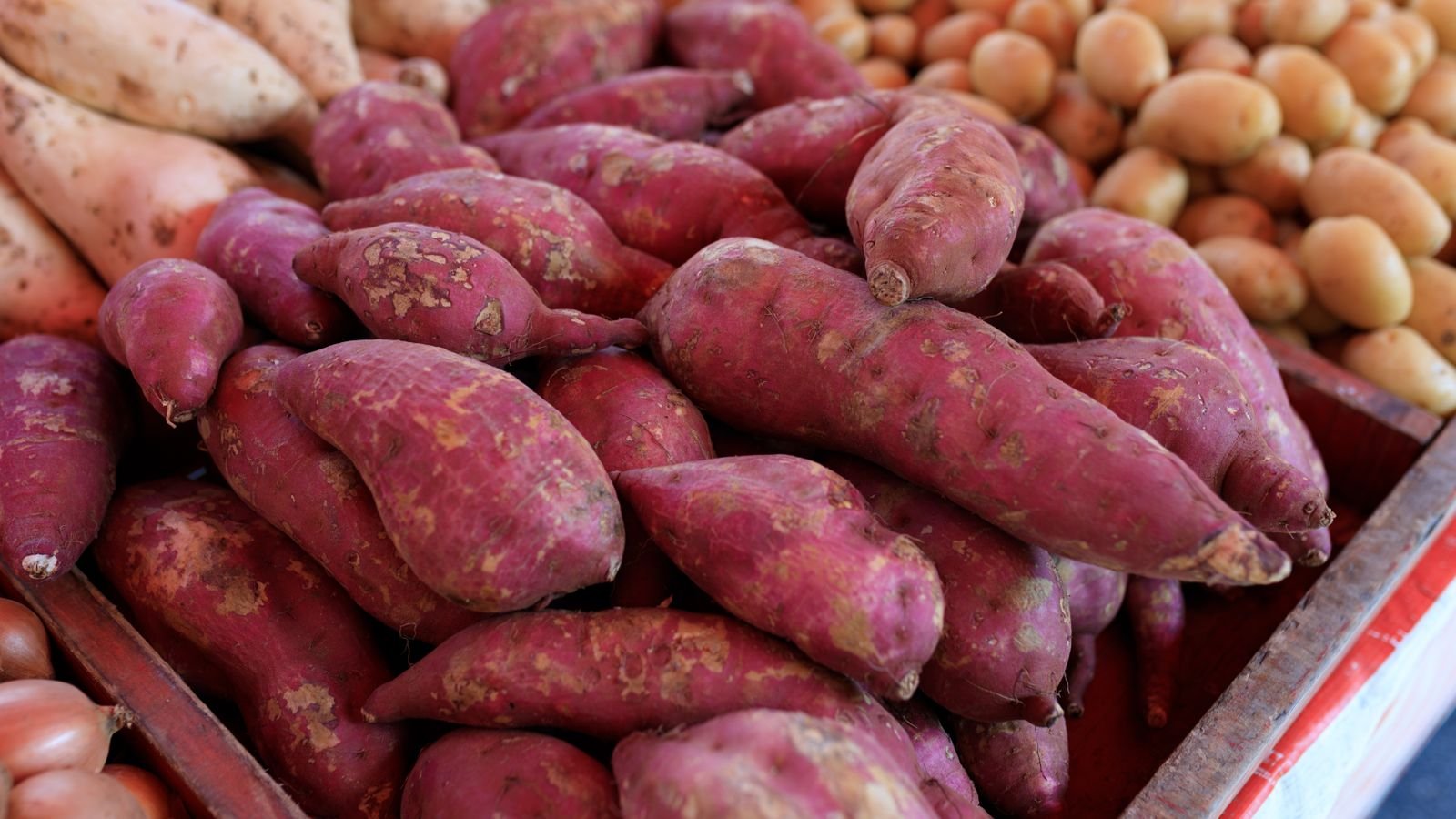
Shakarkandi carts are back on Indian streets, and the big question is whether sweet potato really beats regular aloo. Short answer: yes, a little, mostly because it has far more vitamin A and slightly fewer calories, but how you cook it changes the blood sugar story completely.
Roasted shakarkandi, the way most of us eat it in winter, is actually the version that pushes blood sugar highest. And there’s a colour catch most buyers miss, which we explain in section 4.
⚡ Key takeaways
- Per 100 g, boiled sweet potato has 76 kcal, 2.5 g fibre and 787 mcg of vitamin A (USDA). Baked potato has 93 kcal and almost no vitamin A.
- Boiled sweet potato had an average GI of about 46 in a 2011 study. Baked and roasted were around 87, as high as white bread.
- The vitamin A lives in orange-fleshed varieties. Common white-fleshed shakarkandi has very little.
- Best way: boil or steam it, keep the skin, and eat a fist-sized portion with protein.
- Diabetic? Treat it as a carb, not a free food, and ask your doctor or dietitian.
Why Sweet Potato Is Everywhere This Winter
Walk past any market in Delhi, Lucknow or Indore after 6 pm in November and you’ll find a shakarkandi cart. It’s a cold-weather favourite, cheap and roasted over coal with chaat masala and nimbu.
It also shows up in fasting food. Many families eat it during vrat because it isn’t a grain. That makes it a staple for a lot of homes from Navratri right through winter.
So it’s worth knowing what you’re actually getting. Is it a health food, or just a tastier potato?
Sweet Potato vs Potato: The Numbers
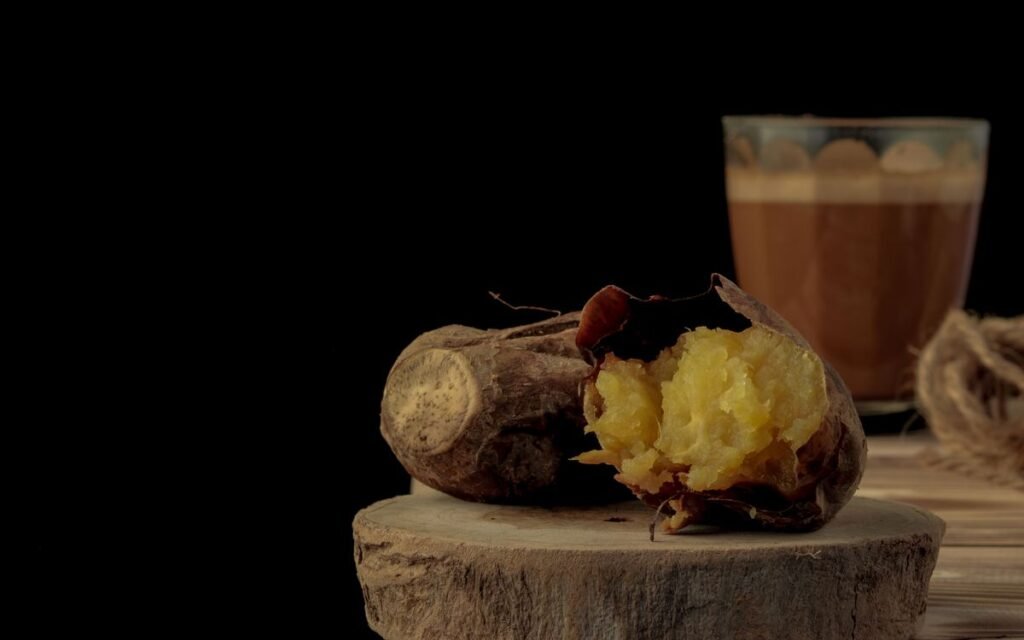
Here’s a straight comparison using US Department of Agriculture data from FoodData Central. We used boiled shakarkandi and baked potato, since those are common entries with full data.
| Per 100 g | Sweet potato (boiled, no skin) | Potato (baked, with skin) |
|---|---|---|
| Calories | 76 kcal | 93 kcal |
| Carbohydrates | 17.7 g | 21.2 g |
| Sugars | 5.7 g | 1.2 g |
| Fibre | 2.5 g | 2.2 g |
| Protein | 1.4 g | 2.5 g |
| Vitamin A (RAE) | 787 mcg | 1 mcg |
| Vitamin C | 12.8 mg | 9.6 mg |
| Potassium | 230 mg | 535 mg |
What stands out
- Vitamin A is the big win. 100 g of boiled orange shakarkandi has 787 mcg of vitamin A. Aloo has almost none.
- Sweeter, but fewer total carbs. It tastes sweeter because more of its carbs are sugars, yet the total carb and calorie count is a bit lower.
- Aloo isn’t the villain. Potato has more potassium and protein. The problem with aloo in Indian kitchens is usually the frying and the portion, not the vegetable.
💡 Pro tip
Wash it well and keep the skin on when you boil it. Boiled shakarkandi skin turns soft, and anyone who doesn’t like it can peel it off at the table.
 Also readJaggery vs Sugar: Is Gur Really Healthier? What NIN Says
Boiled or Roasted? Cooking Changes Everything
This is where most of us go wrong. A 2011 study in the Journal of Nutrition and Metabolism tested ten Jamaican sweet potato varieties cooked four ways, in ten healthy adults.
| Cooking method | Average glycaemic index (GI) | What it means |
|---|---|---|
| Boiled (about 30 min) | about 46 (range 41 to 50) | Low GI |
| Fried | about 71 (range 63 to 77) | High GI |
| Roasted | about 87 (range 79 to 93) | High GI |
| Baked | about 87 (range 82 to 94) | High GI |
That’s a huge gap. Same vegetable, same people, and the GI nearly doubled just by switching from the pot to the oven.
So the coal-roasted street version is a treat, not a low-GI snack. If blood sugar is something you watch, boil or steam it at home and save the roasted one for an occasional evening.
The Colour Catch: Not All Shakarkandi Has Vitamin A
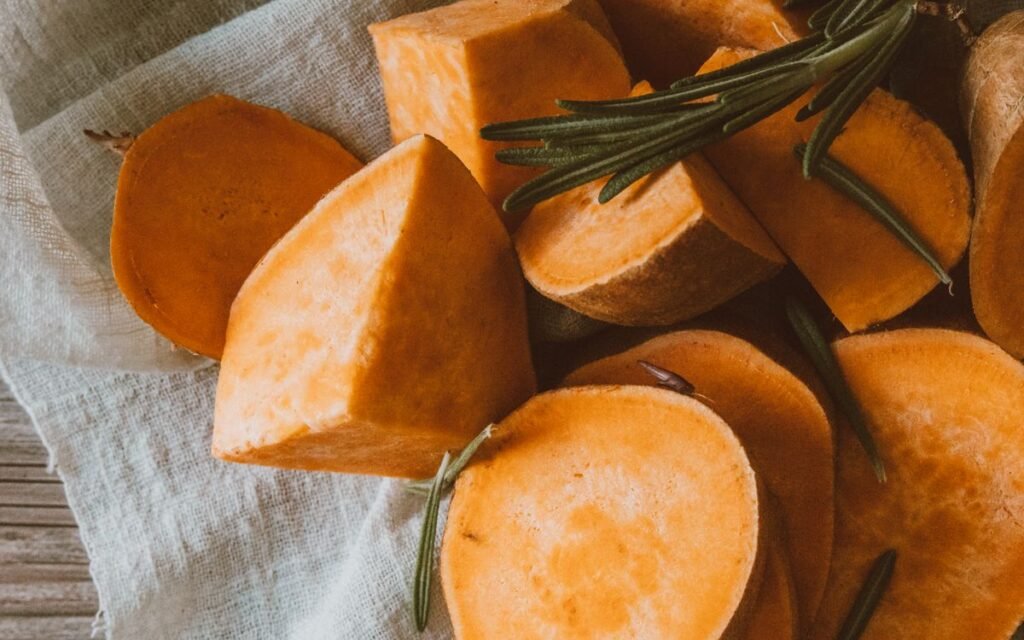
That 787 mcg of vitamin A comes from beta-carotene, the orange pigment. But cut open a lot of the shakarkandi at your local sabzi mandi and you’ll find white, cream or pale yellow flesh under a pink or purple skin.
A 2020 study in the Journal of Food Science and Technology Nepal measured both kinds. Orange-fleshed varieties had 14.4 to 22.1 mg of beta-carotene per 100 g. White-fleshed local ones had only 0.7 to 1.8 mg, roughly a tenth or less.
⚠️ Watch out
If your shakarkandi is white inside, it’s still a decent carb with fibre, but don’t count on it for vitamin A. Look for orange flesh; ask the vendor to cut one open, or check packaged ones at the supermarket.
The same study found boiling kept 79% to 89% of the beta-carotene, more than baking (56% to 78%). Boiling wins again.
How to Eat Sweet Potato the Healthy Way
A few simple swaps make the most of it.
- Boil or steam, don’t roast, at home. Pressure-cook for 2 to 3 whistles or boil until a knife slides in.
- Portion: one fist. About 100 to 150 g is a reasonable serving of carbs for most adults.
- Add protein. Pair it with curd, paneer, peanuts or a handful of chana so the plate isn’t only carbs.
- Go easy on the sugar coatings. Shakarkandi halwa and gur-glazed versions turn a vegetable into a dessert.
- Chaat masala and nimbu are fine. Just watch the salt if you’re already eating salty namkeen this season.
- Count it as a carb, not a sabzi. If you eat it, cut back on rice or roti in the same meal.
ICMR-NIN’s Dietary Guidelines for Indians (2024) advise preferring root vegetables to tubers and filling about half your plate with vegetables and fruit. Sweet potato fits as part of that plate, not the whole plate.
 Also readWalking After Meals: What a 10-Minute Walk Does for Your Body
Our Verdict: Sweet Potato or Aloo?
✅ Our verdict
Sweet potato wins, but only modestly, and only if you cook it right. Boiled orange-fleshed shakarkandi gives you vitamin A, fibre and a low GI. Roasted or fried, it behaves like any other high-GI carb, and white-fleshed varieties skip most of the vitamin A.
Good choice for: most families as a winter carb, kids who need more vitamin A, and anyone replacing fried aloo snacks.
Be careful if: you have diabetes or prediabetes. Portion and cooking method matter a lot, and a 10-minute walk after meals helps too. If you’re tracking sweetness in other foods this season, our jaggery vs sugar breakdown is worth a read.
This article is for information only and isn’t medical advice. If you have diabetes, kidney disease or any condition that needs a special diet, consult a doctor or a registered dietitian before changing what you eat.
Frequently Asked Questions
Is sweet potato good for weight loss?
It has slightly fewer calories than potato (76 vs 93 kcal per 100 g in USDA data) and some fibre. It helps only if it replaces other carbs, not if it’s added on top.
Can diabetics eat sweet potato?
Many can, in small portions, boiled rather than roasted. The 2011 study found boiled shakarkandi had a much lower GI than baked or roasted. Check with your doctor or dietitian for your own plan.
Is roasted shakarkandi healthy?
It’s a good winter treat, but roasting raised the GI to around 87 in the 2011 study. Enjoy it occasionally and keep the portion small.
Which sweet potato has more vitamin A?
Orange-fleshed varieties. White-fleshed ones had about a tenth of the beta-carotene or less in a 2020 study.
Should I eat sweet potato with the skin?
Yes, if it’s washed well. Boiled shakarkandi skin is soft enough to eat, so there’s no need to waste it.
The Bottom Line
Sweet potato is a slightly better carb than aloo, mainly for its vitamin A, and boiling it keeps both the GI and the nutrients in your favour. Pick orange flesh when you can, and keep the coal-roasted version as an evening treat. For more winter food swaps, see our guide to amla in winter.
Keep reading
 Read nextAmla in Winter: How Much to Eat and the Best Way to Have It
 Read nextHow Many Almonds a Day? The Handful Rule for Diwali Dry Fruits
Sources
- USDA FoodData Central: sweet potato, boiled, without skin (FDC 168484) and potato, baked (FDC 170093)
- Bahado-Singh et al., Journal of Nutrition and Metabolism 2011: GI of sweet potato by cooking method
- Rayamajhi & Mishra, J Food Sci Technol Nepal 2020: beta-carotene in orange vs white sweet potato, retention after cooking
- ICMR-NIN: Dietary Guidelines for Indians 2024