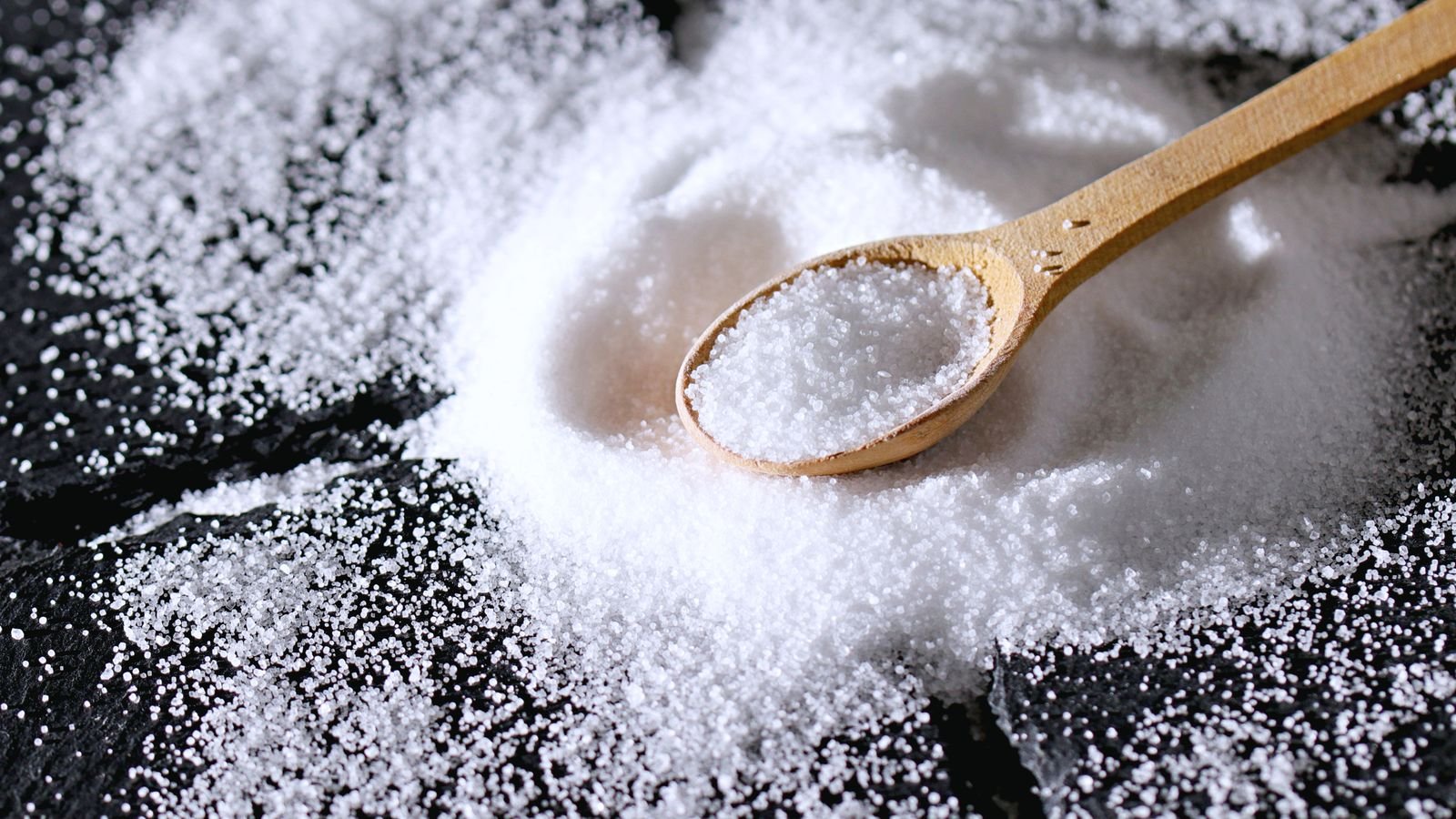
How much salt per day is OK? The WHO says adults should eat less than 5 g, which is just under one level teaspoon, all sources combined. An ICMR study of Indian adults found the average is about 8 g a day, so most of us are eating roughly 60% more than that.
The surprising part is where it comes from. It isn’t mainly the salt shaker on the table, and it isn’t only the Diwali namkeen tin either. Section 3 breaks down where an Indian day’s salt hides.
⚡ Key takeaways
- WHO limit: under 5 g of salt a day (under 2,000 mg sodium) for adults; less for children. Use iodised salt.
- Indian adults average 8.0 g a day (men 8.9 g, women 7.1 g), per an ICMR study in Scientific Reports (2023).
- Only about 31% of Indian adults knew high salt intake affects health, the same study found.
- Biggest sources: salt added while cooking, plus namkeen, papad, chips, pickles, bread and instant noodles.
- Label maths: sodium (mg) × 2.5 = salt (mg). 400 mg sodium is 1 g of salt.
- Low-sodium (potassium) salt can help, but skip it if you have kidney disease or are told to limit potassium.
How Much Salt Per Day Does the WHO Recommend?
The WHO’s salt reduction fact sheet recommends that adults eat less than 2,000 mg of sodium a day. That’s less than 5 g of salt, or just under a teaspoon. For children aged 2 to 15, WHO says the limit should be lower, based on how much energy they need.
That 5 g is everything: salt in the dal, the sabzi, the roti dough, the papad, the bread and the evening namkeen. It isn’t 5 g on top of your normal cooking.
WHO also says all salt you eat should be iodised. Cutting back doesn’t mean switching to non-iodised rock salt or “pink salt” for everything.
Why it matters
The main effect of too much sodium is raised blood pressure, which increases the risk of heart disease and stroke, according to WHO. The fact sheet estimates 1.7 million deaths a year worldwide were linked to excess sodium in 2023. Globally, adults averaged about 11 g of salt a day in 2021, more than double the limit.
How Much Salt Indians Actually Eat
The best national estimate comes from the ICMR’s National NCD Monitoring Survey. Researchers measured sodium in urine samples from 3,000 adults aged 18 to 69 across India and published the results in Scientific Reports in 2023.
| Group | Average salt per day |
|---|---|
| All adults | 8.0 g |
| Men | 8.9 g |
| Women | 7.1 g |
| Urban adults | 8.3 g |
| Rural adults | 7.9 g |
| WHO limit | under 5 g |
The awareness numbers are what stand out. Only 30.9% of adults knew that high salt intake could affect their health, and fewer than half did anything to cut down.
A separate statement from ICMR’s National Institute of Epidemiology in July 2025, reported by Medical Dialogues, put average intake even higher, at about 11 g a day. Different methods give different numbers, but both say the same thing: most Indians are well over the limit.
Where the Salt Hides in an Indian Day
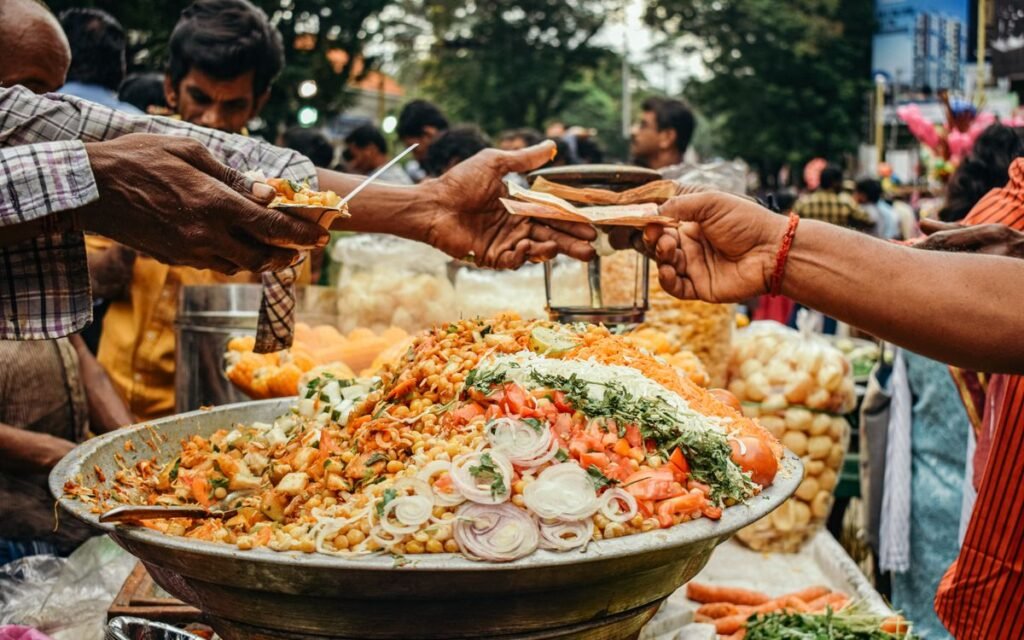
The ICMR study’s authors say that in countries like India, salt added during home cooking is the main source. That’s different from the US or UK, where packaged food dominates. The ICMR-NIE statement also lists pickles, papad, namkeen, biscuits, bread, vada pav, chips and instant noodles as common hidden sources.
Here’s how a normal day can add up, and what to swap.
| Food | Why it’s salty | Easy swap |
|---|---|---|
| Dal, sabzi, curries | Salt added while cooking, then again at the table | Salt once, at the end; taste before adding more |
| Roti or paratha dough | Many families add salt to the atta | Skip salt in the dough; the sabzi has enough |
| Achaar (pickle) | Salt is the preservative | A small piece, not a spoonful |
| Papad | Salted dough, often eaten daily | Keep it for weekends |
| Namkeen, bhujia, chips | Salt plus spice coating | A small bowl, not the packet |
| Bread, pav, biscuits | Salt is part of the recipe | Count them; they add up quietly |
| Instant noodles, soup sachets | Seasoning packet is mostly salt | Use half the tastemaker |
| Chaat masala, sauces | High salt per spoon | Use lemon and roasted jeera instead |
The study found 36.1% of adults ate salty snacks like namkeen, papad and chips at least monthly. In festive season, it’s daily for a lot of households.
How to Read Salt on a Food Label
Indian packaged food labels list sodium, usually in mg per 100 g or per serving. Salt is about 40% sodium, so you need one conversion.
Sodium (mg) × 2.5 = salt (mg). WHO’s own maths: 400 mg of sodium is 1 g of salt, and 2,000 mg of sodium is 5 g.
Try it on a namkeen pack. Say the label shows 600 mg sodium per 100 g. A 50 g bowl then has 300 mg sodium, which is 0.75 g of salt. That’s 15% of your whole day’s limit from one bowl, before dinner.
💡 Pro tip
Look at the “per 100 g” column, not “per serving”. Brands often pick a tiny serving size (like 20 g) that nobody actually eats. Do the maths for the amount you’ll really eat.
Diwali Namkeen Season: 7 Ways to Eat Less Salt Without Noticing
Taste buds adjust. Cut back gradually and food tastes normal again within a few weeks. These steps follow WHO’s advice to eat more fresh food, cook with less salt and use herbs and spices for flavour.
- Serve snacks in a small bowl. Close the packet and put it away.
- Make one plain snack. Roasted chana, makhana or peanuts with spices and no extra salt.
- Salt at the end of cooking. You use less when you can taste it.
- Take the salt shaker off the dining table. WHO lists this as one of the simplest steps.
- Use lemon, amchur, ginger, garlic and roasted jeera. Sour and spicy flavours make up for less salt.
- Limit pickle and papad to one each, not one of each at every meal.
- Drink water, not salty buttermilk with extra kala namak, if you’re snacking a lot.
If you’re managing sugar too, our post on Diwali sweets for diabetics has a similar one-piece rule for mithai.
 Also readDrinking Too Much Water Can Harm You: How Much Is Actually Right?
Low-Sodium Salt: Should You Switch?
Low-sodium salts replace part of the sodium with potassium (or sometimes magnesium). WHO suggests that people who use table salt replace it with lower-sodium substitutes containing potassium.
ICMR-NIE scientists, as reported by Medical Dialogues, said switching can lower blood pressure by about 7/4 mmHg on average. They’re also running Project Namak, a three-year community salt reduction study in Punjab and Telangana.
⚠️ Watch out
Low-sodium salt isn’t for everyone. ICMR-NIE scientists caution against it for people with kidney disease or anyone told to restrict potassium. If you take medicines for blood pressure, heart or kidney problems, ask your doctor before switching.
Also, a low-sodium salt still has sodium. It works only if you use the same amount or less, not double because it “tastes lighter”.
This article is for information only and is not medical advice. If you have high blood pressure, kidney disease or another health condition, consult a doctor about how much salt is right for you.
✅ Our verdict
Aim for under one level teaspoon of salt a day, all food included. For most Indian families, the biggest wins are salting once at the end of cooking, dropping salt from the atta, and keeping pickle, papad and namkeen to small portions. Low-sodium salt helps many people, but check with your doctor first if you have kidney problems.
Frequently Asked Questions
How much salt per day is safe for adults?
WHO recommends less than 5 g of salt a day for adults, which is under 2,000 mg of sodium. That’s just under one level teaspoon, including the salt already in cooked and packaged food.
How much salt do Indians eat per day?
An ICMR study published in 2023 found Indian adults eat about 8 g of salt a day on average, with men at 8.9 g and women at 7.1 g. A 2025 ICMR-NIE statement put it at about 11 g.
How do I convert sodium to salt on a label?
Multiply sodium by 2.5. For example, 400 mg of sodium equals about 1 g of salt.
Is rock salt or pink salt healthier than regular salt?
They’re still mostly sodium chloride, so they count towards the same limit. WHO recommends that the salt you eat be iodised, and most rock and pink salts aren’t.
How much salt should children have?
WHO says the adult limit should be reduced for children aged 2 to 15 based on their energy needs. Keep chips, namkeen and instant noodles as occasional treats.
The Bottom Line
How much salt per day? Under 5 g, and most Indians are eating around 8 g without realising it. The fix isn’t giving up namkeen this Diwali. It’s salting once, skipping salt in the atta, keeping snacks to a small bowl, and reading the sodium line on packets.
Start with one change tonight: take the salt shaker off the dinner table.
Keep reading
Read nextDiwali Sweets for Diabetics: Enjoy Mithai Without the Spike Read nextAlways Tired? It Could Be Vitamin B12 Deficiency (Signs to Check)
 Read nextExercise in Pollution: When Your Morning Walk Stops Helping
Sources
- WHO: Salt reduction fact sheet
- Mathur et al., Scientific Reports (2023): Dietary salt intake in Indian adults, National NCD Monitoring Survey
- Medical Dialogues: ICMR-NIE on India’s salt consumption, low-sodium salt and Project Namak (July 2025)