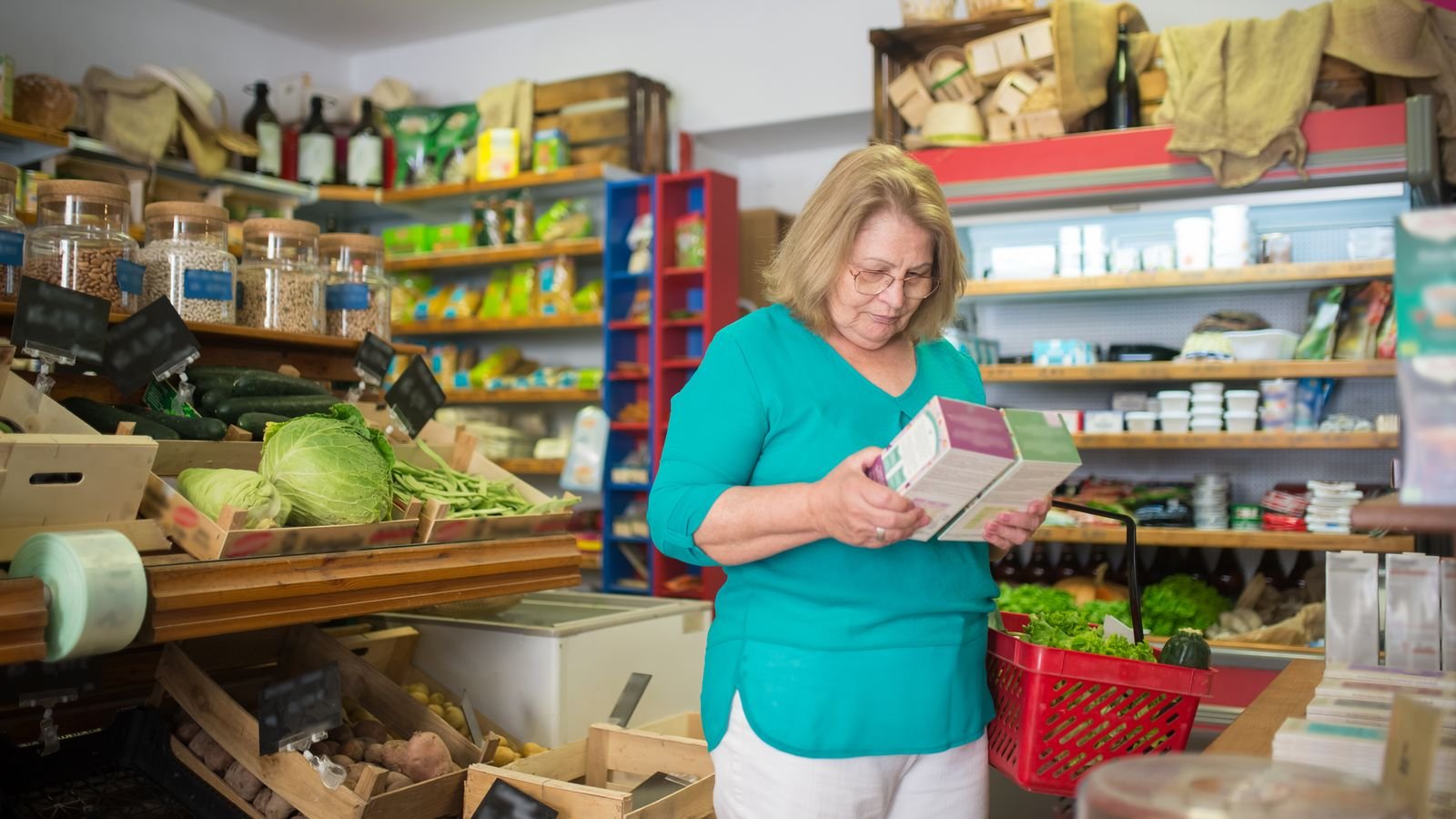
Here’s how to read food labels in about a minute: skip the front of the pack, turn it over, and check five things in a fixed order. Those five are the first three ingredients, the serve size, sugar, sodium and the date.
The front is advertising. The back is regulated by FSSAI, line by line. One number on the back still trips up careful shoppers, and it sits in the “per serve” column. I’ll work through it with a real pack in section 3.
⚡ Key takeaways
- Ingredients are listed in descending order by weight or volume. Whatever comes first is what you’re mostly eating.
- Use the per 100 g column to compare two packs. Use the per serve column, and the number of servings, to know what you’ll eat.
- Sodium (mg) × 2.5 = salt (mg). WHO’s limit for adults is under 5 g of salt a day.
- “No added sugar” doesn’t mean no sugar. FSSAI’s rule makes such packs print “Contains naturally occurring sugars” where that applies.
- As of 11 November 2026, India has no front-of-pack warning label in force. The Supreme Court’s verdict on it was reported as reserved in September, so the back of the pack is still your best tool.
What FSSAI Makes Every Pack Tell You
Most of what you need is on the pack by law. The Food Safety and Standards (Labelling and Display) Regulations, 2020 list what a pre-packaged food must carry. I read the FSSAI compendium of the regulations for this post, and these are the parts a shopper can use:
- List of ingredients, in descending order of weight or volume at the time of manufacture.
- Nutritional information per 100 g or 100 ml (or per single-consumption pack), plus each serve’s percentage of the RDA.
- Veg or non-veg mark. A green filled circle in a green square means vegetarian. A brown filled triangle in a brown square means non-vegetarian.
- FSSAI logo and licence number of the brand owner.
- Date of manufacture or packing, and the expiry or use-by date, printed together in one place.
- Allergen declaration, written as “Contains…” with the ingredient named.
A few foods are exempt from the nutrition table, including single-ingredient unprocessed foods, plain tea and coffee, spices, salt and packaged water. So don’t panic if your haldi packet has no table.
The nutrition table must show energy, protein, carbohydrate, total and added sugars, total, saturated and trans fat, cholesterol and sodium. You need only three of those rows for the 60-second check.
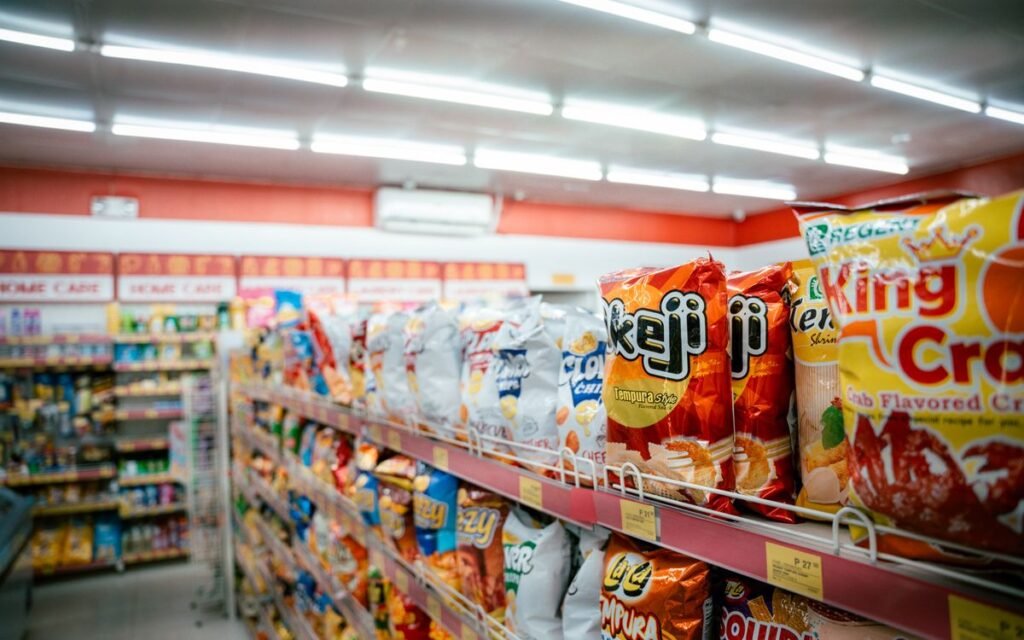
How to Read Food Labels in 60 Seconds
Do these in the same order every time, and the routine sticks by your third trip to the store.
1. First three ingredients (10 seconds)
Because the list runs from most to least, the first three names tell you what the product mostly is. If sugar, refined wheat flour (maida) or edible vegetable oil shows up in the top three, that’s the bulk of the pack, whatever the front says.
2. Serve size and number of serves (10 seconds)
Find the serve size in grams and how many serves the pack holds. FSSAI requires both. Then ask yourself honestly: is that how much I eat?
3. Sugar rows (15 seconds)
Look at total sugars and added sugars, in the per 100 g column if you’re comparing two brands.
4. Sodium (15 seconds)
Indian labels print sodium, not salt. Multiply by 2.5 to get salt.
5. Dates and allergens (10 seconds)
Check the expiry or use-by date, the storage line, and the “Contains” line if anyone at home has a food allergy.
💡 Pro tip
Does the front shout about one ingredient, like “with real almonds” or a big picture of fruit? FSSAI’s rule says a pack that emphasises an ingredient in words or pictures must disclose its percentage. Look for that percentage in the ingredient list. It can be a surprisingly small number.
The ICMR-NIN Dietary Guidelines for Indians (2024) make the same point in Guideline 17. They call serving size one of the most important pieces of information on the label, because every other number depends on it.
 Also readHow Much Salt Per Day? Indians Eat 8 g, WHO Says Under 5
The Per 100 g vs Per Serve Trap, With a Real Pack
Two columns sit side by side on most Indian labels, and they answer different questions.
Per 100 g is for comparing. Two brands of namkeen can have different serve sizes, so the only fair comparison is 100 g against 100 g.
Per serve is for your plate. It tells you what one portion gives you, but only if you eat the portion the company picked.
Here’s a worked example. Nestlé’s own page for Maggi Special Masala Noodles listed these values when I checked on 11 November 2026:
| Nutrient | Per 100 g | Per serve |
|---|---|---|
| Energy | 409 kcal | 286 kcal |
| Total sugars | 2.3 g | 1.6 g |
| Saturated fat | 6.3 g | 4.4 g |
| Sodium | 1,072 mg | 750.4 mg |
Now the maths, which is mine and not Nestlé’s:
- 750.4 ÷ 1,072 = 0.70. So one serve is 70 g, which is one cake of noodles.
- 750.4 mg sodium × 2.5 = 1,876 mg, or about 1.9 g of salt in one serve.
- FSSAI’s %RDA uses 2,000 mg of sodium a day. 750.4 ÷ 2,000 = about 38% of the day from one bowl.
- Cook two cakes for dinner and it’s 1,500.8 mg sodium, about 3.75 g of salt, or 75% of the day.
⚠️ Watch out
The trap works in both directions. A small serve size makes a pack look lighter than the way you eat it. And one good row can hide a poor one: this pack is low in sugar (2.3 g per 100 g) but high in sodium. Never judge by a single line.
The brand’s page also shows its own “%GDA per serve” column, with sodium at 31%, which is a different base from FSSAI’s 2,000 mg. Percentages depend on the base, so trust the milligrams and do your own sum.
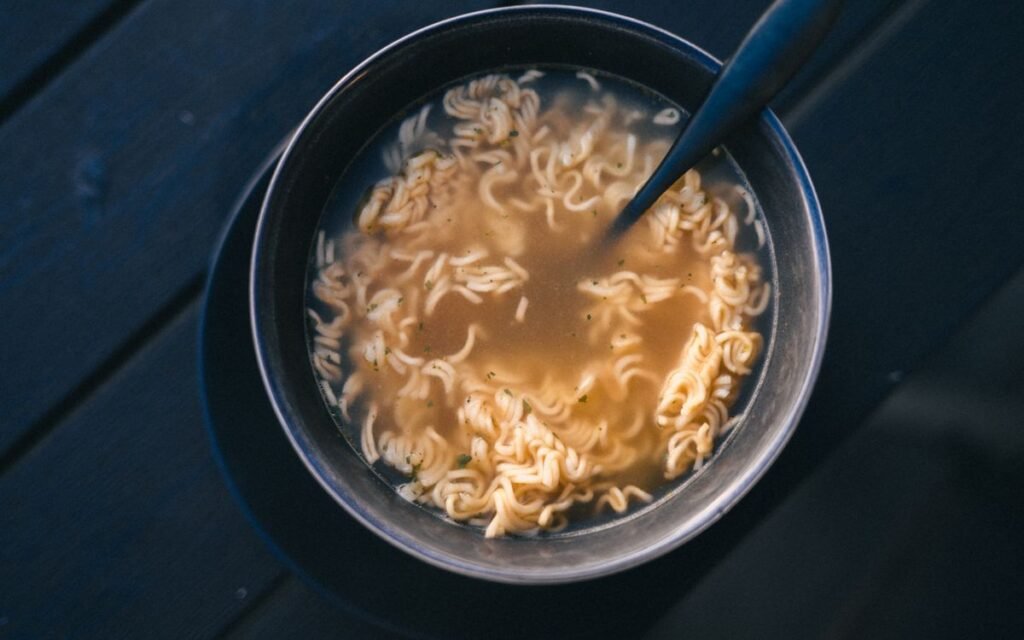
Added Sugar Has Many Names
Sugar rarely appears just once in an ingredient list. It can be split across several names, and each one then sits lower in the list than plain “sugar” would.
FSSAI’s claims regulation names sucrose, glucose, honey, molasses and corn syrup as sugars, and counts concentrated fruit juice and dried fruit paste as stand-ins for added sugar. ICMR-NIN lists fructose, corn syrup and molasses among “hidden sugars”, and the NHS in the UK adds more names. Put together, scan for these:
- Sucrose, glucose, fructose, dextrose, maltose
- Corn syrup, high-fructose corn syrup
- Honey, molasses, treacle
- Fruit juice concentrate, fruit purée, dried fruit paste
- Cane sugar, brown sugar, and yes, jaggery
Jaggery and honey still count as added sugar when a company puts them in a pack. I compared the two sweeteners in jaggery vs sugar.
How much is too much? WHO says free sugars should stay under 10% of daily energy, about 50 g or 12 level teaspoons on a 2,000-calorie diet, and adds that going below 5% may bring more benefit. ICMR-NIN is stricter for Indians: restrict sugar to 20 to 25 g a day for adults.
FSSAI’s %RDA on your label uses 50 g of added sugar as its base. So a serve showing 20% RDA has 10 g of added sugar.
Sodium to Salt: The ×2.5 Rule
Salt is sodium chloride, and only part of it is sodium. WHO’s fact sheet gives the conversion as 1 g of salt for every 400 mg of sodium. That’s where the ×2.5 comes from.
WHO recommends adults stay under 2,000 mg of sodium a day, which is just under 5 g of salt, or about a teaspoon. That teaspoon includes the salt in your dal, sabzi, achaar and papad, plus whatever is inside packets.
So how do you use this in the store?
- Per 100 g sodium above 600 mg is “high” by the NHS guide (that’s 1.5 g of salt per 100 g).
- Per 100 g sodium at or under 120 mg is what FSSAI allows a brand to call “low sodium”.
- The noodles in section 3, at 1,072 mg per 100 g, sit well above the first number. That doesn’t make them banned. It means the portion matters.
The full salt story, with Indian home-cooking numbers, is in how much salt per day. If you’re looking at “low sodium” salts on the same shelf, read the potassium salt swap post before you buy one.
 Also readJaggery vs Sugar: Is Gur Really Healthier? What NIN Says
Quick-Check Table: What Counts as Low or High
India doesn’t yet have an official “high” cut-off printed on packs, so this table uses two sources.
The “low” column is FSSAI’s condition for making a “low” claim under the Advertising and Claims Regulations, 2018. The “high” column is the NHS traffic-light guide, which is UK guidance and not an Indian rule. All figures are per 100 g of solid food.
| Nutrient | Where to look | Low (FSSAI claim condition) | High (NHS, UK guide) |
|---|---|---|---|
| Total fat | “Total fat” row | 3 g or less | More than 17.5 g |
| Saturated fat | Under total fat | 1.5 g or less | More than 5 g |
| Total sugars | Under carbohydrate | 5 g or less | More than 22.5 g |
| Sodium | Last rows of the table | 120 mg or less (0.3 g salt) | More than 600 mg (1.5 g salt) |
| Dietary fibre | If declared | “Source” needs 3 g, “high” needs 6 g | Higher is better here |
Drinks follow different numbers: FSSAI’s “low sugar” condition for liquids is 2.5 g per 100 ml.
Use the table as a rough sorter, not a verdict on a food. Ghee, nuts and paneer will show “high” fat on any chart, and they have a place in a normal Indian diet in sensible amounts. Our guides on how much protein a day and how many almonds a day cover those portions.
What Front-of-Pack Claims Mean (and What They Don’t)
Some front-of-pack claims are tightly defined. Others are looser than they sound.
“No added sugar.” FSSAI allows this only if no sugar of any type was added, and no ingredient that contains sugar or substitutes for it, such as concentrated fruit juice. The food can still be naturally sugary, and then the label must carry the line “Contains naturally occurring sugars”. Check the total sugars row anyway.
“Sugar free.” By FSSAI’s condition, that’s 0.5 g of sugars or less per 100 g. ICMR-NIN warns that sugar-free foods “may be loaded with fats, refined cereals” and hidden sugars, so read the rest of the table.
“Natural.” FSSAI’s schedule says a composite food can’t be described as “natural” at all. It may only say “made from natural ingredients”, and only if every ingredient qualifies. Phrases like “natural goodness” aren’t allowed.
“Made with whole grain” and “multigrain”. ICMR-NIN says “made with whole grain” can be misread, and doesn’t mean the food isn’t highly processed. Neither document I read defines “multigrain”. So use the ingredient list: is whole wheat or a millet first, or is it maida with a sprinkle of other grains?
“Real fruit.” ICMR-NIN notes a product with only 10% fruit or less may still say it’s made with real fruit, and can carry added sugar too.
What about warning labels on the front?
They aren’t here yet. FSSAI’s 2022 star-rating model, the Indian Nutrition Rating, didn’t get consensus among stakeholders, LiveLaw reported in February 2026.
In August 2026, FSSAI proposed red hexagon labels reading “High Fat”, “High Sugar” or “High Salt” to the Supreme Court. In September it told the court it would consider them for foods high in even one of these.
The court reportedly reserved its verdict in late September 2026. I found no final order or notified rule as of 11 November 2026. Until one arrives, treat every front-of-pack promise as a claim to verify on the back.
Your Supermarket Checklist
Screenshot this list. It works at a kirana counter and in a supermarket aisle. On quick-commerce apps, look for the back-of-pack photo in the product gallery.
- Flip the pack. Ignore the front until you’ve read the back.
- Read the first three ingredients. Sugar, maida or oil up top tells you what the product mostly is.
- Count the sugar names. Two or three different sugars in one list is worth noticing.
- Find the serve size and number of serves. Multiply if you’ll eat more than one.
- Compare brands on per 100 g only. Never compare one brand’s serve with another’s.
- Convert sodium. Multiply by 2.5 and hold it against the 5 g a day limit.
- Glance at saturated and trans fat. ICMR-NIN’s advice is to pick the variant lower in saturated fat, with no trans fat.
- Check “expiry” or “use by” before “best before”. Under FSSAI’s definitions, food past its use-by date may not be safe and can’t be sold. “Best before” is about quality, and the food may still be safe after it.
- Read the “Contains” line for milk, nuts, soy, wheat, egg, fish or crustaceans if allergies matter in your home.
- Look for the FSSAI logo and licence number. No logo on a packaged food is a reason to put it back.
Buying loose mithai, where there’s no label to read at all? Use our checks for adulterated sweets instead.
✅ Our verdict
You don’t need to read every row. Three ingredients, the serve size, sugar, sodium and the date cover most of what matters, and they take a minute. Do the per 100 g comparison when choosing between two brands, and the per serve maths for the amount you’ll eat.
This article is for information only and isn’t medical advice. If you have a health condition, a food allergy or a prescribed diet, consult a doctor or a registered dietitian about what to look for on labels.
Frequently Asked Questions
What is the difference between “best before” and “use by” in India?
Under FSSAI’s definitions, “best before” marks the end of the period when the food keeps its promised quality, and it may still be safe after that date. “Use by” or “expiry” is the date after which the food may not be safe and must not be sold. Only expiry or use-by is mandatory on the pack.
What does %RDA per serve mean on a food label?
It’s the share of an average adult’s daily allowance that one serve provides. FSSAI’s regulation bases it on 2,000 kcal, 67 g total fat, 22 g saturated fat, 2 g trans fat, 50 g added sugar and 2,000 mg sodium a day. Your own needs can be higher or lower.
How do I convert sodium to salt on a label?
Multiply the sodium figure by 2.5. So 400 mg of sodium is 1 g of salt. WHO’s limit for adults is under 2,000 mg of sodium, or under 5 g of salt, a day.
Does “no added sugar” mean a food is sugar free?
No. It means no sugar or sugar-containing ingredient was added. Fruit and milk carry their own sugars, and FSSAI requires such packs to say “Contains naturally occurring sugars”.
Are there warning labels on the front of food packs in India?
Not as of 11 November 2026. FSSAI has proposed red hexagon warnings for foods high in fat, sugar or salt before the Supreme Court, and the verdict was reported as reserved in late September 2026. Nothing has been notified yet.
The Bottom Line
Once you know how to read food labels, the front of the pack loses most of its power over you. Check the first three ingredients, the serve size, sugar, sodium and the date, in that order. Try it tonight on one packet already in your kitchen, and time yourself.
Keep reading
 Read nextHow Much Protein a Day? An Indian Veg Plate That Gets There
 Read nextPotassium Salt May Save 4 Lakh Indians a Year: Should You Switch?
 Read nextMillets in Winter: Which to Eat and the Label to Check First
Sources
- FSSAI: Food Safety and Standards (Labelling and Display) Regulations, 2020, compendium (ingredient order, nutrition table, %RDA base, veg mark, dates, allergens)
- FSSAI: Food Safety and Standards (Advertising and Claims) Regulations, 2018, compendium (“no added sugar”, “natural”, low and free claim conditions)
- ICMR-NIN: Dietary Guidelines for Indians 2024, Guideline 17 on reading food labels
- WHO: Sodium reduction fact sheet (2,000 mg sodium, 5 g salt, conversion)
- WHO: Healthy diet fact sheet (free sugars under 10% of energy)
- NHS: How to read food labels (UK high and low thresholds per 100 g)
- NHS: Sugar: the facts (names for added sugars)
- Maggi India: Special Masala Noodles product nutrition, checked 11 Nov 2026
- LiveLaw (Feb 2026): Supreme Court asks FSSAI to consider front-of-pack warning labels
- LiveLaw (Aug 2026): FSSAI proposes pictorial front-of-pack warning labels
- LiveLaw (Sept 2026): FSSAI revises stand on single-nutrient warning labels
- OC Academy (28 Sept 2026): Supreme Court reserves verdict on front-of-pack labelling