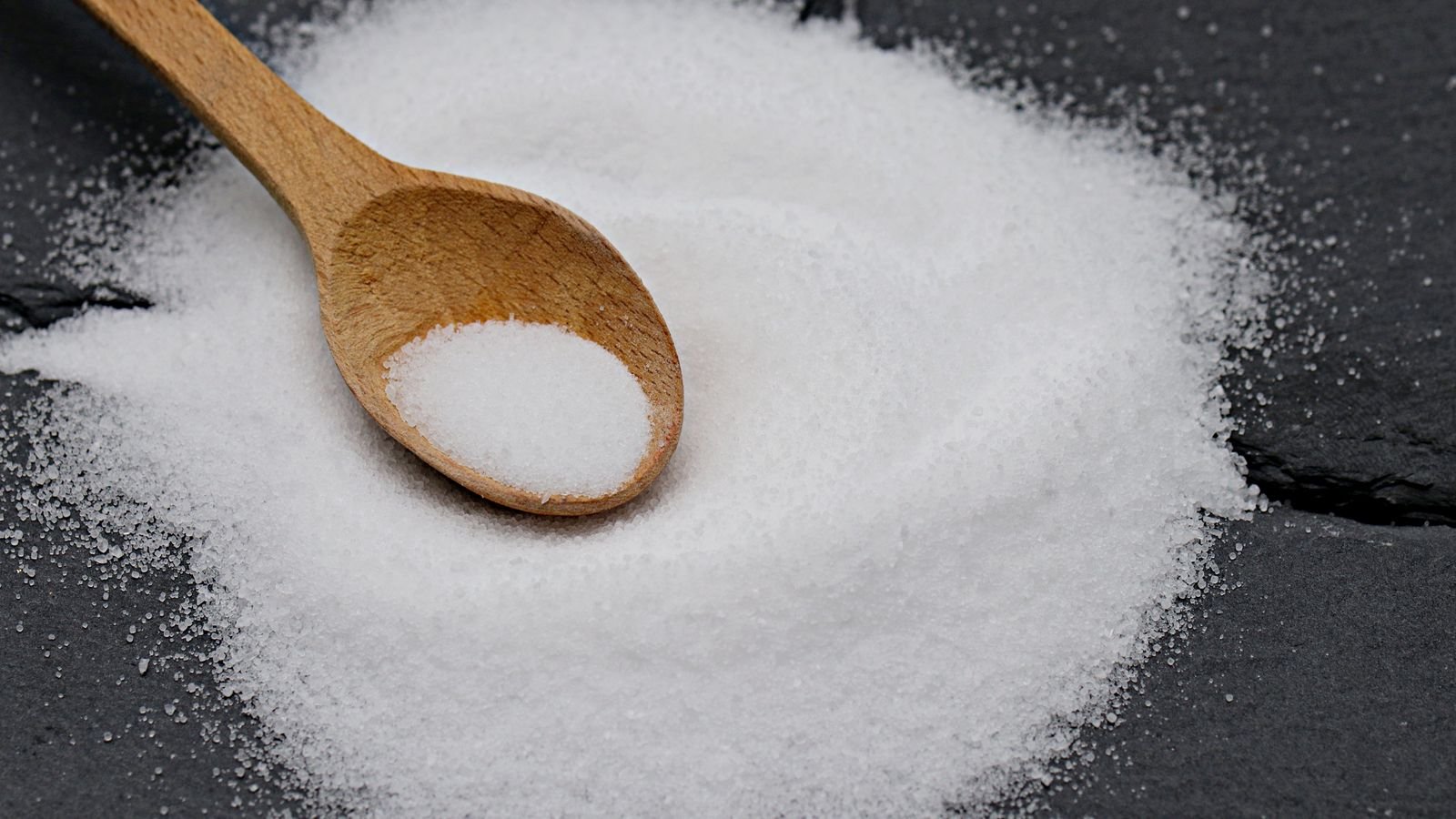
A study published on 4 November estimates that if all salt in India were replaced with potassium salt, about 4 lakh deaths a year could be prevented. Most healthy adults can reasonably make this swap at home, and it costs a family around ₹40 a month.
Two things the headlines skip, though. That 4 lakh is a computer model and not a count of real people, and some readers shouldn’t touch this salt at all. Section 4 tells you who.
⚡ Key takeaways
- The Nature Health study puts India’s figure at 3,99,884 deaths prevented a year, if every bit of salt were replaced.
- It’s a modelling estimate. The real-world trial evidence comes from about 21,000 people in rural China.
- Potassium salt replaces part of the sodium chloride with potassium chloride. Tata Salt Superlite, at ₹71 a kg on Amazon on 6 November, lists it as an ingredient.
- People with advanced kidney disease, or on potassium-sparing diuretics or potassium supplements, should not switch without asking their doctor.
- Pink salt labelled “low sodium” isn’t the same thing. Look for “potassium chloride” on the pack.
What the Potassium Salt Study Actually Found
Researchers from The George Institute for Global Health and UNSW Sydney ran the numbers for 193 countries, and Nature Health published the paper. Worldwide, replacing all added salt could prevent an estimated 2.96 million deaths and 10.17 million new cases of heart and kidney disease every year.
The George Institute’s release gives India’s share: 3,99,884 deaths and 15,28,494 new cases a year. Euronews reports that only China, at about 1.08 million deaths, comes out higher.
The mechanism is simple. You get less sodium, which pushes blood pressure up, and more potassium, which many diets are short of. The paper’s benefit comes from that blood pressure drop.
How Much Should You Trust That 4 Lakh Number?
Treat it as the size of the prize, not a promise. It assumes every grain of salt in India gets replaced, including what’s in namkeen, pickles and restaurant gravy, and nobody expects that soon.
The part you control is smaller but still big. Globally, swapping only the salt used in home cooking and at the table accounted for 1.85 million of the estimated deaths prevented, more than swapping salt in processed and restaurant food (1.56 million).
The real-world evidence behind it
The strongest trial is SSaSS, published in the New England Journal of Medicine in 2021. About 21,000 adults in 600 Chinese villages, all with a past stroke or poorly controlled blood pressure, were followed for almost five years. Those on the substitute had 14% fewer strokes, 13% fewer cardiovascular events and 12% fewer premature deaths.
Notice who was in that trial. They were higher-risk people in rural China, so the result doesn’t transfer perfectly to a healthy 30-year-old in Pune. I’d still call this one of the better-backed food swaps around.
The WHO suggested the swap in January 2025, but as a conditional recommendation resting on low-certainty evidence. That’s the honest position: promising, not settled.
 Also readHow Much Salt Per Day? Indians Eat 8 g, WHO Says Under 5
Potassium Salt vs Regular Salt: What Changes in Your Kitchen
Indian experts writing in an April 2026 consensus statement, reported by The South First, describe products replacing about 25 to 30% of the sodium with potassium chloride. The George Institute says it looks, tastes and cooks like regular salt, so your dal shouldn’t notice.
| Salt on Amazon (6 November 2026) | Price for 1 kg | Potassium chloride on the label? |
|---|---|---|
| Regular Tata Salt | About ₹31 to ₹35 | No, regular iodised salt |
| Tata Salt Lite | ₹55 | Not confirmed; check the pack |
| Tata Salt Superlite (30% less sodium) | ₹71 | Yes, listed with potassium iodate for iodine |
| “Low sodium” pink or rock salts | ₹99 to ₹299 | Not always; read the pack before paying |
An ICMR study found Indian adults average about 8 g of salt a day. For a family of four, that’s under 1 kg a month even if all of it came from your kitchen. So the swap adds around ₹40 a month by my maths, and a bit less if some of that salt comes from outside food.
💡 Pro tip
Prices vary a lot by store and pack size. The panel says these salts cost two to four times more than iodised salt, and that about 70% of sales are in Delhi, Mumbai, Bengaluru and Pune. If your kirana doesn’t stock one, ask them or try a grocery app.

Who Should Not Switch to Potassium Salt
This is the catch from the top, and I’d read it twice if anyone at home has kidney trouble or takes blood pressure tablets. Extra potassium is a problem when the kidneys can’t clear it.
⚠️ Watch out
The South First’s report of the Indian panel names people with advanced kidney disease (stages 4 and 5) and those on potassium-sparing diuretics or potassium supplements as needing caution. Prof Vivek Jha, in The George Institute’s release, says people with serious kidney disease and those on medicines that raise potassium need to take precautions. Ask your doctor before switching if that could be you or your parents.
The WHO’s guideline summary applies to adults and doesn’t cover pregnant women, children or people with kidney problems. If you cook one pot for the whole family, that matters. A home with a pregnant woman or a parent on dialysis shouldn’t assume the swap suits everyone at the table.
The study itself modelled this group. Among people with advanced kidney disease, it estimated 0.10 million deaths worldwide from high potassium against 0.75 million prevented by lower blood pressure. A net benefit on a population chart doesn’t tell you what’s safe for your own father, though, so this one is his nephrologist’s call.
The panel also said early-stage kidney disease, diabetes, older age and common BP drugs (ACE inhibitors, ARBs) shouldn’t mean automatic exclusion. That’s a call for your doctor too, not for a blog.
4 Mistakes That Cancel Out the Swap
Switching the packet is easy, and it’s also easy to undo the benefit without noticing.
- Using more because it’s “healthy.” A lower-sodium salt is no licence for an extra pinch. The WHO limit of under 5 g a day still applies.
- Buying pink salt instead. WHO’s advice covers only substitutes where potassium replaces some sodium. “Himalayan” or “natural” on a pack proves nothing either way.
- Losing the iodine. Regular iodised salt protects against iodine deficiency, so choose a potassium salt that also says iodised, as Superlite’s potassium iodate listing shows.
- Ignoring packaged food. Our salt guide shows how much comes from papad, namkeen and pickles, and no kitchen swap touches that.
⚠️ Watch out
One regulatory wrinkle: as of the April 2026 statement, FSSAI hadn’t formally recognised potassium-enriched iodised salt as an approved edible salt category, and a draft label said “to be consumed under medical supervision”. The panel called that too restrictive. So you may see that kind of wording on packs, and the rules could still change.
 Also readJaggery vs Sugar: Is Gur Really Healthier? What NIN Says
How to Switch Without a Family Revolt
Nobody at home needs a lecture. Do this over a fortnight.
- Check first. Ask the doctor if anyone has kidney disease or takes potassium-affecting medicine.
- Finish the current packet, then swap. Use it for everyday dal and sabzi, same quantity or slightly less.
- Keep the old salt out of the salt shaker. Mixed jars defeat the point.
- Taste-test without announcing it. The George Institute says it cooks like regular salt, though buyer reviews on Amazon are mixed on saltiness. Your family’s tongue is the real test.
- Watch the pack. Pick one that says iodised and lists potassium chloride.
My Verdict: Should Your Family Switch?
✅ Our verdict
Yes for most healthy adults, if nobody at the table has kidney disease or takes potassium-affecting medicine and nobody is pregnant. It costs about ₹40 a month, and the evidence is decent for such a small change. If anyone in the house falls in the caution group, ask their doctor first or keep separate salt for them.
And keep this in proportion. It helps, but eating less salt overall is still the bigger habit, and this swap doesn’t replace walking, sleep or your BP check.
This article is for information only and isn’t medical advice. Consult a doctor before changing your salt if you have kidney disease, take blood pressure medicine, or are pregnant.
Frequently Asked Questions
Is potassium salt safe for everyone?
No. People with advanced kidney disease, those on potassium-sparing diuretics or potassium supplements, and anyone told to limit potassium should ask a doctor first. WHO’s guidance also doesn’t cover pregnant women or children.
Does potassium salt taste different?
The George Institute says it looks, tastes and cooks like regular salt. Buyer reviews on Amazon are mixed on saltiness, so try one small pack before committing.
Is Himalayan pink salt a low-sodium option?
Not as a rule. WHO’s advice covers salts where potassium replaces part of the sodium, so a pink salt only counts if the label lists potassium chloride. Some pink salts aren’t iodised either, so check for that too.
Can I eat more potassium salt since it has less sodium?
No. Limits for total salt still apply, and more of it simply brings the sodium back. The WHO’s limit is under 5 g of salt a day for adults.
Which potassium salt can I buy in India?
Tata Salt Superlite lists potassium chloride among its ingredients on Amazon, at ₹71 a kg on 6 November 2026. Others exist, so read the ingredient list instead of the front of the pack.
The Bottom Line
Potassium salt looks like one of the cheapest health upgrades in an Indian kitchen, but the 4 lakh figure is a model and the kidney warning is real. Check the medicine list at home, then try one pack of an iodised salt with potassium chloride on it. While you’re at it, look at how much salt a day is OK, because the swap works best with less.
Keep reading
Read nextHow Much Salt Per Day? Indians Eat 8 g, WHO Says Under 5 Read nextHow Much Ghee a Day Is OK? The Spoon Maths for Winter Meals
 Read nextShakarkandi vs Aloo: Is Sweet Potato Really Healthier in Winter?
Sources
- Nature Health: Global health outcomes from replacing dietary sodium chloride with potassium-enriched salt (4 November 2026)
- The George Institute: release with India figures and expert comments
- Euronews: study coverage and country estimates (4 November 2026)
- The George Institute: SSaSS trial results, New England Journal of Medicine (2021)
- WHO: Use of lower-sodium salt substitutes, guideline summary (2025)
- The South First: Indian expert consensus, cautions and cost (22 April 2026)
- Amazon India: Tata Salt Superlite ingredients and price (checked 6 November 2026)