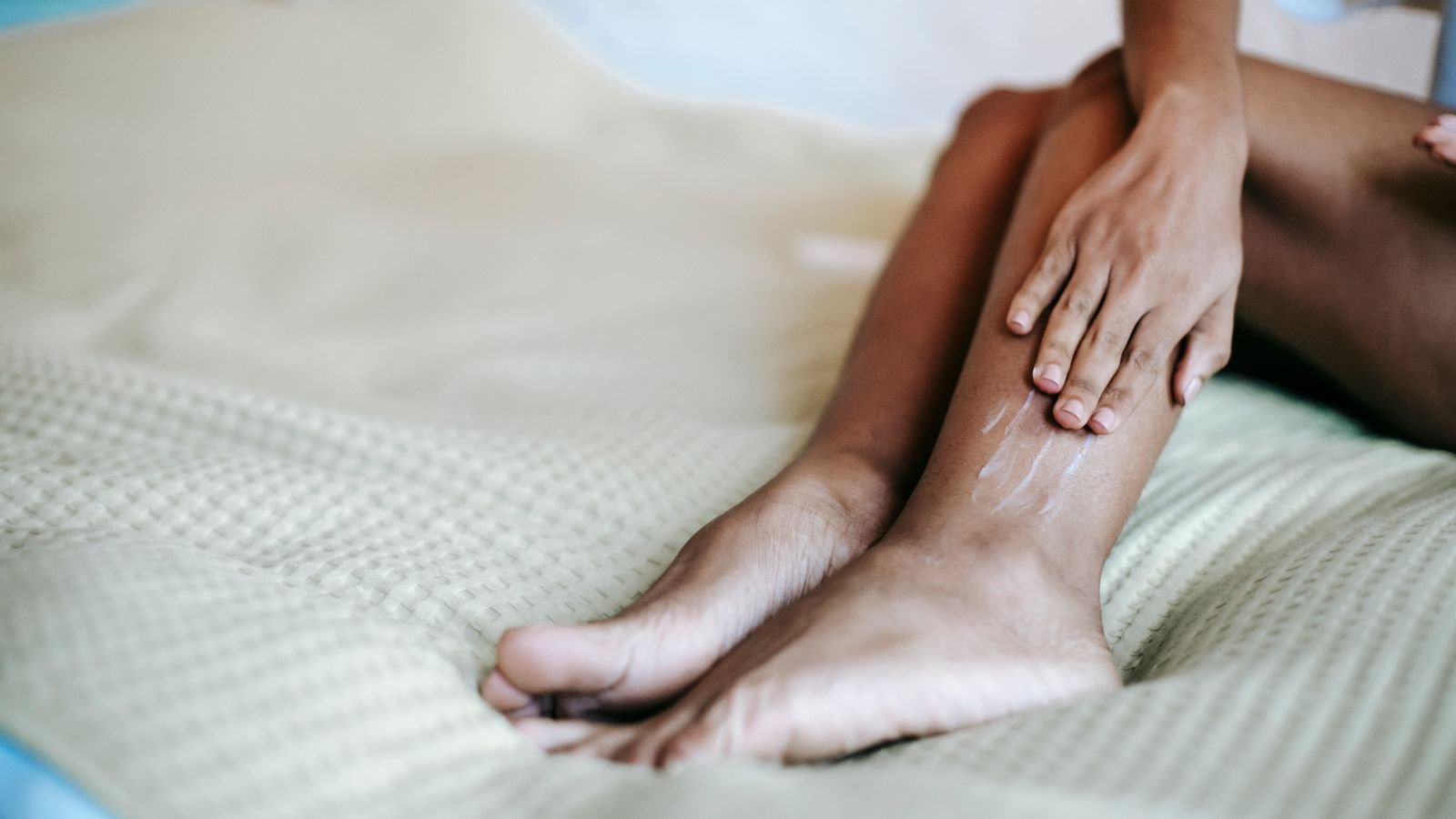
Cracked heels in winter usually heal with a cream that contains urea, a layer of plain petroleum jelly at night and a pair of cotton socks over it. The American Academy of Dermatology (AAD) suggests a cream with 10 to 25% urea, and Cleveland Clinic says these creams take about two weeks of regular use to show results.
Coconut oil and ghee aren’t useless, but they’re not the strongest option. And one common Indian winter habit, the long hot-water bucket soak, can leave your heels worse off. That’s in section 4.
⚡ Key takeaways
- Best cream: one with urea (10 to 25%), an alpha hydroxy acid like lactic acid, or salicylic acid, per the AAD. These soften the hard skin and hold water in it.
- At night: plain petroleum jelly over the cream, then thin cotton socks. Cleveland Clinic recommends exactly this.
- Coconut oil and ghee: fine as a stopgap. Coconut oil matched mineral oil in one small trial on dry legs; ghee has no studies on heels.
- Never: cut hard skin with a blade at home, or sit with your feet in a bucket of hot water for long.
- Time: give it 2 weeks of daily use before you judge.
- Diabetes? Get any heel crack checked by a doctor instead of treating it at home.
Why Heels Crack in Winter (Especially in Indian Homes)
Heel skin is thick. When it dries out, it can’t stretch the way thinner skin can, so it splits along the edges each time your weight lands on it. Cleveland Clinic dermatologist Dr Lindsey Moore also points out that people simply forget their heels: they moisturise their arms and face but not their feet.
Winter adds dry air on top of that. Cold air holds less moisture, and a room heater dries the indoor air further. Our winter dry skin routine covers the rest of your body; this post is only about feet.
Then come our own habits. A review in the New Zealand prescribing journal bpac lists the risk factors for cracked heels, and a few of them describe a normal Indian day:
- Going barefoot on cold marble or tile floors at home.
- Open-back footwear, like the chappals and sandals many of us wear all year.
- Standing for long hours, especially on hard floors. Think of cooking, teaching or a shop counter.
- Extra body weight, which puts more pressure on the heel.
Is it just dry skin?
For most people, yes. Cleveland Clinic’s Dr Moore puts it down mainly to dry skin, plus friction from shoes and dry climates. But the AAD notes that cracked heels are sometimes caused by a medical condition such as diabetes, so cracks that keep coming back despite good care deserve a doctor’s look.
Cracked Heels in Winter: The Creams That Actually Help
A plain body lotion won’t do much for thick heel skin. You need an ingredient that softens and lifts the hard top layer, followed by something greasy that seals the water in.
Urea: the ingredient doctors name first
The AAD recommends a moisturiser with 10 to 25% urea, alpha hydroxy acid or salicylic acid. Urea draws water into the skin and loosens thick, dry layers. Cleveland Clinic’s Dr Moore mentions stronger 20% or 40% urea creams as exfoliating moisturisers.
There’s trial evidence too. In a 2017 double-blind study in Diabetic Medicine, 167 people with deep heel cracks used either a cream with urea, glycerine and petrolatum or a placebo cream for four weeks. Only 6.4% of the urea-cream group still had a deep open crack at four weeks, against 24.1% on placebo.
That study was in people with diabetes, who should use creams under a doctor’s guidance. Full healing at four weeks wasn’t significantly different between groups, but the deep cracks closed faster with the urea cream.
Lactic acid and salicylic acid
Both help peel away thick skin. bpac says 10% urea creams are the most commonly used, and some come with 5% lactic acid added. It cites one study where a 6% salicylic acid cream reduced thick skin, cracks and pain.
Petroleum jelly: the sealant
A cream works better with a lid on top. The AAD says to apply plain petroleum jelly before bed, and Cleveland Clinic calls it a sealant that locks moisture in after your lotion. Ceramides in a cream also help trap water in the skin, according to Cleveland Clinic.
💡 Pro tip
Put the cream on right after your bath, while your feet are still a little damp. Then you’re sealing in water that’s already there.
 Also readBath Water Temperature in Winter: How Hot Is Too Hot
Coconut Oil, Ghee or Vaseline: What Home Remedies Can Do
Every Indian household has a heel remedy. Coconut oil before bed, a dab of ghee, mustard oil, sometimes candle wax. So what does the evidence say?
Coconut oil
There’s one decent trial. In 2004, researchers in the journal Dermatitis had 34 people with mild to moderate dry skin apply either virgin coconut oil or mineral oil to their legs twice a day for two weeks. Both improved skin hydration, and coconut oil worked about as well as mineral oil.
That was dry shin skin, not deep heel cracks. So coconut oil is a fair moisturiser, but it has nothing that softens hard skin the way urea does.
Ghee and other kitchen fats
Honestly, nobody has studied ghee on heels. It’s a fat, so it will coat the skin and soften it for a while, like any oil. It also smells and stains bedsheets.
Vaseline
This is the one home staple the AAD actually recommends. Plain petroleum jelly is cheap and sold at every chemist. It isn’t a cure by itself, but it’s the best “lid” to put over a urea cream.
| Option | What it does | Evidence | Our take |
|---|---|---|---|
| Urea cream (10 to 25%) | Softens hard skin, pulls in water | AAD recommends; trials support | First choice |
| Lactic or salicylic acid cream | Exfoliates thick skin | AAD lists AHAs and salicylic acid | Good alternative |
| Plain petroleum jelly | Seals moisture in | AAD recommends at bedtime | Use over the cream at night |
| Coconut oil | Moisturises like mineral oil | One small trial on legs | Fine stopgap |
| Ghee, mustard oil | Coats and softens | No studies on heels | Better than nothing, messy |
The Mistakes That Make Cracked Heels Worse
Remember the bucket soak from the top? Many of us fix rough heels with a long soak in steaming water, then scrape hard. It feels productive, but both halves of that habit can backfire.
⚠️ Watch out
Skip the steaming bucket. Cleveland Clinic says lukewarm water is best and warns that soaking too long can weaken the skin barrier. A short warm soak before a pumice is fine; a 20-minute hot one isn’t.
Cutting hard skin with a blade
This is the big one. The NHS says not to cut off hard skin yourself, and bpac says blades should not be used at home because of the risk of injury and infection. A razor or a nail cutter on your heel can turn a dry crack into an open wound. If a salon pedicure reaches for a blade, it’s fine to say no.
Scrubbing too hard
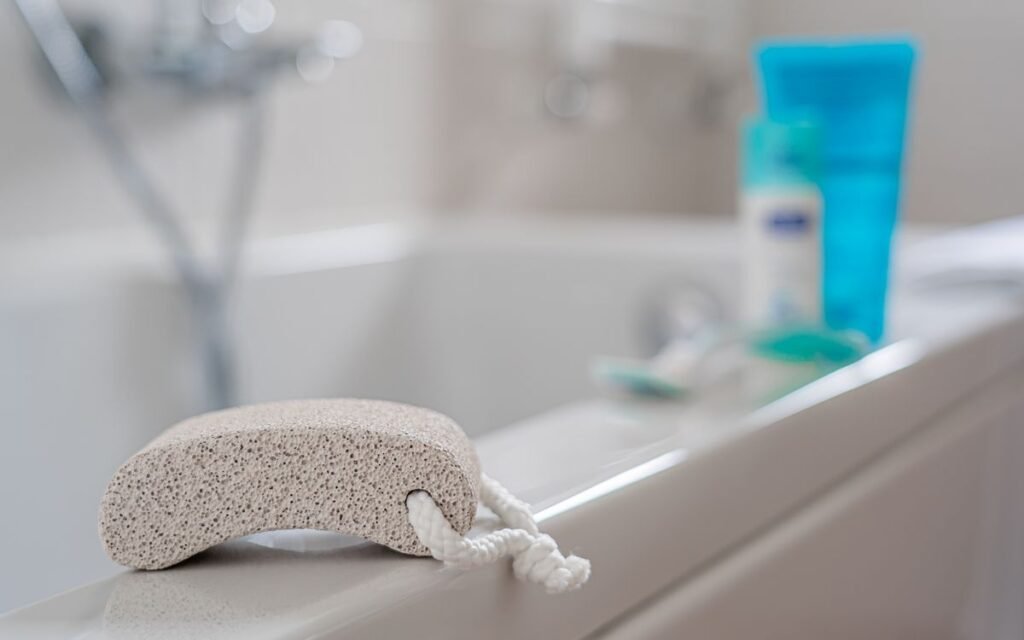
Cleveland Clinic says a pumice stone is fine when used in moderation, but not over inflamed, itchy or sensitive skin. If a crack is open or bleeding, leave the pumice alone. bpac adds that urea and salicylic acid can sting on broken skin, so let open cracks settle first.
Walking barefoot and wearing flat chappals all winter
Your floors don’t warm up in December. Wear soft socks or closed slippers at home, and closed shoes outside when you can. The NHS suggests shoes that fit well and don’t rub.
Forgetting water
Dry skin isn’t only an outside problem. Winter makes you less thirsty, so it’s easy to drink too little. Our guide to drinking water in winter has an easy way to check.
A Simple Night Routine With Socks
This takes about five minutes before bed, and I’d keep it boring and consistent.
- Wash feet in lukewarm water. Soak for only a few minutes if the skin is thick. The NHS suggests warm water to soften hard skin.
- Pat dry, but not bone dry. Dry well between the toes.
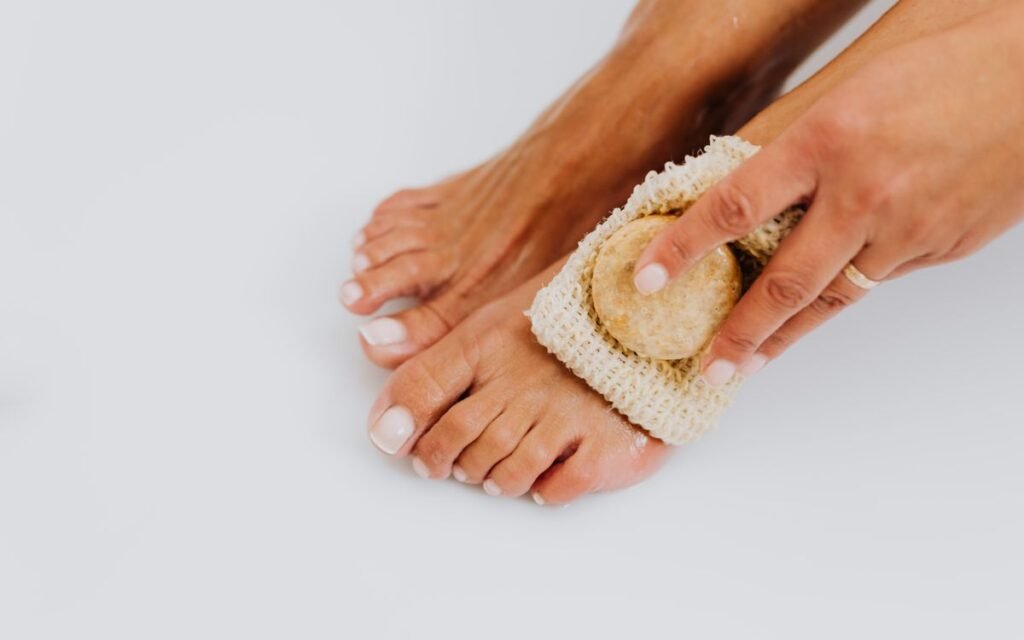
- Use a pumice stone gently on the thick, softened edges. The NHS says to use one regularly; Cleveland Clinic says in moderation. Skip any open or sore crack.
- Apply the urea cream to both heels, working it into the edges.
- Seal with petroleum jelly. A thin layer is enough.
- Pull on thin cotton socks. Cleveland Clinic suggests thin, 100% cotton socks to keep the moisture in, and the AAD says socks also keep grease off your bedding.
- Repeat the cream in the morning if you can, before your socks and shoes go on.

What about painful cracks during the day?
The AAD suggests a liquid bandage over the cracks in the daytime. It forms a protective layer that can reduce pain and help keep germs out. Ask your chemist for one.
If you’re wondering whether sleeping in socks is comfortable or safe, read our post on sleeping with socks on in winter.
💡 Pro tip
Keep the cream, the jar of petroleum jelly and a pair of socks next to your bed. If they’re in the bathroom cupboard, you’ll skip it on cold nights.
 Also readSleeping With Socks On in Winter: What the Studies Say
What to Buy for Cracked Heels on a Budget
You don’t need a fancy foot spa kit. A few cheap items cover most cases of cracked heels in winter.
- A urea cream. Indian online pharmacies like 1mg list several 10% urea creams, some with lactic acid. Check the label for the percentage. For stubborn, thick skin, ask the chemist about a stronger heel cream.
- A tub of plain white petroleum jelly. Skip scented versions. The plain one is the cheapest and does the job.
- A pumice stone or a foot file. A basic stone is enough. Rinse it after use and let it dry.
- Two pairs of thin cotton socks just for bedtime.
What to skip: anything with a razor blade built in, “foot peel” socks if your skin is cracked or broken (Cleveland Clinic advises against peels on broken skin), and heavily perfumed foot creams.
✅ Our verdict
Start with a 10% urea cream, plain petroleum jelly and cotton socks for two weeks. That’s the routine the dermatology sources agree on, and none of it is expensive. Use coconut oil only if you’ve run out of cream.
When should you see a doctor?
The AAD says to see a dermatologist if your heels are severe or don’t improve with these steps. The NHS advises seeing a GP if hard skin bleeds, has pus, or hasn’t improved after three weeks. If you have diabetes or poor circulation, the NHS says not to treat foot skin yourself; get it checked.
Frequently Asked Questions
Why do my heels crack only in winter?
Winter air is drier, and heaters dry indoor air further, so thick heel skin loses water and splits under your body weight. Going barefoot on cold floors and wearing open chappals add to it.
Is urea cream good for cracked heels?
Yes. The AAD recommends a moisturiser with 10 to 25% urea for dry, cracked heels. Urea softens thick skin and pulls water into it. It can sting on open cracks, so go gently there.
Is coconut oil good for cracked heels?
It moisturises about as well as mineral oil in one small trial on dry legs. It doesn’t soften hard skin like urea, so treat it as a stopgap.
How long do cracked heels take to heal?
Cleveland Clinic says over-the-counter treatments take about two weeks of regular use to show a response. Deep cracks may take longer.
Can I use Vaseline on cracked heels?
Yes. The AAD suggests plain petroleum jelly before bed. It works best as a seal over a urea cream, with cotton socks on top.
The Bottom Line
Cracked heels in winter come from dry air, thick skin and a few habits: bare feet, open chappals and long hot soaks. A urea cream, plain petroleum jelly and cotton socks at night usually start to help within about two weeks. Tonight, put your socks and cream next to the bed and start.
This article is for information only; consult a doctor or dermatologist about your own skin. If you have diabetes, poor circulation or a crack that bleeds or looks infected, see a doctor instead of treating it at home.
Keep reading
 Read nextWinter Dry Skin: The Hot-Water Bath Habit Making It Worse
 Read nextChapped Lips in Winter? The Lip Balm Habit Making Them Worse
 Read nextDrinking Water in Winter: How Much You Need When Not Thirsty
Sources
- American Academy of Dermatology: How to care for dry, cracked heels (urea 10-25%, petroleum jelly, socks, liquid bandage)
- Cleveland Clinic Health Essentials: Don’t let dry heels ruin sandal season (Dr Lindsey Moore)
- NHS: Corns and calluses (pumice, warm soak, don’t cut hard skin, diabetes)
- bpac NZ: Cracked heels (risk factors, urea and salicylic acid, no blades at home)
- Gin et al. 2017, Diabetic Medicine: Urea, glycerine and petrolatum cream for foot cracks (PubMed)
- Agero and Verallo-Rowell 2004, Dermatitis: Virgin coconut oil vs mineral oil for dry skin (PubMed)