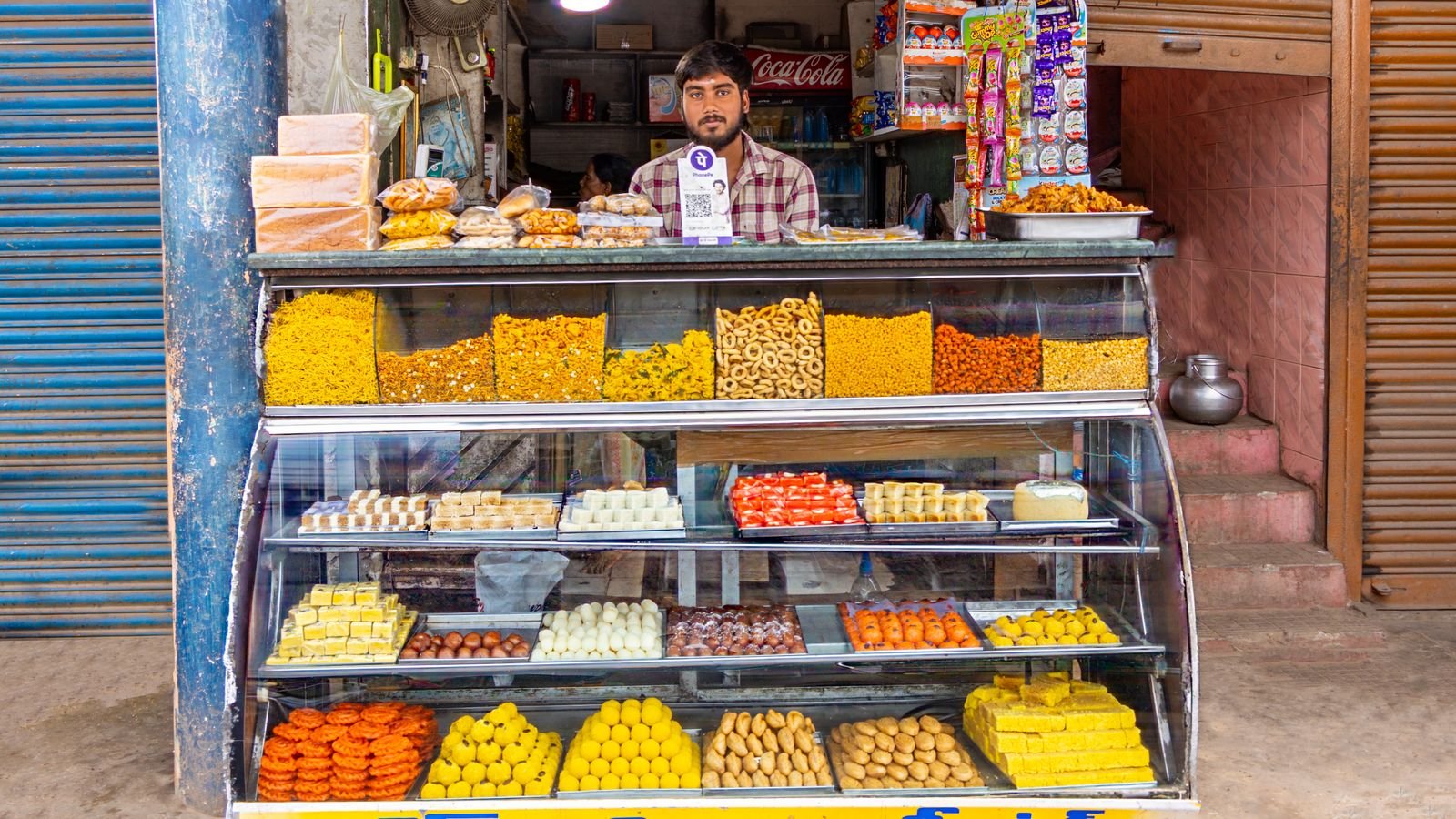
Adulterated sweets are the quiet risk of Diwali shopping. Demand for khoya, ghee and mithai jumps, and so does the temptation to stretch them with starch, cheap fat or non-permitted colours. A few checks at the counter, plus one simple FSSAI home test, catch most of the obvious problems.
The single most useful check takes five seconds and is printed right on the tray, if the shop is following the law. It’s check number 2 in section 3.
⚡ Key takeaways
- FSSAI asked all states on 29 September 2026 to step up inspections of sweets, khoa, paneer, ghee and edible oil for Navratri and Diwali.
- Loose sweets in a shop must show a “best before” date on the tray or container. That’s been mandatory since 1 October 2020.
- At home, FSSAI’s DART test for starch in khoya or paneer needs only water and tincture of iodine. Blue colour means starch.
- Avoid sweets with unnaturally bright colours, and buy from a shop that displays its FSSAI licence or registration number.
- Home tests can’t detect everything. Colours, aluminium “chandi varq” and bad ghee usually need a lab.
Why Adulterated Sweets Rise Around Diwali
It’s simple economics. Every family wants mithai in the same three weeks, milk supply doesn’t triple, and khoya is expensive. That gap is where adulteration happens.
FSSAI knows this. In a letter dated 29 September 2026, it told states and union territories to step up inspections and sampling before Navratri and Diwali. Business Today reported that the drive targets sweets, namkeen, edible oil, beverages and milk products including ghee, khoa and paneer, with mobile “Food Safety on Wheels” labs doing spot tests in busy markets.
What do inspectors actually find? Last Diwali, Telangana’s food safety teams inspected 95 sweet units across all 33 districts. According to South First (October 2025), they found banned synthetic colours in jalebis, laddoos and khoya sweets, adulterated ghee, reused frying oil, non-food-grade silver foil, and expired, unlabelled stock.
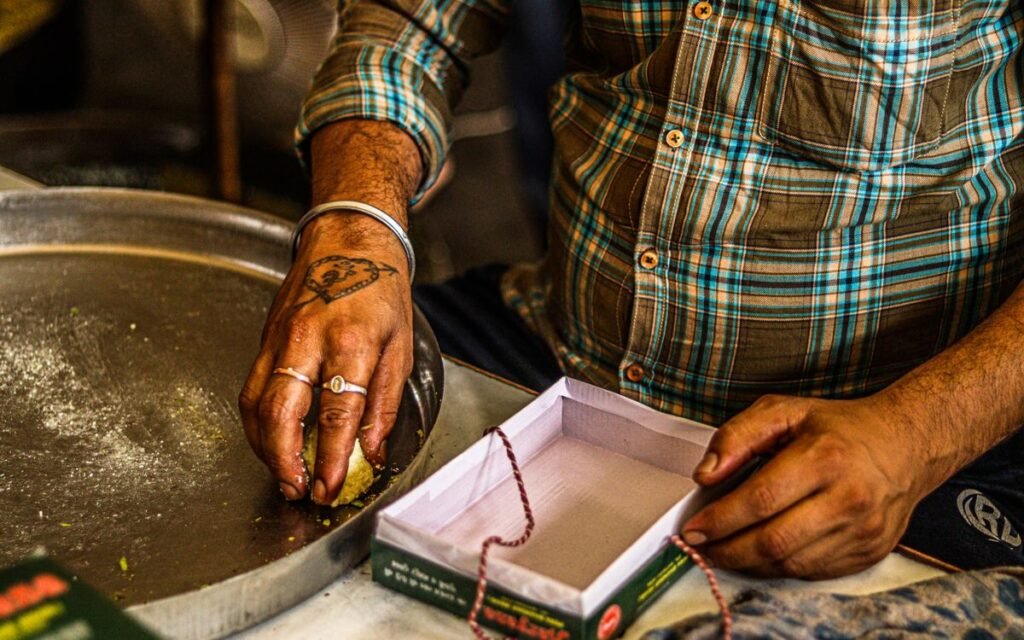
The One Home Test for Adulterated Sweets: Iodine for Starch
FSSAI publishes a free booklet called DART (Detect Adulteration with Rapid Test) with dozens of kitchen tests. The FSSAI DART page describes it as a set of quick household tests, mostly using water and simple solutions like tincture of iodine.
For mithai, the most useful one checks for starch, a common filler in khoya, chhena and paneer. As described in Down To Earth’s summary of the DART tests:
- Take a small piece of the khoya, chhena or paneer (or a milk sweet made from them), about half a teaspoon (DART says 2 to 3 ml).
- Boil it with 5 ml of water in a steel spoon or small pan.
- Let it cool.
- Add 2 to 3 drops of tincture of iodine (available at any chemist for a few rupees).
- If it turns blue, starch is present.
For ghee or butter, skip the water: put a little in a glass bowl, add iodine, and look for the same blue colour.
💡 Pro tip
Test plain khoya or paneer rather than a finished sweet when you can. Some sweets legitimately contain flour, besan or sooji, which also turn blue with iodine. A blue kalakand is a warning; a blue besan laddoo is just a besan laddoo.
 Also readReusing Cooking Oil After Diwali Frying? What FSSAI Says
7 Checks at the Mithai Shop
You can’t run a lab test at the counter. These checks still filter out a lot of adulterated sweets.
1. FSSAI licence or registration number on display
Shops are supposed to display their FSSAI licence or registration.
Telangana’s food safety department advised buyers last year to buy sweets and milk products only from licensed outlets that display a valid FSSAI number. No number in sight? Ask. If they can’t show it, walk.
2. The “best before” date on the tray
This is the check most people skip. Under an FSSAI order of 25 September 2020, loose sweets on trays or in containers at the shop must carry a “best before” date from 1 October 2020, as explained by law firm S.S. Rana & Co. The shop decides the date based on the sweet and local conditions. Showing the manufacturing date is voluntary.
| What you see on the tray | What it means |
|---|---|
| Best-before date in the future | Following the rule. Good sign. |
| Best-before date already passed | Old stock. Don’t buy. |
| No date at all | Breaking a rule in force since 2020. Ask, or buy elsewhere. |
| Packed box with full label | Best option for gifting; check date and FSSAI number on the box. |
3. Colours that look too bright
Neon orange jalebi, fluorescent green barfi, deep pink laddoos. Telangana’s advisory was blunt: avoid sweets with “excessively bright or unnatural colours”. Natural saffron and pista give soft shades, not highlighter tones.
4. Smell and taste
A milk sweet should never smell sour or stale. If a free sample tastes off, trust your tongue.
5. How milk sweets are stored
Rasgulla, kalakand, malai sweets and anything with fresh chhena spoil fastest. They should sit in a chilled counter, not on an open tray under a tube light and flies.
6. Chandi varq: less is more
Edible silver leaf should be real silver. FSSAI’s standard requires 999/1000 fineness and bans any material of animal origin, as summarised on Wikipedia’s vark page. A Lucknow study of 178 foils found about 10% were aluminium and only 46% met the purity standard. You can’t test this at home, so for very cheap sweets thickly covered in “silver”, consider skipping the varq-heavy ones.
7. Price that’s too good
Khoya and ghee cost what they cost. A “pure desi ghee” box selling far below every other shop in your area has cut something, and it’s rarely the profit margin.
What Home Tests Can’t Tell You
With adulterated sweets, the iodine test only catches starch. It won’t catch:
- Non-permitted synthetic colours. These need a lab.
- Aluminium instead of silver in varq.
- Vanaspati or other fats mixed into ghee. FSSAI’s lab method exists, but it needs reagents you won’t have.
- Bacterial spoilage that doesn’t yet smell.
⚠️ Watch out
Don’t “test” sweets by burning varq, rubbing colours with your fingers or tasting a lot of a suspicious sweet. None of these are reliable, and the last one is the risk you were trying to avoid. If something looks badly wrong, keep the bill and a sample and report it to your state’s food safety department.
Buying Sweets for Family Members With Diabetes or Heart Concerns
Adulteration isn’t the only thing to think about at Diwali. Even pure mithai is mostly sugar and fat.
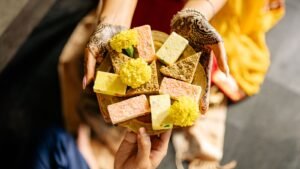
- One or two pieces after a proper meal is different from a box through the day. Our guide on Diwali sweets for diabetics has a piece-by-piece plan.
- Namkeen and farsan bring their own problem: salt. See how much salt per day is sensible.
- Frying at home? Don’t reuse the same oil again and again. Our post on reusing cooking oil explains FSSAI’s limits.
 Also readDiwali Sweets for Diabetics: Enjoy Mithai Without the Spike
Storing Mithai at Home So It Stays Safe
Buying good sweets is half the job. Keeping them safe after a week of guests is the other half.
- Put milk-based sweets in the fridge the day you buy them, in a closed box.
- Keep dry sweets (besan laddoo, soan papdi, dry fruit sweets) in an airtight container away from the stove.
- Write the shop’s best-before date on the box with a marker. Diwali boxes get mixed up fast.
- When gifting sweets you’ve been given, check the date first. Re-gifting expired mithai is an Indian tradition we can all retire.
- Throw out anything with mould, a sour smell or a slimy surface, whatever the date says.
✅ Our verdict
Buy from a shop that shows its FSSAI number and a best-before date on every tray, skip the neon colours and the suspiciously cheap “pure ghee” boxes, and run the iodine test on khoya or paneer if you’re making sweets at home. That covers most of what you can check yourself. For everything else, a trusted shop beats any home test.
Frequently Asked Questions
How can I check if sweets are adulterated at home?
For starch in khoya, chhena or paneer, boil a small sample with water, cool it and add a few drops of tincture of iodine. Blue means starch. This is one of FSSAI’s DART household tests. Colours and fake silver need a lab.
Is it mandatory for sweet shops to show a best-before date?
Yes. FSSAI made a best-before date mandatory on trays and containers of loose sweets from 1 October 2020. The manufacturing date is optional.
Is silver varq on sweets safe to eat?
Genuine food-grade silver leaf in tiny amounts is considered inert. FSSAI’s standard requires 999/1000 fine silver with no animal-origin material. The concern is aluminium or impure foil, which a home test can’t detect.
Which sweets are most often adulterated?
Inspections usually focus on milk products such as khoa, paneer and ghee, and on sweets made from them. Telangana’s 2025 drive also found banned colours in jalebis and laddoos.
Where can I complain about adulterated sweets?
Keep the bill and a sample, then contact your state’s food safety department or the local Food Safety Officer. FSSAI’s festive drive asks states to act on such inspections and samples.
The Bottom Line
You don’t need a lab to avoid most adulterated sweets this Diwali. Check the FSSAI number and the best-before date on the tray, skip unnatural colours, and use the iodine test on khoya or paneer at home. Do the tray-date check on your next mithai run; it takes five seconds.
This article is for information only and is not medical advice. If you feel unwell after eating sweets, or have diabetes or another condition, consult a doctor.
Keep reading
Read nextDiwali Sweets for Diabetics: Enjoy Mithai Without the Spike Read nextHow Much Salt Per Day? Indians Eat 8 g, WHO Says Under 5
Sources
- Business Today: FSSAI steps up festive food safety checks (6 Oct 2026)
- FSSAI: DART, Detect Adulteration with Rapid Test
- Down To Earth: DART tests for milk and milk products
- S.S. Rana & Co.: Best-before date on sweets mandatory from 1 October 2020
- South First: Telangana food safety teams find synthetic colours and adulterated ghee (Oct 2025)
- Wikipedia: Vark (FSSAI silver leaf standard, Lucknow purity study)