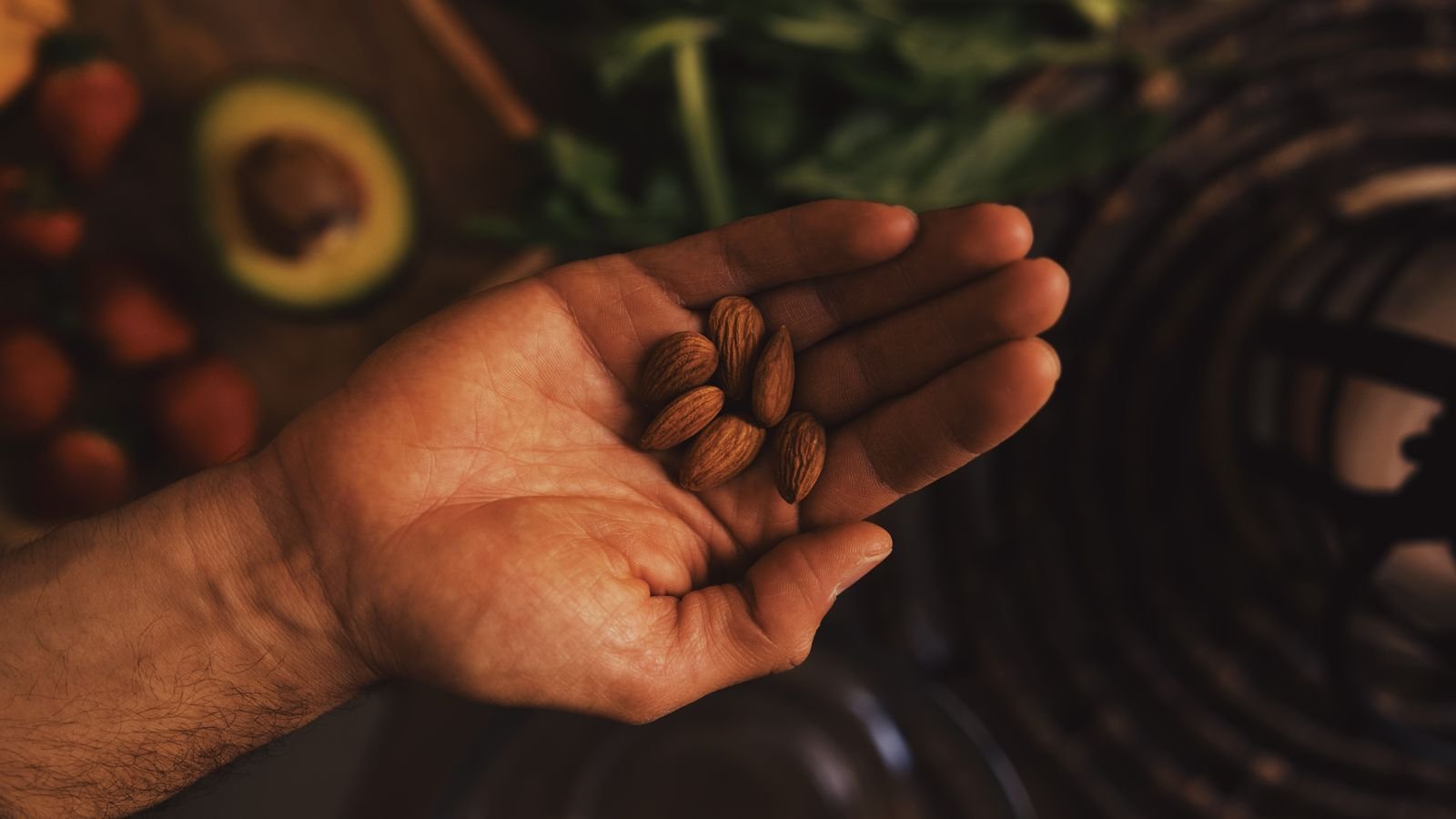
The dry fruit boxes have started arriving, and the question in every house is the same: how many almonds a day is actually good? The short answer is about one handful of nuts, roughly 28 grams, which is around 23 almonds. That’s the amount most big studies use.
The trickier part is the rest of the box. Kaju, kishmish and the sugar-coated stuff each work differently, and the catch with dried fruit is in section 4.
⚡ Key takeaways
- A handful of nuts (28 g, about 23 almonds) a day is the amount linked with lower heart disease risk in a large 2016 meta-analysis.
- Almonds aren’t magic on their own. Swap them for a snack, don’t add them on top, or the calories add up.
- A USDA study found 28 g of almonds gives about 129 kcal to the body, not the 160 on the label.
- Dried fruit is different: 30 g (a small handful of raisins) is one portion, and the NHS suggests eating it with meals.
- Skip salted, fried and sugar-coated mixes most days. Plain nuts are the point.
How Many Almonds a Day: What the Research Says
The strongest evidence comes from a 2016 meta-analysis in BMC Medicine by Dagfinn Aune and colleagues. They pooled 20 prospective studies. For every 28 g a day more nuts people ate, the risk of coronary heart disease was about 29% lower, cardiovascular disease 21% lower and death from any cause 22% lower.
These are observational studies. People who eat nuts may also exercise more or smoke less, so this shows a link, not proof. The authors also estimated, assuming the link is causal, that eating fewer than 20 g of nuts a day accounted for millions of early deaths in 2013.
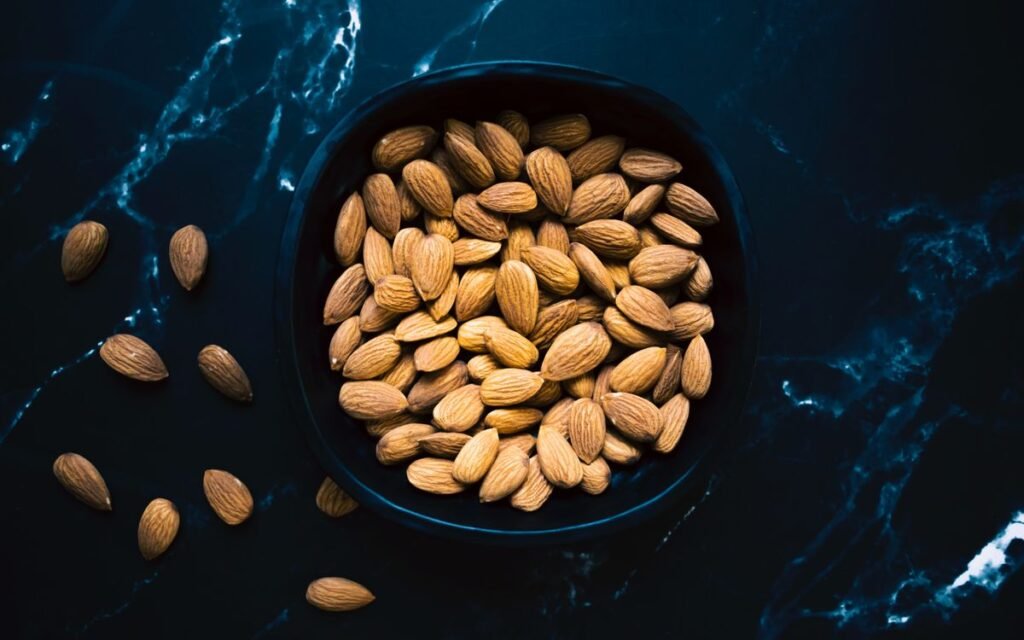
In plain terms: around 20 to 28 g of nuts a day is a sensible target. For almonds, that’s roughly 15 to 23 pieces. Tree nuts and peanuts showed similar results, so a handful of moongphali counts too.
This article is for information only; consult a doctor or dietitian if you have a nut allergy, kidney disease, diabetes or are on a special diet.
What ICMR-NIN Says About Nuts in an Indian Diet
The ICMR-NIN Dietary Guidelines for Indians (2024) don’t set a separate almond target. They ask you to use oils and fats in moderation and to “choose a variety of oil seeds, nuts, nutricereals, and legumes” to meet your daily fat and essential fatty acid needs.
The guidelines also list nuts and oilseeds among foods rich in ALA, a plant omega-3 fat. And they ask everyone to cut down on foods high in fat, salt and sugar, which is where most Diwali “dry fruit” mixes go wrong.
So the Indian guidance fits the handful rule. Nuts are part of your fat for the day, not a free extra on top of ghee-heavy mithai.
💡 Pro tip
Use your own palm as the measure. A loose handful of almonds, or a small katori filled once, is close to 28 g. You don’t need a kitchen scale.
 Also readWalking After Meals: What a 10-Minute Walk Does for Your Body
Almonds, Kaju, Walnuts: Daily Portions Compared
Here’s a simple guide for the common nuts in an Indian dry fruit box. Counts are approximate.
| Nut | About 28 g is | Daily portion idea | Our take |
|---|---|---|---|
| Almonds (badam) | ~23 almonds | 15–23 | Easy to portion, good default |
| Walnuts (akhrot) | A handful | A handful | Good source of ALA omega-3 |
| Cashews (kaju) | A handful | Half a handful if you also eat kaju katli | Fine plain; skip fried, salted versions |
| Peanuts (moongphali) | A handful | A handful | Cheapest option with similar study results |
| Pistachios (pista) | A handful | A handful, unsalted | Salted pista adds a lot of sodium |
Do calories from almonds matter?
Less than the label suggests, but they still count. A USDA study reported by Nutrition Insight (Novotny and colleagues, 2012) measured how much energy people actually absorbed. A 28 g serving of about 23 almonds gave about 129 kcal, against 160 kcal on the nutrition label.
Harvard’s Nutrition Source makes the practical point: there’s no evidence nuts cause weight gain, but eating a handful a day on top of your usual snacks can add weight over a year. Swap, don’t stack.
The Catch: Dried Fruit and Coated Nuts
Raisins, dates, figs and apricots aren’t nuts. They’re fruit with the water taken out, so the natural sugar is concentrated in a small bite.
⚠️ Watch out
The NHS says 30 g of dried fruit counts as one of your 5 A Day, and that dried fruit “should be eaten at mealtimes, not as a between-meal snack” to reduce the risk of tooth decay. So a fistful of kishmish while watching TV, every evening, isn’t the same as a handful of almonds.
Then there are the festive extras: honey-roasted almonds, masala kaju, chocolate-coated raisins. These fall under the high fat, salt and sugar foods ICMR-NIN asks us to cut down on. Harvard’s Nutrition Source also notes that nuts covered in chocolate or high in sugar or salt are probably not as good for you.
If you’re managing sugar this season, our guide to Diwali sweets for diabetics covers the mithai side.
A Simple Daily Dry Fruit Plan
- Pick one handful of plain nuts a day. Almonds, walnuts, peanuts or a mix. About 28 g.
- Use it as a swap. Replace biscuits, namkeen or a second sweet, not dinner.
- Add dried fruit with meals. A small handful of raisins in breakfast poha or curd, or two dates after lunch.
- Keep the coated mixes for festival days, not every day.
- Store the box well. Keep nuts in an airtight container away from heat and humidity, and throw out any that smell bitter or “off”.
What about soaked almonds?
Soak them if you find them easier to chew or digest; many Indian families do. We couldn’t find good human studies showing soaking makes a meaningful nutritional difference, so don’t stress if you eat them dry.
 Also readJaggery vs Sugar: Is Gur Really Healthier? What NIN Says
Our Verdict: How Many Almonds a Day?
✅ Our verdict
About a handful of nuts a day, roughly 23 almonds, is the sweet spot backed by research. Eat them plain, as a swap for a less healthy snack. Treat raisins, dates and coated dry fruits as fruit or sweets, not as “healthy nuts”, and keep them to mealtimes.
Honestly, the cheapest win here is peanuts. They showed similar results to tree nuts in the 2016 analysis, and a handful costs a fraction of imported almonds. If your Diwali box runs out, you don’t need to buy another.
For more everyday habits that actually move the needle, see our pieces on walking after meals and how much salt a day.
Frequently Asked Questions
How many almonds a day should I eat?
About one handful, or 28 g, which is around 23 almonds. That’s the amount large studies link with lower heart disease risk. If you also eat other nuts that day, count them in the same handful.
Is it bad to eat 50 almonds a day?
That’s about double the 28 g used in the big studies, so you’re adding calories without evidence of extra benefit. Unless a doctor or dietitian has advised it, a handful is enough.
Should I eat almonds soaked or raw?
Either is fine. Soaking may make them easier to chew. We couldn’t find strong human evidence that soaking changes their health benefits.
How many dates or raisins a day?
The NHS counts 30 g of dried fruit as one portion of fruit. Eat it with meals rather than as a snack between meals to protect your teeth.
Are salted cashews healthy?
Plain cashews are fine in a handful. Salted and fried versions add sodium and fat, which ICMR-NIN guidelines ask us to limit.
The Bottom Line
So, how many almonds a day? A handful of plain nuts, about 23 almonds, eaten as a swap rather than an extra. Treat dried fruit like fruit and coated mixes like sweets. Open the Diwali box, portion one handful into a small katori, and close the lid.
Keep reading
Read nextJaggery vs Sugar: Is Gur Really Healthier? What NIN Says Read nextWalking After Meals: What a 10-Minute Walk Does for Your Body
Sources
- Aune D et al. Nut consumption and risk of CVD, cancer and mortality. BMC Medicine 2016 (Europe PMC record)
- ICMR-NIN: Dietary Guidelines for Indians (2024) booklet
- NHS: 5 A Day, what counts (dried fruit portion and mealtimes)
- Nutrition Insight: USDA study measures 129 kcal per 28 g of almonds (Novotny et al., AJCN 2012)
- Harvard T.H. Chan Nutrition Source: Nuts for the heart