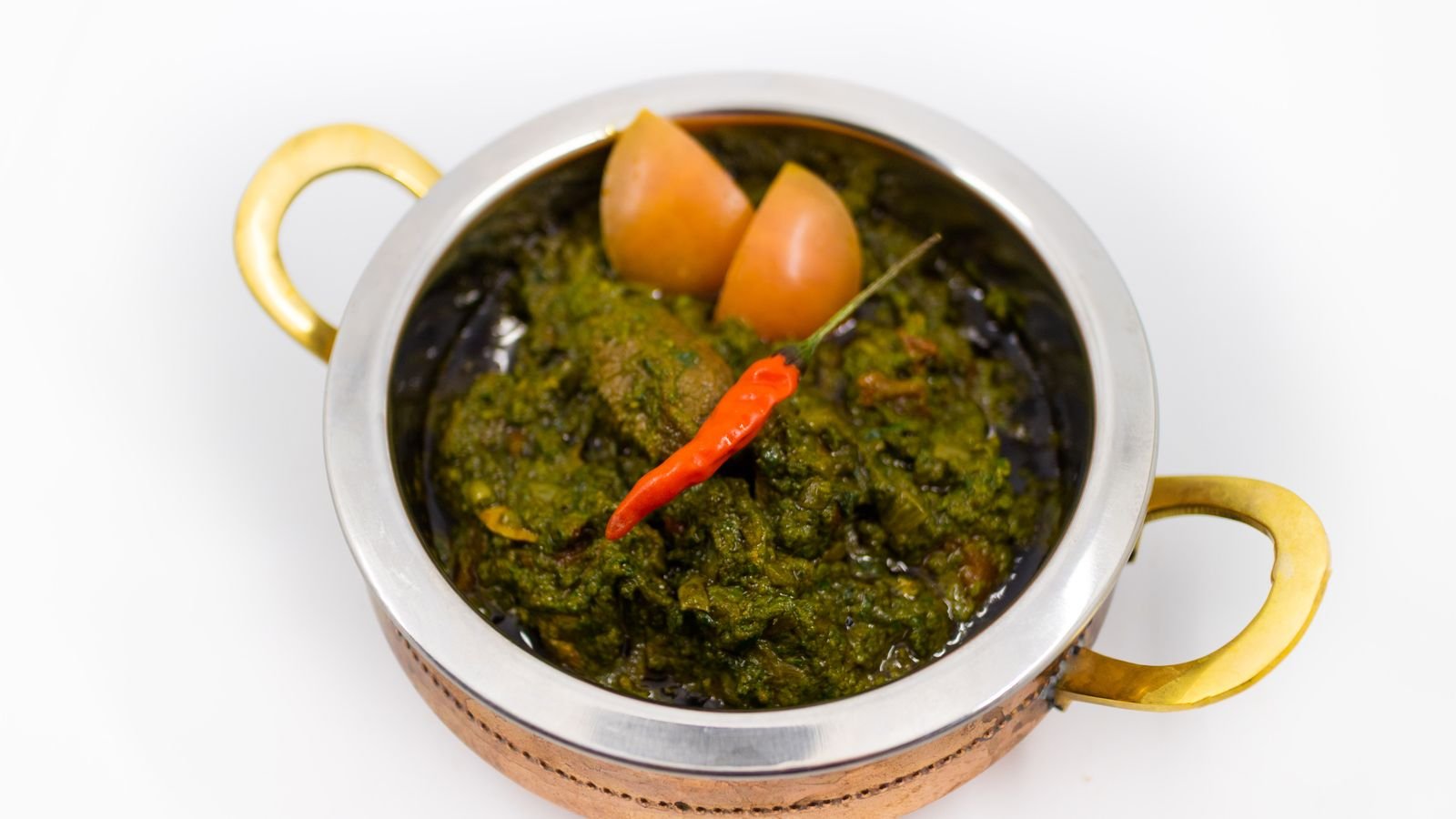
Is sarson ka saag healthy? The greens themselves are among the best things you can eat this winter: one katori brings calcium your body absorbs about as well as milk’s, plus a big dose of vitamins A and K. What turns it heavy is what we pour on top.
A typical dhaba plate, with a ghee tadka, ghee on the rotis and a dollop of white makhan, carries about 25 g of saturated fat by our count. That’s more than the WHO’s limit for a whole day, and the full plate maths is in section 4.
⚡ Key takeaways
- The greens are light: a 150 g katori of plain boiled mustard greens is about 39 kcal with ~177 mg calcium, based on USDA data.
- Mustard greens are low in oxalate, so their calcium is absorbed about as well as milk’s. Spinach-heavy saag loses some of that edge.
- Two makki rotis (80 g flour) add ~290 kcal, ~6 g fibre and ~2.8 mg iron.
- The dhaba-style plate we priced out comes to ~671 kcal and ~25 g saturated fat. A lighter home plate is ~415 kcal and ~6.5 g.
- On warfarin? Don’t drop greens suddenly or binge on them. Talk to your clinic about keeping intake steady.
Is Sarson Ka Saag Healthy? What’s in One Katori
Strip away the ghee and look at the greens alone. We worked these numbers out from USDA’s standard reference data for mustard greens, boiled and drained, scaled to a 150 g katori.
| Nutrient | 150 g katori (plain greens) | What it means |
|---|---|---|
| Energy | ~39 kcal | Lighter than a single biscuit |
| Protein | ~3.9 g | A small bonus |
| Fibre | ~3 g | Helps you feel full |
| Calcium | ~177 mg | Well absorbed (more in section 2) |
| Iron | ~1.3 mg | Non-heme, needs help to absorb |
| Vitamin A (RAE) | ~927 µg | Around 100% of the US Daily Value |
| Vitamin K | ~889 µg | Many times the US Daily Value of 120 µg |
| Vitamin C | ~38 mg | Before long simmering |
One honest caveat. Real saag at home is rarely pure sarson. Most families add palak and bathua, and a spoon or two of makki atta to thicken it. So treat this table as the green part of your bowl, not the final dish.
This article is for information only; consult a doctor or dietitian if you have a health condition or take regular medicines.

Calcium and Iron in Saag: The Absorption Catch
Calcium on a label means little if your gut can’t pull it out of the food. Sarson does well here.
The Linus Pauling Institute at Oregon State University notes that calcium in the kale family, which includes mustard and turnip greens, is as bioavailable as the calcium in milk. A classic 1990 study in the American Journal of Clinical Nutrition tested this with kale in 11 women: about 41% of its calcium was absorbed, compared with 32% from milk.
Why palak is different
Spinach is the odd one out. The same Linus Pauling page lists spinach among foods high in oxalic acid, which binds calcium and blocks its absorption. So a saag that is mostly palak with a little sarson isn’t the calcium source you might think. Our til in winter guide covers another calcium-rich winter food.
Don’t count on saag alone for calcium
A 1999 review by Connie Weaver in the same journal makes a fair point. Some plants give absorbable calcium, but you’d need to eat a lot of vegetables to meet your full needs that way. Saag helps. Dahi, milk and paneer still do the heavy lifting in most Indian diets.
Iron needs a partner
Iron from plants is non-heme iron, the less easily absorbed kind. The Linus Pauling Institute’s iron page says vitamin C strongly boosts non-heme iron absorption. That’s why a squeeze of lemon, a slice of mooli or a few onion rings on the side make sense. Skip the chai right after the meal, as our iron absorption and chai timing guide explains.
💡 Pro tip
Squeeze half a lemon over your saag just before eating, not while it’s cooking. You add vitamin C right when the iron is on your plate.
 Also readIron Absorption: The Chai Timing Mistake Most Vegetarians Make
Makki Ki Roti: Fibre and Iron, but Watch the Count
Makki ki roti is the heavier half of the pair. That’s fine: whole-grain maize flour is filling and brings real fibre.
Using USDA values for whole-grain yellow cornmeal, two rotis made from about 80 g of flour (roughly 40 g each) work out to:
- ~290 kcal
- ~6.5 g protein
- ~5.8 g fibre
- ~2.8 mg iron, more than the katori of saag gives
The catch is that makki rotis are thick and dense. Two of them are one meal’s worth of grain for most adults. A third or fourth roti, which is easy to eat at a wedding or a dhaba, adds about 145 kcal each before any ghee.
Makki also doesn’t hold together like wheat, so many homes roll it thick and roast it in plenty of ghee to keep it soft. That habit, not the maize, is where the extra calories sneak in. If you like rotating winter grains, our millets in winter guide compares bajra, jowar and ragi.
| Roti count | Flour (approx.) | Energy before ghee |
|---|---|---|
| 1 makki roti | 40 g | ~145 kcal |
| 2 makki rotis | 80 g | ~290 kcal |
| 3 makki rotis | 120 g | ~435 kcal |
| 4 makki rotis | 160 g | ~580 kcal |
The Real Catch: Makhan, Ghee and the Dhaba Plate
Back to that saturated fat number. We built two plates from USDA values for ghee (anhydrous butter oil) and butter, and the difference is not small.
Dhaba-style plate: a katori of saag with a 1 tbsp (13 g) ghee tadka, two makki rotis with 1 tsp ghee each (10 g), and a 20 g dollop of white makhan on top.
Lighter home plate: the same saag with a 1 tsp (5 g) ghee tadka and two rotis with ½ tsp ghee each (5 g total). No makhan dollop.
| Dhaba-style plate | Lighter home plate | |
|---|---|---|
| Saag greens (150 g) | ~39 kcal | ~39 kcal |
| Ghee tadka | 13 g, ~112 kcal | 5 g, ~43 kcal |
| 2 makki rotis | ~290 kcal | ~290 kcal |
| Ghee on rotis | 10 g, ~86 kcal | 5 g, ~43 kcal |
| White makhan | 20 g, ~144 kcal | none |
| Total energy | ~671 kcal | ~415 kcal |
| Saturated fat | ~25 g | ~6.5 g |
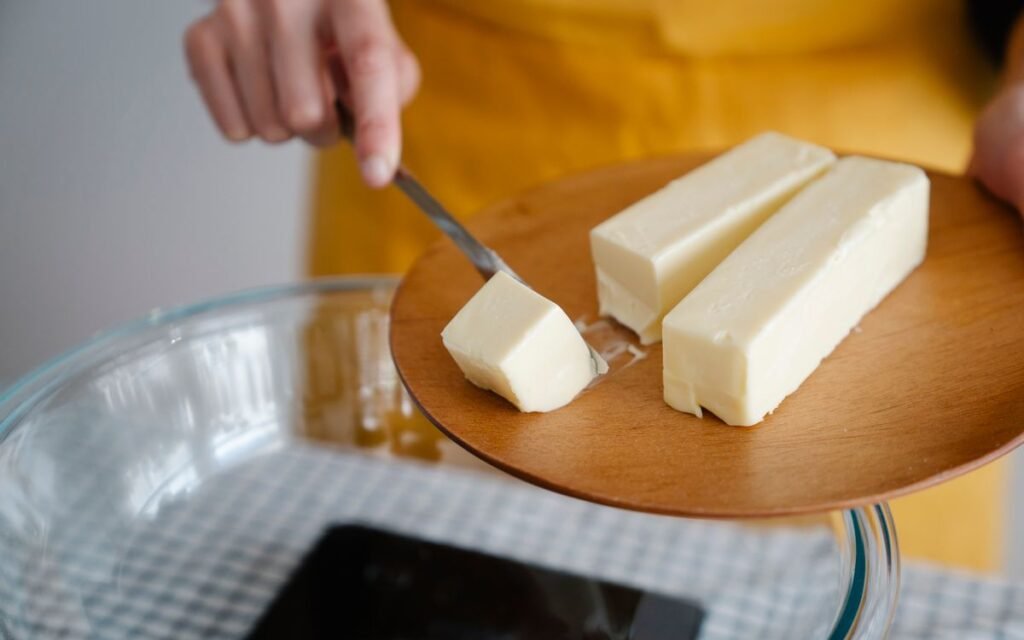
Now compare that with the WHO’s 2023 guideline: no more than 10% of your daily energy should come from saturated fat. On a 2,000 kcal day, that’s about 22 g. The dhaba plate goes past it in one sitting.
⚠️ Watch out
About half the dhaba plate’s calories (~342 of 671 kcal) come from ghee and makhan, not from the saag or the roti. So blame the topping, not the greens.
Note the white makhan figure uses USDA’s salted butter as a stand-in, since homemade white butter isn’t in the database. Unsalted makhan will be close on fat and calories.
How to Make a Lighter Saag Plate at Home
You can keep the taste. These swaps cut most of the fat, and honestly, most people at the table won’t notice.
- Use more sarson than palak. Aim for mostly mustard greens, with bathua or a little palak for texture. You keep the well-absorbed calcium.
- Measure the tadka. One teaspoon of ghee with garlic, ginger and green chilli gives plenty of aroma. Pour it on at the end so the smell hits the table.
- Thicken lightly. One tablespoon of makki atta for a family pot is enough. More makes it stodgy.
- Go easy on salt. Long-cooked saag tastes salty fast. Add salt near the end. Our potassium salt swap guide explains other ways to cut back.
- Roast rotis on the tawa, then brush. Half a teaspoon of ghee per roti, brushed after roasting, goes further than ghee poured during cooking.
- Make makhan a weekend treat. If you want the dollop, take a teaspoon, not a tablespoon.
- Add a side of mooli, onion or lemon. It adds crunch and vitamin C for the iron.
Cooking saag in big batches is common, so freeze it plain and add the tadka fresh when you reheat. That way every bowl gets a small, fresh tadka instead of the whole pot soaking in ghee.

Who Should Be Careful With Saag
For most healthy adults, sarson ka saag a few times a week in winter is a good habit. A few groups should think about how much and how often.
People on warfarin
The NHS page on warfarin says foods high in vitamin K, such as broccoli, spinach and other leafy greens, can affect how warfarin works. You can still eat them, but you should talk to your warfarin clinic before making big changes to your diet. A katori of saag is very high in vitamin K, so suddenly eating it daily in December, then stopping in March, is the pattern to avoid.
People watching weight or cholesterol
The fat maths in section 4 matters most here. One makhan-heavy plate can use up your whole day’s saturated fat. Our guide on how much ghee a day gives a practical daily range. If winter is when the kilos creep up, read why we gain weight in winter.
Anyone with a kidney, heart or other condition
Ask your doctor or dietitian how saag fits your diet. They know your reports and medicines; a blog doesn’t.
✅ Our verdict
Sarson ka saag is one of the healthiest things on a North Indian winter menu. Eat it often, with two makki rotis and a measured teaspoon of ghee. Keep the big makhan dollop for the occasional treat, and if you’re on warfarin, keep your greens steady and check with your clinic.
Frequently Asked Questions
Is sarson ka saag good for weight loss?
The greens are very low in calories, about 39 kcal for a plain 150 g katori. The plate becomes heavy because of ghee, makhan and extra rotis. With a teaspoon of ghee and two rotis, it can fit a weight-loss diet.
How many calories are in sarson ka saag with makki roti?
It depends on the fat. By our USDA-based count, a dhaba-style plate with a ghee tadka, ghee on rotis and a makhan dollop is about 671 kcal. A lighter home version with 10 g ghee in total is about 415 kcal.
Is sarson ka saag high in calcium?
Yes. A 150 g katori of boiled mustard greens has about 177 mg calcium, and mustard greens are low in oxalate, so it’s absorbed about as well as milk’s calcium. Saag made mostly of palak absorbs less.
Can I eat sarson ka saag every day in winter?
Most healthy adults can, as long as the ghee and makhan stay modest. If you take warfarin, don’t change your greens intake suddenly. Keep it steady and ask your clinic.
Is makki ki roti healthier than wheat roti?
Both are fine whole grains. Makki rotis are usually thicker, so each one carries more flour and more calories. Two makki rotis are a full serving for most adults.
The Bottom Line
So, is sarson ka saag healthy? The greens are light, rich in vitamins A and K, and their calcium is the kind your body actually absorbs. Keep the plate to two makki rotis, measure your ghee, and treat the makhan dollop as a once-in-a-while extra. Tonight, try a one-teaspoon tadka and a squeeze of lemon, and see if anyone at the table notices.
Keep reading
 Read nextMillets in Winter: Which to Eat and the Label to Check First
 Read nextTil in Winter: How Much a Day, and Which Kind Has the Calcium
 Read nextWinter Weight Gain Is Real but Small. The Catch Is It Stays
Sources
- USDA SR Legacy: mustard greens, boiled, drained (via NutritionValue.org)
- USDA SR Legacy: cornmeal, whole-grain, yellow (via NutritionValue.org)
- USDA SR Legacy: butter oil, anhydrous (ghee) (via NutritionValue.org)
- USDA SR Legacy: butter, salted (via NutritionValue.org)
- Heaney RP, Weaver CM. Calcium absorption from kale. Am J Clin Nutr 1990 (Europe PMC record)
- Weaver CM et al. Choices for achieving adequate dietary calcium with a vegetarian diet. Am J Clin Nutr 1999 (Europe PMC record)
- Linus Pauling Institute, Oregon State University: Calcium
- Linus Pauling Institute, Oregon State University: Iron
- WHO: WHO updates guidelines on fats and carbohydrates (17 July 2023)
- NHS: Warfarin