Is instant soup healthy? It’s warm, quick and low in calories, but most packet soups sold in India carry a lot of salt for a small cup. One 53 g pouch of Knorr Classic Thick Tomato has more sodium in it than WHO’s limit for a whole day.
That doesn’t mean you have to give up your winter soup. You just need to know how the “serves 4” line on the pack plays with your numbers, and that catch is in section 3.
⚡ Key takeaways
- The limit: WHO says adults should eat under 2,000 mg of sodium a day, which is under 5 g of salt. ICMR-NIN’s 2024 guidelines also say no more than 5 g of salt a day.
- The packets: the five soups I looked up on BigBasket list 401 mg to 681 mg of sodium per serving, roughly 1 g to 1.7 g of salt per small cup.
- The whole pack: a 4-serve tomato soup pouch from Knorr or Ching’s has 2,100 to 2,480 mg of sodium in total. That’s more than WHO’s full-day limit.
- The fix: use half a sachet, add vegetables, never add extra salt, or make a dal or tomato soup at home in 20 minutes.
- Who should take extra care: anyone with high blood pressure or kidney problems. Talk to your doctor about your salt limit.
Is Instant Soup Healthy? The Short Answer
A bowl of packet soup is not junk food. The five I checked list under 60 kcal a cup, and the ingredient lists include dried vegetables. The problem is salt, and Indian guidelines say so directly.
The ICMR-National Institute of Nutrition’s Dietary Guidelines for Indians (2024) lists “snack foods, savouries, soups, sauces, ketchup” among the processed foods that push up salt intake. It also notes that less than 10% of our sodium comes naturally from food. Most of it comes from salt added while cooking or processing.
We already eat too much. A national survey of Indian adults published in Scientific Reports in 2023 found an average of 8 g of salt a day (8.9 g for men, 7.1 g for women). If you’re already above 5 g, a daily packet soup adds to a number that’s already high. Our guide on how much salt per day is right for Indians explains where that 8 g comes from.
Why salt matters at all
WHO’s sodium fact sheet says the main effect of too much sodium is raised blood pressure, which raises the risk of heart and blood vessel disease. ICMR-NIN adds that high salt intake is linked to stomach problems and lower bone density. Neither tells you to stop eating soup. What they care about is your total salt for the day.
What Indian Soup Packets Actually Say
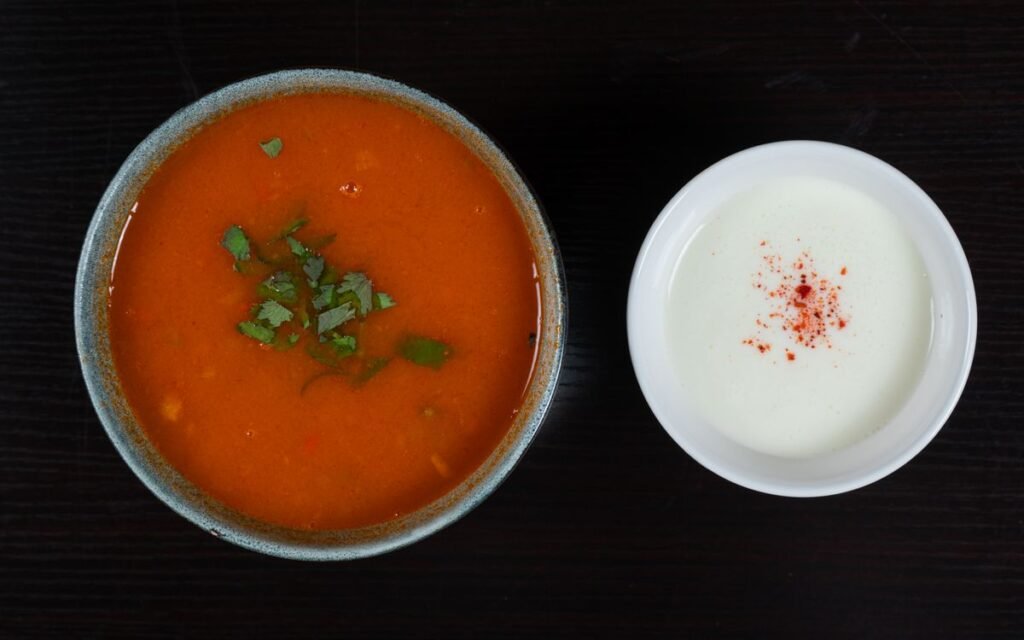
I looked up the nutrition panels for five popular soups on BigBasket’s product listings on 20 November 2026. Every number below is the sodium figure printed on the listing. Prices are BigBasket’s selling prices on the same day and change often.
How to turn sodium into salt
Labels show sodium in milligrams. Salt is sodium chloride, and WHO says 1 g of salt contains 400 mg of sodium. So:
- Salt (mg) = sodium (mg) × 2.5
- Example: 580 mg sodium × 2.5 = 1,450 mg, or about 1.45 g of salt.
Some listings give sodium per 100 g of powder instead of per cup. In that case, multiply by the serving size on the pack. For Knorr Classic Thick Tomato: 3,961 mg per 100 g × 12.75 g per serving ÷ 100 = about 505 mg of sodium per cup.
| Soup (pack size, price on 20 Nov 2026) | Sodium per serving (as listed or worked out) | Salt per serving | % of WHO’s 2,000 mg sodium |
|---|---|---|---|
| Knorr Cup-a-Soup Hot & Sour Veg (10.5 g sachet, ₹10) | 580 mg | 1.45 g | 29% |
| Ching’s Secret Sweet Corn Veg Instant (15 g pouch, ₹10) | 681 mg | 1.7 g | 34% |
| Knorr Classic Thick Tomato (53 g, serves 4, ₹61) | 505 mg (3,961 mg per 100 g × 12.75 g) | 1.26 g | 25% |
| Knorr Hot & Sour Vegetable (41 g, serves 4, ₹56) | 401 mg (3,916 mg per 100 g × 10.25 g) | 1 g | 20% |
| Ching’s Secret Tomato cook-up soup (55 g, serves 4, ₹46.75) | 620 mg (4,509 mg per 100 g × 13.75 g) | 1.55 g | 31% |
Look at the Knorr Cup-a-Soup. It lists 33 kcal and 580 mg of sodium. You’re getting almost a third of your day’s sodium from something that barely counts as a snack.
💡 Pro tip
On any soup label, check two lines: the serving size and the sodium. If sodium per serving is more than about 500 mg, that one cup is already a quarter of WHO’s daily limit.
 Also readHow to Read Food Labels in India: A 60-Second Pack Check
The Catch: “Serves 4” Means a Small Cup
Most people miss this part. The 4-serve pouches assume each serving is about 150 ml of water. Knorr’s listing says one serving is 12.75 g of powder plus 150 ml of water. That’s a small cup, not a big bowl.
Now think about how soup gets made in most homes. Say two people share one pouch and each has a refill. That’s half the pack each. Here’s what the whole pack holds:
| Pack | Total sodium in the pack | Total salt | Half a pack (one person, two cups) |
|---|---|---|---|
| Knorr Classic Thick Tomato, 53 g | about 2,099 mg | about 5.2 g | about 2.6 g salt |
| Ching’s Secret Tomato, 55 g | about 2,480 mg | about 6.2 g | about 3.1 g salt |
| Knorr Hot & Sour Vegetable, 41 g | about 1,606 mg | about 4 g | about 2 g salt |
The method is simple: sodium per 100 g × pack weight ÷ 100. For the Knorr tomato pouch, 3,961 × 53 ÷ 100 = 2,099 mg.
⚠️ Watch out
If two people share one 4-serve tomato pouch, each person can get 2.5 g to 3 g of salt from soup alone. That’s more than half of ICMR-NIN’s 5 g daily limit, before dinner’s dal, sabzi, achar and papad.
What about adding more water?
Extra water makes the soup taste less salty, but it doesn’t remove any salt. If you drink the whole diluted pot, you get the same sodium. More water only helps if you then drink less of the powder, for example by using half the pack for the same number of cups.
How to Make Packet Soup Healthier
You don’t have to throw out the packets in your kitchen drawer. A few changes cut the salt and make the bowl more filling.
- Use half the sachet. This is the only change that actually halves the sodium. Make up the taste with black pepper, lemon, ginger or fresh coriander.
- Add real vegetables. Throw in chopped carrot, cabbage, beans, peas, spinach or a grated tomato. ICMR-NIN says vegetables are good sources of potassium, which helps balance sodium.
- Never add extra salt. The powder is already salted. Taste before you reach for the salt box.
- Skip the soy sauce and chilli sauce. ICMR-NIN lists sauces and ketchup among high-salt processed foods. A spoon of soy sauce on top of a hot and sour packet adds more of the same.
- Watch the rest of the meal. If soup is your starter, go lighter on pickle, papad and salted snacks that day.
- Make it one cup, not three. One small cup with lots of vegetables beats three plain cups.
The NHS gives similar advice for cutting salt: flavour food with herbs, spices, black pepper, garlic, chilli or lemon, and taste before you add salt.
💡 Pro tip
A squeeze of lemon at the end makes soup taste brighter, so you notice the missing salt less. It works especially well in tomato and dal soups.
If you cook with regular salt at home, our post on switching to potassium-enriched salt explains who can use it and who must ask a doctor first.
 Also readPotassium Salt May Save 4 Lakh Indians a Year: Should You Switch?
4 Quick Homemade Winter Soups With Indian Ingredients
Homemade soup isn’t salt-free. The difference is that you decide how much goes in.
WHO says 5 g of salt is just under a teaspoon. So a quarter teaspoon (a little over 1 g) in a pot that makes four bowls works out to roughly 0.3 g of added salt per bowl. Compare that with 1 g to 1.7 g in a single cup of the packets above.
1. Tomato soup (desi style)
Boil 4 to 5 tomatoes with a small piece of ginger, 2 garlic cloves and a little onion. Blend, strain if you like, and simmer. Finish with black pepper, a pinch of jeera powder and coriander. Add a quarter teaspoon of salt at the end and taste.
2. Moong dal soup
Pressure-cook half a cup of yellow moong dal with turmeric and 3 cups of water. Thin it out, add grated ginger, a tadka of jeera in ghee, and lemon. It’s filling and has protein. If you’re vegetarian and trying to eat more, our guide on how much protein you need on an Indian veg diet has more ideas.
3. Mixed vegetable soup
Carrot, beans, cabbage, peas, a little sweet potato or pumpkin. Boil, mash half of it for body, and season with pepper and herbs. Winter sabzi mandis are full of these vegetables, and they’re cheap right now.
4. Sweet corn soup
Boil corn kernels (fresh bhutta or frozen), blend half, add the rest whole with chopped vegetables. Thicken with a teaspoon of cornflour mixed in water. Add pepper and a few drops of vinegar instead of extra salt.
| Packet soup (one cup) | Homemade (one bowl) | |
|---|---|---|
| Time | 2 to 5 minutes | 15 to 25 minutes |
| Salt | 1 g to 1.7 g as per the labels above | Your choice; about 0.3 g with a quarter teaspoon in a 4-bowl pot |
| Vegetables | Small amounts of dried vegetables | As many fresh ones as you add |
| Cost | About ₹10 to ₹15 a cup | Depends on what you add |
Soup also counts towards your fluids on cold days when you forget to drink water. We covered why that happens in drinking water in winter.
Who Should Be Extra Careful With Salt, and Our Verdict
Salt limits matter for everyone, but some people need to watch them more closely. The NHS says people with high blood pressure should take care, because too much salt can raise it further. It also gives lower salt limits for children: under 2 g a day for ages 1 to 3, and 3 g for ages 4 to 6.
- People with high blood pressure: talk to your doctor about how much salt is right for you.
- People with kidney or heart conditions: ask your doctor before using salt substitutes or changing your diet.
- Young children: a full cup of packet soup can use up most of a toddler’s daily salt limit. Make theirs at home with little or no salt.
- Older parents: many older adults already take BP medicine. If they love their evening soup, the half-sachet trick or a homemade dal soup is a kind swap.
✅ Our verdict
Is instant soup healthy? As an occasional quick cup, it’s fine for most healthy adults. As a daily habit, or when two people share one 4-serve pouch, the salt adds up fast. Use half a sachet, load it with vegetables, add no extra salt, and make dal or tomato soup at home on most winter nights.
My honest take: a ₹10 cup-a-soup at your desk once in a while won’t hurt you. What hurts is the routine you don’t notice, like a packet soup every evening plus achar plus namkeen.
Frequently Asked Questions
Is instant soup good for health in winter?
It’s warm and low in calories, but most Indian packet soups list about 400 mg to 680 mg of sodium per small cup. That’s 20% to 34% of WHO’s daily limit. Once in a while is fine; daily, it adds a lot of salt.
How much salt is in one packet of instant soup?
It depends on the brand and size. The single-serve sachets I checked list 580 mg to 681 mg of sodium, or about 1.5 g to 1.7 g of salt. A 4-serve tomato soup pouch holds about 2,100 mg to 2,480 mg of sodium in total.
Does adding more water make packet soup less salty?
It tastes less salty, but the total salt stays the same if you drink it all. To actually cut salt, use less powder, for example half a sachet with extra vegetables.
Is homemade soup healthier than packet soup?
Usually, yes, because you control the salt and can add more fresh vegetables. A quarter teaspoon of salt in a four-bowl pot is about 0.3 g per bowl, much less than a single packet cup.
Can people with high BP have packet soup?
Packet soups are high in sodium, and too much salt can raise blood pressure. If you have high BP, talk to your doctor about your salt limit before making packet soup a habit.
This article is for information only and is not medical advice. Please consult a doctor for advice about your own diet, especially if you have high blood pressure, kidney disease or heart disease.
The Bottom Line
So, is instant soup healthy? It’s a convenient, low-calorie cup with a salt problem. One 4-serve tomato pouch holds more sodium than WHO’s whole-day limit, and a single ₹10 sachet can carry a third of it.
Next step: pick up the soup packet in your kitchen and find the sodium line. Multiply it by 2.5 to get the salt, then decide if tonight is a half-sachet night or a moong dal night.
Keep reading
 Read nextHow Much Salt Per Day? Indians Eat 8 g, WHO Says Under 5
 Read nextWinter Weight Gain Is Real but Small. The Catch Is It Stays
 Read nextShakarkandi vs Aloo: Is Sweet Potato Really Healthier in Winter?
Sources
- WHO: Sodium reduction fact sheet (under 2,000 mg sodium / 5 g salt a day, 1 g salt = 400 mg sodium, blood pressure risk)
- ICMR-NIN: Dietary Guidelines for Indians 2024, Guideline 11 on salt (5 g a day, soups and sauces among high-salt processed foods, potassium from vegetables)
- Mathur et al., Scientific Reports (2023): mean salt intake of Indian adults 8 g a day
- NHS: Salt in your diet (tips to cut salt, high blood pressure, children’s limits)
- BigBasket: Knorr Cup-a-Soup Hot & Sour Veg, 580 mg sodium per serve (checked 20 Nov 2026)
- BigBasket: Ching’s Secret Sweet Corn Veg Instant Soup, 681 mg sodium per serve (checked 20 Nov 2026)
- BigBasket: Knorr Classic Thick Tomato Soup 53 g, 3,961 mg sodium per 100 g (checked 20 Nov 2026)
- BigBasket: Knorr Hot & Sour Vegetable Soup 41 g, 3,916 mg sodium per 100 g (checked 20 Nov 2026)
- BigBasket: Ching’s Secret Tomato Soup 55 g, 4,509 mg sodium per 100 g (checked 20 Nov 2026)