Methi in winter is worth eating, but mostly as fresh leaves in thepla, paratha and aloo methi, not as a spoon of seeds in water. The leaves give you iron, calcium and vitamin C for hardly any calories, and the seeds have some real research behind them for blood sugar and cholesterol.
The catch is in the laddoo. A methi laddoo is sold to us as the “healthy” winter sweet, and when I did the maths in section 6, the methi turned out to be the smallest part of it.
⚡ Key takeaways
- Fresh methi leaves: about 35 kcal, 8.8 mg iron and 91 mg vitamin C per 100 g raw, per UK government food data. Light, and easy to knead into roti dough.
- Methi seeds: one teaspoon (3.7 g) has about 12 kcal, 0.9 g fibre and 1.2 mg iron, per USDA.
- Blood sugar and cholesterol: meta-analyses found modest improvements, but the trials were small and varied. Research, not a replacement for medicine.
- Methi laddoo: about 200 kcal each in a typical home recipe. Ghee gives about 44% of those calories; methi gives about 4%.
- Be careful if: you’re pregnant, take diabetes medicines or blood thinners, or have a peanut allergy.
Why Methi in Winter Is a Fixture in Indian Homes
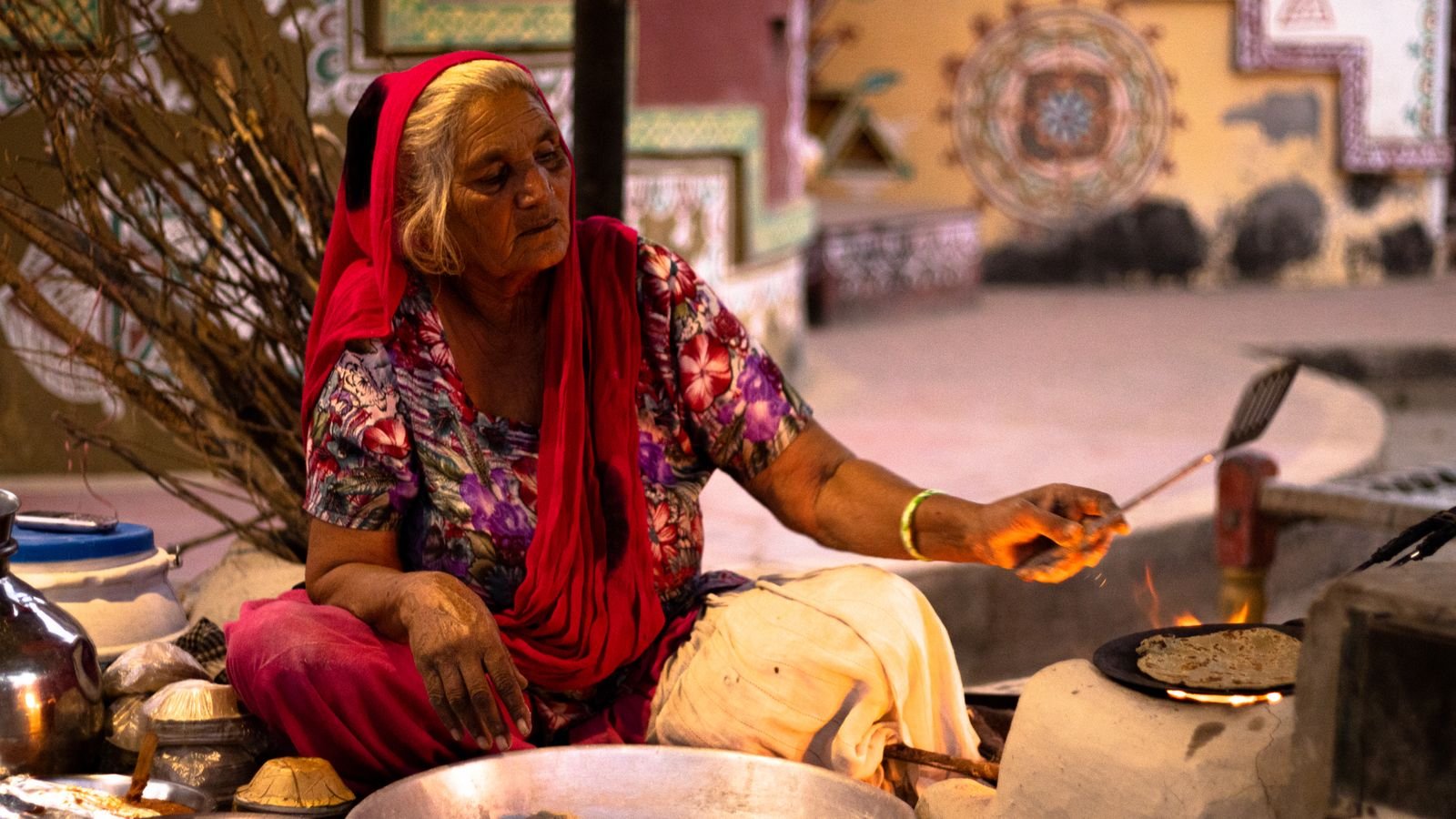
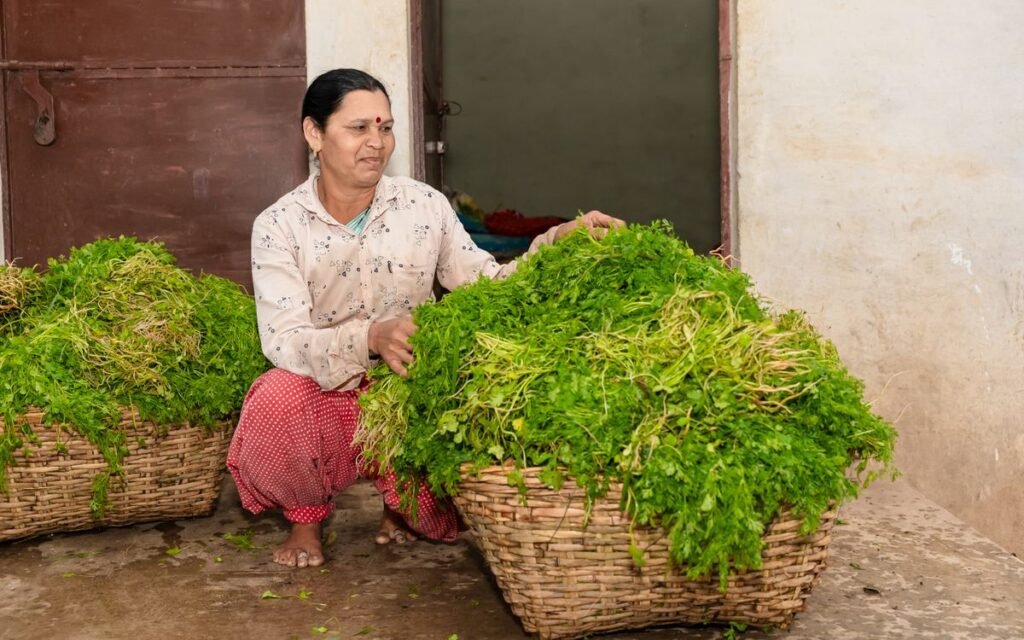
The first cold week arrives and the sabziwala’s cart fills up with bunches of fresh methi next to the palak and sarson. At home, the same plant shows up in three forms: fresh leaves in thepla and aloo methi, seeds in the tadka or soaked overnight, and roasted seed powder in the methi laddoo that someone’s mother makes every December.
These three forms are nutritionally different foods. Leaves are mostly water with minerals and vitamins. Seeds are dense, high in fibre and bitter. Laddoos are mostly flour, ghee and sweetener with a little methi in them.
WhatsApp forwards mix them up all the time. “Methi controls sugar”, “methi is full of iron”, “methi laddoo keeps you warm and strong”. I’ve split each claim by form and checked it against sources I could actually open: the US National Center for Complementary and Integrative Health (NCCIH), Memorial Sloan Kettering’s herb database, USDA and UK food data, and published meta-analyses.
Methi Leaves vs Methi Seeds: The Nutrition Numbers
USDA has no entry for fresh fenugreek leaves, so the leaf figures come from the UK government’s McCance and Widdowson dataset (via Patient.info). The seed figures come from USDA FoodData Central.
| Per serving | Fresh methi leaves (100 g, raw) | Methi seeds (1 tsp, 3.7 g) | Methi seeds (1 tbsp, 11.1 g) |
|---|---|---|---|
| Calories | 35 kcal | 12 kcal | 36 kcal |
| Protein | 4.6 g | 0.9 g | 2.6 g |
| Fibre | not listed | 0.9 g | 2.7 g |
| Iron | 8.8 mg | 1.2 mg | 3.7 mg |
| Calcium | 140 mg | 6.5 mg | 19.5 mg |
| Vitamin C | 91 mg | 0.1 mg | 0.3 mg |
Seed values are my calculation from USDA’s per-100 g numbers (323 kcal, 23 g protein, 24.6 g fibre, 33.5 mg iron, 176 mg calcium, 3 mg vitamin C).
What the table tells you
- Per 100 g, seeds look like a superfood. But nobody eats 100 g of methi seeds. You eat a teaspoon, because they’re bitter.
- Leaves win on what you actually eat. A thepla dough with a big handful of chopped leaves gives you real vitamin C and iron for almost no calories.
- Seeds win on fibre. About a quarter of a methi seed’s weight is fibre, more than whole wheat flour.
💡 Pro tip
Different food databases list quite different numbers for fresh methi leaves, so treat the leaf column as a ballpark. The pattern holds, though: methi leaves are light, and the seeds are concentrated.
 Also readIron Absorption: The Chai Timing Mistake Most Vegetarians Make
Iron in Methi: Why the Big Number Needs a Footnote
Methi is often called an “iron-rich” food, and on paper that’s fair. The NHS says women aged 19 to 49 need 14.8 mg of iron a day and men need 8.7 mg. So 100 g of raw methi leaves (8.8 mg) covers more than half a woman’s daily target, and a teaspoon of seeds (1.2 mg) covers about 8%.
The footnote is absorption. Iron from plants is non-haem iron, and a review in Critical Reviews in Food Science and Nutrition lists what holds it back: polyphenols in tea and coffee, phytates in plant foods, and calcium. The same review says vitamin C (ascorbic acid) helps you absorb more.
What that means at your dinner table
- Methi leaves carry their own vitamin C, which is a nice built-in advantage.
- A squeeze of lemon on aloo methi, or a few slices of tomato in the sabzi, adds more.
- Your post-meal chai works against you. Our guide to chai timing and iron absorption explains why an hour’s gap helps vegetarians most.
So yes, eat methi for iron. Just don’t count every milligram on the label as iron your body will keep, and if you’ve been told you’re anaemic, follow your doctor’s plan rather than a methi plan.
Methi Seeds, Blood Sugar and Cholesterol: What Reviews Found
This is the claim most people care about, so I went to systematic reviews instead of single studies. Read this section as a summary of research, not advice.
| Review | What it pooled | What it found |
|---|---|---|
| Khodamoradi et al., 2020 (Complementary Therapies in Medicine) | 12 trials in adults | Fasting sugar about 13 mg/dL lower, HbA1c 0.58% lower, total cholesterol about 9 mg/dL lower, LDL about 11 mg/dL lower |
| Askarpour et al., 2020 (Journal of Ethnopharmacology) | 12 trials, 560 adults | Total cholesterol about 9 mg/dL lower, triglycerides about 14 mg/dL lower, HDL about 3.5 mg/dL higher, no change in weight |
| Kim et al., 2023 (International Journal of Molecular Sciences) | 10 trials, 706 people with type 2 diabetes or prediabetes | Lower fasting sugar, 2-hour sugar and HbA1c; better total cholesterol, triglycerides and HDL; no change in LDL or BMI |
The honest reading
The direction is consistent: fenugreek seed nudged sugar and cholesterol numbers down in trials. But the Khodamoradi review called fenugreek an “adjuvant therapy”, meaning something used alongside treatment, and warned that its glucose findings “must be interpreted with great caution” because the trials differed so much.
NCCIH says research suggests fenugreek may lower blood sugar in type 2 diabetes, but many studies were low quality and there isn’t enough good evidence to say it helps. Memorial Sloan Kettering says a few trials support the cholesterol use, but more studies are needed.
⚠️ Watch out
If you take diabetes medicines or insulin, talk to your doctor before adding methi seeds, methi water or fenugreek capsules as a daily habit. NCCIH warns that large doses may cause a harmful drop in blood sugar, and that risk adds up with medicines that lower sugar too. Never cut or stop a prescribed medicine because of methi.
If you want to understand what your own sugar report means first, our guide to normal blood sugar levels walks through fasting, post-meal and HbA1c numbers.
Soaked Methi Water: The Trend, Checked Honestly
Every winter, reels push the same morning ritual: soak a spoon of methi seeds overnight, drink the water on an empty stomach, and watch your belly fat, sugar and hair fall improve. Some of it holds up. Most of it doesn’t.
What holds up
- Soaking softens the seeds. That makes them easier to chew, so you can eat them in dal or sabzi instead of spitting them out.
- It’s a low-calorie habit. A teaspoon of seeds is about 12 kcal.
What doesn’t hold up
- Weight loss: the Askarpour review found no change in body weight or BMI with fenugreek across 12 trials. Kim’s 2023 review found no change in BMI either.
- “Controls sugar”: the reviews above tested measured amounts of fenugreek seed, often alongside treatment. Home methi water has no fixed amount at all; it depends on how many seeds you soak and whether you eat them or only drink the water.
- Hair fall: I didn’t find a systematic review or health-body page that supports this, so I’m leaving it out.
Some people do get stomach trouble from it. NCCIH lists diarrhoea, nausea and other digestive symptoms as side effects, so if methi water on an empty stomach leaves you uneasy, stop.
💡 Pro tip
If you like the taste, a simpler habit is to add soaked or sprouted seeds to dal, kadhi or a sabzi. You get the fibre with a meal instead of drinking bitter water alone first thing.
Methi Laddoo Calories: The Maths
Of all the ways to eat methi in winter, the laddoo has the biggest health halo. For the maths, I used a typical home batch: 250 g wheat flour, 200 g ghee, 250 g jaggery, 50 g methi seeds and 50 g almonds, rolled into 20 laddoos of about 40 g each. Your recipe will differ, and many also add gond, dry coconut or more nuts.
| Ingredient | Amount | kcal per 100 g (USDA) | kcal in the batch | Share |
|---|---|---|---|---|
| Ghee | 200 g | 876 | 1,752 | 44% |
| Jaggery (sugar used as stand-in) | 250 g | 387 | 968 | 24% |
| Whole wheat flour | 250 g | 340 | 850 | 21% |
| Almonds | 50 g | 579 | 290 | 7% |
| Methi seeds | 50 g | 323 | 162 | 4% |
| Total | 800 g | about 4,020 |
USDA has no jaggery entry, so I used white sugar’s 387 kcal per 100 g as a close stand-in, since jaggery is mostly sugar too.
What the numbers say
- About 200 kcal per laddoo (4,020 ÷ 20). Two with morning chai is 400 kcal before you’ve eaten breakfast.
- Ghee is nearly half the calories. Methi is 4%.
- Sugar adds up fast. Each laddoo carries about 12.5 g of jaggery. WHO advises keeping free sugars under about 50 g a day for an adult, and jaggery counts as added sugar. Two laddoos use half of that.
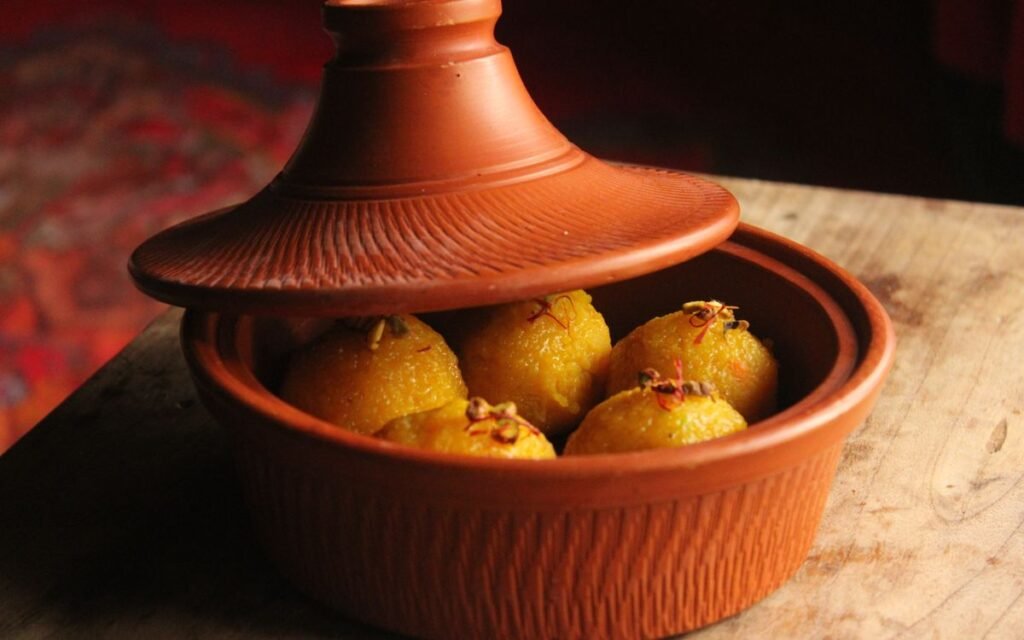
I’m not saying skip it. A methi laddoo in December is part of growing up in many Indian homes. Just treat it as a sweet, have one rather than three, and if you’re watching ghee, our post on how much ghee a day has the saturated fat maths.
Many families also give methi laddoos to new mothers for breast milk. NCCIH says it’s uncertain whether fenugreek increases milk supply, and Memorial Sloan Kettering says evidence is lacking. If you’re breastfeeding, check with your doctor or a lactation counsellor.
Who Should Be Careful With Methi
Methi in winter food, as a leafy vegetable or a pinch in tadka, is safe for most people. NCCIH says fenugreek is believed safe for adults and children in food amounts. The cautions below are mainly about large amounts, daily seed habits, powders and capsules.
- Pregnant women: NCCIH says fenugreek is not safe in pregnancy in amounts greater than those found in food, and it has been linked to birth defects in animals and people. Methi sabzi is food; methi water, laddoo stockpiles and capsules are a question for your gynaecologist.
- People on diabetes medicines or insulin: large doses may cause a harmful drop in blood sugar, per NCCIH. Ask your doctor first.
- People on blood thinners like warfarin: Memorial Sloan Kettering says case reports suggest fenugreek may increase bleeding risk.
- People on SSRI antidepressants: MSK lists a case report of serotonin syndrome in a woman taking sertraline with fenugreek supplements.
- People with peanut or other legume allergies: fenugreek is a legume. Thermo Fisher’s allergen encyclopedia notes lab cross-reactivity with peanut, pea, chickpea and soybean, though clinical studies show little cross-reactivity in practice. NCCIH says fenugreek reactions can be serious.
Two odd but useful facts
- The maple syrup smell: NCCIH says the seeds smell and taste like maple syrup. MSK notes that sotolone, a compound from fenugreek, can show up in urine and has led to false diagnoses of maple syrup urine disease in infants. Strange, but true.
- Hidden methi: Thermo Fisher notes fenugreek is used in curry powders, spice blends and teas. If you have a legume allergy, read masala labels.
This article is for information only and is not medical advice. Please consult a doctor before using methi seeds or supplements for any health condition, during pregnancy or breastfeeding, or if you take regular medicines.
Easy Ways to Eat Methi in Winter (Leaves First)
Honestly, this is where I’d put my effort. Fresh leaves give you the most for the fewest calories. Pick bunches with bright green, unwilted leaves and use them within a couple of days.
Five simple ideas
- Methi thepla: knead a big handful of chopped leaves into wheat or bajra dough with curd, haldi and ajwain. They travel well for office lunches and train journeys.
- Aloo methi: use more methi than aloo for a lighter version. Squeeze lemon on top to help with iron absorption.
- Methi paratha: mix leaves into the dough instead of stuffing it, so you need less ghee to cook it.
- Methi in dal: stir a handful of leaves into moong or toor dal in the last five minutes.
- Methi with millets: a bajra or jowar methi roti pairs two winter staples. Our guide to millets in winter explains which millet suits what.
Methi leaves are bitter, so blanch them or rub them with a pinch of salt and squeeze out the water before cooking. That takes some of the edge off for kids.
✅ Our verdict
Eat methi in winter, and lean on the leaves. They’re light and in season, and they carry iron and vitamin C. Methi seeds have modest research support for sugar and cholesterol, but they’re not a medicine, and anyone on diabetes medicines or blood thinners should ask a doctor first. Enjoy methi laddoo as a sweet, one at a time.
Frequently Asked Questions
Is it good to eat methi in winter?
Yes, for most people. Fresh methi leaves are low in calories and give you iron, calcium and vitamin C, and winter is when they’re easiest to find. Pregnant women and people on diabetes medicines or blood thinners should check with a doctor before eating large amounts of seeds.
Does methi water reduce belly fat?
There’s no good evidence that it does. A 12-trial meta-analysis found fenugreek didn’t change body weight or BMI, and another review of 10 trials found no BMI change either. Methi water is low in calories, but it won’t melt fat.
Do methi seeds lower blood sugar?
Meta-analyses found modest drops in fasting sugar and HbA1c in trials, but NCCIH says many studies were low quality. It’s research, not a treatment. If you have diabetes, keep taking your prescribed medicines and ask your doctor before adding methi seeds.
How many calories are in one methi laddoo?
About 200 kcal for a 40 g laddoo, based on a home recipe and USDA ingredient values. Ghee supplies about 44% of those calories and methi about 4%. Bigger laddoos or extra dry fruits push it higher.
Are methi leaves or methi seeds better?
They’re different foods. Leaves give more vitamin C and iron in the amounts you actually eat, for hardly any calories. Seeds have more fibre per gram and are the form studied for blood sugar and cholesterol.
The Bottom Line
Methi in winter earns its place, mainly as fresh leaves in thepla, paratha, dal and aloo methi. The seeds have real but modest research behind them for sugar and cholesterol, the methi water trend is mostly hype, and the methi laddoo is a ghee-and-jaggery sweet with a little methi in it.
Next step: buy a bunch of methi this week, make thepla for tomorrow’s lunch box, and if a parent takes diabetes tablets or blood thinners, mention any methi seed habit at their next check-up. If you enjoy honest checks like this, read our ginger in winter research check next.
Keep reading
 Read nextIs Sarson Ka Saag Healthy? Yes, Until the Makhan Lands
 Read nextTil in Winter: How Much a Day, and Which Kind Has the Calcium
 Read nextMillets in Winter: Which to Eat and the Label to Check First
Sources
- NCCIH: Fenugreek (blood sugar evidence, milk supply, safety in food amounts, pregnancy, allergies, maple syrup smell)
- Memorial Sloan Kettering: Fenugreek (cholesterol, lactation, warfarin and SSRI case reports, sotolone and maple syrup urine disease)
- USDA FoodData Central: Spices, fenugreek seed (FDC 171324)
- Patient.info: Fenugreek leaves, raw (data from McCance and Widdowson’s Composition of Foods Integrated Dataset 2021)
- Khodamoradi et al., Complement Ther Med 2020: fenugreek and cardiometabolic risk factors, 12 trials (PubMed)
- Askarpour et al., J Ethnopharmacol 2020: fenugreek, blood lipids and body weight, 12 RCTs, 560 adults (PubMed)
- Kim et al., Int J Mol Sci 2023: fenugreek in type 2 diabetes and prediabetes, 10 RCTs, 706 participants (PubMed)
- Zijp et al., Crit Rev Food Sci Nutr 2000: tea and other dietary factors in iron absorption (PubMed)
- NHS: Iron (daily needs for men and women)
- Thermo Fisher allergen encyclopedia: Fenugreek (legume cross-reactivity, use in curry powders)
- USDA FoodData Central: butter oil/ghee (173412), whole-grain wheat flour (168893), almonds (170567), granulated sugar (169655)
- WHO: Healthy diet fact sheet (free sugars under 10%, about 50 g)