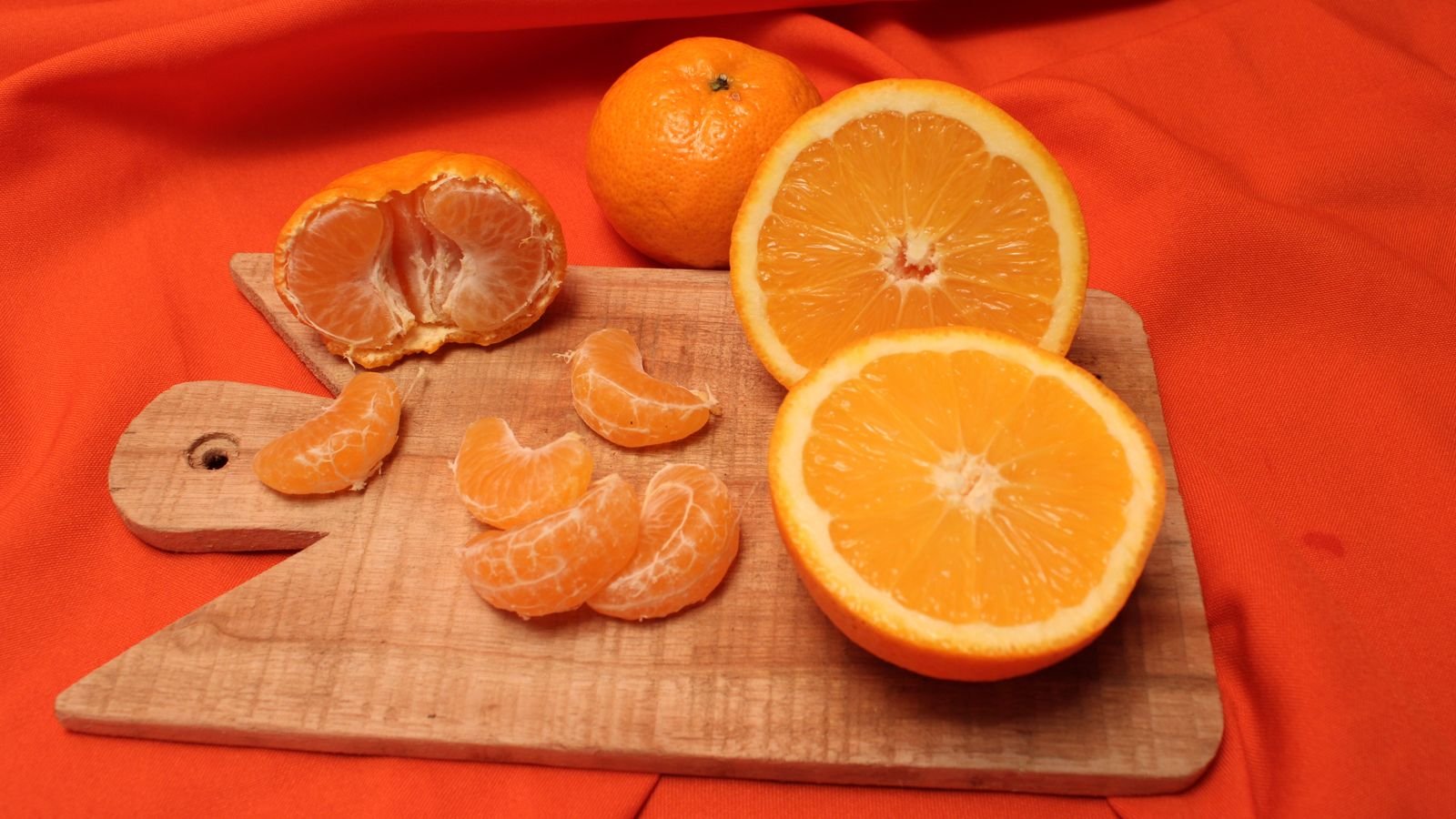
One or two oranges a day is plenty for most adults, and eating them whole beats drinking them. That’s the short answer on oranges in winter: a single medium orange gives you more vitamin C than you need in a day, plus fibre that a glass of juice leaves behind in the strainer.
And no, santra won’t give you a cold. The real catch is in the packaged juice aisle, and it’s on the label (section 4).
⚡ Key takeaways
- How many: 1 to 2 oranges, or 2 to 3 small kinnow or mandarins, a day is a sensible amount for most healthy adults. ICMR-NIN’s sample plate for an adult includes about 100 g of fruit a day.
- Vitamin C: one medium orange (about 131 g) has roughly 70 mg, per USDA data. Adults need 40 mg a day, says the NHS.
- Juice: WHO counts fruit juice as “free sugar”, the kind to cut down on. The sugar in a whole orange isn’t counted that way.
- Cold or cough: colds are caused by viruses. No source we found links eating oranges to catching one.
- Packaged juice: ICMR-NIN says commercial juices may contain as little as 7% fruit pulp. Read the label.
- Watching blood sugar? Eat the whole fruit, one at a time, and ask your doctor how it fits your plan.
Why Oranges in Winter Are Worth Buying
From now until March, fruit carts across north India fill up with oranges, mandarins and kinnow. Kinnow is the Punjab and Rajasthan favourite, a hybrid of the King and Willowleaf mandarins. It was developed in California in 1915 and reached the Abohar research station in Punjab in 1954, according to a Punjab Agricultural University (PAU) post-harvest expert writing in The Tribune.
Here’s what USDA FoodData Central lists for 100 g of raw orange:
- Energy: 47 kcal
- Vitamin C: 53.2 mg
- Total sugars: 9.35 g
- Fibre: 2.4 g
- Potassium: 181 mg
- Folate: 30 µg
Mandarins (USDA’s “tangerines, mandarin oranges”) come in at 53 kcal, 26.7 mg of vitamin C, 10.6 g of sugar and 1.8 g of fibre per 100 g. USDA has no separate entry for kinnow or mosambi, so treat the mandarin figures as a rough guide for kinnow, not an exact match.
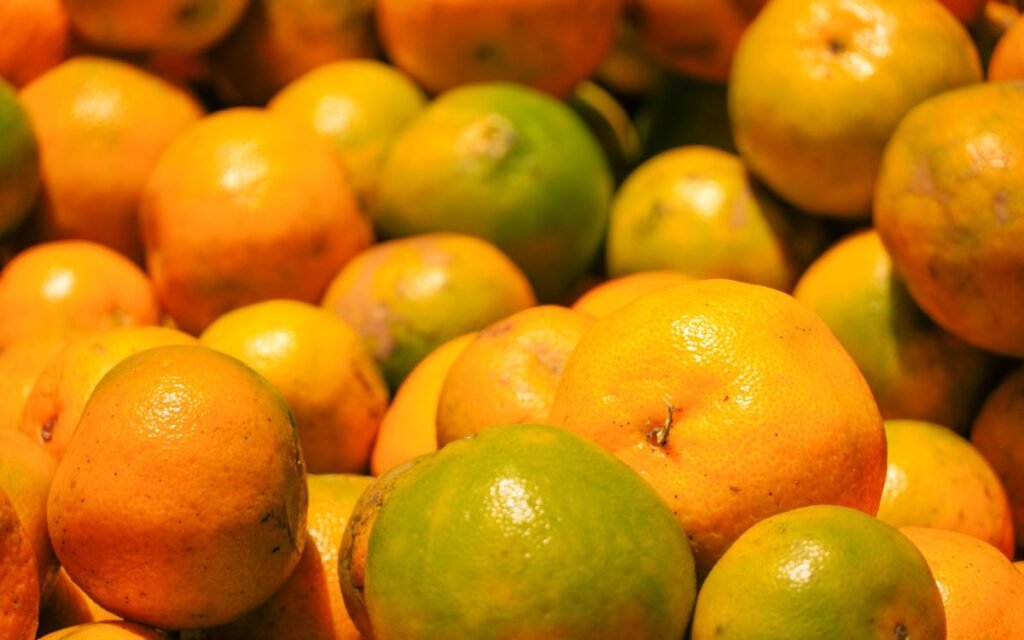
When kinnow tastes best
Kinnow picking in Punjab can run from mid-December to mid-March. But the PAU expert notes that the best sweet-sour balance for eating fresh comes only from mid-January to the last week of February. So if the first kinnow of December taste sharp, that’s why. Give it a few weeks.
How Many Oranges a Day Is Right?
For vitamin C alone, one is enough. The NHS says adults aged 19 to 64 need 40 mg of vitamin C a day, and the body can’t store it, so you need some daily. A medium orange (131 g in USDA’s portion list) gives roughly 70 mg. That’s the whole day covered by one fruit.
A medium mandarin (88 g) gives about 23 mg, so two or three kinnow-sized fruits get you to the same place.
What the Indian guidelines say
ICMR-NIN’s Dietary Guidelines for Indians (2024) build a 2,000 kcal day around about 100 g of fruit and 400 g of vegetables. One medium orange is already a little more than that 100 g. The NHS uses a similar idea: one orange counts as one portion of your “5 A Day”, and two small fruits like satsumas count as one.
So a sensible winter routine looks like this:
- 1 to 2 oranges a day, or 2 to 3 small kinnow or mandarins
- Mixed with other fruit through the week, like guava, amla and papaya
- More isn’t harmful for most healthy people, but it adds sugar and calories without extra benefit
💡 Pro tip
Eat a few of the white strands (the pith) instead of picking every one off. It’s part of the whole fruit you’re paying for, and the juice is exactly what leaves it behind.
 Also readGuava in Winter: 4 Times the Vitamin C of an Orange
Whole Orange vs Kinnow vs Juice: The Sugar and Fibre Table
A glass of juice at breakfast feels like the healthy way to have oranges in winter. Honestly, it’s the weaker option, and the numbers show why.
WHO’s sugar guideline defines “free sugars” as sugars added to food plus those naturally present in honey, syrups and fruit juices. WHO says its advice doesn’t apply to sugars in fresh fruit. It recommends keeping free sugars under 10% of daily energy, and says going below 5%, roughly 25 g (6 teaspoons) a day, has extra benefits.
Here’s how common servings compare. Numbers are worked out from USDA FoodData Central per-100 g values; we’ve treated 1 ml of juice as roughly 1 g.
| Serving | Sugar | Fibre | Vitamin C | Counts as free sugar (WHO)? |
|---|---|---|---|---|
| 1 medium orange (131 g) | about 12 g | about 3.1 g | about 70 mg | No |
| 1 medium mandarin / small kinnow (88 g) | about 9 g | about 1.6 g | about 23 mg | No |
| 150 ml fresh orange juice | about 13 g | about 0.3 g | about 75 mg | Yes |
| 250 ml glass of fresh orange juice | about 21 g | about 0.5 g | about 125 mg | Yes |
| 250 ml packaged “orange juice drink” | about 23 g | about 0.5 g | about 38 mg | Yes |

Why the glass adds up fast
USDA says one orange yields about 86 g of juice. A 250 ml glass is therefore the juice of roughly three oranges, which most people would never eat in one sitting. That one glass carries about 21 g of free sugar, close to WHO’s stricter 25 g daily target, and almost none of the fibre.
The NHS caps juice and smoothies at a combined 150 ml a day. It counts as one of your 5 A Day only once, however much you drink. The NHS also notes that crushing fruit into juice releases its sugars, which can damage teeth, and suggests having juice with meals rather than between them.
What about mosambi juice?
Mosambi (sweet lime) mostly ends up at the juice stall, not the fruit bowl. The same rules apply.
ICMR-NIN says fresh juice for an adult should come from no more than 100 to 150 g of fruit, and only occasionally. So next time you’re at the juice stall, ask how many mosambi go into one glass. If you love it, keep it to a small glass with a meal.
Packaged Orange Juice: The Label Catch
Here’s the catch I promised at the top, and it sits on the back of the carton.
ICMR-NIN’s guidelines say commercially available fruit juices may contain fruit pulp as low as 7%, and that drinking them adds sugar and salt to your diet. The same document says FSSAI rules let a product with 10% or less fruit claim it’s made with “real fruit” pulp or juice. So “made with real oranges” on the front tells you very little.
Look at the USDA numbers again. A 250 ml packaged “orange juice drink” has about the same sugar as fresh juice but only about 38 mg of vitamin C, roughly half of what one whole orange gives you.
⚠️ Watch out
Words like “juice drink”, “nectar” and “fruit beverage” on a pack are your cue to check for added sugar and water. Check the ingredients list: if sugar appears near the top, or fruit content is a small percentage, it’s a sweet drink with an orange picture on it. Our guide on how to read food labels in India shows exactly where to look.
How to choose if you do buy it
- Look for 100% juice and no added sugar in the ingredients list, not just on the front.
- Compare total sugars per 100 ml across brands; lower is better.
- Treat it like a treat, not a daily health drink. ICMR-NIN itself says commercial juices should be avoided in favour of whole fruit.
Do Oranges Cause a Cold or Cough?
“Don’t eat santra in winter, you’ll catch a cold” is a line many of us heard from elders. The science doesn’t support it.
The NHS says colds are caused by viruses. They spread through coughs and sneezes, and the germs can survive on hands and surfaces for 24 hours. Food isn’t listed as a cause or a way they spread, and neither is cold weather by itself.
Will oranges stop a cold, then?
Not that either. The NHS says there’s little evidence that supplements such as vitamin C prevent colds. Oranges are a good everyday source of vitamin C, and the NHS lists citrus fruit among the best ones. But eating four a day won’t build a shield against the office cold going around.
If chilled fruit straight from the fridge makes your throat feel scratchy, let it sit at room temperature for a while. That’s about comfort, not about catching anything. We looked at the same myth for curd in our piece on whether dahi causes a cold, and the answer was the same.
Empty Stomach, Night and Blood Sugar: The Other Myths
Plenty of families have a rule about each of these. The sources are a lot less strict.
Oranges on an empty stomach
There’s no rule in the NHS, WHO or ICMR-NIN guidance we checked that says citrus on an empty stomach is harmful. Some people do feel a burn when they eat sour fruit first thing.
The NHS advice for heartburn is simple: avoid the food or drink that triggers your own symptoms. So if it bothers you, eat your orange after breakfast. If it doesn’t, carry on.
Oranges at night
Fruit at night doesn’t cause a cold, and nothing we found says oranges after sunset are harmful. If you get acid reflux, the NHS suggests not eating within 3 or 4 hours of bedtime. That applies to any food, not oranges in particular.
Oranges and blood sugar
This is the one worth taking seriously, in a calm way. A 2013 BMJ study by Muraki and colleagues followed 187,382 US health professionals in three long-running cohorts. Over the follow-up, 12,198 developed type 2 diabetes.
For every three servings a week, whole fruit overall was linked to slightly lower risk (hazard ratio 0.98). Fruit juice was linked to slightly higher risk (1.08). Oranges on their own showed no clear link either way (0.99, not statistically significant). It’s an observational study, so it shows patterns, not cause and effect.
So if you’re watching your sugar, the practical version looks like this:
- Choose the whole orange or kinnow over juice
- Eat one at a time, not a plateful
- Pair it with a meal or a handful of nuts rather than eating it alone
- Ask your doctor or dietitian how many fruit servings fit your plan, especially if you take medicines
Our World Diabetes Day habits guide covers the bigger daily habits that matter more than any single fruit.

How to Eat Oranges in Winter: A Simple Plan
Forget recipes. What helps is a habit that lasts past the first week of December.
- Buy for the week, not the month. The PAU expert notes that waxed kinnow keep about two weeks at room temperature. Buy a dozen at a time.
- Skip bruised fruit. The same PAU expert says only unbruised kinnow store well, so leave the squashed ones on the cart.
- Wash before peeling. Your hands touch the peel, then the segments.
- Make one orange your 4 pm snack. A medium one is about 62 kcal, per USDA, and it comes with its own wrapper.
- Send peeled segments in the tiffin. Kids eat what’s easy to grab.
- Swap the daily juice for the fruit. If you want juice, keep it to a small 150 ml glass with a meal.
- Mix your winter fruit. Guava, amla and oranges all bring vitamin C; our amla guide shows why fresh beats murabba.
If winter snacking is your weak spot, see our piece on winter weight gain. Small swaps like fruit for biscuits add up across a season.
✅ Our verdict
Eat one or two whole oranges, or two or three kinnow, a day this winter and skip the daily glass of juice. Ignore the “santra gives you a cold” warning, read the label before buying packaged juice, and keep portions sensible if you’re watching your blood sugar.

Frequently Asked Questions
Is it good to eat oranges in winter?
Yes. Oranges and kinnow are in season, easy to find and a good source of vitamin C. One medium orange gives about 70 mg, per USDA data, and adults need 40 mg a day, per the NHS. Eat them whole for the fibre.
How many oranges can I eat in a day?
For most healthy adults, one or two oranges, or two or three small kinnow, is plenty. One medium orange already covers your daily vitamin C. Eating many more mostly adds sugar and calories.
Is orange juice as healthy as eating an orange?
No. WHO counts fruit juice as free sugar, and juice loses most of the fibre. The NHS suggests no more than 150 ml of juice a day, with a meal. A whole orange gives similar vitamin C with more fibre.
Does eating oranges cause a cold or cough?
No. Colds are caused by viruses that spread through coughs, sneezes and touch, according to the NHS. Oranges don’t cause them, and vitamin C supplements have little evidence for preventing them either.
Can people with diabetes eat oranges?
Many can, in sensible portions. A large BMJ study found no clear link between whole oranges and type 2 diabetes risk, while fruit juice was linked to slightly higher risk. Eat the whole fruit, one at a time, and check with your doctor or dietitian.
The Bottom Line
Oranges in winter are one of the easiest healthy habits you can keep: one or two a day covers your vitamin C and adds fibre. Eat the fruit, not the glass, and give packaged “juice drinks” a hard look at the label. Next time the kinnow cart comes by, buy a dozen and make one your afternoon snack.
This article is for information only; consult a doctor or a registered dietitian for advice about your own health, especially if you have diabetes, acid reflux or a kidney condition.
Keep reading
 Read nextAmla in Winter: How Much to Eat and the Best Way to Have It
 Read nextCurd in Winter: Does Dahi Really Give You a Cold?
 Read nextGinger in Winter: Does Adrak Really Keep You Warm?
Sources
- USDA FoodData Central: Oranges, raw, all commercial varieties (FDC 169097)
- USDA FoodData Central: Tangerines (mandarin oranges), raw (FDC 169105)
- USDA FoodData Central: Orange juice, raw (FDC 169098)
- USDA FoodData Central: Beverages, orange juice drink (FDC 169044)
- WHO: Guideline on sugars intake for adults and children (free sugars include fruit juices)
- ICMR-NIN: Dietary Guidelines for Indians 2024 (fruit per day, fresh and packaged juice)
- NHS: 5 A Day, what counts (150 ml juice limit)
- NHS: 5 A Day portion sizes
- NHS: Vitamin C (40 mg a day)
- NHS: Common cold (causes and spread)
- NHS: Heartburn and acid reflux
- Muraki et al. 2013, BMJ: Fruit consumption and risk of type 2 diabetes
- The Tribune: Reduce post-harvest losses to make kinnow juicier (BVC Mahajan, PAU)