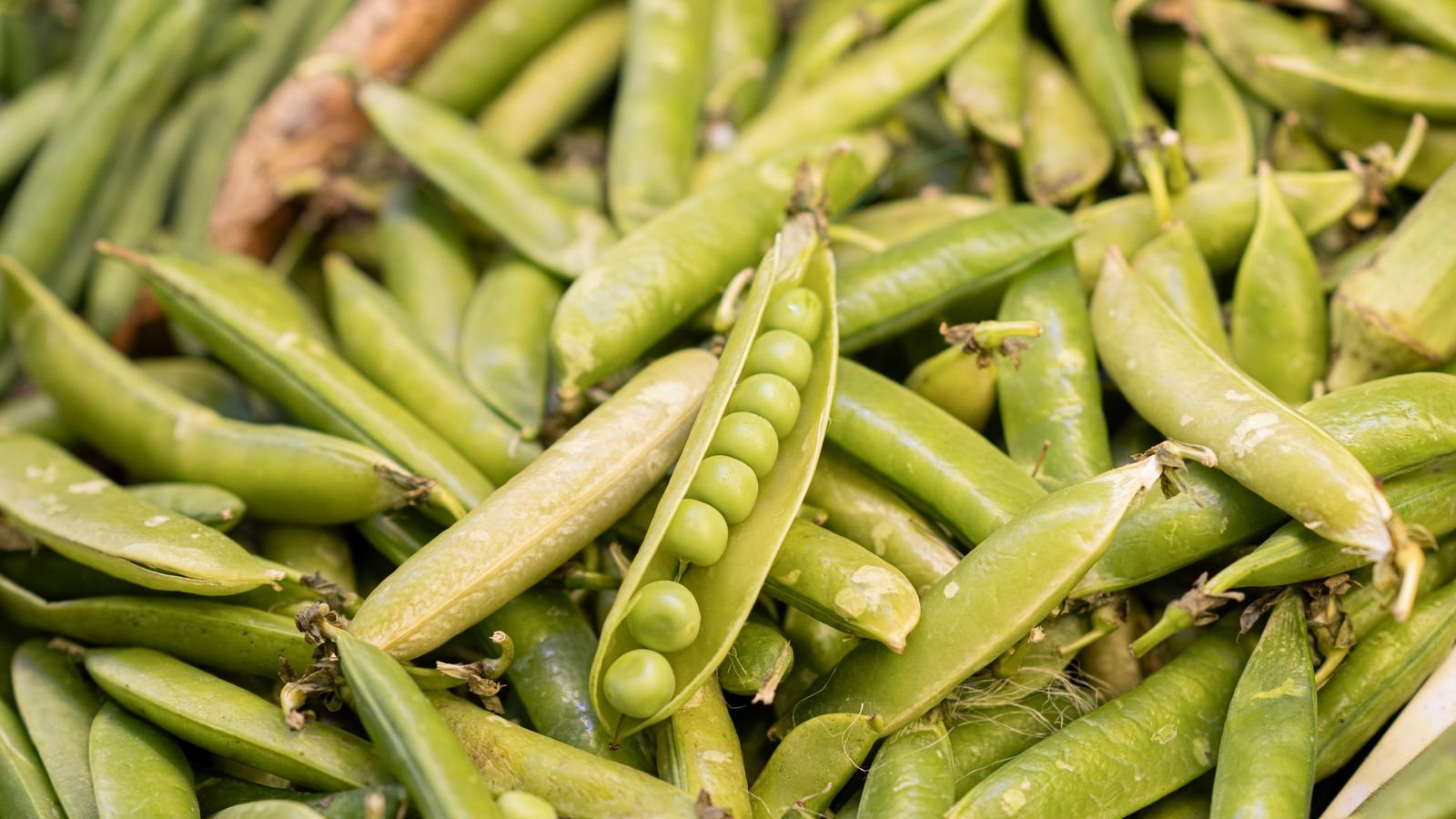
A katori of boiled green peas (about 150 g) gives you roughly 8 g of protein and 8 g of fibre, for around 125 kcal, based on USDA data. So yes, green peas protein is real, and calorie for calorie, plain matar beats paneer.
But a katori of peas still gives less protein than a katori of thick masoor dal, and pea protein has one gap you need to fill at the same meal. That catch is in section 4. We also checked whether the frozen packet in your freezer is as good as the pods from the mandi.
⚡ Key takeaways
- Per katori (150 g, boiled): about 8 g protein, 8.3 g fibre and 126 kcal, from USDA FoodData Central values.
- Versus others: a katori of cooked masoor-type lentils gives about 13.5 g protein, one boiled egg about 6.3 g, and 50 g of paneer about 7.9 g (with 150 kcal).
- Frozen peas: two studies found frozen produce, peas included, broadly matched fresh for most vitamins. Peas lost some beta-carotene and riboflavin in one study.
- The gap: pulses like peas are low in methionine. ICMR-NIN says pair them with cereals (roti, rice) in roughly a 3:1 cereal-to-pulse ratio.
- Gas: the NHS lists pulses among foods that can cause wind. Start with smaller portions if matar bloats you.
- Skip the “healthy kachori” idea: the peas are fine, the deep-fried maida is the issue.
Green Peas Protein: The Numbers Per Katori
Fresh green peas hold a lot of water, which is why they feel light. USDA FoodData Central lists 100 g of boiled green peas (no salt) at:
- Energy: 84 kcal
- Protein: 5.36 g
- Fibre: 5.5 g
- Fat: 0.22 g
- Vitamin C: 14.2 mg
What that means for your katori
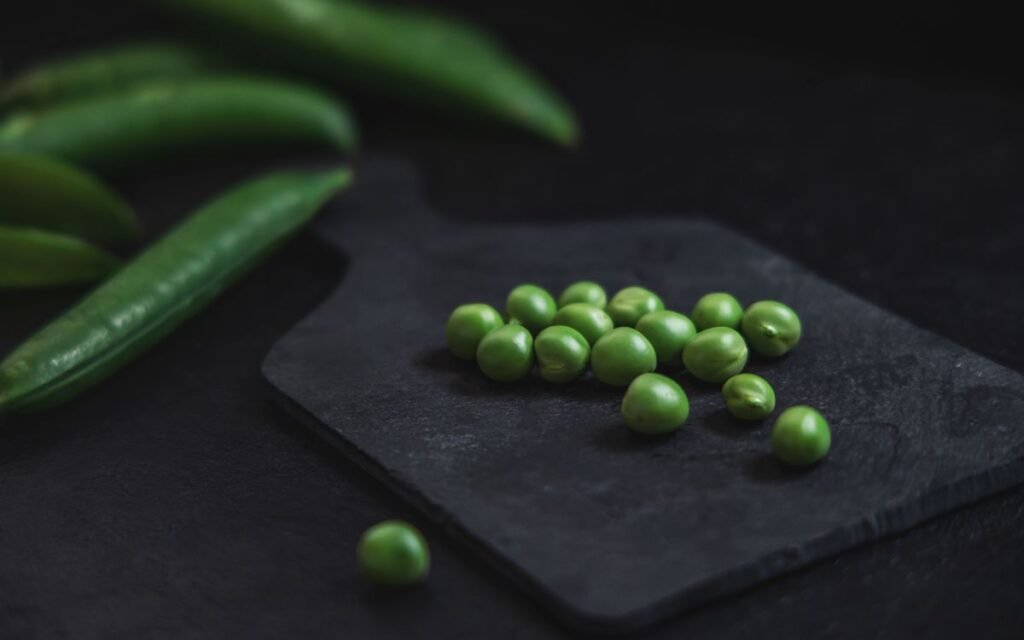
Kitchen katoris vary, so I’ve used 150 g of boiled peas as one katori. Here’s the maths from the per-100 g values above:
- Protein: 5.36 × 1.5 = about 8 g
- Fibre: 5.5 × 1.5 = about 8.3 g
- Energy: 84 × 1.5 = about 126 kcal
USDA’s own “1 cup” of boiled peas is 160 g, which comes to about 8.6 g of protein and 8.8 g of fibre.
How much of your day is that?
ICMR-NIN’s Dietary Guidelines for Indians (2024) set the protein RDA at 0.83 g per kg of body weight, which is 54 g a day for a 65 kg adult. One katori of peas covers about 15% of that. The NHS says adults should aim for 30 g of fibre a day, so the same katori covers more than a quarter of your fibre.
That’s why I like matar more as a fibre food that brings some protein, than as a protein food. It’s a useful add-on, not your main source.
Matar vs Dal, Paneer and Eggs: The Protein Table
So can green peas protein stand in for dal or paneer? For dal, not quite. For paneer, it’s closer than you’d think. Here’s the comparison, using USDA values and the same serving sizes we used in our daily protein guide.
| Food (cooked) | Protein per 100 g | Serving | Protein per serving | Calories per serving |
|---|---|---|---|---|
| Green peas, boiled | 5.36 g | 1 katori, 150 g | 8.0 g | 126 kcal |
| Frozen peas, boiled | 5.15 g | 1 katori, 150 g | 7.7 g | 117 kcal |
| Lentils (masoor type), boiled | 9.02 g | 1 katori, 150 g | 13.5 g | 174 kcal |
| Toor dal (pigeon peas), boiled | 6.76 g | 1 katori, 150 g | 10.1 g | 182 kcal |
| Paneer | 15.86 g | 50 g | 7.9 g | 150 kcal |
| Egg, hard-boiled | 12.58 g | 1 large, 50 g | 6.3 g | 78 kcal |
Paneer here is USDA’s survey entry “Cheese, paneer”; your local paneer may differ, especially full-fat versus low-fat. The dal figures assume thick, cooked dal, not a watery katori.
The surprise: protein per 100 kcal
Divide protein by calories and plain peas look smarter than you’d expect:
- Peas: 5.36 g ÷ 84 kcal = 6.4 g protein per 100 kcal
- Paneer: 15.86 g ÷ 299 kcal = 5.3 g per 100 kcal
- Lentils: 9.02 g ÷ 116 kcal = 7.8 g per 100 kcal
- Egg: 12.58 g ÷ 155 kcal = 8.1 g per 100 kcal
So if you’re watching calories this winter, peas give you more protein per calorie than paneer does. Eggs and dal still win. Our guide on how many eggs a day covers the egg side of this.
 Also readHow Much Protein a Day? An Indian Veg Plate That Gets There
Fresh vs Frozen Peas: Is Frozen Matar as Good?
In December the mandi is full of pea pods, and by May most of us are back on the frozen packet. Is the packet a compromise? Two studies say not by much.
What the studies found
A 2015 study by Bouzari and colleagues, in the Journal of Agricultural and Food Chemistry, compared fresh and frozen versions of eight fruits and vegetables, including peas. Its conclusion: vitamin content of frozen produce was “comparable to and occasionally higher than” fresh. For peas, though, the frozen samples had less riboflavin (a B vitamin) and less beta-carotene than fresh ones.
A 2017 study by Li and colleagues in the Journal of Food Composition and Analysis tested green peas and seven other foods as fresh, frozen and “fresh-stored” (five days in the fridge, like most of us do). In most comparisons there was no significant difference. Where there was one, frozen beat fresh-stored more often than the other way round. One honest note: the paper says the Frozen Food Foundation picked which foods were tested.
What USDA’s numbers show
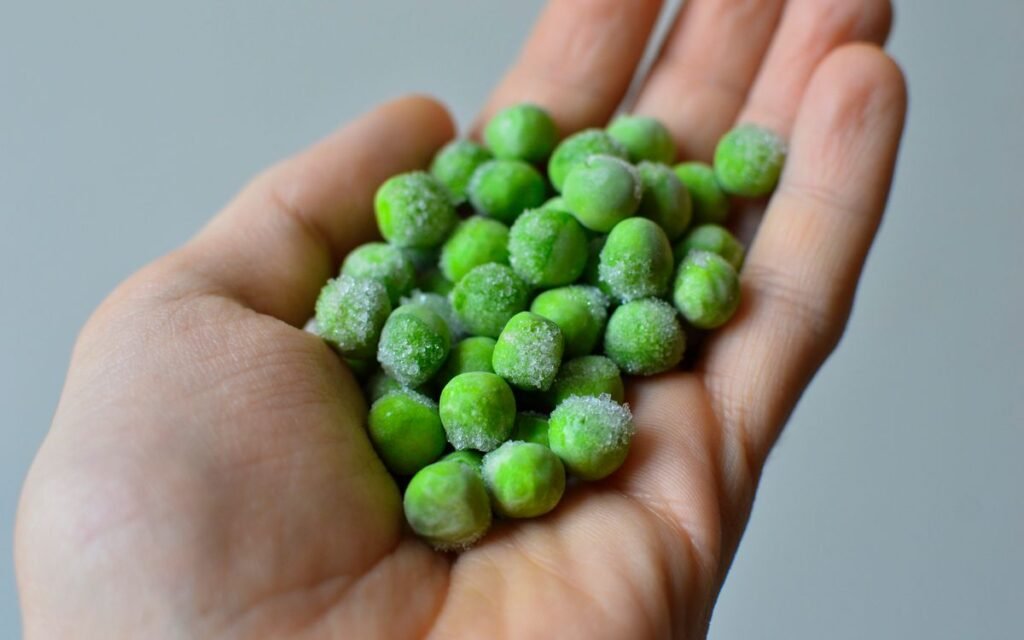
USDA’s separate entries for fresh and frozen peas aren’t a head-to-head test, but they line up with the studies on protein:
| Per 100 g | Protein | Fibre | Vitamin C |
|---|---|---|---|
| Fresh, raw | 5.42 g | 5.7 g | 40 mg |
| Frozen, uncooked | 5.22 g | 4.5 g | 18 mg |
| Fresh, boiled | 5.36 g | 5.5 g | 14.2 mg |
| Frozen, boiled | 5.15 g | 4.5 g | 9.9 mg |
Green peas protein barely moves between fresh and frozen. Vitamin C drops a lot once peas are boiled, fresh or frozen. ICMR-NIN’s 2024 guidelines also put fresh or frozen vegetables (without added chemicals) in the group of foods with minimal nutrient losses.
The Catch: Green Peas Protein Has a Gap
Here’s the part most posts on green peas protein skip. ICMR-NIN names green peas alongside lentils, chickpeas and rajma as rich sources of protein. But like other pulses, peas don’t carry every amino acid in good amounts.
What ICMR-NIN says
The 2024 guidelines explain it plainly. Cereals are low in lysine but higher in methionine and cysteine. Pulses are the reverse: higher in lysine, lower in methionine and cysteine.
So the fix is to eat them together. ICMR-NIN says cereals and pulses in a ratio of about 3:1 (raw weight) can meet your needs for all the amino acids, and adding 250 ml of milk a day improves it further. Its note under the table says a meal with both pulses and grains is “of higher quality” than either alone.
⚠️ Watch out
The catch, stated plainly: a bowl of plain matar on its own is not a “complete protein”. Eat it with roti, rice, poha or a millet, and add curd or milk where you can. That’s what Indian kitchens already do with matar paneer and roti or matar pulao.
A second gap: water
By weight, dried peas have about four times the protein of fresh ones. USDA lists raw dried split peas at 23.1 g of protein per 100 g, against 5.42 g in fresh raw peas, and most of that difference is water.
So a katori of fresh matar can’t replace the 85 g of pulses and legumes a day that ICMR-NIN suggests. It just helps along.
Matar Paneer, Aloo Matar, Poha, Nimona, Kachori: Best Ways to Eat It
Winter matar shows up in a lot of north Indian dishes. Here’s how each one stacks up on the protein and fibre side. The numbers are rough estimates, because every recipe uses different amounts.
- Matar paneer: the best combo for protein. If your katori has about 50 g of peas and 50 g of paneer, that’s roughly 2.7 g + 7.9 g = 10.6 g of protein. Go easy on the cream and keep the oil to a spoon or two.
- Nimona: the UP and Bihar curry made from ground green peas. It packs more peas per bowl than any other dish here, so it gives the most pea fibre and protein. Eat it with rice to close the amino-acid gap.
- Aloo matar: tasty, but the potato takes up space that peas could fill. Tilt the ratio toward matar, or swap some aloo for sweet potato.
- Poha or upma with peas: a handful of peas (say 30 g) adds only about 1.6 g of protein. Nice, but add peanuts or a glass of milk if breakfast protein matters to you.
- Matar pulao or khichdi: rice plus peas is the cereal-pulse pairing ICMR-NIN describes, in one pot.
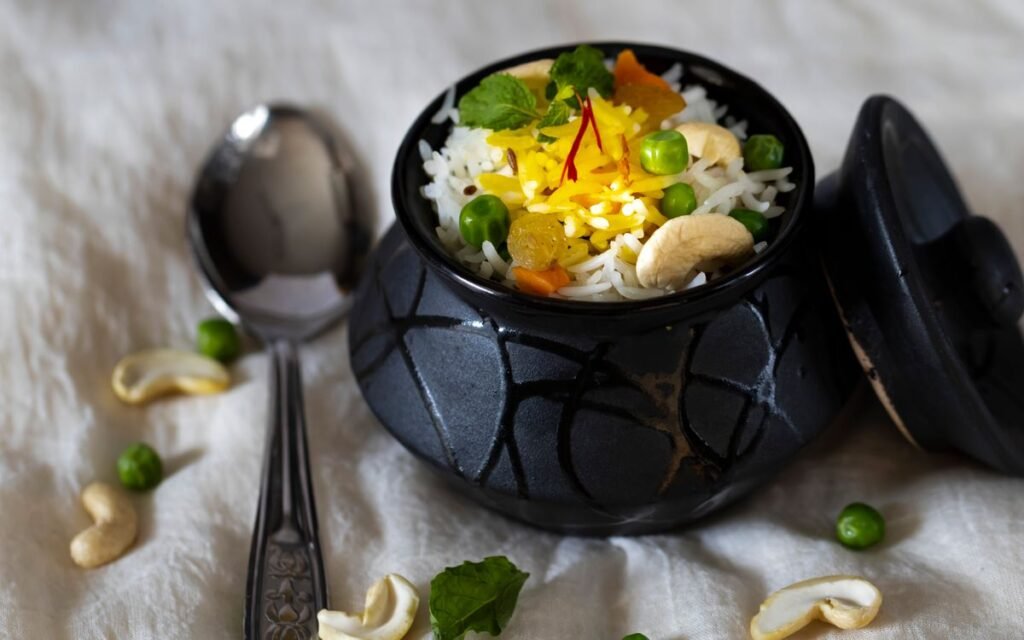
The matar kachori reality check
A matar kachori is a deep-fried pastry made with maida, with a spoon of spiced peas inside. The peas are fine. The problem is the frying and the refined flour around them, so it’s a treat, not a way to “eat more vegetables”. Our ghee guide explains how quickly cooking fat adds up.
 Also readHow Many Eggs a Day Is Safe? What Big Studies Actually Say
Does Matar Cause Gas? Everyday Comfort Tips
“Matar se pet phoolta hai” is a common complaint, and it’s not imagined. Peas are a pulse, and the NHS page on flatulence lists pulses like beans and lentils among foods that can cause wind, along with cabbage, cauliflower and onions.
Peas aren’t named on that list by themselves. Still, if a big bowl of nimona leaves you bloated, the legume family is a likely reason. People react differently, so go by your own stomach.
What the NHS suggests
The NHS tips for wind are simple and fit an Indian winter kitchen:
- Eat smaller meals, more often.
- Eat and drink slowly.
- Exercise regularly to help digestion.
- Don’t overdo foods that give you wind.
Practical matar tips
- Start with half a katori if you’re not used to peas, then build up.
- Have matar as part of a meal with roti or rice, not as a huge bowl on its own.
- If one dish (say nimona) bothers you and matar pulao doesn’t, that’s useful information. Eat the version that suits you.
💡 Pro tip
If you don’t usually eat many pulses, add matar gradually instead of in one big winter feast. Peas, dal and millets all in one heavy meal is a lot for most stomachs.
The NHS says to see a GP if bloating or stomach pain won’t go away or keeps coming back, or if you’ve lost weight without trying.
How to Buy and Store Matar This Winter
Pea season is the cheapest time to eat a lot of matar, so buy well and don’t waste it. These are everyday kitchen tips, not lab rules.
At the sabzi mandi
- Pick pods that are bright green, firm and plump. Dull, yellowing or limp pods are older.
- Press a pod: it should feel full, with peas filling most of the length.
- Peel one and taste a raw pea. Sweet and tender is what you want.
- Remember that much of what you pay for is the pod, so a kilo of pods gives you far less than a kilo of shelled peas.
At home
- Keep pods unshelled in the fridge, and shell them close to cooking.
- Wash pods before you shell them, not the shelled peas after. ICMR-NIN says vegetables should be washed before cutting or peeling, because nutrient loss is higher when you wash after cutting.
- Don’t boil peas to mush. Vitamin C falls from 40 mg to 14.2 mg per 100 g between raw and boiled peas in USDA’s data. Add them near the end of cooking.
- Got a lot? Shell and freeze some in a zip bag for the summer, or just buy the frozen packet later. As section 3 showed, frozen peas hold up well.
✅ Our verdict
Eat matar freely this winter. A katori gives about 8 g of protein and over 8 g of fibre for around 125 calories, and frozen peas are a fine stand-in the rest of the year. Just don’t count on peas alone for protein: pair them with roti, rice or paneer, and keep your daily dal.
Frequently Asked Questions
How much protein is in 100 g of green peas?
Raw green peas have 5.42 g of protein per 100 g and boiled peas 5.36 g, per USDA FoodData Central. A 150 g katori of boiled peas gives roughly 8 g.
Is frozen matar as healthy as fresh?
Mostly, yes. Two studies found frozen produce, peas included, comparable to fresh for most vitamins. In one, frozen peas had less riboflavin and beta-carotene, but protein in USDA’s data is nearly the same.
Are green peas a complete protein?
Not on their own. ICMR-NIN says pulses are low in methionine and cysteine, so eat peas with cereals like roti or rice, about 3 parts cereal to 1 part pulse.
Is matar better than paneer for protein?
Per serving, 50 g of paneer gives a similar amount of protein to a katori of peas. Per calorie, peas give more protein than paneer, and they bring fibre, which paneer doesn’t.
Why does matar cause gas?
Peas are a pulse, and the NHS lists pulses like beans and lentils among foods that can cause wind. Smaller portions and eating peas with a meal can help.
The Bottom Line
Green peas protein is modest but useful: about 8 g a katori, with plenty of fibre and few calories. Treat matar as a helper to your dal, curd and paneer, not a replacement, and always eat it with a grain. Next time you’re at the mandi, pick up a kilo of bright pods and make matar paneer with roti or a pot of nimona with rice.
If you’re vegetarian and want the full picture of where your protein comes from, our millets in winter guide and our piece on getting more iron from veg meals are good next reads.
This article is for information only; consult a doctor or a registered dietitian for advice about your own diet, especially if you have a kidney condition, a digestive problem or have been told to limit certain foods.
Keep reading
 Read nextMillets in Winter: Which to Eat and the Label to Check First
 Read nextShakarkandi vs Aloo: Is Sweet Potato Really Healthier in Winter?
 Read nextIs Sarson Ka Saag Healthy? Yes, Until the Makhan Lands
Sources
- USDA FoodData Central: Peas, green, raw (FDC 170419)
- USDA FoodData Central: Peas, green, cooked, boiled, drained, without salt (FDC 170420)
- USDA FoodData Central: Peas, green, frozen, unprepared (FDC 170016)
- USDA FoodData Central: Peas, green, frozen, cooked, boiled (FDC 170017)
- USDA FoodData Central: Lentils, cooked, boiled (FDC 172421)
- USDA FoodData Central: Pigeon peas (red gram), cooked, boiled (FDC 172437)
- USDA FoodData Central: Egg, whole, hard-boiled (FDC 173424)
- USDA FoodData Central: Cheese, paneer (FDC 2705740)
- USDA FoodData Central: Peas, green, split, mature seeds, raw (FDC 172428)
- ICMR-NIN: Dietary Guidelines for Indians 2024 (protein RDA, 3:1 cereal-pulse ratio, limiting amino acids, washing before cutting)
- Bouzari et al. 2015, J Agric Food Chem: Vitamin retention in eight fruits and vegetables, refrigerated vs frozen
- Li et al. 2017, J Food Compos Anal: Selected nutrient analyses of fresh, fresh-stored and frozen fruits and vegetables
- NHS: Flatulence (foods that can cause wind, self-help tips)
- NHS: How to get more fibre into your diet (30 g a day)