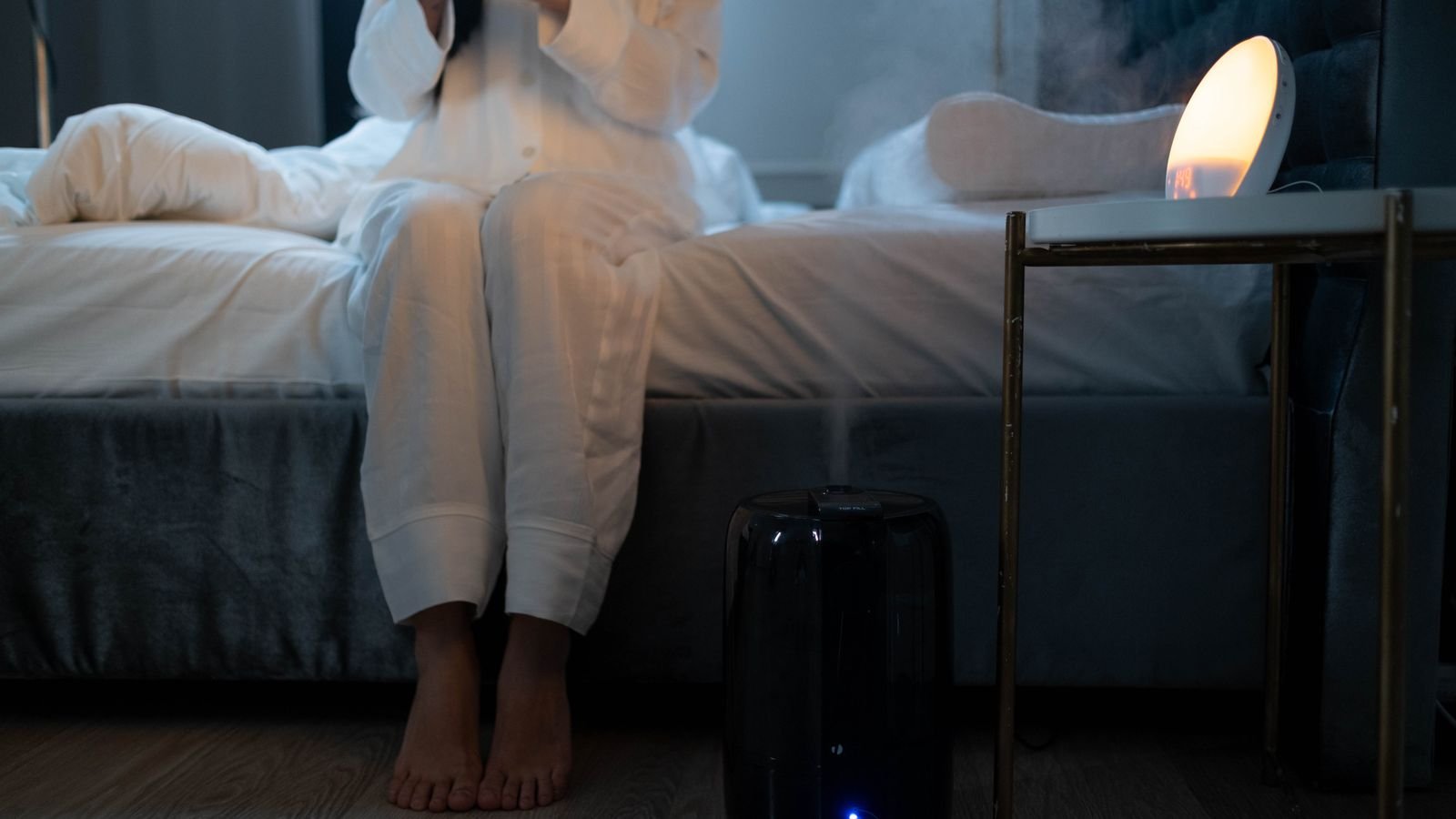
Do you need a humidifier in winter? Only if a small hygrometer shows your room’s humidity has dropped below 30%, which usually happens in a closed room with a heater running for hours. If it reads 30 to 50%, you’re already in the range the US EPA recommends, and a humidifier adds nothing but a cleaning chore.
That’s the short answer. If you do need one, the type matters, and so does the water you pour in. Most buyers in India never hear about the tap water catch, and it’s in section 4.
⚡ Key takeaways
- The number to check: indoor humidity. The US EPA says keep it below 60%, ideally 30 to 50%.
- Measure first: a small digital hygrometer tells you in minutes. Don’t buy a humidifier on a hunch.
- Warm or cool mist: both add moisture. Steam types can burn curious kids, so a cool-mist one is the safer pick around children.
- The catch: tap water in an ultrasonic humidifier sprays minerals into the air as fine “white dust”. Distilled water avoids it.
- Skip it if you rarely run a heater, as in most of Mumbai, Chennai or Kolkata. Measure anyway before you spend.
Why Your Room Feels Dry in Winter (Even on a Foggy Day)
Here’s the odd part. North Indian winter mornings are often foggy and damp outside, yet your bedroom feels dry by night. On one late-November day in 2025, Delhi’s humidity swung between 42% and 100%, according to a weather report on Asianet Newsable.
The culprit is heating, not the weather. Warming air doesn’t remove any water, but warm air can hold much more of it, so the relative humidity falls. Engineering ToolBox gives a worked example: outdoor air at 0°C and 90% humidity, heated to 20°C indoors, drops to about 23%.

Delhi rarely hits 0°C, so the drop in your flat will be smaller. But the direction is the same. Shut the windows against the cold and the smog, run a fan heater or oil-filled radiator for six hours, and the room can slide below the comfortable range.
Signs the air may be too dry
- Static shocks when you touch a door handle or take off a sweater
- Hair that flies up after you comb it
- Skin that feels tight soon after you moisturise
- Lips that crack even though you drink enough water
Cleveland Clinic calls static in your hair and sparks on touch “sure signs” that indoor air is too dry. Still, these signs are a nudge to measure, not proof.
The Number That Decides It: 30 to 50% Humidity
The US EPA’s advice is simple: keep indoor relative humidity below 60%, ideally between 30 and 50%. Its humidifier guide goes further and says to keep it at or below 50%, because higher levels can encourage dust mites and mould.
So don’t start with “which humidifier?” Start with “what does my room read right now?”
How to measure it
Buy a small digital hygrometer. Most show temperature and humidity together, and they’re sold as “thermometer hygrometer” on Amazon and Flipkart. I couldn’t check live prices for this post, so compare a few listings and read the reviews before you pick one.
- Keep it at bed height, away from the heater and the window.
- Check it at night after the heater has run for an hour or two.
- Note the reading for three or four nights, not just one.
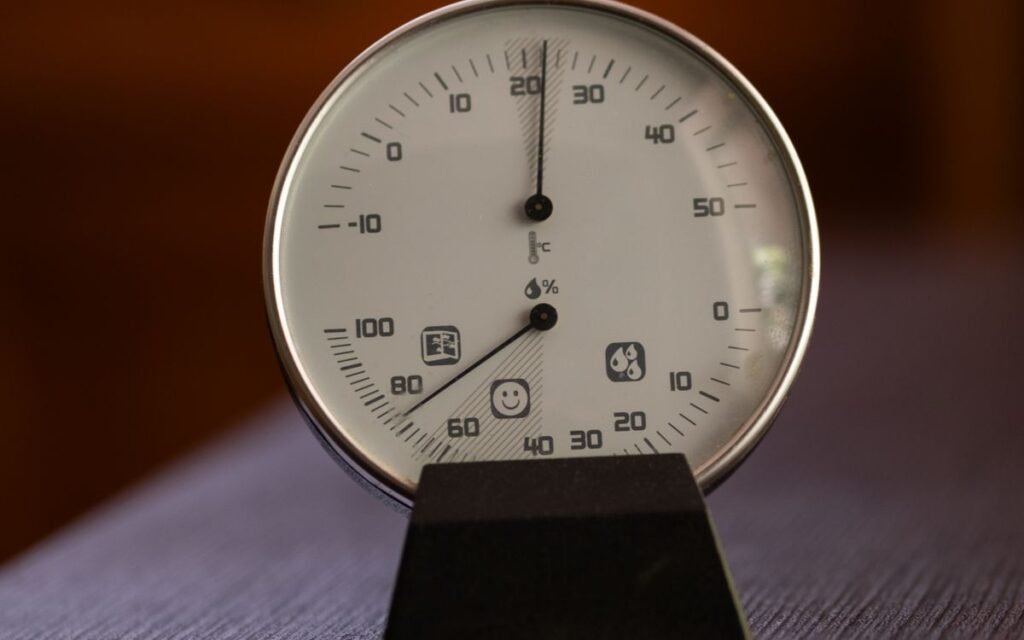
Cleveland Clinic suggests checking levels every few days with a hygrometer. Some humidifiers have a built-in humidistat, but a separate meter gives you a second opinion.
💡 Pro tip
Measure before and after you run the heater. If the reading only dips below 30% on heater nights, the cheaper fix may be using the heater less, not buying another appliance.
 Also readRoom Heater Running Cost: What 4 Hours a Day Adds to Your Bill
Cool Mist, Warm Mist or Ultrasonic: Which Humidifier in Winter?
If your hygrometer keeps showing under 30%, then a humidifier makes sense. The EPA and Cleveland Clinic describe the main types, and they work in quite different ways.
The main types
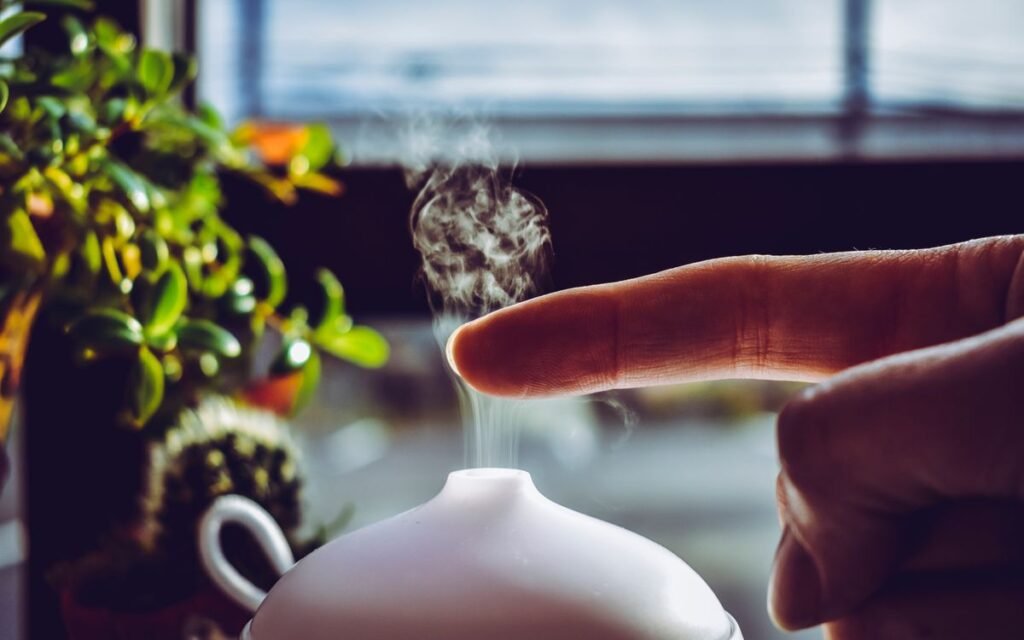
- Ultrasonic (cool mist): vibrations turn water into a fine mist. Quiet, and the most common type on Indian shopping sites.
- Impeller (cool mist): a spinning disc flings water into a mist.
- Evaporative: a fan blows air through a wet wick or filter.
- Steam vaporizer (warm mist): heats water into steam before releasing it.
The EPA says ultrasonic and impeller units appear to disperse the most microorganisms and minerals into the air. Evaporative and steam units disperse less, but they can still grow germs if water sits in the tank.
| Type | How it works | Watch out for | My take |
|---|---|---|---|
| Ultrasonic | Vibrations make a cool mist | White dust from tap water; needs regular cleaning | Fine with distilled water and strict cleaning |
| Impeller | Spinning disc makes a cool mist | Also sprays minerals and germs | Rare in India; no real edge |
| Evaporative | Fan through a wet wick | Wick needs changing; fan noise | Good if you hate white dust |
| Steam (warm mist) | Boils water into steam | Burn risk; uses more power | Skip it if kids or pets are around |
What about kids and older parents?
The EPA says to keep steam vaporizers away from children, because the steam and hot water can cause burns. In a joint family flat with a toddler crawling around, that settles it: go for a cool-mist or evaporative model.
For grandparents who get up at night, put any humidifier where the cord and tank can’t trip anyone. And keep it well away from the room heater.
The White Dust Catch: Tap Water in an Ultrasonic Humidifier
This is the catch I promised. An ultrasonic humidifier doesn’t boil water; it shatters it into droplets. So whatever is dissolved in that water flies into the room too.
The EPA says minerals in tap water can leave a “white dust” on furniture and form scale inside the unit. A University of Alberta study, published in the journal Indoor Air, found tap water in an ultrasonic humidifier produced the most fine particles, while distilled water from the grocery store produced none. The researchers said the particle levels from tap water were comparable to a polluted city, and the PM2.5 spread through the whole house.
⚠️ Watch out
If your tap or borewell water leaves white scale on the kettle, it’s hard water. Filling an ultrasonic humidifier with it can add particles to the very air you’re trying to keep clean. Use distilled water, or pick an evaporative model.
Is RO water good enough?
Partly. The EPA ranks distilled water as the most effective at cutting minerals. It says deionised, reverse osmosis and other “purified” water still carry somewhat more. Bottled “mineral” or “spring” water hasn’t been demineralised at all, so skip it here.
Humidifier and air purifier together
Running both in one room is fine, and plenty of Delhi homes will need both this winter. Just expect one quirk. If your ultrasonic humidifier sprays mineral particles, the purifier’s PM2.5 sensor will likely count them as pollution and run harder; that’s my inference from the research above, not a tested result.
Distilled water fixes that too. Our guide to running an air purifier in the bedroom at night covers placement. I’d keep the two a few feet apart so the purifier isn’t sitting in the mist.
How to Clean a Humidifier So It Doesn’t Grow Mould
A dirty humidifier is worse than none. The EPA notes microorganisms often grow in tanks with standing water, and the mist can carry them into the air. An old CPSC safety alert says the same: bacteria and fungi often grow in portable humidifier tanks.
The routine the EPA and CPSC suggest
- Daily: unplug it, empty the tank, wipe it dry and refill with fresh water. Don’t top up old water.
- Every third day: the EPA says clean portable units, using a brush to remove scale and film, then wipe dry.
- For cleaning solution: follow the maker’s manual. If there’s none, the EPA suggests 3% hydrogen peroxide; an older CPSC release suggests a weak bleach solution, then rinsing until the smell is gone.
- For scale: a CPSC release suggests a 1:1 vinegar and water mix with a soft brush.
- End of season: clean it, dry it fully and store it dry.
Cleveland Clinic adds one more rule worth following: don’t pour essential oils or vapour rubs into the tank unless the manufacturer allows it.
Signs you’re overdoing it
- Water droplets on windows, walls or the inside of the curtains
- A damp patch on the floor or table around the humidifier
- A musty smell in the room
- Your hygrometer reads above 50%
The EPA says if you see condensation, move the humidifier, turn it down or run it less. In a small Indian bedroom with closed windows, a big tank on full blast can overshoot surprisingly fast.
 Also readWinter Dry Skin: The Hot-Water Bath Habit Making It Worse
Cheaper Fixes to Try Before You Buy One
Not every dry room needs a new gadget. Try these first, and keep checking the hygrometer.
Free or nearly free
- Use the heater less. Heat the room before bed, then switch it off. Our room heater cost and safety guide has more ways to cut heater hours, which also cuts the bill.
- Dry clothes indoors on a stand. Wet laundry releases moisture as it dries. Keep it away from the heater, and stop if windows start fogging up.
- A wide bowl of water near (not on) the heater adds a little moisture. Expect a small effect at best.
- Leave the bathroom door open after a hot bath so the steam spreads.
Don’t count on plants
Plants release some water vapour, but a few pots on a shelf won’t move a dry bedroom much. We looked at a similar claim in do indoor plants clean air, and the numbers needed were huge.
Protect yourself directly
Sometimes the room is fine and your skin is the issue. A good winter dry skin routine and a lip balm habit (see our chapped lips in winter guide) cost less than any appliance.
✅ Our verdict
Buy a hygrometer before you buy a humidifier. If your heated room keeps reading below 30%, get a cool-mist or evaporative humidifier, fill it with distilled water and clean it every few days. If it reads 30 to 50%, skip the humidifier and spend the money elsewhere.
Who Should Buy One, and Who Should Skip It
Here’s my honest split, based on the guidance above and how Indian homes work in winter.
A humidifier in winter makes sense if
- You live in Delhi NCR, Punjab, Haryana, UP, Rajasthan or the hills, and run a heater for long hours
- Your hygrometer stays under 30% on most nights
- You’ll actually empty and refill it every day (be honest here)
- You can buy distilled water regularly, or you choose an evaporative model
Skip it if
- You’re in a city with mild winters, like Mumbai, Chennai or Kolkata, where heaters rarely run for long
- You use a heater for an hour or less a day
- Nobody in the house will clean it. A neglected tank is the worst outcome
- Your reading already sits between 30% and 50%
| Your reading at night | What to do |
|---|---|
| Below 30% | Cut heater hours first; then consider a humidifier |
| 30% to 50% | Leave it. You’re in the EPA’s ideal range |
| 50% to 60% | No humidifier. Air the room daily |
| Above 60% | Too damp; watch for mould and open a window when outdoor air allows |
If anyone at home has asthma or allergies, ask their doctor before adding a humidifier to the bedroom. Both the EPA and Cleveland Clinic say to stop using one and see a doctor if breathing problems seem linked to it.
This article is for information only; consult a doctor for any health concern.
Frequently Asked Questions
Is it good to use a humidifier in winter?
Only when your indoor humidity is low. The US EPA recommends 30 to 50%, so measure with a hygrometer first. If the room is already in that range, a humidifier in winter adds little.
Can I use tap water in a humidifier?
You can, but in an ultrasonic humidifier it can spread minerals as white dust and fine particles. The EPA says distilled water is the most effective at reducing minerals, and a University of Alberta study found distilled water produced no particles.
Should I sleep with a humidifier on all night?
It’s fine if the room stays at or below 50% and you see no condensation on windows. Keep it away from the heater, and empty the tank every morning, as the EPA advises daily refills.
Is warm mist or cool mist better in winter?
Both add moisture. The EPA warns steam vaporizers can burn children, so cool mist or evaporative models are the safer pick in homes with kids.
Can I use a humidifier and an air purifier together?
Yes. Use distilled water in the humidifier so it doesn’t add mineral particles that the purifier then has to filter out.
The Bottom Line
A humidifier in winter is useful only when your room is truly dry, and in India that mostly means closed, heated rooms in the north. Measure first, aim for 30 to 50%, and if you buy one, use distilled water and clean it every few days. Tonight, check what your room actually reads before you add anything to your cart.
Keep reading
 Read nextAir Purifier in Bedroom All Night? What a New Trial Found
 Read nextChapped Lips in Winter? The Lip Balm Habit Making Them Worse
 Read nextCracked Heels in Winter: The Cream Ingredient That Actually Works
Sources
- US EPA: Use and Care of Home Humidifiers (types, white dust, distilled water, cleaning, keep at or below 50%)
- US EPA: Mold Course Chapter 2 (indoor humidity below 60%, ideally 30-50%)
- Cleveland Clinic: 4 Ways a Humidifier Can Improve Your Health (signs of dry air, hygrometer, types, cleaning)
- US CPSC: Portable Humidifiers Need Regular Cleaning During Winter Months (daily water change, bleach and vinegar cleaning)
- US CPSC safety alert: Dirty Humidifiers May Cause Health Problems
- University of Alberta: tap water in ultrasonic humidifiers and particle pollution (study in Indoor Air)
- Engineering ToolBox: indoor vs outdoor relative humidity when air is heated
- Asianet Newsable: Delhi weather, humidity between 42% and 100% (26 Nov 2025)