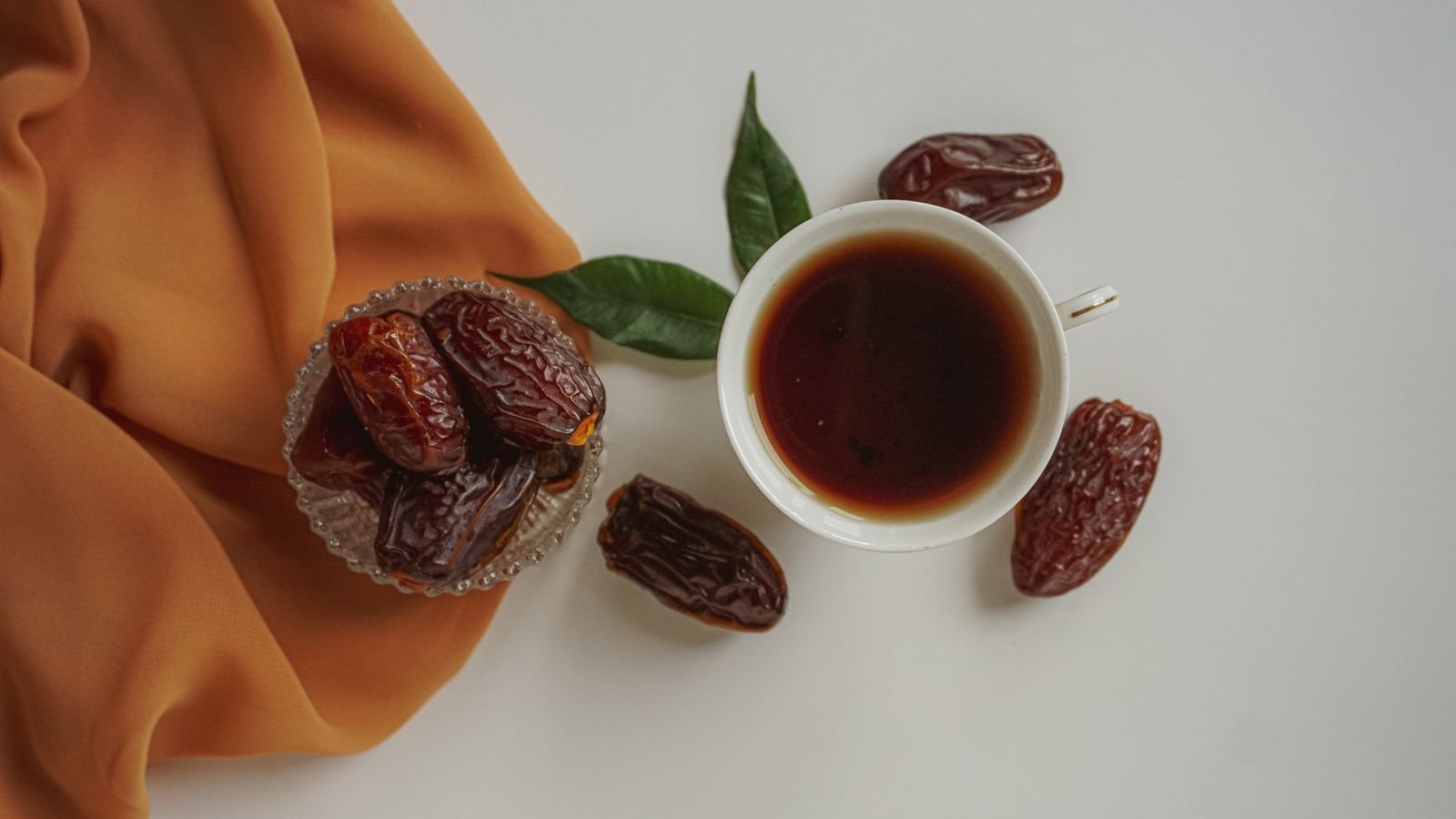
Dates in winter are a good sweet, not a free one. For most healthy adults, two big Medjool dates or three to four small ones a day is a sensible amount, and that’s already about 130 kcal and 30 g of natural sugar if you pick the big ones.
So which khajur do you have in the kitchen? Size changes everything, and one of the two winter claims everyone forwards turns out to be the opposite of what the old texts say. That’s in section 3.
⚡ Key takeaways
- One Medjool date (24 g): about 67 kcal, 16 g sugar and 1.6 g fibre, per USDA data. One small Deglet Noor (7 g) is about 20 kcal and 4.5 g sugar.
- How many a day: no health body sets a number. Two Medjool or three to four small dates, eaten as your sweet for the day, is my practical line.
- “Dates are full of iron”: not really. Three Medjool dates give about 0.65 mg, roughly 4% of what a woman aged 19 to 49 needs.
- “Dates are garam”: Ayurveda references actually list khajur as cooling (sheeta). The “warm” feeling is just calories.
- Ask your doctor first if you have diabetes, or a kidney or potassium-related diet plan.
Why Khajur Shows Up in Every Indian Kitchen in Winter
The first cold week arrives and the dry-fruit shelf gets busy. Someone’s mother starts the khajur-with-ghee routine, a box of Medjool shows up as a gift, and the office snack drawer quietly fills with date bites and “no added sugar” laddoos.
Dates feel like the healthy option because they’re fruit. And compared with a box of mithai, they often are.
But a date is a dried fruit, which means the water is gone and the sugar is packed tight. Per gram, a date has about 2.8 kcal, according to USDA figures.
I didn’t want to write another “10 benefits of khajur” list about dates in winter. Instead, I took the USDA’s nutrition data for two common varieties, the WHO and ICMR-NIN sugar guidance, and a peer-reviewed glycaemic index study, and did the maths you can use at home.
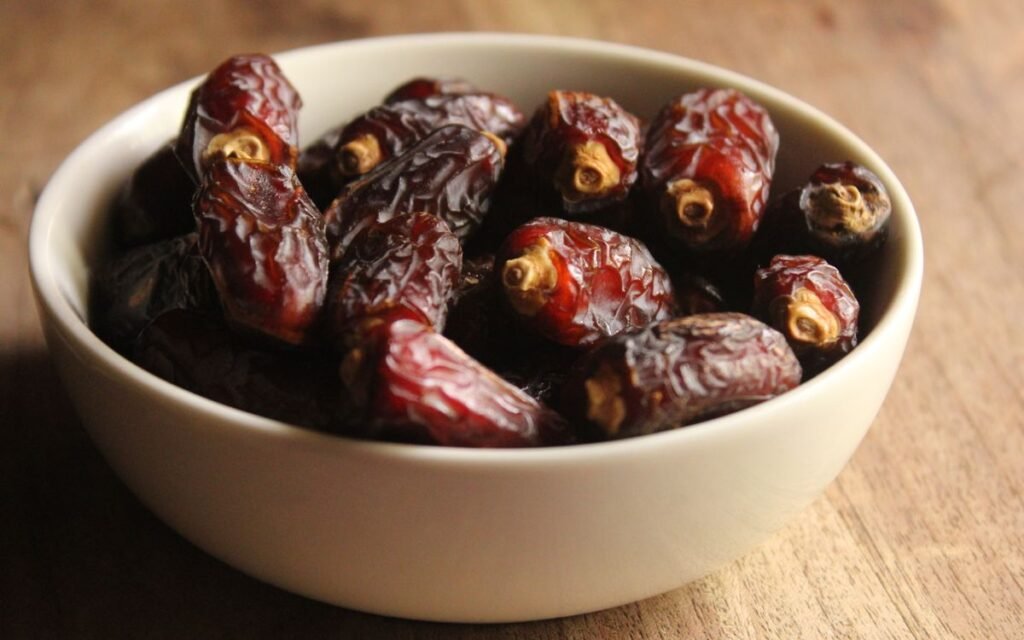
Calories, Sugar and Fibre in One Date
The numbers below come from USDA FoodData Central. Medjool is the big, soft, premium date.
Deglet Noor is a smaller, firmer date, so it shows how much size matters. I worked out the per-date values from USDA’s per-100 g figures and its listed weight for one pitted date.
| Per serving | 1 Medjool date (24 g) | 1 Deglet Noor date (7.1 g) | Per 100 g, Medjool |
|---|---|---|---|
| Calories | 67 kcal | 20 kcal | 277 kcal |
| Total sugar | 16 g | 4.5 g | 66.5 g |
| Fibre | 1.6 g | 0.6 g | 6.7 g |
| Potassium | 167 mg | 47 mg | 696 mg |
| Iron | 0.2 mg | 0.07 mg | 0.9 mg |
| Calcium | 15 mg | 3 mg | 64 mg |
What the table tells you
- Size is the whole story. One Medjool has more than three times the calories of one Deglet Noor. “Two dates” can mean 40 kcal or 133 kcal.
- The fibre is real. About 7 to 8 g per 100 g, which helps. But you’d need a lot of dates to get much of it, and the sugar comes along.
- Potassium is the quiet strength. A Medjool carries about 167 mg, a decent amount for one bite.
💡 Pro tip
Most Indian packs print nutrition per 100 g. Weigh one date from your box on a kitchen scale, then multiply its weight by 2.8 for the rough calories. A 12 g date is about 34 kcal. It takes ten seconds and tells you more than the brand name does.
 Also readHow Many Almonds a Day? The Handful Rule for Diwali Dry Fruits
Two Winter Claims Checked: “Dates Are Garam” and “Full of Iron”
These two come up every December on family WhatsApp groups. Both need a correction.
“Dates keep you warm”
Here’s the twist I promised. Ayurveda references describe kharjura as madhura (sweet) in taste and sheeta (cooling) in potency, and say it pacifies Vata and Pitta.
That’s how Truemeds’ Ayurveda reference page summarises it. So in the tradition the “garam” claim leans on, dates are classed as cooling, not heating.
What about modern nutrition? I couldn’t find a study showing that dates raise body temperature.
The honest version is simpler: dates give you quick calories, and any snack with calories gives your body energy to use. Nothing special about that. If two dates with hot chai feel warming, honestly, that’s the chai.
“Dates are full of iron”
The numbers don’t back this. USDA lists about 0.9 mg of iron per 100 g of Medjool dates and about 1 mg in Deglet Noor. The NHS says women aged 19 to 49 need 14.8 mg of iron a day, and men need 8.7 mg.
My maths: three Medjool dates (72 g) give about 0.65 mg of iron. That’s roughly 4% of a woman’s daily need.
To get the full 14.8 mg from Medjool dates alone, you’d have to eat about 1.6 kg, around 68 dates and 4,500 kcal. Nobody should try that.
If iron is your worry, the NHS points to beans and chickpeas (chana), which do far more work. Our guide on chai timing and iron absorption explains how to get more out of the iron you already eat. And if a doctor has told you you’re anaemic, follow their plan, not a khajur plan.
Dates vs Gur, Chikki and Laddoo: The Winter Sweet Maths
Dates come out looking good here, with one catch. I compared the servings people actually eat. The gur and chikki rows are my estimates: USDA has no jaggery entry, so I used white sugar’s 387 kcal per 100 g as a stand-in, and for chikki I assumed a 20 g piece made of half peanuts (567 kcal per 100 g, USDA) and half jaggery.
| Winter sweet (one serving) | Calories | Sugar | Counts as “free sugar” (WHO)? |
|---|---|---|---|
| 2 Medjool dates (48 g) | 133 kcal | 32 g | No, whole fruit |
| 3 small Deglet Noor dates (21 g) | 60 kcal | 13.5 g | No, whole fruit |
| Gur, one 10 g piece | about 39 kcal | about 10 g | Yes |
| Peanut chikki, 20 g piece | about 95 kcal | about 10 g | Yes, the jaggery part |
| Methi laddoo, 40 g | about 200 kcal | about 12.5 g jaggery | Yes |
The laddoo row comes from our methi laddoo calorie maths.
Why “free sugar” matters
WHO defines free sugars as sugars added to food by the maker, cook or consumer, plus sugars naturally in honey, syrups, fruit juices and juice concentrates. It advises keeping free sugars under 10% of daily energy, which it puts at about 50 g for someone eating 2,000 kcal.
ICMR-NIN’s 2024 Dietary Guidelines go further and ask people over two to keep sugar under 5% of daily calories, as ThePrint reported. On 2,000 kcal, 5% works out to about 25 g (my maths).
The sugar inside a whole date sits in the fruit with its fibre, so WHO doesn’t count it as free sugar. Gur, chikki and laddoo jaggery do count.
⚠️ Watch out
Here’s the catch. Two big Medjool dates still carry 32 g of sugar and 133 kcal. Not being “free sugar” doesn’t make those calories disappear. And date syrup counts as free sugar, because WHO lists syrups by name. If a “no added sugar” sweet is made with date syrup, it isn’t really sugar-free.
What about “sugar-free” sweets made with date paste? WHO’s fact sheet doesn’t name date paste, so I won’t pretend there’s an official answer.
But blending dates breaks up the fruit, and a laddoo made with a cup of date paste is still a dense, sweet laddoo. Read the label for total sugar per piece. Our guide on how to read food labels in India shows where to look.
Dates and Blood Sugar: What a Glycaemic Index Study Found
Glycaemic index (GI) compares how fast a food raises blood sugar against pure glucose. A score of 55 or less counts as low.
In a 2011 study in Nutrition Journal, Alkaabi and colleagues in the UAE tested five local date varieties. Each person ate a portion of dates with 50 g of available carbohydrate, and the team tracked blood sugar for two to three hours.
| Group | People | GI of the five date varieties |
|---|---|---|
| Healthy adults | 13 | 46.3 to 55.1 |
| Adults with type 2 diabetes (on lifestyle measures and/or metformin) | 10 | 43.8 to 53.0 |
The authors found all five varieties were low GI and that dates didn’t cause significant blood sugar spikes in the diabetic group.
The honest reading
- It’s a small study. 23 people, five Gulf varieties, tested in one setting. Medjool and the dates in your local shop weren’t among them.
- GI isn’t portion size. 50 g of available carbohydrate is roughly three Medjool dates by my estimate from USDA values. Eat six and the sugar load doubles, whatever the GI.
- Low GI isn’t low sugar. It just means the rise is slower than glucose.
⚠️ Watch out
If you have diabetes or prediabetes, ask your doctor or dietitian how dates fit your plan before making them a daily habit. People on a doctor-advised low-potassium diet should ask too, since dates are rich in potassium. This is a summary of research, not advice for any condition.
 Also readJaggery vs Sugar: Is Gur Really Healthier? What NIN Says
How to Enjoy Dates in Winter Without Overdoing It
Dates in winter work best when they replace another sweet, not when they’re added on top. Here’s how I’d use them.
- Make them your one sweet of the day. Two Medjool or three to four small dates after lunch, instead of mithai or biscuits with chai.
- Pair them with protein or fat. A date with a few almonds, walnuts or a spoon of peanut butter makes a more filling snack than dates alone.
- Sweeten with a whole date, not gur. Blend one or two into a smoothie, kheer or dalia instead of adding sugar or jaggery. You get some fibre and skip the free sugar.
- Watch the khajur-with-ghee habit. Stuffing dates with ghee or frying them for khajur paak adds fat calories quickly. Keep it to one or two, not a plate.
- Count the “healthy” date sweets. Date bites, date rolls and date laddoos are still sweets. Check calories per piece on the pack.
- Brush or rinse after. Dates are sticky and cling to teeth. A glass of water or a rinse after eating them is an easy habit for kids too.
If you want to understand why winter snacking adds up, our post on winter weight gain breaks down the habits that matter more than any single food.
💡 Pro tip
Buying for the family? Smaller dates are easier to portion, especially for kids. Three small ones feel like a treat. Three Medjool, at about 200 kcal, is closer to a snack meal.
Our Verdict: Who Should Eat How Many
There’s no official number for dates in winter, or any season, from WHO, ICMR-NIN or the NHS, so this is my practical take from the numbers above.
| You are… | Sensible amount |
|---|---|
| A healthy adult with an active day | 2 Medjool or 3 to 4 small dates |
| Trying to lose weight | 1 Medjool or 2 small dates, in place of another sweet |
| A child over two | 1 to 2 small dates, pitted and chopped for little ones |
| Living with diabetes or on a special diet | Whatever your doctor or dietitian advises |
✅ Our verdict
Eat dates in winter, but treat them as your sweet, not your health food. Two Medjool or three to four small khajur a day beats gur, chikki or a laddoo because the sugar comes with fibre and no added sugar. They won’t fix low iron, and they’re cooling in Ayurveda, not “garam”. If you have diabetes or a diet plan from your doctor, ask first.
This article is for information only and is not medical advice. Please consult a doctor or registered dietitian before changing your diet if you have diabetes, kidney disease or any other health condition.
Frequently Asked Questions
How many dates should I eat a day in winter?
No health body sets an exact number. For most healthy adults, two Medjool dates or three to four small dates a day, eaten in place of another sweet, is a sensible amount. That’s about 60 to 133 kcal depending on size.
Are dates hot or cold for the body?
Ayurveda references classify khajur as sheeta (cooling) in potency, not heating. Modern nutrition has no evidence that dates raise body temperature. They simply give you quick energy, like any snack with calories.
Are dates good for iron?
Not much. Medjool dates have about 0.9 mg of iron per 100 g, per USDA. Three dates give roughly 4% of the 14.8 mg a day the NHS says women aged 19 to 49 need. Beans and chickpeas, which the NHS lists, are better sources.
Is the sugar in dates as bad as gur?
Not quite. WHO doesn’t count sugar inside whole fruit as free sugar, while gur and other added sugars do count. But dates are still high in sugar per bite, so the calories add up just the same.
Can people with diabetes eat dates?
A small 2011 study found five varieties of dates had a low glycaemic index in people with type 2 diabetes. That doesn’t make them unlimited. Anyone with diabetes should ask their doctor or dietitian how many fit their plan.
The Bottom Line
Dates in winter are one of the better sweets you can pick, mostly because there’s no added sugar in them. But they’re dense. Two Medjool dates carry 32 g of sugar, they won’t fix low iron, and the “garam” label doesn’t match the Ayurveda references or the research.
Next step: weigh one date from the box at home, multiply by 2.8 for its calories, and decide your daily number from there. If you like checks like this, read our til in winter research check next.
Keep reading
Read nextJaggery vs Sugar: Is Gur Really Healthier? What NIN Says Read nextMethi in Winter: What Leaves, Seeds and Laddoo Really Give You
 Read nextGajar Ka Halwa Calories: What One Katori Really Costs You
Sources
- USDA FoodData Central: Dates, medjool (FDC 168191)
- USDA FoodData Central: Dates, deglet noor (FDC 171726)
- USDA FoodData Central: Peanuts, all types, raw (FDC 172430)
- USDA FoodData Central: Sugars, granulated (FDC 169655), used as a jaggery stand-in
- Alkaabi et al., Nutrition Journal 2011: Glycemic indices of five varieties of dates in healthy and diabetic subjects (PMC)
- WHO: Healthy diet fact sheet (free sugars definition, under 10%, about 50 g)
- ThePrint, 13 May 2024: ICMR-NIN dietary guidelines limit sugar to 5% of daily calories
- NHS: Iron (daily needs for men and women)
- Truemeds: Dates (Kharjura) in Ayurveda (madhura rasa, sheeta virya)