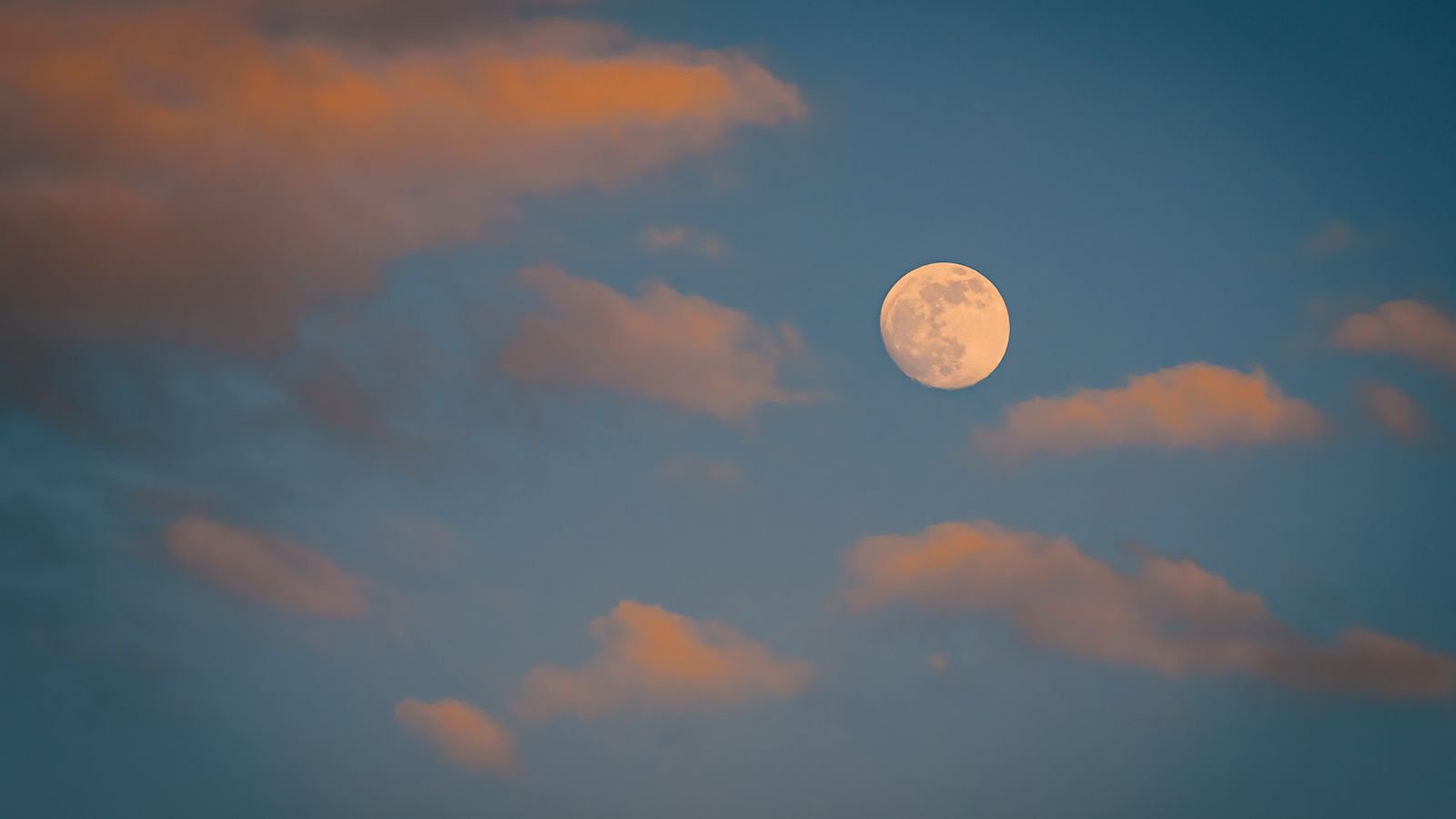
The Beaver Supermoon is full at 8:23 pm IST on Tuesday, 24 November 2026, and unlike in the US, the Moon is already up in India when it happens. It rises between about 4 pm and 5:40 pm depending on your city, which is a few minutes before sunset everywhere from Guwahati to Mumbai.
That timing matters more than the size. For about half an hour the sky is still bright enough for your phone to get both the Moon and the skyline right in one shot. Miss it and you’re back to fighting a white blob (the fix is in section 4). One more honest note: this isn’t the biggest supermoon of the season, and section 2 explains why that shouldn’t stop you.
⚡ Key takeaways
- Full moon: 8:23 pm IST on Tuesday 24 November (14:53 UTC), which is also Kartik Purnima.
- Moonrise on 24 Nov: about 4:56 pm in Delhi, 5:37 pm in Mumbai, 4:25 pm in Kolkata, 5:19 pm in Chennai, 5:30 pm in Bengaluru (timeanddate.com). Table for 10 cities below.
- Is it a supermoon? Yes, but only just. It’s about 360,765 km away when full. December’s full Moon is closer.
- Best photo window: the first 30 minutes after moonrise, while there’s still daylight. Night mode off, exposure down, optical zoom only.
- Can’t make Tuesday? Monday 23 and Wednesday 25 November evenings look almost as full.
Beaver Supermoon Moonrise Times in India (24 November)
The exact instant of full moon is 14:53 UTC on 24 November, per Space.com. That’s 8:23 pm IST. Drik Panchang lists the Purnima tithi ending at the same moment, 8:23 pm, with Kartik Purnima on Tuesday 24 November for New Delhi.
Indians get the better deal this time. In New York the Moon turns full at 9:53 am, when it’s below the horizon. In India it’s evening and the Moon is well above the eastern sky.
These are the moonrise and sunset times for 24 November from timeanddate.com, which we checked city by city on 22 November.
| City | Moonrise (24 Nov) | Sunset (24 Nov) | Moon up before sunset by |
|---|---|---|---|
| Guwahati | 4:02 pm | 4:31 pm | ~29 min |
| Kolkata | 4:25 pm | 4:51 pm | ~26 min |
| Lucknow | 4:45 pm | 5:13 pm | ~28 min |
| New Delhi | 4:56 pm | 5:24 pm | ~28 min |
| Jaipur | 5:06 pm | 5:33 pm | ~27 min |
| Hyderabad | 5:17 pm | 5:39 pm | ~22 min |
| Chennai | 5:19 pm | 5:39 pm | ~20 min |
| Bengaluru | 5:30 pm | 5:50 pm | ~20 min |
| Pune | 5:34 pm | 5:56 pm | ~22 min |
| Mumbai | 5:37 pm | 5:59 pm | ~22 min |
Drik Panchang gives 5:01 pm for Delhi’s moonrise. Small gaps like that come from how each site treats the horizon. Either way, add a few minutes if buildings or trees block your eastern view.
Is It Really a Supermoon? Yes, by a Small Margin
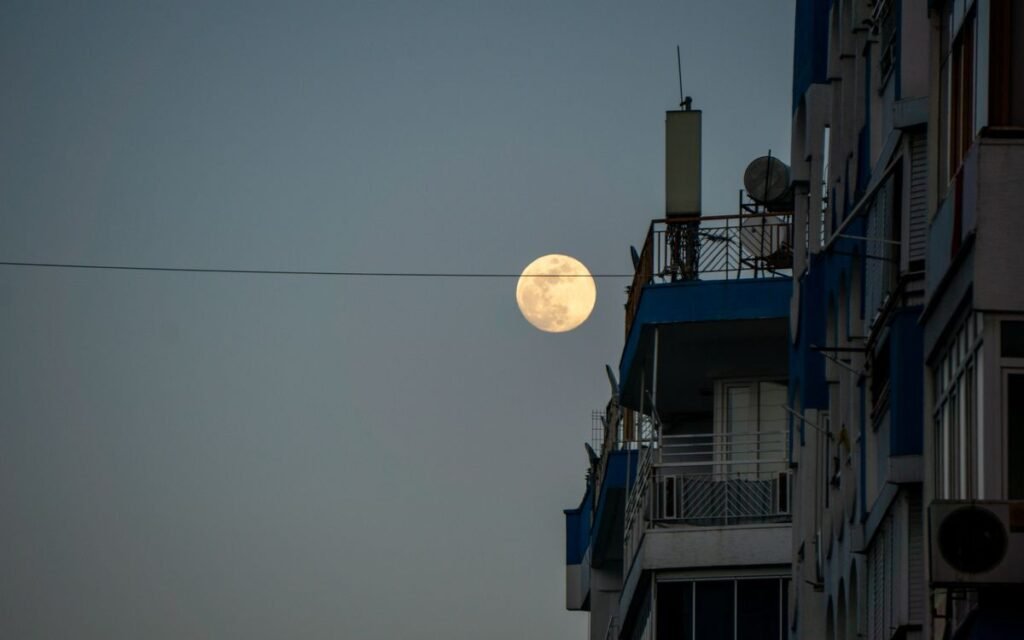
“Supermoon” isn’t a formal astronomy term. The common test is a full Moon that falls within about 90% of the Moon’s closest approach (perigee) for its orbit. Space.com uses that definition and quotes NASA: a supermoon can look up to 14% larger and 30% brighter than the year’s smallest full Moon.
The Farmers’ Almanac puts November’s full Moon at 360,765 km from Earth. Its cut-off for 2026 is roughly 361,600 km, so this one sits just inside the line. The Moon’s actual closest point comes about a day later. Timeanddate lists perigee at 2:30 am IST on 26 November, at 359,347 km.
So what will you actually see? Honestly, not much difference by eye. The Almanac says a supermoon is around 7% wider than an average full Moon, which is hard to notice with nothing beside it to compare.
📝 Note
The catch: December’s full Moon is closer: the Almanac gives 356,738 km, which makes it the closest full Moon of 2026. It’s full at 6:58 am IST on 24 December (01:28 UTC), so in India the best evening for it is 23 December. Treat 24 November as your practice run.
The “huge orange Moon” you see near the horizon isn’t the supermoon effect at all. It’s the Moon illusion plus the thicker slice of air near the horizon, which scatters blue light and leaves orange behind. That happens every full Moon.
Which Evening Is Best: 23, 24 or 25 November?
All three evenings are worth stepping out for. Timeanddate’s illumination figures for New Delhi show 98.7% on 23 November and 99.8% on 25 November. Your eye can’t tell those from 100%.
What changes is the moonrise time. In Delhi, the Moon rises at 4:07 pm on Monday 23 November, 4:56 pm on Tuesday 24 November and 5:55 pm on Wednesday 25 November.
| Evening | Delhi moonrise | Sky at moonrise | Best for |
|---|---|---|---|
| Mon 23 Nov | 4:07 pm | Full daylight | A pale Moon in a blue sky |
| Tue 24 Nov | 4:56 pm | Golden hour, before 5:24 pm sunset | Moon plus skyline in one frame |
| Wed 25 Nov | 5:55 pm | Already dark | Moon high over city lights |
Our pick is Tuesday. Wednesday’s Moon is technically a touch closer to Earth, but it rises after dark, which makes the phone photo harder. Monday’s rises in such bright light that it looks washed out.
Working late on Tuesday? Wednesday is a fine fallback. You lose the sunset colours, not the Moon.
The 30-Minute Window That Fixes Moon Photos
Most phone Moon photos fail for one reason. The Moon is sunlit and very bright, the sky around it is dark, and your phone can’t expose for both. It brightens the sky and burns the Moon into a white disc.
On 24 November you get a way around that. For roughly 20 to 30 minutes after moonrise the sun hasn’t set yet, so the sky, the buildings and the Moon are closer in brightness. That’s when a phone can capture all three without tricks. CSIRO’s astrophotography expert suggests the same thing for dawn and dusk: balance the Moon, the twilight sky and a foreground like treetops.
What to set up before moonrise
- Find your east. The Moon rises in the east-northeast this week (timeanddate gives about 61° for Delhi). Use your phone’s compass to check before 4:30 pm.
- Pick a foreground. A water tank, temple shikhara, mosque dome or a row of palm trees gives the Moon scale.
- Get above the haze. In north India, smog near the horizon can hide the Moon for its first 10 to 15 minutes. A terrace helps.
💡 Pro tip
Open Google Maps, long-press on your terrace, and look at the compass direction toward a landmark you want behind the Moon. If it’s roughly east-northeast, that’s your shot for Tuesday evening.
Phone Settings Checklist for the Supermoon
This is the short version. Our Hunter’s Moon photo guide explains each setting in more detail.
- Night mode off. CSIRO says night mode can brighten the sky and blur detail or overexpose the Moon. On iPhone, tap the moon icon until it reads Off.
- Optical zoom only. Use your phone’s 2x, 3x or 5x lens and stop there. CSIRO says digital zoom works poorly in low light; crop later.
- Lock focus and exposure. Tap and hold on the Moon. NASA’s smartphone astrophotography guide warns that autofocus can keep re-adjusting mid-session.
- Drag exposure down until you see the dark grey patches on the Moon’s face.
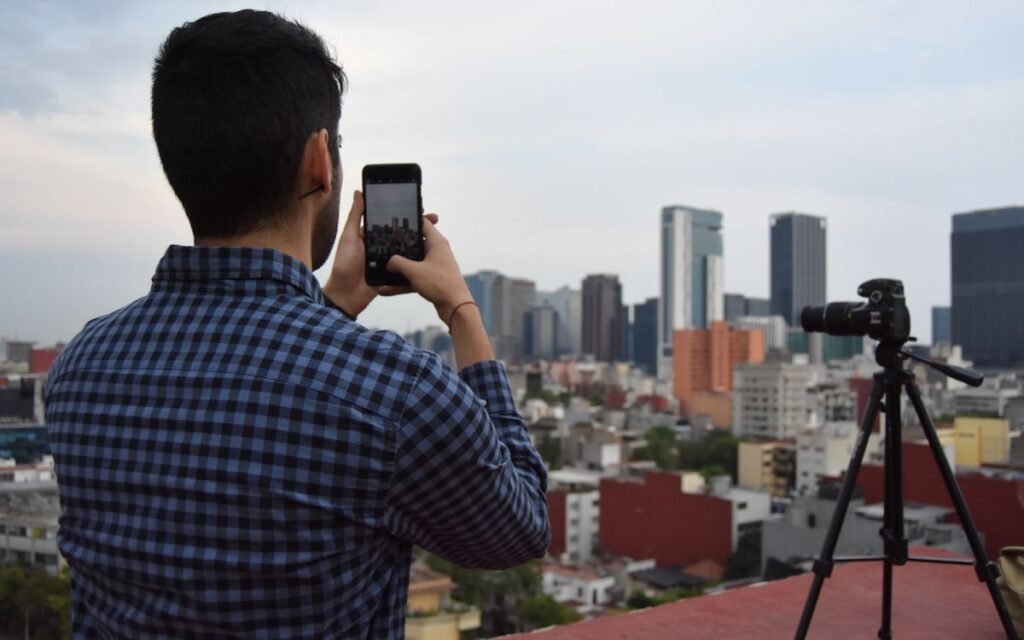
- Steady the phone. A cheap tripod works. So does the terrace parapet or a stack of books, which NASA also suggests.
- Use a 3-second timer so tapping the shutter doesn’t shake the frame.
- Flash off. It can’t reach the Moon.
After 6 pm, change one thing
Once the sky is dark, your phone will struggle to show both the Moon and the city lights. Pick one. For the Moon, keep exposure low and accept a black sky. For the city, let the Moon go bright and treat it as a light in the scene.
⚠️ Watch out
Be careful with “100x moon zoom” modes. Some phones apply heavy processing to Moon shots, and the result can look more like a stock image than your sky. A 3x optical shot at sunset with buildings in it is more honest, and usually more interesting to share.
Smog, Clouds and Battery: Small Things That Ruin the Evening
If your city has smog this week, the horizon is where you’ll notice it most. Haze there can turn the rising Moon a muddy orange, or hide it entirely for a while. If that happens, wait 30 to 45 minutes and shoot again when it’s higher.
Check the air before you take older family members up to the terrace for long. Our guide on why AQI apps show different numbers helps you pick a source you can trust for your area.
The cold can also catch you out. Phones lose battery faster in the chill, and in hill towns that can mean a sudden shutdown mid-shot. Our explainer on phone battery drain in cold weather covers why. Keep the phone in an inside pocket between shots.
Finally, shoot a burst rather than one frame. Heat shimmer from warm roofs and roads blurs the Moon for a second, then clears. CSIRO advises against shooting over roads and rooftops that radiate heat. From a terrace, step back from the hot edge.
 Also readDiwali Photos on Phone: 9 Night Mode Tips for Diyas and Lights
Our Verdict: Is the Beaver Supermoon Worth Stepping Out For?
Yes, but go for the right reason. The Moon won’t look dramatically bigger than last month’s. What makes 24 November special in India is the timing: a near-perfect full Moon rising into a still-bright sky, right around the time most people are heading home.
It also lands on Kartik Purnima, so in many cities you’ll have diyas, lit ghats or gurdwara lights in the foreground. That’s a photo you can’t take on a random night.
✅ Our verdict
Step out between moonrise and 6 pm on Tuesday 24 November, facing east-northeast. Use optical zoom, lock exposure on the Moon and get one shot with something familiar in front of it. Then mark 23 December on your calendar. That’s the closer, brighter supermoon, and you’ll have practised.
Frequently Asked Questions
What time is the Beaver Supermoon in India?
The Moon is exactly full at 8:23 pm IST on Tuesday 24 November 2026. It rises earlier, between about 4 pm and 5:40 pm depending on the city, so you can watch it from sunset onwards.
What time is moonrise in Mumbai and Delhi on 24 November?
Timeanddate.com gives 5:37 pm for Mumbai and 4:56 pm for New Delhi. Drik Panchang lists 5:01 pm for Delhi. Add a few minutes if buildings block your eastern horizon.
Is the November 2026 full moon a supermoon?
Yes, under the common 90%-of-perigee definition. The Farmers’ Almanac puts it at 360,765 km when full, just inside the supermoon cut-off. December’s full Moon is closer.
Will the supermoon look bigger?
Only slightly. It’s around 7% wider than an average full Moon, which most people can’t spot by eye. The big look near the horizon comes from the Moon illusion, not the distance.
When is the next supermoon after 24 November?
The December full Moon is at 6:58 am IST on 24 December, so look on the evening of 23 December. The Almanac says it’s the closest full Moon of 2026, and January 2027’s full Moon is also a supermoon.
The Bottom Line
The Beaver Supermoon is full at 8:23 pm IST on 24 November and rises before sunset across India. That gives you a rare window where a phone can catch the Moon and the skyline together. Check your city’s moonrise in the table above, turn night mode off, and be on the terrace 10 minutes early.
Want to tidy up the photos afterwards? Our Diwali night photo guide has editing tips that work just as well for moonlit shots.
Keep reading
Read nextHunter’s Moon 2026 in India: When to Look and How to Shoot It Read nextOrionid Meteor Shower Peaks This Week: Shoot It on Your PhoneRead nextDiwali Photos on Phone: 9 Night Mode Tips for Diyas and Lights
Sources
- Space.com: November 2026 full moon, 14:53 UTC on 24 Nov, supermoon definition and NASA figures
- Farmers’ Almanac: Beaver Moon supermoon distance, perigee and December’s closer full Moon
- timeanddate.com: moonrise, moonset and illumination for New Delhi, November 2026
- timeanddate.com: sunrise and sunset for New Delhi, November 2026
- timeanddate.com: Moon distance, perigee and apogee 2026
- Drik Panchang: Kartik Purnima 2026, tithi timings and moonrise (New Delhi)
- CSIRO: how to photograph the Moon with your phone (April 2026)
- NASA Science: astrophotography with your smartphone