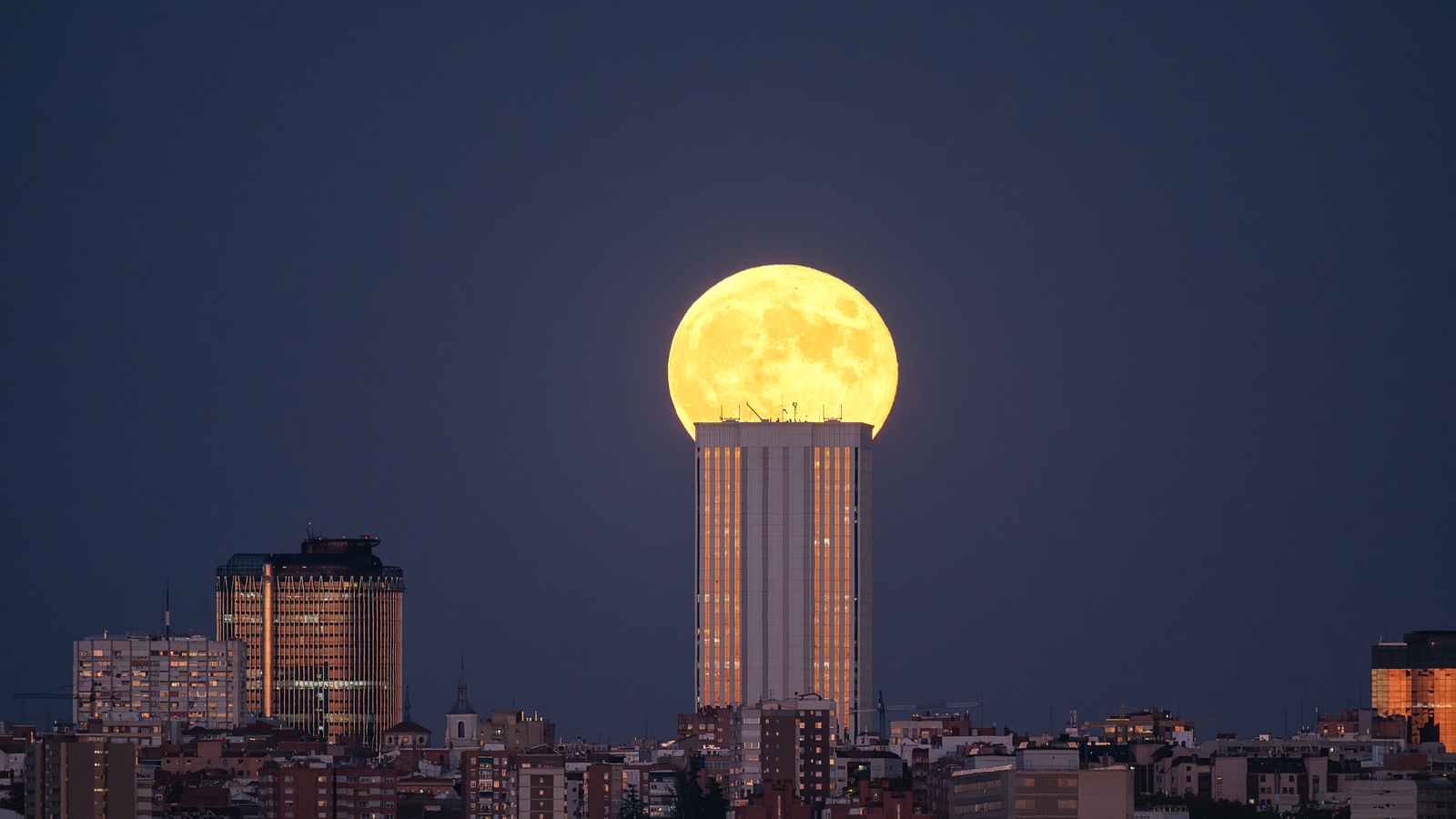
The Hunter’s Moon, October’s full moon, is at its fullest at 9:41 am IST on Monday, 26 October, so the night to watch from India is Sunday, 25 October, which is also Sharad Purnima. It rises around sunset and stays up all night, and Saturday and Monday evenings will look almost as full.
Most phone photos of it come out as a glowing white blob. That’s not your phone’s fault. It’s one setting that most people leave on, and fixing it takes ten seconds (section 3).
⚡ Key takeaways
- Best night in India: Sunday 25 October (Sharad Purnima). The exact full moon is at 9:41 am IST on 26 October.
- Moonrise in New Delhi is around 5:00 pm on 25 October, per Drik Panchang. In most Indian cities it rises close to sunset.
- For photos: turn night mode off, lower exposure until you see craters, use optical zoom only, and keep the phone steady.
- Shoot the rising Moon over a building or tree in the first hour for the best “wow” photo. A bare Moon high in the sky looks flat.
- November’s full moon is reported as the first of three supermoons, so practise now.
When to See the Hunter’s Moon in India
The astronomical full moon happens on 26 October 2026 at 04:11 UTC, according to MoonGiant. That’s 9:41 am IST, when the Moon is below the horizon for us. So the best time to see it at its roundest is the evening and night before, Sunday 25 October.
That lines up with Sharad Purnima. Drik Panchang lists Sharad Purnima on Sunday 25 October for New Delhi, with the Purnima tithi running from 11:55 am on 25 October to 9:41 am on 26 October, and moonrise at about 5:00 pm.
NASA says a full Moon rises around sunset and sets around sunrise, and that the Moon appears full for a couple of days. So if Sunday is cloudy, Saturday 24 or Monday 26 October are fine backups.
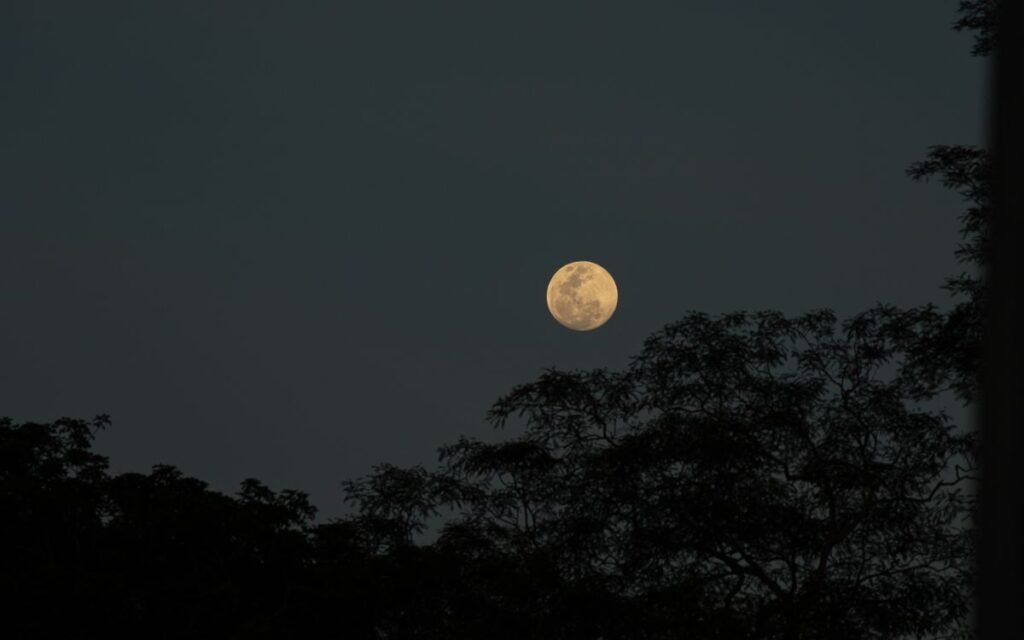
Why It’s Called the Hunter’s Moon
The name comes from European and North American folklore, not Indian tradition. The Farmers’ Almanac explains that by late October the harvest was in, and a bright full Moon over bare fields helped hunters spot animals.
There’s a real astronomy detail behind it too. Around this time of year, the Almanac says, the Moon’s path meets the eastern horizon at a shallow angle. So moonrise on consecutive nights comes only about 30 minutes later instead of the usual 50 or so. That’s why you get bright moonlight soon after sunset for several evenings in a row.
In India, of course, the same Moon is Sharad Purnima, or Kojagari Purnima in Bengal, Odisha and Assam. Families keep kheer out in the moonlight and stay up late. If you’re on the terrace anyway, it’s a great night to try a Moon photo with the family in the frame.
💡 Pro tip
Is it a supermoon? Not this one. The Farmers’ Almanac describes November’s Beaver Moon as the first of three consecutive supermoons ending 2026, so use this weekend to get your settings right.
 Also readOrionid Meteor Shower Peaks This Week: Shoot It on Your Phone
The Setting That Ruins Moon Photos: Night Mode
Here’s the catch. Your phone sees a dark sky and assumes it needs to brighten everything. It switches on night mode or pushes exposure up, and the Moon, which is lit by direct sunlight, turns into a white circle with no detail.
Australia’s science agency CSIRO says it plainly: avoid night mode if your phone has it. Lower the exposure until craters and features show up.
| Setting | What to do | Why |
|---|---|---|
| Night mode | Turn it off | It overexposes the Moon and smears detail |
| Exposure | Tap the Moon, then drag the sun icon or slider down | Craters appear when the Moon isn’t blown out |
| Zoom | Use the 2x, 3x or 5x lens your phone has, not beyond | Digital zoom loses detail; crop later instead |
| Focus | Tap and hold the Moon to lock focus (AE/AF lock on iPhone) | Autofocus hunts in the dark |
| Flash | Off | It can’t reach the Moon and lights up dust |
| Timer | 3 seconds | Stops the shake from tapping the shutter |
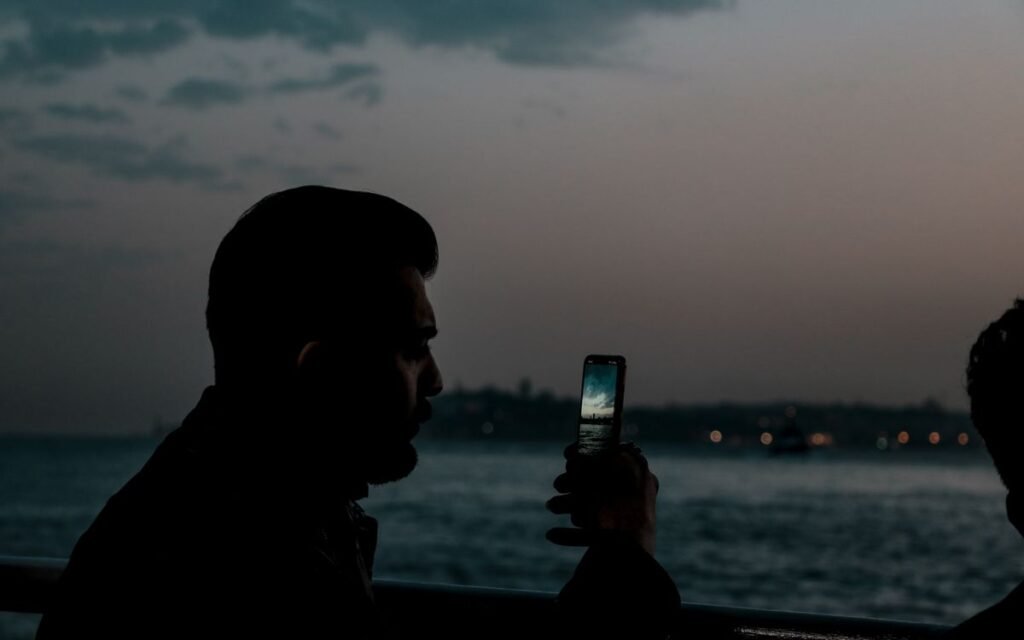
BBC Sky at Night Magazine agrees on zoom: stick to your phone’s maximum optical zoom and crop afterwards. If your phone has a Pro or Manual mode, lowering ISO and shutter speed there gives you even more control.
Step by Step: Your Phone Settings Tonight
These steps work on most iPhones, Galaxy, Pixel, OnePlus, Vivo and Redmi phones. Menu names differ a little, but the idea is the same.
- Steady the phone. A small tripod is ideal. No tripod? NASA’s smartphone astrophotography guide suggests propping it on something solid, like a wall, a car roof or a stack of books on the terrace parapet.
- Open the normal Photo mode and make sure night mode is off. On iPhone, tap the yellow moon icon until it shows Off.
- Zoom to your optical lens (2x, 3x or 5x, depending on the phone). Stop there.
- Tap the Moon and hold to lock focus and exposure.
- Drag exposure down until the grey patches (the “seas”) and some craters appear. Usually that’s further down than feels right.
- Set a 3-second timer, or press the volume button with wired earphones, which BBC Sky at Night suggests as a remote shutter.
- Take a burst of several shots and keep the sharpest one. Thin clouds and haze change second by second.
For the “wow” photo
Shoot in the first hour after moonrise, when the Moon is low over a temple shikhara, a rooftop water tank or a tree line. The sky still has some colour then, so the foreground isn’t pitch black. BBC Sky at Night says dusk or dawn is the time to get the scenery and the Moon in one frame.
⚠️ Watch out
Don’t trust “100x moon zoom” photos you see online as a guide to what your phone captures. Some phones apply heavy AI processing to Moon shots. Your photo with a 3x lens and correct exposure is a real photo, and often looks better printed or shared than a mushy 30x digital zoom.
 Also readDiwali Photos on Phone: 9 Night Mode Tips for Diyas and Lights
Smog, Clouds and City Lights: Getting a Clear View
In late October, a lot of north India has smog. Haze near the horizon can turn a rising Moon orange or hide it completely for the first half hour. That orange colour is pretty, but it also softens detail.
A few practical fixes:
- Go higher. A terrace or upper-floor balcony gets you above some of the haze and the streetlight glare.
- Wait a bit. If the rising Moon looks muddy, try again an hour later when it’s higher and the air between you and it is thinner.
- Kill the glare. Turn off terrace lights and shade the lens with your hand if a streetlight is nearby.
- Check the weather. CSIRO also advises against shooting over hot roads and rooftops, since rising heat shimmers and blurs the Moon. A concrete terrace after a sunny day can do the same, so stand back from the edge or shoot from a garden.
If your city has bad air this weekend, keep the photo session short and check the AQI before taking older family members up to the terrace. Our N95 mask guide explains what each AQI band means.
Our Take: Is It Worth Staying Up For?
Yes, and you don’t even need to stay up late. The Moon is up from sunset, so 6:00 to 8:00 pm on Sunday is enough. Pair it with the Sharad Purnima kheer on the terrace and it’s an easy family evening.
Will your phone photo look like the ones from a telescope? No.
A full Moon is actually the flattest-looking phase, because the Sun is lighting it head-on and there are few shadows. CSIRO notes that quarter and crescent phases show craters more clearly. So treat this as a “Moon plus scene” night, not a crater close-up night.
✅ Our verdict
Go out on Sunday 25 October between moonrise and about 8 pm. Turn night mode off, drag exposure down, use only optical zoom and steady the phone. Get one shot of the Moon rising over something familiar. That’s the photo the family will actually want on WhatsApp.
Frequently Asked Questions
When is the Hunter’s Moon in 2026 in India?
The full moon peaks at 9:41 am IST on Monday, 26 October 2026. The best night to see it from India is Sunday, 25 October, which is also Sharad Purnima. It looks nearly full on 24 and 26 October too.
What time is moonrise on Sharad Purnima 2026?
Drik Panchang gives moonrise at about 5:00 pm on 25 October in New Delhi. Times vary by city, so check Drik Panchang with your location; it’s usually close to sunset.
Is the October 2026 full moon a supermoon?
No. The Farmers’ Almanac calls November’s full moon the first of three consecutive supermoons closing 2026.
Why does the Moon look like a white blob in my phone photos?
Your phone is overexposing it, often because night mode or auto exposure brightens the dark sky. Turn night mode off, tap the Moon and drag exposure down until surface detail shows.
Which zoom should I use for Moon photos?
Use your phone’s highest optical zoom (2x, 3x or 5x) and crop later. Digital zoom beyond that mostly enlarges blur.
The Bottom Line
The Hunter’s Moon is best from India on Sunday 25 October, Sharad Purnima, from sunset onwards. Turn off night mode, lower exposure, use optical zoom and steady your phone, and you’ll get craters instead of a blob.
Saving these photos for Diwali too? Our Diwali night photo tips cover diyas, rangoli and sparklers with the same phone.
Keep reading
Read nextOrionid Meteor Shower Peaks This Week: Shoot It on Your PhoneRead nextDiwali Photos on Phone: 9 Night Mode Tips for Diyas and Lights
Sources
- MoonGiant: October 2026 full moon, 26 Oct 04:11 UTC
- Drik Panchang: Sharad Purnima 2026 date, tithi and moonrise (New Delhi)
- Farmers’ Almanac: Hunter’s Moon 2026, name, moonrise timing, November supermoons
- NASA Science: Moon phases
- NASA Science: astrophotography with your smartphone
- CSIRO: photographing the Moon (April 2026)
- BBC Sky at Night Magazine: how to photograph the Moon