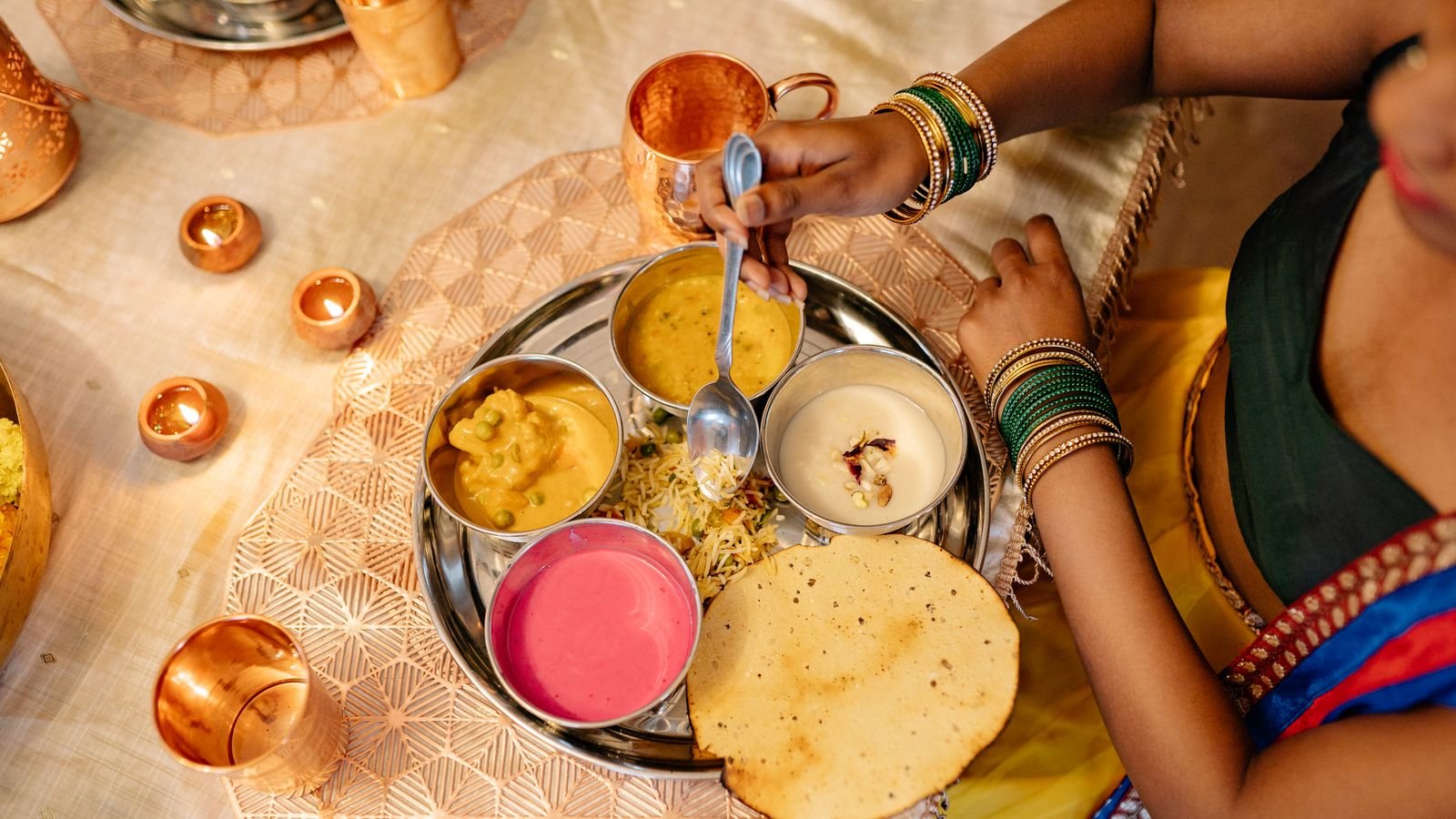
How much ghee a day is OK? For most healthy adults, about 1 to 2 teaspoons (5 to 10 g) fits comfortably, as long as the rest of your day isn’t loaded with butter, mithai and fried snacks. That’s not a rule from one study. It’s what you get when you do the maths with WHO and NHS saturated fat limits.
Winter makes this harder. Gond laddoos, gajar halwa and that extra spoon on the bajra roti all add up fast. The surprise for most families is where the real ghee comes from, and it’s usually not the dal. That’s in section 4.
⚡ Key takeaways
- 1 teaspoon of ghee (about 5 g) has roughly 44 kcal and 3 g of saturated fat, per USDA data.
- Daily saturated fat limit: about 20 g for women and 30 g for men (NHS), or under 10% of calories (WHO).
- ICMR-NIN’s guideline: use oils and fats in moderation and limit high saturated fat ones such as ghee and butter.
- A sensible range: 1 to 2 teaspoons a day if your other fats are mostly from oils, nuts and seeds.
- Talk to your doctor first if you have high cholesterol, heart disease or diabetes.
What’s Actually in a Spoon of Ghee
Ghee is almost pure fat. The USDA’s FoodData Central lists anhydrous butter oil, which is essentially ghee, at 99.5 g fat, 61.9 g saturated fat and 876 kcal per 100 g. Most of that fat is saturated.
Now scale it down to a real kitchen spoon:
| Amount | Approx. weight | Calories | Saturated fat |
|---|---|---|---|
| 1 level teaspoon | 5 g | 44 kcal | 3.1 g |
| 2 teaspoons | 10 g | 88 kcal | 6.2 g |
| 1 tablespoon (heaped serving spoon) | 15 g | 131 kcal | 9.3 g |
| “Ghee on 4 rotis” (about 1 tsp each) | 20 g | 175 kcal | 12.4 g |
These are calculated from the USDA figures. Your spoon may be bigger. Most home serving spoons hold far more than a measuring teaspoon, so measure once to see what “a little ghee” looks like in your kitchen.
How Much Ghee a Day Fits the Official Advice
No major guideline gives a single “ghee number”. What they give you is a saturated fat budget, and ghee spends it fast.
WHO: under 10% of calories from saturated fat
The WHO healthy diet fact sheet advises keeping total fat at or below 30% of daily energy and saturated fat below 10%. It names ghee alongside butter, lard and cream as sources of saturated fat. On a 2,000 kcal day, 10% works out to roughly 22 g of saturated fat.
NHS: 20 g for women, 30 g for men
The NHS guide to fats sets the daily maximum at 20 g of saturated fat for women and 30 g for men. It also lists ghee among foods high in saturated fat and says too much raises LDL (“bad”) cholesterol.
ICMR-NIN: moderation, and limit ghee and butter
India’s own Dietary Guidelines for Indians 2024 from ICMR-NIN say, under Guideline 7, to use oils and fats in moderation and to “limit the use of high saturated-fat containing oils/fats such as ghee, butter etc.” They also suggest a variety of oil seeds, nuts and whole grains for healthy fats.
💡 Pro tip
Here’s the practical reading for a woman with a 20 g limit: 2 teaspoons of ghee use about 6 g, almost a third of the day’s saturated fat. Milk, paneer, curd, biscuits and fried snacks share the rest. That’s why 1 to 2 teaspoons is a sensible ceiling for most people.
 Also readHow Much Salt Per Day? Indians Eat 8 g, WHO Says Under 5
Is Ghee Healthier Than Oil?
This is the question every family argues about at dinner. The honest answer: ghee isn’t poison and it isn’t a superfood. It’s a tasty saturated fat.
Vegetable oils such as mustard, groundnut, soybean and sunflower are mostly unsaturated. The WHO and NHS both advise swapping some saturated fat for unsaturated fat, and the NHS says that helps lower cholesterol. So for everyday cooking, oil does the heavy lifting, and ghee works best as a finishing touch for flavour.
What about the claims you see on WhatsApp, that ghee “lubricates joints” or “melts belly fat”? We couldn’t find good human evidence for those in the sources we checked, so we’d skip them. Enjoy ghee because it tastes like home, not because a forward promised a cure.
| Fat | Mostly | Use it for | Our take |
|---|---|---|---|
| Ghee | Saturated | Tadka, a spoon on dal or roti, festive sweets | Small amounts, for flavour |
| Mustard / groundnut oil | Unsaturated | Daily sabzi and dal | Your main cooking fat |
| Butter | Saturated | Toast, paratha | Treat it like ghee |
| Vanaspati | Trans and saturated | Avoid | ICMR-NIN says don’t cook with it |
The Hidden Ghee in Winter Food
This is the open loop from the start. In most homes, the measured spoon on dal is not the problem. The problem is the ghee you never see.
- Mithai and halwa. Gajar halwa, besan laddoo, gond laddoo and pinni are traditionally made with generous ghee. One or two pieces can carry more than your whole day’s spoonful.
- Parathas and puris. A ghee-roasted paratha soaks up far more than a roti with a dab on top.
- Restaurant and wedding food. Dal makhani, biryani and shahi gravies often use ghee, butter and cream together.
- Festive gift boxes. Ghee-based sweets plus dry fruits plus fried namkeen, all in one week.
None of this means skipping Diwali sweets. It means counting them. If you’ll have a laddoo in the evening, keep the morning paratha plain and the dal tadka light. Our guides on Diwali sweets for diabetics and spotting adulterated mithai help with the festive week.
⚠️ Watch out
Loose “desi ghee” sold cheap during festivals can be adulterated. Buy sealed packs with an FSSAI licence number, and check the best-before date.
A Simple Daily Ghee Plan for Indian Meals
Here’s a way to enjoy ghee without doing maths at every meal.
- Pick your spoon. Use an actual measuring teaspoon for a week, so you know what 5 g looks like.
- Choose one ghee moment a day. Tadka for dal, or a dab on rotis, or ghee rice. Not all three.
- Cook the rest in oil. Mustard, groundnut or whatever your family uses, rotating between two if you like.
- Plan around sweets. Mithai day means no extra ghee at dinner.
- Skip reheated ghee and oil. ICMR-NIN advises against reusing heated oils. Our cooking oil reuse guide explains why.
- Pair it with movement. A 10-minute walk after meals is an easy winter habit, especially after a heavy lunch.
For children, older parents and anyone on a special diet, the right amount depends on their total diet and health. Ask your doctor or a registered dietitian.
 Also readHow Many Almonds a Day? The Handful Rule for Diwali Dry Fruits
Our Verdict: How Much Ghee a Day Should You Have?
✅ Our verdict
For a healthy adult, 1 to 2 teaspoons of ghee a day is a sensible amount, used where you can taste it. Cook everyday meals in vegetable oil, and treat festive sweets and parathas as part of the same budget. If you have high cholesterol, heart disease or diabetes, don’t guess: ask your doctor.
Honestly, the families who struggle aren’t the ones who add a spoon to dal. They’re the ones who don’t notice the halwa, the paratha and the restaurant dal on the same day.
Frequently Asked Questions
How much ghee a day is healthy?
For most healthy adults, about 1 to 2 teaspoons (5 to 10 g) fits within WHO and NHS saturated fat limits, if the rest of the diet isn’t heavy on butter, cream or fried food.
Is 1 tablespoon of ghee a day too much?
A level tablespoon is about 15 g, with roughly 9 g of saturated fat. That’s nearly half of the NHS daily limit for women, so it’s on the high side if you eat other dairy or sweets.
Is ghee good for you in winter?
Ghee adds flavour and calories, which many people enjoy in winter food. There’s no strong evidence that it has special winter health benefits, so keep the amount the same as the rest of the year.
Is ghee better than refined oil?
Ghee is mostly saturated fat, while most vegetable oils are mostly unsaturated. Health bodies advise replacing some saturated fat with unsaturated fat, so use oil for daily cooking and ghee in smaller amounts.
Can people with high cholesterol eat ghee?
Saturated fat can raise LDL cholesterol, according to the NHS. If you have high cholesterol, ask your doctor how much ghee, if any, fits your diet.
The Bottom Line
You don’t need to give up ghee. You need to know how much you’re eating. Measure a teaspoon this week, keep ghee to one or two moments a day, and count the mithai in the same budget.
This article is for information only and is not medical advice. Please consult a doctor or a registered dietitian about your own diet, especially if you have a health condition.
Keep reading
Read nextHow Many Almonds a Day? The Handful Rule for Diwali Dry Fruits Read nextJaggery vs Sugar: Is Gur Really Healthier? What NIN Says
 Read nextAmla in Winter: How Much to Eat and the Best Way to Have It
Sources
- ICMR-NIN: Dietary Guidelines for Indians 2024 booklet (Guideline 7 on oils and fats)
- WHO: Healthy diet fact sheet (total fat, saturated fat, trans fat limits)
- NHS: Fat, the facts (saturated fat limits, ghee as a source, LDL)
- USDA FoodData Central: Butter oil, anhydrous (ghee), nutrients per 100 g