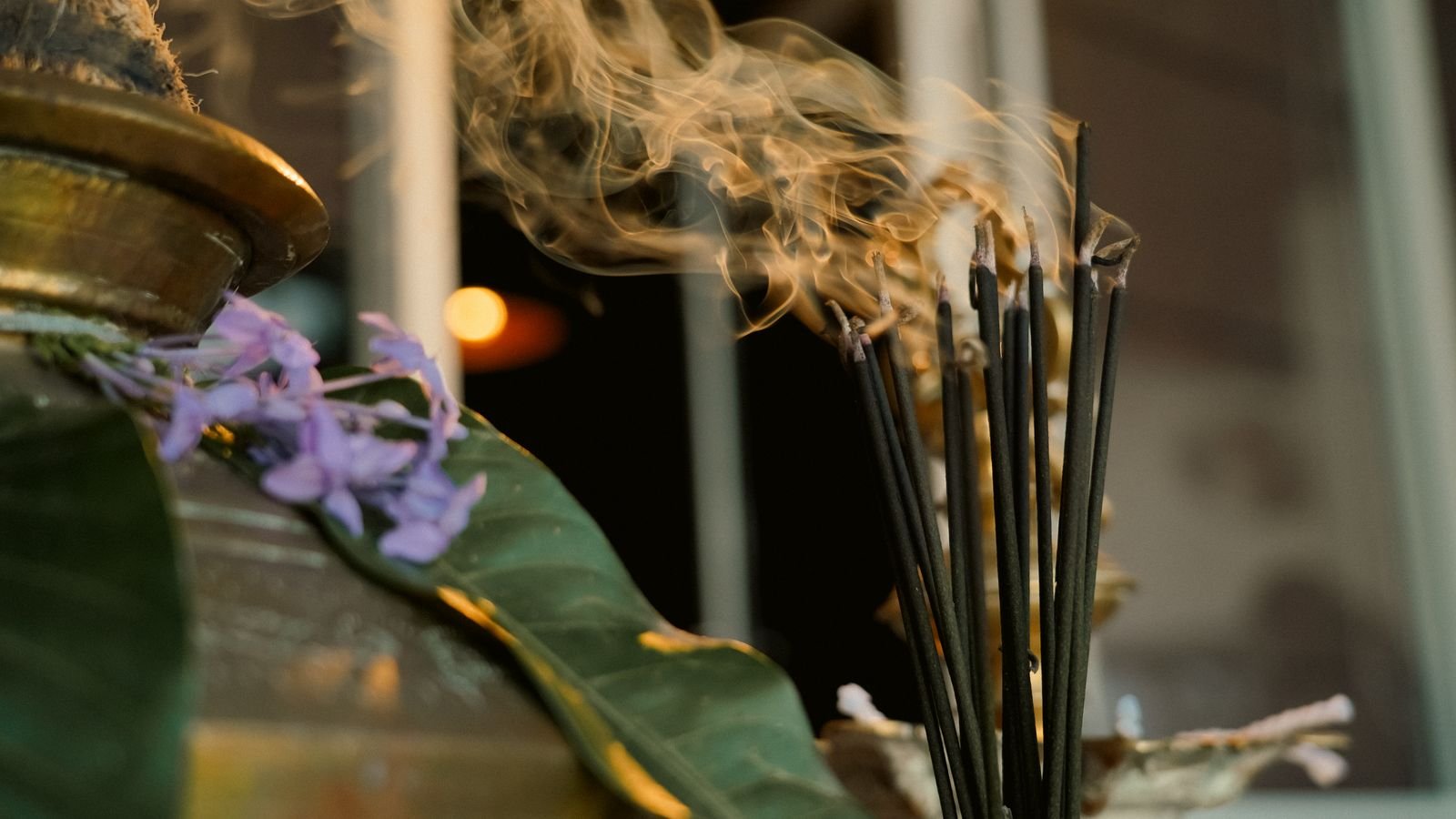
On Diwali night, most of us shut the windows against the crackers and then light agarbatti indoors. You don’t have to give up the puja, but agarbatti smoke is worth managing on a night when the air outside can’t help clear it.
For most homes the fix is timing. The evening plan is in section 4.
⚡ Key takeaways
- One lab study measured incense at 154 to 255 mg of PM2.5 per hour, against about 9 mg for a candle.
- In Delhi after Diwali 2025, PM2.5 peaked at 675 µg/m³ late at night, per CPCB data reported by Business Today.
- The US EPA’s advice for smoky days: avoid burning candles or incense, and avoid frying. Air out the home when outdoor air improves.
- Our suggestion: light one stick, do it early, ventilate during puja, then shut windows before the cracker peak.
- Keep the tradition. This is about fewer sticks and better timing.
Why Diwali Night Is Different for Indoor Air
On a normal day, you can open a window and the smoke from an agarbatti clears. On Diwali night, that option gets worse as the evening goes on.
Business Today reported, citing CPCB and DPCC data, that Delhi’s PM2.5 averaged 488 µg/m³ in the hours after Diwali 2025, with a late-night peak of 675 µg/m³. Delhi’s numbers aren’t your city’s numbers, but the pattern of a late evening spike is what matters for planning.
So you’ve got two sources competing. There’s what comes in from outside, and what you make inside: agarbatti, dhoop, and all that frying for the evening’s snacks.
💡 Pro tip
Check your city’s AQI before you decide anything. Different apps can show different numbers, and our AQI apps guide explains which one to trust.
How Much Agarbatti Smoke Are We Talking About?
The most useful numbers we found come from a study by Ongwandee and Pipithakul, published in Applied Environmental Research. They burned incense, mosquito coils and candles in a small test chamber and measured what came out.
| What’s burning | PM2.5 per hour | Carbon monoxide per hour |
|---|---|---|
| Incense | 154–255 mg | 378–790 mg |
| Mosquito coil | 266–1,611 mg | 722–837 mg |
| Candle | 8.8–10 mg | 75–77 mg |
The researchers explain why the gap is so wide: incense and coils are made to smoulder, so they burn incompletely on purpose. Their modelling also suggests that better room ventilation lowers the risk to people in the room.
⚠️ Watch out
Read this honestly. It was a 1×1×1 metre test chamber in a lab, not an Indian living room, and it tested particular products. Your agarbatti brand and room size will change the numbers. The pattern is the takeaway, not the exact figure.
What about ghee diyas compared with agarbatti smoke? That study didn’t test them, and we didn’t find a good measurement to quote, so we won’t guess. An open flame still burns something, but it doesn’t smoulder the way an agarbatti is designed to.
 Also readMosquito Coil Smoke at Home: Is It Safe, and What Works Better
Windows Open or Shut? It Depends on the Hour
This is the question families actually argue about. The US EPA’s indoor air guidance for smoke events was written for wildfire smoke, not fireworks, but the logic carries over reasonably well to a smoky night.
- While outside smoke is heavy: keep windows and doors closed.
- Don’t add more smoke indoors: the EPA specifically lists burning candles or incense and frying among things to avoid.
- When outdoor air improves, even briefly: open up and run kitchen and bathroom exhaust fans.
- Set up one clean room: pick a room everyone fits in, close it up, keep smoke sources out, and run a non-ozone air cleaner there if you own one.
Here’s what that looks like across a Diwali evening. The timing is our suggestion, so adjust it to your city’s AQI.
| Time | Windows | What to do |
|---|---|---|
| Afternoon | Open if AQI is reasonable | Finish frying, and run the chimney or exhaust |
| Early evening | Open | Do the puja with one agarbatti |
| Before crackers pick up | Shut | Put out any incense, close doors |
| Late night | Shut | Stay in your clean room, purifier on if you have one |
| Next morning | Open only once AQI improves | Air out and run exhaust fans |
WHO’s household air pollution page focuses on cooking with solid fuels, a much bigger daily exposure than one festive evening. Still, its basic point applies: smoke in a poorly ventilated home stays with you.
A Simple Diwali Evening Plan for Your Home
Nobody needs to feel guilty about their puja. Five changes do most of the work:
- Use one stick instead of a bundle. Fewer sticks means less smoke, and the prayer doesn’t need a cloud. Put it out afterwards rather than letting it burn down in a shut room.
- Do the puja early. Light it while you can still ventilate, before the crackers get going in your area.
- Keep the flame near a ventilated spot. A puja corner with a window beats a closed inner room.
- Fry earlier in the day. The EPA lists frying as a particle source. Run the chimney, and finish the chaklis before evening.
- Skip scented candles in bulk. Candles scored far lower than incense in that study, but a dozen of them in a shut room isn’t zero. Electric diyas and fairy lights look just as pretty around the rangoli.
💡 Pro tip
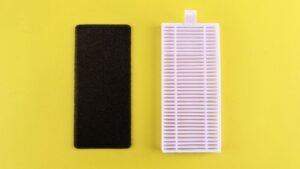
A purifier helps only if it’s the right size and running in the room you’re in. If you’re thinking of buying one, our CADR guide shows how to size it. Don’t count on plants, as the evidence on indoor plants is disappointing.
 Also readAir Purifier for Home: The CADR Number That Matters for Your Room
Who Needs to Be Extra Careful
Some family members have more reason to sit further from the smoke. Our school-day AQI guide for parents covers why children need extra care in bad air, and the same common sense applies at home.
- Small children and babies: keep them in the clean room during the peak, and away from the puja corner while incense burns.
- Elderly parents: give them the best-ventilated seat during the puja, then the clean room.
- Anyone with asthma or a lung condition: follow the plan their doctor has already given them. Our smog season asthma guide has more.
If going outside for crackers or a late walk, an N95 that fits properly helps more than a cloth mask, as our N95 guide explains.
⚠️ Watch out
This article is for information only. Please consult a doctor for personal advice, especially for children, older adults, pregnancy or any breathing condition.
Should You Stop Using Agarbatti Altogether?
No, and I wouldn’t tell anyone to. A stick during puja, in a room with some air moving, isn’t what we’re worrying about here.
✅ Our verdict
Keep the agarbatti, drop the bundle. Light one stick, light it early, keep a window open while it burns, and shut up the house before the crackers peak. Save the frying for the afternoon. You’ll get most of the benefit without changing how your family celebrates.
What I’d really skip is burning several sticks and dhoop in a sealed room late at night. That combines the worst of both: smoke you can’t clear on a night when opening the window makes things worse.
Frequently Asked Questions
Is agarbatti smoke harmful?
It does add fine particles and carbon monoxide to indoor air, as lab measurements show. How much that matters depends on the number of sticks, room size and ventilation. Keeping it short and ventilated is the sensible approach.
Is a candle better than an agarbatti?
In that one chamber study, candles emitted far less PM2.5 per hour than incense, at about 9 mg against 154 to 255 mg. It’s a single lab comparison and doesn’t cover scented candles in general.
Should I keep windows closed on Diwali night?
During the smoky hours, yes, that’s in line with the EPA’s smoke guidance. Open up when outdoor air improves, and check an AQI reading before you do.
Do air purifiers remove incense smoke?
A HEPA purifier can help with fine particles if it’s sized for the room and running there. Pick one that doesn’t produce ozone, and don’t burn incense next to it while expecting it to keep up.
Is dhoop better than agarbatti?
We didn’t find a reliable comparison, so we can’t say. Both smoulder, so the same advice on quantity and ventilation applies.
The Bottom Line
You can’t control your neighbour’s crackers, but you can control what’s burning in your own home. Light one stick early, keep a window open during the puja, then shut up before the late-night spike. Tonight, pick your clean room and move your purifier there if you’ve got one.
Keep reading
 Read nextAQI on a School Day: What Parents Can Actually Do in Smog Season
 Read nextExercise in Pollution: When Your Morning Walk Stops Helping
 Read nextWhy AQI Apps Show Different Numbers (and Which One to Trust)
Sources
- Ongwandee and Pipithakul, Applied Environmental Research: emissions from incense, mosquito coils and candles
- US EPA: wildfires and indoor air quality
- Business Today: Delhi PM2.5 after Diwali 2025, CPCB and DPCC data (21 October 2025)
- WHO: household air pollution fact sheet