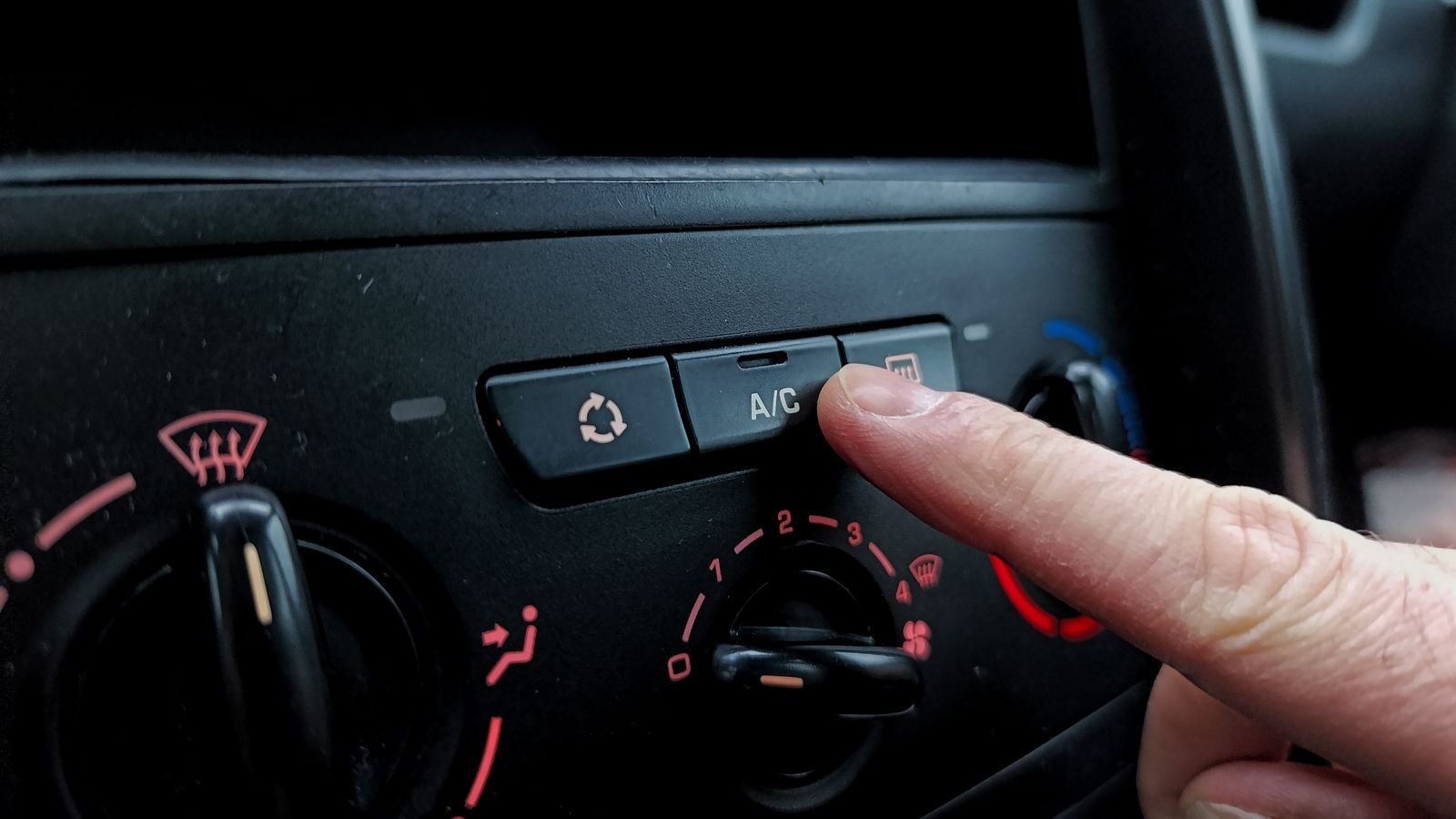
If you run your car AC in pollution season with the windows up, press the recirculation button. It shows an arrow curving inside a car outline, or circling arrows on some cars. Studies show it keeps a large share of outside particles out of the cabin. On a smoggy office commute, it’s the cheapest protection you have.
It isn’t a button to press and forget, though. Leave it on for a long drive with a full car and a different problem builds up. That’s in section 4.
⚡ Key takeaways
- Recirculation mode reuses cabin air instead of pulling in outside air. In a study of 43 cars, particle levels inside were a fraction of outside levels with it on.
- In Delhi measurements, AC cars had far lower PM2.5 than non-AC cars and autos.
- The catch is carbon dioxide from your own breathing. It climbs fast on full recirculation, more so with 4 or 5 people in the car.
- A simple routine works: recirculation in heavy traffic, a short burst of fresh air every 10 to 15 minutes.
- An old, clogged cabin filter cuts the benefit. Maruti’s PM2.5 filter cost about ₹600 at launch and is meant to be changed every 10,000 km or yearly.
What the Recirculation Button Does
Your car’s AC has two ways to get air. In fresh-air mode, it pulls air from outside, through the cabin filter, and blows it in. In recirculation mode, it shuts that outside vent and keeps cooling the air already in the car.
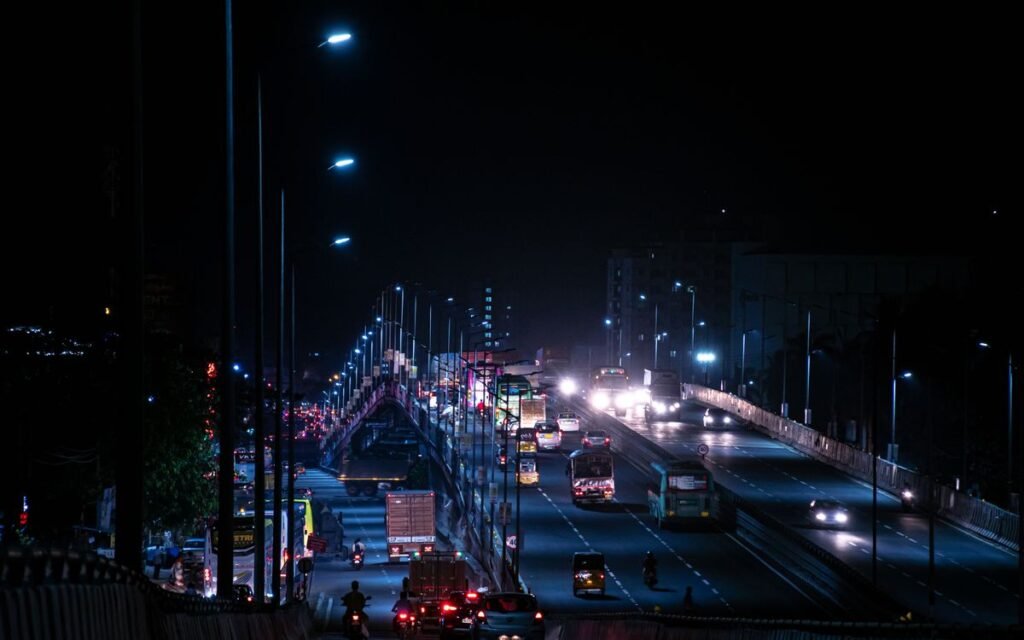
On a clean-air day, the difference hardly matters. On a November morning behind a diesel bus at a red light, it matters a lot. Fresh-air mode is feeding you whatever that bus is putting out, minus what your filter catches.
Most of us use the button only to cool the car faster in May. Smog season is when it earns its place on the dashboard.
How Much Does Car AC in Pollution Help?
Quite a bit, going by the research. I looked at three studies, and they point the same way.
The 43-car study
Researchers led by Neelakshi Hudda measured ultrafine particles inside and outside 43 cars, mostly in Los Angeles. The results are in Atmospheric Environment (2012). With windows closed and recirculation on, the median level inside was 0.11 of the level outside. On outside-air mode it was 0.66.
Put simply, the cabin had about a tenth of the roadside particles on recirculation, against two-thirds on fresh air. The authors say switching to recirculation lowered in-car levels two to four times, depending on the road.
The Volvo simulation
A 2023 study from Volvo and Chalmers University modelled a 2018 Volvo XC90. Recirculating 70% of the air cut PM2.5 in the cabin by an average of 55% with a new filter. With an aged filter, the cut dropped to 39%.
The Delhi numbers
A 2021 paper in Environmental Research quotes in-cabin PM2.5 measured in Delhi by Maji and colleagues:
| How you travel | In-cabin PM2.5 (µg/m³) |
|---|---|
| AC car | 89 ± 30 |
| Bus | 113 ± 14 |
| Non-AC car | 149 ± 13 |
| Auto-rickshaw | 266 ± 159 |
The paper notes that an AC taxi usually runs on recirculation with the windows closed. So the AC car’s lead in that table is partly this button at work.
An honest caveat: 89 µg/m³ is still not clean air. The button reduces what you breathe. It doesn’t turn a Delhi road into a hill station.
 Also readN95 Mask for Pollution: The AQI Number Where It Starts to Matter
Windows Down, Fresh Air or Recirculation: A Quick Comparison
| Setting | Smog entering the cabin | Stale-air risk | Use it when |
|---|---|---|---|
| Windows down | Highest | None | Air outside is clean, or to air out the car |
| AC on fresh-air mode | Medium (depends on filter) | Low | Open roads, long drives, a full car |
| AC on recirculation | Lowest | Builds up with time and passengers | Traffic jams, tunnels, behind trucks and buses |
The table is my summary of the studies above, not a chart from any one of them. The pattern is consistent, though. The more outside air you let in on a bad-air day, the more particles come with it.
💡 Pro tip
Some cars switch back to fresh-air mode by themselves after a while, or when you turn on the defogger. Glance at the button light now and then in traffic.
The Catch: Stale Air on Long Drives
⚠️ Watch out
Recirculation keeps smog out, and it also keeps your breath in. Carbon dioxide from everyone in the car builds up when no outside air comes in. The Volvo study links high cabin CO2 to passenger fatigue and a fogged windscreen.
The numbers move faster than you’d guess. The 2023 paper cites earlier work showing that full recirculation with just one person in the car took cabin CO2 to about 1,100 ppm within 5 minutes. A common comfort guideline is 1,000 ppm.
Passengers make it worse. In the same study’s cold-weather simulation at 70% recirculation, CO2 was 804 ppm with one person and 2,106 ppm with five. The authors advise against high recirculation when the car is full.
Think about what that means for a family trip. Five people, windows up, recirculation on, three hours on the highway to Jaipur or Pune. That drowsy, heavy-headed feeling isn’t only the lunch.
There’s one more trade-off. The Environmental Research paper points out that recirculation doesn’t protect you from a coughing fellow passenger, and fresh air does that job better. If someone in the car has a cold, let more outside air in.
A Simple Routine for Smog Season
No Indian agency has issued a rule for this, so treat it as a sensible routine built on the findings above.
- Windows up before you join a busy road.
- Recirculation on in slow traffic, at signals, in tunnels and behind buses or trucks.
- Every 10 to 15 minutes, switch to fresh-air mode for a minute or two. Pick a moment when the road ahead is clearer, not when you’re beside an exhaust pipe.
- Full car? Do that switch more often, or stay on fresh-air mode with a good filter.
- Open highway with cleaner air? Use fresh-air mode.
- Feeling sleepy or stuffy, or the glass is fogging? Go to fresh air right away, and stop for a break if you’re tired.
For the stretch between your car and the office door, a well-fitted mask still matters. Our N95 mask guide covers fit and reuse. And check the right number before you leave; here’s why AQI apps show different readings.

Your Cabin Filter Decides How Well This Works
The Volvo study’s biggest practical lesson is about the filter. The same recirculation setting gave a 55% cut with a new filter and 39% with an aged one. A filter choked with a year of dust does less, and it weakens your AC airflow too.
Some pointers for Indian cars:
- Know your interval. When Maruti launched its PM2.5 cabin filter in 2020, CarDekho reported a price of ₹600 and a change interval of 10,000 km or one year, whichever comes first. Check your own owner’s manual, and ask for today’s price.
- Watch for the signs. Weak airflow, poorer cooling and slow defogging all suggest the filter is due.
- Ask to see it at service. It’s a cheap part, and it sometimes gets skipped.
- Time it right. If your service is due around now, get the filter changed before the worst smog weeks, not after.
Riding in an auto or on a two-wheeler? None of this helps you, and the Delhi table shows why autos fare worst. A good mask is your main defence there.
✅ Our verdict
Use recirculation in city traffic through smog season; the evidence for it is solid and it costs nothing. Don’t leave it on for hours, mainly with a full car. Switch to fresh air for a minute or two every 10 to 15 minutes, and replace an old cabin filter now.
This article is for information only and isn’t medical advice. If you have asthma, a heart or lung condition, or symptoms that worry you, consult a doctor about travelling on high-AQI days.
Frequently Asked Questions
Should I use car AC in pollution or keep the windows open?
Keep the windows up and the AC on. Delhi measurements quoted in Environmental Research found AC cars at 89 µg/m³ of PM2.5 against 149 in non-AC cars. Open windows let roadside exhaust straight in.
Is recirculation mode safe to keep on all the time?
Not for long drives. With no outside air, carbon dioxide from breathing builds up, which researchers link to fatigue and windscreen fogging. Let fresh air in for a minute or two at regular intervals.
Does the car AC filter remove PM2.5?
A cabin filter catches part of it, and a PM2.5-rated filter does better than a basic dust filter. Performance drops as the filter ages, so change it on schedule.
Do I need a separate car air purifier?
Try the free steps first: windows up, recirculation in traffic and a fresh cabin filter. A purifier may add to that, but I haven’t seen good independent data for the small plug-in ones, so I can’t recommend a model.
Does recirculation save fuel?
It reduces the AC’s workload because the system cools already-cooled air. The Volvo study found lower climate-system power use with more recirculation. Don’t expect a big change in mileage.
The Bottom Line
Using your car AC in pollution the right way comes down to one button and a little timing. Recirculate in traffic, breathe fresh air in short bursts, and don’t ignore the cabin filter. Check when yours was last changed before tomorrow’s commute.
Keep reading
Read nextOpen Windows in Pollution? What to Do at Home When AQI Tops 400 Read nextAQI on a School Day: What Parents Can Actually Do in Smog Season
 Read nextAir Purifier for Home: The CADR Number That Matters for Your Room
Sources
- Hudda et al., Atmospheric Environment (2012): in-vehicle ultrafine particle exposures in 43 vehicles
- Wei et al., Environmental Science and Pollution Research (2023): recirculation, particles and CO2
- Das and Ramachandran, Environmental Research (2021): Delhi in-cabin PM2.5 by transport mode
- CarDekho: Maruti PM2.5 cabin filter price and replacement interval (2020)