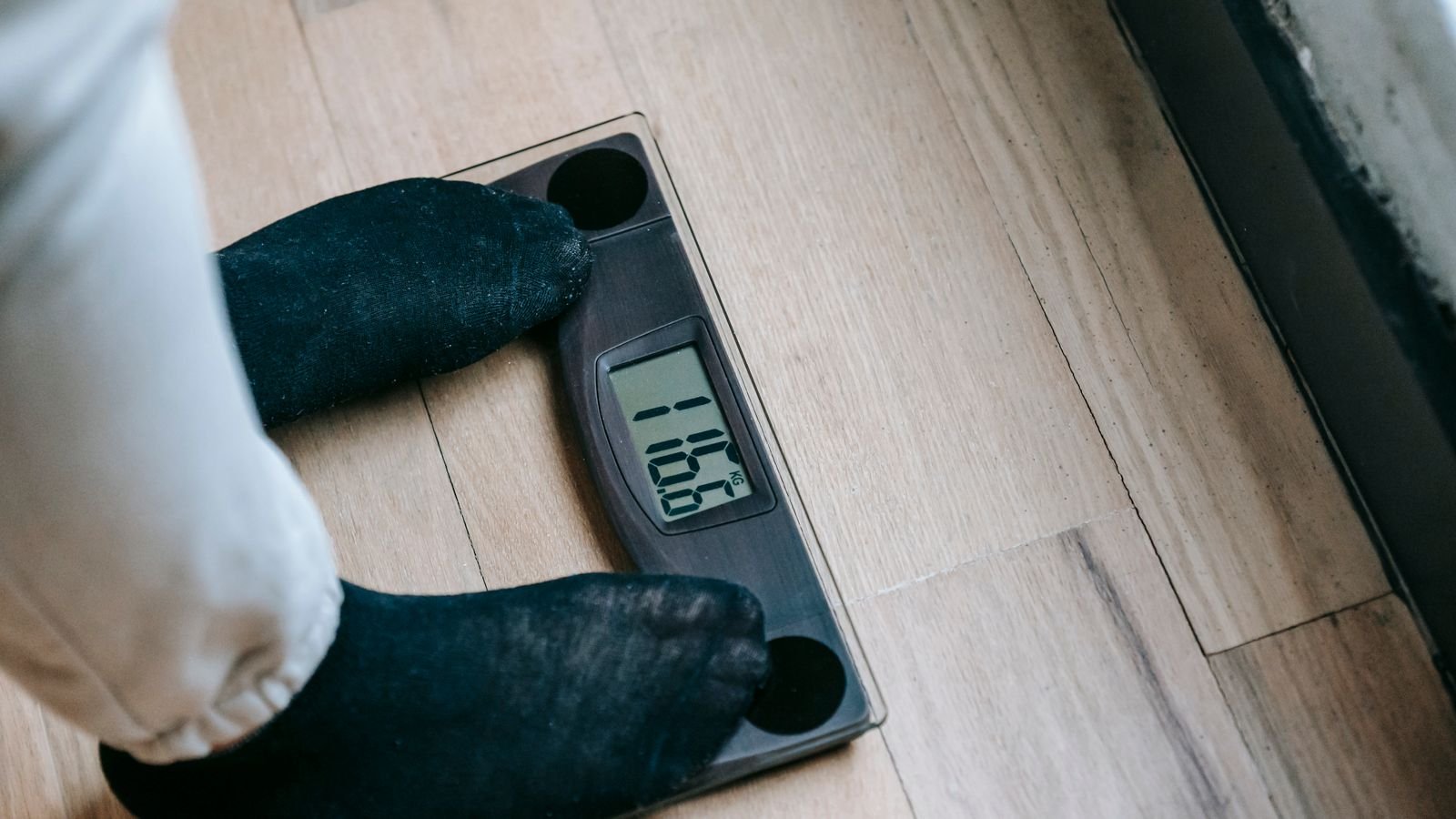
Winter weight gain is real, but it’s smaller than the “5 kilos every December” people joke about: studies of the festive season usually find about 0.4 to 0.9 kg. The problem is what happens next. In the best-known study, people didn’t lose that gain over the following year.
So a small yearly bump quietly stacks up. One habit, tested in a randomised trial in the UK, stopped it almost completely, and it isn’t a diet. It’s in section 5.
⚡ Key takeaways
- How much: reviews of holiday-season studies find an average gain of about 0.4–0.9 kg in adults.
- Why it matters: in a US study of 195 adults, the holiday gain wasn’t lost over the next year and made up about half of the year’s total gain.
- Why winter: more festive food and fewer steps. A Canadian study found people walked about 15% less in autumn and winter.
- What worked in a trial: weighing yourself regularly plus simple food-and-activity tips. That group’s weight stayed flat; the comparison group gained.
- India angle: Diwali leftovers, the wedding season, gajar halwa and smoggy mornings that kill the walk all land in the same three months.
- For: adults who notice their jeans getting tighter by January. This is general wellness, not a weight-loss plan.
How Much Winter Weight Gain Is Normal?
Less than you’d guess, and more than you’d like. A 2017 narrative review in the Journal of Obesity by Díaz-Zavala and colleagues pulled together studies on the festive season and found adults consistently gained about 0.4 to 0.9 kg.
Some of the individual numbers from that review:
| Study | Who | Gain over the festive period |
|---|---|---|
| Yanovski 2000, US | 195 adults | 0.37 kg over about 6 weeks |
| Rees 1985, UK | 22 healthy adults | 0.9 kg |
| Cook 2012, US | 443 adults | 0.9 kg (men), 0.6 kg (women) |
| Stevenson 2013, US | 148 adults | 0.78 kg |
| Payab, Iran (Norouz) | 66 adults | 0.58 kg over about 45 days |
Most of this research comes from the US and Europe around Christmas, so treat it as a pattern, not an Indian figure. There’s no large Indian study of Diwali-to-New-Year weight that I could find. Still, the shape is similar here: a long run of festivals, weddings and cold-weather food.
People think they gain more than they do
In one small US study in the review (Wagner 2012), people believed they’d put on weight over the holidays, but the scale showed no real change. That’s oddly reassuring. A heavy, bloated feeling after a big wedding dinner isn’t the same as a kilo of fat.

The Catch: Winter Weight Gain Doesn’t Come Off
Here’s why a half-kilo is worth an article. In Yanovski’s study, published in the New England Journal of Medicine and summarised in the 2017 review, 165 people came back a year later. Their holiday gain (0.32 kg) was about half of their total gain for the whole year (0.62 kg), and it wasn’t lost after the season ended.
Do that every year for ten years and you’re 3 kg heavier without ever having “binged”. Nobody notices a slow creep like that until a kurta doesn’t fit.
⚠️ Watch out
The people who gain the most are often those already carrying extra weight. The review notes that people with overweight or obesity generally gained more over the holidays, and in one study obese participants added 1.6% body fat against 0.2% in normal-weight people.
Even people actively dieting weren’t immune. In a Spanish study of 215 patients on a very low-calorie diet, they still gained about 0.29 kg over the holidays, according to the review.
Why We Gain Weight in Winter in India
There isn’t one cause. It’s a few small things that happen to line up between November and January.
We move less
Cold mornings, darker evenings and, in north India, smog that makes a morning walk a bad idea. In a Montreal study of 166 adults with type 2 diabetes, step counts fell from about 5,659 a day in spring and summer to 4,901 in autumn and winter, about 15% lower, according to the paper by Dasgupta and colleagues. A 2021 systematic review in the International Journal of Environmental Research and Public Health looked at 26 studies from 18 countries; 22 found activity changed with the seasons, usually lowest in winter. One twist: in hot Qatar, people moved less in summer instead.
If your walk has stopped because the AQI is “very poor”, our guide on when to go out for a morning walk in pollution has a workable middle path.
We eat more, and later
- Festive leftovers. Diwali sweets in the fridge become an everyday thing for weeks.
- Wedding and party dinners that start at 10 pm. Our look at late dinner effects covers what the studies found about eating late.
- Winter food culture. Ghee-heavy parathas, til and gond ladoos, gajar halwa. These aren’t bad foods; it’s the portion and the frequency that change.

Small Habits That Make Winter Weight Gain Less Likely
The aim isn’t to skip the halwa. It’s to stop the season adding a permanent half-kilo. These habits are drawn from what the studies above tested, plus WHO’s activity guidance.
1. Keep a step floor, not a step target
WHO recommends at least 150 minutes of moderate activity a week and says any amount of activity is better than none. On smoggy days, that can be 10-minute indoor walks after meals, stairs at home, or a short workout. Our piece on steps per day explains why you don’t need 10,000.
2. Set a “festive food” rule you can keep
For example: sweets only after a meal, never as a snack; one wedding dessert, not the whole counter. Rules beat willpower because you decide once.
3. Don’t let leftovers live on the counter
Out of sight works. Share Diwali boxes with neighbours or the building staff, freeze half, or keep them in a cupboard rather than on the dining table.
4. Watch the drinks
Sweet chai three or four times a day, plus colas at parties, adds up fast in winter. If chai is your weak spot, our guide to how many cups of chai a day has a realistic limit.
5. Sleep before midnight when you can
Late wedding nights are a given. On the other nights, aim for a normal bedtime so you aren’t snacking at 1 am.
The One Habit a Trial Found Worked: Weigh Yourself
This is the payoff. For the Winter Weight Watch Study, published in The BMJ in 2018, researchers in Birmingham randomised 272 adults before Christmas. Half got a leaflet on healthy living. The other half were encouraged to weigh themselves at least twice a week (ideally daily), got 10 weight-management tips, and saw a list showing how much activity it takes to burn off popular festive foods.
When they were weighed again 4 to 8 weeks later, the comparison group had gained an average of 0.37 kg. The weighing group had changed by −0.13 kg. The adjusted difference was 0.49 kg in favour of the weighing group.
| Group (BMJ 2018 trial) | Average change over Christmas |
|---|---|
| Leaflet only | +0.37 kg |
| Regular weighing + tips + activity equivalents | −0.13 kg |

The activity-equivalent idea is worth stealing. In that study’s list, a mince pie came out to about 21 minutes of running. Seeing food that way makes the second helping a conscious choice. An older study in the same review (Boutelle 1999) also found self-monitoring helped people avoid holiday gain.
💡 Pro tip
Put the scale where you’ll see it, weigh yourself at the same time (morning, after the bathroom, before breakfast) twice a week, and write the number in your phone’s Notes. You’re not chasing a target, just catching a creep early.
 Also readSteps Per Day: Do You Really Need 10,000? What Studies Say
Who should skip the scale
If weighing yourself makes you anxious, or you have a history of eating disorders, don’t use this method. Use how your clothes fit instead, and talk to a doctor if your weight is changing in ways you can’t explain.
✅ Our verdict
Don’t fear the wedding season. A winter gain of under a kilo is normal; the real issue is that it tends to stay. Keep a minimum daily walk, give festive sweets a rule, and weigh yourself twice a week until mid-January. That last habit is the one with trial evidence behind it.
Frequently Asked Questions
Why do I gain weight in winter?
Mostly because you eat a bit more and move a bit less. Festive food, wedding dinners and late meals overlap with colder, darker or smoggier days, when step counts tend to drop. A Canadian study found step counts about 15% lower in autumn and winter, and a 2021 review found activity is usually lowest in winter.
How much weight do people usually gain in winter?
Studies of the festive season find about 0.4–0.9 kg on average in adults, according to a 2017 review. It’s small, but in one US study it wasn’t lost over the next year.
Does weighing yourself daily help prevent winter weight gain?
In a 2018 BMJ trial, people encouraged to weigh themselves regularly (at least twice a week), with simple tips, didn’t gain over Christmas, while the comparison group gained about 0.37 kg. Daily weighing isn’t necessary; regular is enough.
Is winter food like gajar halwa or ghee bad for weight?
No single food causes weight gain. It’s the total amount and how often you eat it. Enjoy seasonal dishes in normal portions, and keep an eye on sweets, fried snacks and sugary drinks across the whole season.
The Bottom Line
Winter weight gain is usually under a kilo, but it tends to stick around, year after year. You don’t need a diet to stop it: a daily walking floor, a simple sweets rule and a twice-weekly weigh-in cover most of it.
This article is for general information only and isn’t medical advice. Consult a doctor or a registered dietitian before changing your diet if you have diabetes, heart disease, thyroid problems or any other health condition. For a practical next step, try our Indian food swaps for weight loss.
Keep reading
Read nextFestive Eating Without the Slump: 7 Habits for Diwali Week Read nextHow Much Protein a Day? An Indian Veg Plate That Gets There
 Read next4 Minutes of Exercise a Day: What the Diabetes Study Really Found
Sources
- Díaz-Zavala et al., Journal of Obesity 2017: Effect of the Holiday Season on Weight Gain, a narrative review (PMC)
- Mason et al., The BMJ 2018: Winter Weight Watch Study, randomised controlled trial (PMC)
- Dasgupta et al., Cardiovascular Diabetology 2010: daily steps dip in fall/winter (PMC)
- Garriga et al., IJERPH 2021: Impact of Seasonality on Physical Activity, a systematic review (PMC)
- WHO: Physical activity fact sheet