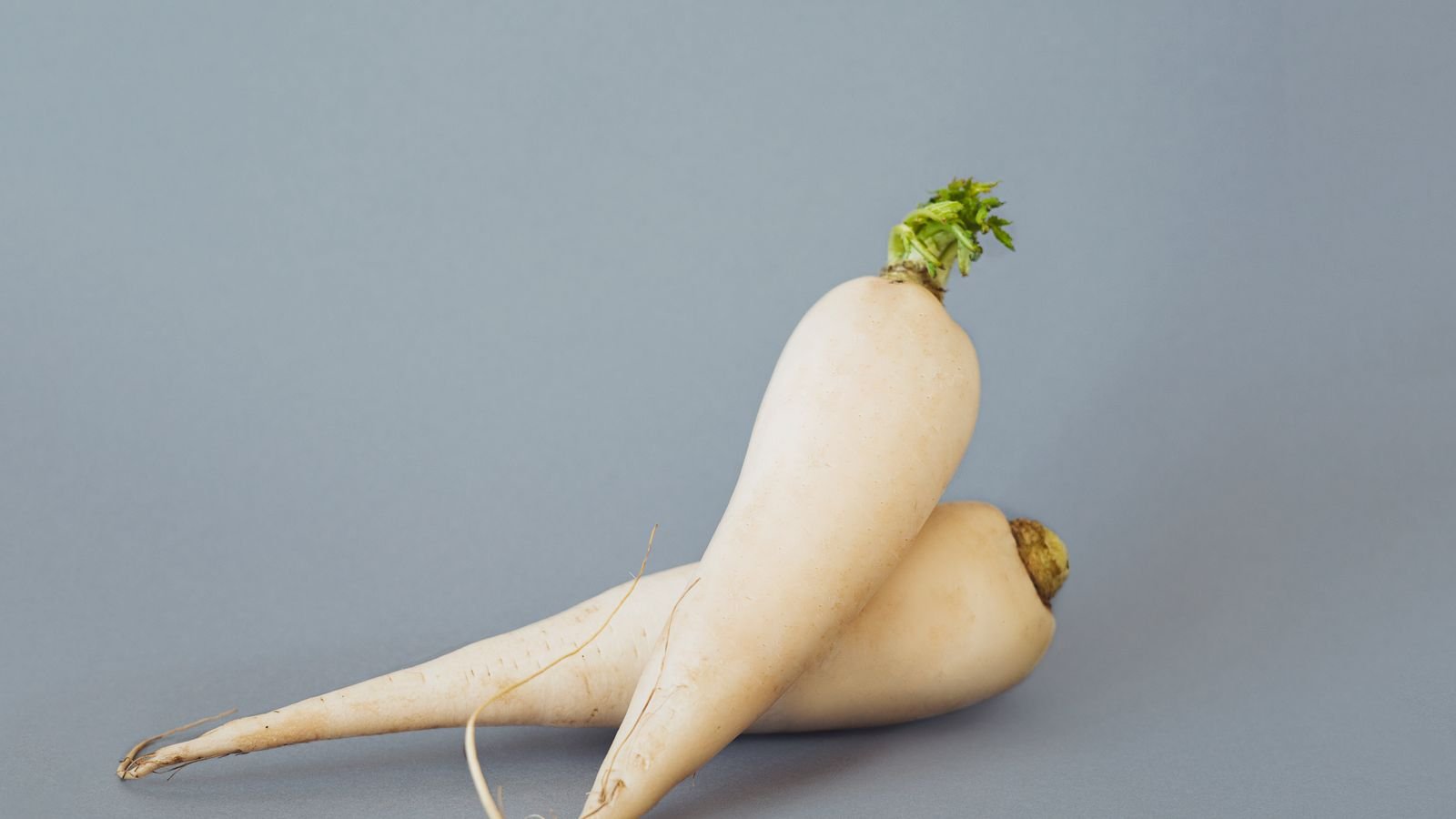
Yes, mooli in winter is a good everyday vegetable: a cup of sliced white radish has about 21 kcal, almost 2 g of fibre and around 25 mg of vitamin C, per USDA data. That’s well over half of the 40 mg an adult needs in a day, from a vegetable that’s piled on most sabzi carts right now.
The bigger win, though, is the part most of us throw away. The leaves carry about twice the vitamin C of the root, according to a 2025 review. And the old warnings about gas, mooli at night and mooli with milk? We checked those too (sections 4 and 5).
⚡ Key takeaways
- Calories: 100 g of raw white radish (mooli, or daikon) has about 18 kcal and 1.6 g of fibre, per USDA FoodData Central.
- Vitamin C: about 22 mg per 100 g of root. Adults need 40 mg a day, says the NHS.
- The leaves: mooli ke patte have about 51 mg of vitamin C per 100 g, twice the root, and far more calcium, per a 2025 review in Foods.
- Gas: mooli belongs to the cabbage family, and the NHS lists cabbage, cauliflower and broccoli among foods that can cause wind. Start with small portions if your stomach complains.
- Night and milk rules: we found no study showing harm from mooli at night or with milk. Go by how your own stomach reacts.
- Thyroid: worries come from animal studies with huge intakes. In people, risk mainly shows up with iodine deficiency.
Mooli in Winter: What You Get Per Serving
The long white mooli sold across India is the same species as Japanese daikon: Raphanus sativus. USDA lists it as “Radishes, oriental, raw”. It’s mostly water, about 95%, which explains why it’s so light.
Here’s what USDA FoodData Central gives for 100 g of raw white radish:
- Energy: 18 kcal
- Fibre: 1.6 g
- Total sugars: 2.5 g
- Vitamin C: 22 mg
- Potassium: 227 mg
- Calcium: 27 mg
- Folate: 28 µg
What that means on your plate
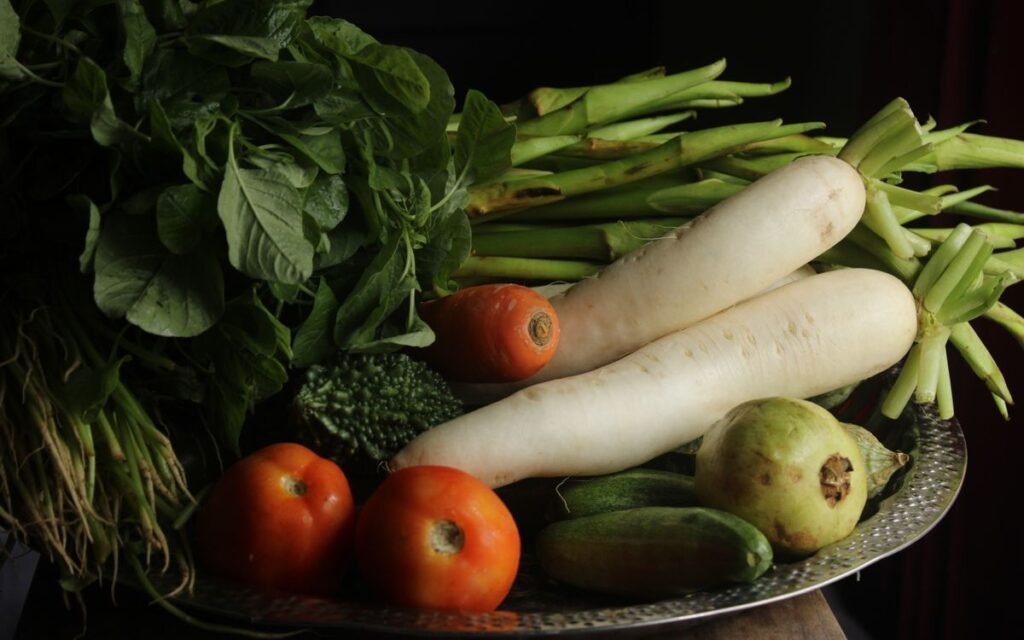
USDA counts one cup of sliced radish as 116 g. That cup gives you about 21 kcal, 1.9 g of fibre and roughly 25 mg of vitamin C. A big 7-inch mooli weighs about 338 g in USDA’s portion list, so the whole thing comes to around 61 kcal and 74 mg of vitamin C.
The NHS says adults aged 19 to 64 need 40 mg of vitamin C a day, and the body can’t store it. So a generous bowl of mooli salad covers a good chunk of the day.
Where it fits in an Indian diet
ICMR-NIN’s Dietary Guidelines for Indians (2024) ask every adult to eat at least 400 g of vegetables a day: 100 g of green leafy vegetables, 250 g of other vegetables and 50 g of roots and tubers. The guidelines name radish in the roots group, and say root vegetables like carrots, radish, beetroot and turnip “should be preferred” to tubers like potato and yam.
So if your winter thali leans on aloo, swapping some of it for mooli or sweet potato is the kind of small change the guidelines are pointing at.
Mooli Ke Patte: Don’t Throw Away the Leaves
When we buy mooli in winter, a lot of us ask the sabzi-wala to chop the leaves off. I think that’s a mistake, because the leaves are the more nutritious part.
A 2025 review of radish leaves in the journal Foods (Geng and colleagues) says the leaves have more protein, fibre and vitamin C than the roots. It reports about 51 mg of vitamin C per 100 g of leaves, twice the root. It also says calcium, magnesium, iron, zinc, riboflavin and folic acid were found at 3 to 10 times the levels in the root.
The calcium number stands out: 238 mg per 100 g of leaves in the review’s food table, against 27 mg in 100 g of white radish root in USDA’s data.
A fair caveat on those numbers
Leaf values vary by variety, soil and season, and the review’s own nutrient table cites a single food-composition source. So treat the leaf figures as a good estimate, not a lab result for the bunch in your kitchen.
A 2021 systematic review by Gamba and colleagues, which pulled together 63 studies, reached a similar view: radish leaves are high in calcium, potassium and fibre, and the authors suggest leaves and sprouts could be part of a healthy diet.
💡 Pro tip
Buy mooli with fresh, unwilted leaves still attached. Wash the leaves before you chop them, not after. ICMR-NIN says nutrient loss is higher when vegetables are washed after cutting or cut into tiny pieces.
ICMR-NIN asks for 100 g of green leafy vegetables a day. Mooli ke patte count, and they’re free with the root. If you already make sarson ka saag, a handful of radish leaves fits right into the mix.
 Also readIs Sarson Ka Saag Healthy? Yes, Until the Makhan Lands
Mooli vs Its Leaves vs Red Radish: The Table
Not all radishes are equal, and the leaf is the clear winner on two counts. Here’s 100 g of each, raw.
| Per 100 g, raw | Calories | Fibre | Vitamin C | Calcium | Potassium |
|---|---|---|---|---|---|
| White mooli / daikon root (USDA) | 18 kcal | 1.6 g | 22 mg | 27 mg | 227 mg |
| White icicle radish root (USDA) | 14 kcal | 1.4 g | 29 mg | 27 mg | 280 mg |
| Small red radish root (USDA) | 16 kcal | 1.6 g | 14.8 mg | 25 mg | 233 mg |
| Mooli ke patte, leaves (Foods review, 2025) | 20 kcal | 1.4 g | 51 mg | 238 mg | 101 mg |
Root figures are from USDA FoodData Central. Leaf figures come from the nutrient table in the 2025 Foods review, so they aren’t measured the same way. Use the table to compare broadly, not to count milligrams.
So which one should you eat?
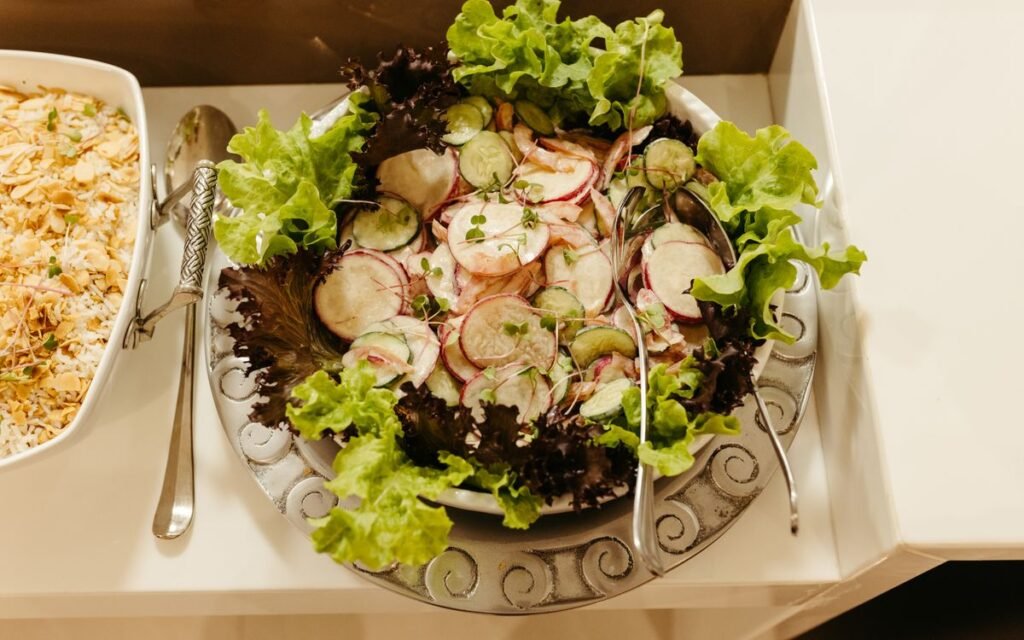
Both. The root is the low-calorie, crunchy, filling part, good for salads and parathas. The leaves bring the vitamin C and calcium. If you’re cooking mooli anyway, cooking the leaves as a quick sabzi alongside costs you nothing extra.
Does Mooli Cause Gas? What the Evidence Says
“Mooli khaoge toh gas banegi” is probably the line you hear most often about mooli in winter. There’s something to it, but it’s not unique to mooli.
The Linus Pauling Institute at Oregon State University lists radish as a cruciferous vegetable, the same family as cabbage, cauliflower and broccoli. The NHS page on flatulence names cabbage, broccoli, cauliflower and Brussels sprouts among foods that can cause wind, along with beans, lentils and onions. Mooli isn’t named on that list, but it’s a close cousin.
Why it tastes sharp
That peppery bite comes from compounds called isothiocyanates. The 2025 Foods review says a compound of this type is “the main source of the spicy flavor of radishes”. They form when you chop or chew the raw vegetable, and the Linus Pauling Institute notes that boiling stops this reaction.
⚠️ Watch out
The catch: no study we found measured gas from mooli specifically. So if raw mooli bloats you, that’s real for you, but don’t expect a scientific “safe amount”. Start with a small portion, and see what your stomach says.
What helps if mooli bloats you
The NHS suggests eating smaller meals more often, eating and drinking slowly, and regular exercise to ease wind. Practically, with mooli:
- Start with a small katori of salad, not a big plate.
- Try it cooked (in sambar or a sabzi) if raw upsets you.
- Eat it as part of a meal rather than on its own.
The NHS says to see a GP if bloating or stomach pain won’t go away or keeps coming back, or if you’ve lost weight without trying.
Mooli at Night, Mooli With Milk: Myths Checked
Plenty of families have firm rules about both. I couldn’t find research that backs either one.
“Don’t eat mooli at night”
We found no study showing that radish at dinner is harmful. If raw mooli at night gives you wind or keeps you uncomfortable in bed, move it to lunch. That’s about your own comfort, not a medical rule. Our piece on late dinners covers what studies actually say about eating close to bedtime.
“Never have mooli with milk”
This one shows up on a lot of family WhatsApp groups. We looked for evidence in the ICMR-NIN guidelines, the NHS and the research on radish, and found nothing showing that the combination is harmful. Evidence is simply lacking either way.
So if a glass of milk after a mooli paratha has never bothered you, there’s no research reason to stop. If it has, skip the pairing. Curd gets a similar winter warning; we looked at that one in does dahi cause a cold.
Mooli and Thyroid: Who Should Be Careful
You may have read that cruciferous vegetables are bad for the thyroid. The Linus Pauling Institute explains where this comes from, and the picture is much calmer than the internet makes it sound.
- The worry: extremely large intakes of cruciferous vegetables such as cabbage and turnips have caused hypothyroidism in animals.
- The mechanism: some breakdown products may interfere with thyroid hormone production or compete with iodine.
- In people: these compounds don’t appear to raise hypothyroidism risk unless iodine deficiency is also present. In one human study, 150 g a day of cooked Brussels sprouts for four weeks had no adverse effect on thyroid function.
For most Indians eating mooli as part of normal meals, this isn’t a reason to avoid it. The factor that mattered in the research was iodine deficiency, not the vegetable alone. If you have a thyroid condition, ask your doctor about your diet instead of cutting out vegetables on your own.
Other people who should check first
Mooli has about 227 mg of potassium per 100 g, per USDA. If your doctor has put you on a low-potassium diet for a kidney condition, ask how much fits. Same if you’ve been told to watch specific vegetables for any reason.
How to Eat Mooli in Winter: Paratha, Salad, Sambar, Saag
The best way to eat mooli is whichever way your family will keep eating all winter. These are the usual Indian options, each with a small practical tip.
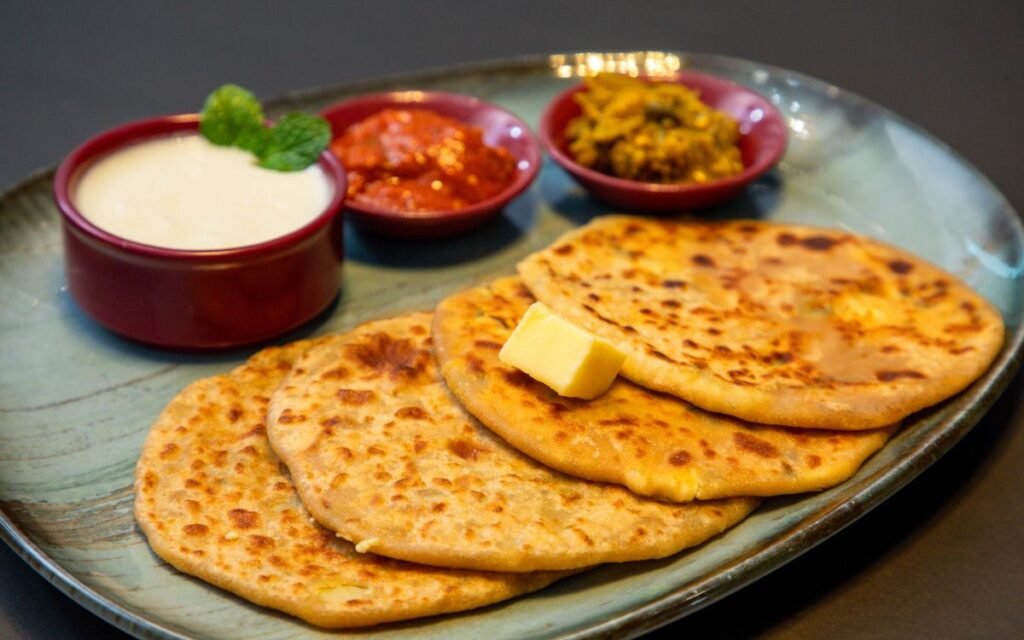
- Mooli paratha: grate the mooli, salt it lightly, squeeze out the water, and mix it into the stuffing. Keep the ghee to a thin brush. The calories in a paratha come from the atta and fat, not the mooli, so our ghee guide matters more here.
- Raw salad (kachumber or lachha mooli): slice thin, add lemon, salt and a pinch of chaat masala. Raw keeps the crunch and the peppery bite.
- Mooli sambar or curry: the pieces turn soft and mild. Good if raw mooli upsets your stomach.
- Mooli ke patte ki sabzi: chop the washed leaves with some of the root, cook with garlic, jeera and a little oil. Ten minutes, and it counts toward your 100 g of greens.
- Raita: grated mooli in curd with roasted jeera. A cooling side for a heavy winter meal.
Buying and storing
- Pick firm, heavy roots with smooth skin and green, fresh leaves.
- Skip roots that feel soft or bendy; they’re old.
- Separate the leaves at home and use them within a day or two, since greens wilt faster than the root.
- Watch the salt in mooli pickle. Our salt per day guide shows how fast it adds up.
 Also readShakarkandi vs Aloo: Is Sweet Potato Really Healthier in Winter?
✅ Our verdict
Eat mooli in winter without guilt: it’s cheap, low in calories and a decent source of vitamin C. Keep the leaves and cook them, because that’s where most of the nutrition is. If it gives you gas, eat smaller portions or have it cooked, and ignore the night and milk rules unless your own stomach disagrees.
Frequently Asked Questions
Is mooli good for health in winter?
Yes. White radish is about 18 kcal per 100 g with 1.6 g of fibre and 22 mg of vitamin C, per USDA data. ICMR-NIN also recommends root vegetables like radish over tubers like potato. It’s a cheap, filling way to reach your 400 g of vegetables a day.
Are radish leaves healthier than the root?
On vitamin C and calcium, yes. A 2025 review reports about 51 mg of vitamin C per 100 g of leaves, twice the root, and calcium several times higher. Wash and cook them as a sabzi or add them to saag.
Why does mooli cause gas?
Mooli is a cruciferous vegetable, the same family as cabbage and cauliflower, which the NHS lists among foods that can cause wind. Not everyone reacts. Smaller portions, cooked mooli and eating it with a meal can help.
Can we eat mooli at night?
We found no study showing radish at night is harmful. If it gives you gas or discomfort at dinner, have it at lunch instead.
Can I drink milk after eating mooli?
We found no scientific evidence that mooli with milk is harmful. If the pairing has never bothered you, there’s no research reason to stop. If it upsets your stomach, keep them apart.
The Bottom Line
Mooli in winter is worth buying every week: light, cheap and good for vitamin C, with leaves that carry even more. Eat it raw or cooked in whatever form your family enjoys, start small if it gives you gas, and don’t fear the night or milk rules. Next time the sabzi-wala offers to cut off the leaves, say no and take them home.
This article is for information only; consult a doctor or a registered dietitian for advice about your own health, especially if you have a thyroid or kidney condition or ongoing digestive problems.
Keep reading
 Read nextMillets in Winter: Which to Eat and the Label to Check First
 Read nextGinger in Winter: Does Adrak Really Keep You Warm?
 Read nextIron Absorption: The Chai Timing Mistake Most Vegetarians Make
Sources
- USDA FoodData Central: Radishes, oriental, raw (FDC 168451)
- USDA FoodData Central: Radishes, raw (FDC 169276)
- USDA FoodData Central: Radishes, white icicle, raw (FDC 170081)
- ICMR-NIN: Dietary Guidelines for Indians 2024 (400 g vegetables, prefer roots to tubers, washing before cutting)
- Geng et al. 2025, Foods: Nutritional and Phytochemical Characterization of Radish Leaves
- Gamba et al. 2021, Trends in Food Science and Technology: Nutritional and phytochemical characterization of radish, a systematic review
- Linus Pauling Institute: Cruciferous vegetables (radish, thyroid, isothiocyanates)
- NHS: Flatulence (foods that can cause wind)
- NHS: Vitamin C (40 mg a day)