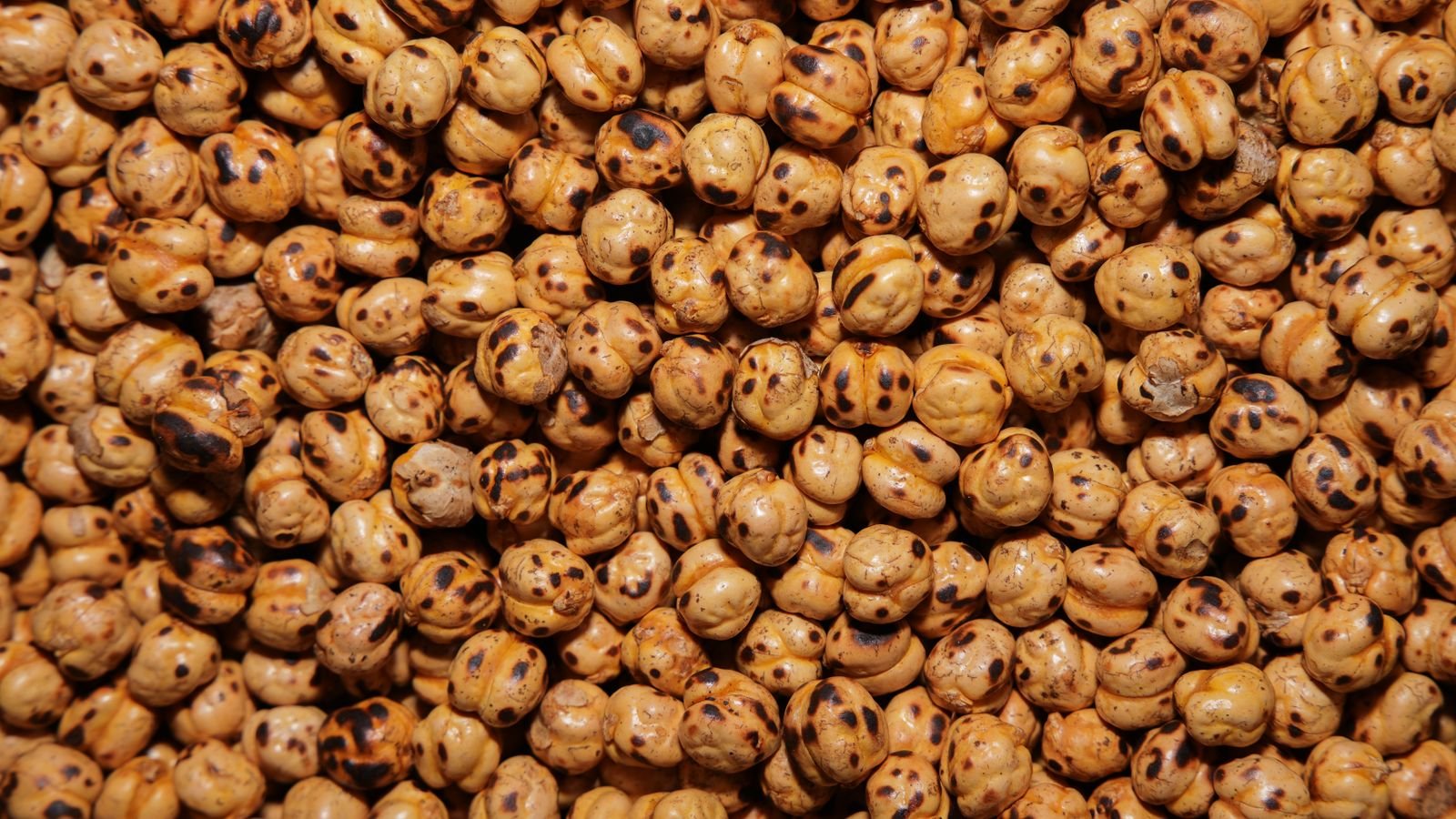
A 30 g handful of plain roasted chana gives you about 7 g of protein and close to 3 g of fibre, for roughly 120 kcal, based on USDA data. That makes bhuna chana one of the cheapest, simplest protein snacks you can keep in a kitchen dabba this winter.
But the chana in a shiny packet isn’t always the same food as the one from the kirana’s big tin. One flavoured pack we checked carries as much salt per handful as a bag of chips. The numbers are in section 4.
⚡ Key takeaways
- One handful (30 g) of plain roasted chana: about 7 g protein, 2.7 g fibre, 120 kcal and almost no sodium (USDA FoodData Central).
- Beats namkeen and biscuits on protein per calorie by a wide margin. Peanuts match it on protein but carry about 55 more calories per handful.
- With chilka (skin) is better for fibre. The skin is the fibre-rich part of the seed.
- Go easy if beans and dal give you gas, or if you snack on flavoured packs. Gur on the side counts as added sugar.
Why Roasted Chana Is the Winter Snack Worth Keeping
Winter evenings in India have a snacking problem. It’s cold, chai is on the stove every two hours, and the namkeen jar is right there. Bhuna chana is the swap that actually changes something, because it’s a pulse, not fried dough.
ICMR-NIN’s Dietary Guidelines for Indians (2024) say it plainly. In the section on what makes a healthy snack, the guidelines list roasted or boiled beans, lobia, chickpeas and peanuts as nutritious options. The same food pyramid suggests about 85 g of pulses and legumes a day on a 2,000 kcal diet, and most of us fall short on busy days.
A handful of bhuna chana counts towards that. It needs no cooking, and it travels well in an office bag or a school tiffin. Honestly, it’s also one of the few snacks most parents and kids will both eat.
Roasted Chana Protein and Calories per Handful
USDA FoodData Central doesn’t have a “bhuna chana” entry. Its closest match is “Chickpeas, puffed” (a Foundation Foods entry), which is the crunchy, dry-roasted style. Here’s what that works out to.
Per 100 g and per 30 g handful
| Plain bhuna chana | Per 100 g | Per 30 g handful |
|---|---|---|
| Energy | 402 kcal | about 120 kcal |
| Protein | 23.4 g | about 7 g |
| Fibre | 9.0 g | about 2.7 g |
| Fat | 6.9 g | about 2 g |
| Iron | 3.75 mg | about 1.1 mg |
| Sodium | 0 mg (no salt added) | 0 mg |
A 30 g handful is roughly what fits in a cupped adult palm, or about a small katori filled halfway. Weigh it once on a kitchen scale, and you’ll know your handful forever.
How much of your day’s protein is that?
ICMR-NIN puts the protein requirement for healthy adults at 0.83 g per kg of body weight a day. For a 60 kg adult, that’s about 50 g. So one handful covers about one-seventh of the day.
Helpful, but not a replacement for dal, curd or eggs at meals. For the full maths, read our guide on how much protein you need a day.
💡 Pro tip
Pair chana with a cereal at some point in the day. ICMR-NIN recommends a cereal-to-pulse mix because the two cover each other’s gaps in amino acids. Chana in the evening and roti or rice at dinner does the job.
Roasted Chana vs Namkeen, Biscuits, Peanuts and Makhana
This is the comparison that matters at 5 pm. Everything below is for a 30 g serving, worked out from USDA FoodData Central values per 100 g, except makhana, which comes from a published review of fox nut composition.
| Snack (30 g) | Calories | Protein | Fibre | Sodium | Our take |
|---|---|---|---|---|---|
| Plain bhuna chana | ~120 kcal | ~7 g | ~2.7 g | ~0 mg | Best all-rounder |
| Dry-roasted peanuts, unsalted | ~176 kcal | ~7.3 g | ~2.5 g | ~2 mg | Same protein, more calories |
| Makhana (fox nut seed) | ~109 kcal | ~4.7 g | ~2.3 g | depends on pack | Light, less protein |
| Salted potato chips (namkeen stand-in) | ~160 kcal | ~1.9 g | ~0.9 g | ~158 mg | Skip as a daily snack |
| Butter biscuits | ~140 kcal | ~1.8 g | ~0.2 g | ~85 mg | Mostly flour and sugar |
USDA has no entry for Indian namkeen, so we used salted potato chips as a stand-in for fried, salted snacks. Real bhujia and mixture vary by brand, so check the label on your packet.
What the table tells you
Peanuts match chana on protein, but they’re about half fat, which is why a handful costs around 55 extra calories. That’s fine if you’re active and want the energy. It’s less fine if winter weight gain is your worry.
Makhana is lighter and lower in calories, and it’s a good snack too. Still, per handful you get less protein than chana. Biscuits with chai give you calories and very little else.
The Salt Catch in Packaged Roasted Chana
Here’s the catch from the top of the post. Plain bhuna chana has almost no sodium. Flavoured packs are a different story.
The label for Jabsons’ Turmeric ‘n’ Pepper roasted chana (listed on Open Food Facts) shows 0.8 g of sodium per 100 g, which is 2 g of salt. It also lists added cottonseed oil, with 20 g of fat per 100 g. Per 30 g handful, that’s about 240 mg of sodium and 6 g of fat, against roughly 2 g of fat in the plain kind.
⚠️ Watch out
WHO advises adults to keep sodium under 2,000 mg a day (under 5 g of salt). One handful of that flavoured chana uses about 12% of the day’s limit. Two handfuls with evening chai, and you’re near a quarter, before dinner’s dal and sabzi.
ICMR-NIN also caps salt at 5 g a day and names snack foods, savouries and salted nuts among the main sources of hidden salt in Indian diets. So the word “roasted” on the front of a pack doesn’t tell you much. Turn it over and look for two lines: sodium per 100 g, and whether oil appears in the ingredients.
Our rule: buy plain chana loose or in a plain pack, and add your own pinch of chaat masala or lemon at home. You control the salt that way. Our guide to reading Indian food labels shows where to look on the pack, and how much salt per day explains the 5 g limit.
Roasted Chana With or Without Chilka (Skin)?
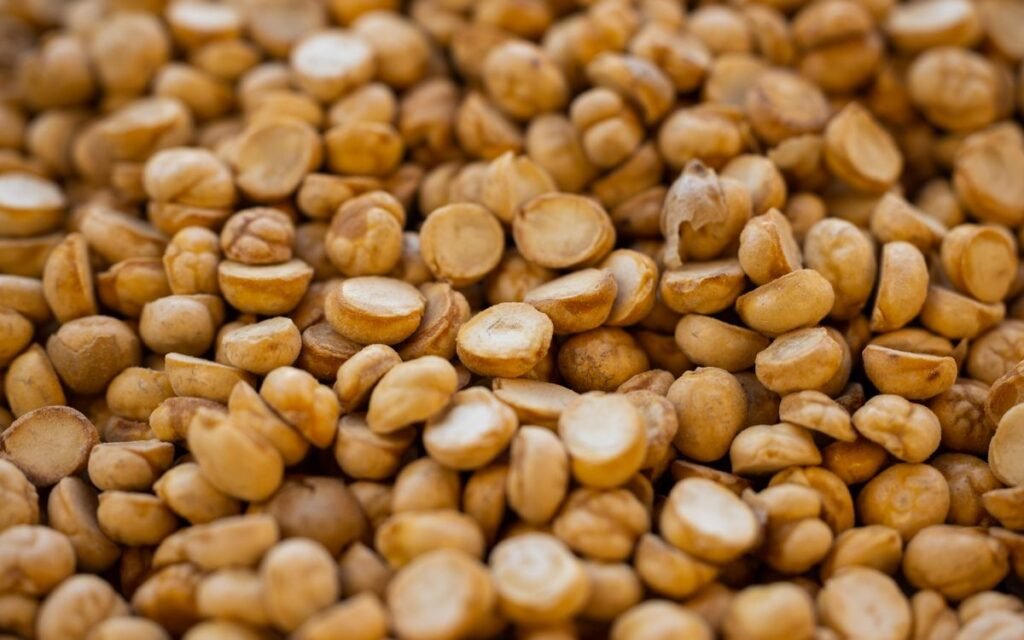
Shops sell bhuna chana two ways: whole, with the thin brown skin, and split without skin (often sold as phutana or dalia). Which is better depends on what you want from it.
With skin: more fibre
A 2024 review on chickpeas and gut health in the journal Heliyon reports that chickpea hull is more than 70% dietary fibre. So the chilka you brush off is the most fibre-rich part of the seed. If fibre is the reason you’re eating it, keep the skin on.
Without skin: easier on the stomach
The same review notes that dehulling lowers fibre and raises the protein share. It also says removing the hull cuts down some of the fibre linked to bloating. That makes split, skinless chana a reasonable pick for older parents, kids, or anyone who finds whole chana heavy.
- Pick with skin if you want fibre and fullness.
- Pick without skin if chewing or gas is a problem.
- Either way, check that it’s plain roasted, not fried or coated.
💡 Pro tip
Not sure which kind you have? Whole chana keeps its thin, wrinkled skin, and desi bhuna chana is usually dark brown. Split, skinless chana comes in smooth golden halves, like the photo in section 1.
Roasted Chana With Gur: The Winter Combo, Checked
Chana-gur is a classic winter pairing in North Indian homes. A small piece of jaggery after a handful of chana feels like a treat, and many people believe gur is “not really sugar”.
WHO disagrees on that last point. Its guideline defines free sugars as sugars added to food by the cook or the consumer, plus those in honey, syrups and fruit juices. Gur is concentrated cane juice, so it counts. WHO advises keeping free sugars below 10% of daily energy, and suggests going under 5%, about 25 g (6 teaspoons) a day, for extra benefit.
ICMR-NIN gives the same 20 to 25 g a day ceiling for adults. A branded jaggery entry on USDA FoodData Central lists 88 g of sugar per 100 g. That means a 10 g piece of gur brings about 9 g of sugar, roughly a third of the 25 g level.
✅ Our verdict
Chana with a small piece of gur is fine as an occasional winter treat. Don’t make it a three-times-a-day habit, and don’t swap sugar for gur thinking it’s free. Our jaggery vs sugar guide explains why.
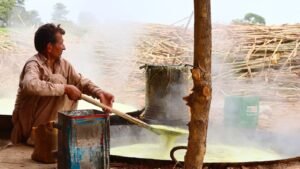 Also readJaggery vs Sugar: Is Gur Really Healthier? What NIN Says
How Much Roasted Chana a Day, and Who Should Go Easy
There’s no official “chana limit”. The practical answer comes from the numbers above. One to two handfuls (30 to 60 g) a day gives you 7 to 14 g of protein for 120 to 240 kcal, which fits most adult diets without crowding out meals.
Use it as a swap, not an extra
ICMR-NIN’s guidelines suggest limiting meal frequency and not snacking in between meals. So the smart move is replacing something: the biscuits with chai, the namkeen at 5 pm, the chips on a long drive. Adding chana on top of everything else just adds calories.
Who should go easy
- If beans and dal give you gas. The NHS lists beans and lentils among foods that can cause wind. Start with a small handful, choose skinless chana, and eat it slowly.
- If you buy flavoured packs. The salt and added oil change the picture, as section 4 showed.
- If you’re watching sugar. Skip the gur, or keep it to a small piece now and then.
This article is for information only and isn’t medical advice. If you have a digestive condition, kidney concerns, or a doctor-advised diet, consult your doctor or a registered dietitian before changing your snacks.
A Simple Roasted Chana Habit for Winter
You don’t need a recipe. You need a system that stops you reaching for the namkeen jar.
- Buy plain. Loose bhuna chana from a kirana, or a pack that lists only chana (and maybe salt and turmeric) in the ingredients.
- Portion it. Fill a small steel dabba with about 30 g for the office bag, so you don’t eat from the big packet.
- Flavour at home. A squeeze of lemon, a pinch of chaat masala, chopped onion and tomato turn it into a quick chana chaat.
- Keep it dry. Store it in an airtight jar so it keeps its crunch through damp winter mornings.
- Mix it up. Rotate with other plant proteins like green peas in winter or a handful of almonds, so you’re not eating one food every day.
A 2016 review in the journal Nutrients on chickpeas and hummus found that, in US survey data, people who ate chickpeas or hummus had higher fibre intakes, about 24 g a day against 10 g for non-consumers. That’s observational, so it doesn’t prove chickpeas did it. Still, it lines up with the simple idea here: swap a low-fibre snack for a pulse, and your daily fibre goes up.
Frequently Asked Questions
How much protein is in 100 g of roasted chana?
About 23 g, based on USDA FoodData Central’s “Chickpeas, puffed” entry, which is the closest match to plain bhuna chana. That comes with about 400 kcal and 9 g of fibre. Flavoured packs often show less protein because of added oil and spices.
Is roasted chana good to eat in winter?
Yes, as a snack swap. ICMR-NIN lists roasted chickpeas as a nutritious snack option, and the plain kind is low in fat and has almost no salt. Just keep the portion to one or two handfuls and skip heavily salted packs.
Should I eat roasted chana with or without the skin?
With the skin if you want more fibre, since the hull is the most fibre-rich part of the seed. Without skin if whole chana feels heavy or gives you gas. Both give you good plant protein.
Is chana with gur healthy?
It’s fine as an occasional treat. Gur is still a free sugar in WHO’s definition, and a 10 g piece carries about 9 g of sugar. Daily, keep the gur small or leave it out.
Can roasted chana cause gas?
It can for some people, as with most beans and lentils, according to the NHS. Start small, try skinless chana, eat slowly and drink water through the day.
The Bottom Line
Plain bhuna chana is one of the best everyday snacks you can buy in India: about 7 g of protein per handful, real fibre, almost no salt, and none of the frying. The only real catches are flavoured packs loaded with salt and oil, and gur that quietly adds sugar.
Your next step: check the back of the chana packet in your kitchen tonight. If sodium is over about 500 mg per 100 g, switch to plain chana and season it yourself.
Keep reading
 Read nextHow Many Almonds a Day? The Handful Rule for Diwali Dry Fruits
 Read nextTil in Winter: How Much a Day, and Which Kind Has the Calcium
 Read nextWinter Weight Gain Is Real but Small. The Catch Is It Stays
Sources
- USDA FoodData Central: Chickpeas, puffed (FDC 2779255)
- USDA FoodData Central: Peanuts, all types, dry-roasted, without salt (FDC 173806)
- USDA FoodData Central: Snacks, potato chips, plain, salted (FDC 169677)
- USDA FoodData Central: Cookies, butter, commercially prepared (FDC 174950)
- USDA FoodData Central: Jaggery (gur), branded entry (FDC 2164542)
- ICMR-NIN: Dietary Guidelines for Indians 2024 (healthy snacks, 85 g pulses, 0.83 g/kg protein, 5 g salt, 20 to 25 g sugar)
- WHO: Guideline on free sugars (under 10%, ideally under 5% or about 25 g a day)
- WHO: Salt reduction fact sheet (under 2,000 mg sodium, under 5 g salt)
- Wallace et al. 2016, Nutrients: The Nutritional Value and Health Benefits of Chickpeas and Hummus
- Ajay et al. 2024, Heliyon: Chickpeas and gut microbiome (hull fibre, dehulling, roasting)
- Euryale ferox review 2023, Molecules (makhana composition)
- Open Food Facts: Jabsons Turmeric ‘n’ Pepper roasted chana label
- NHS: Flatulence (foods that can cause wind)