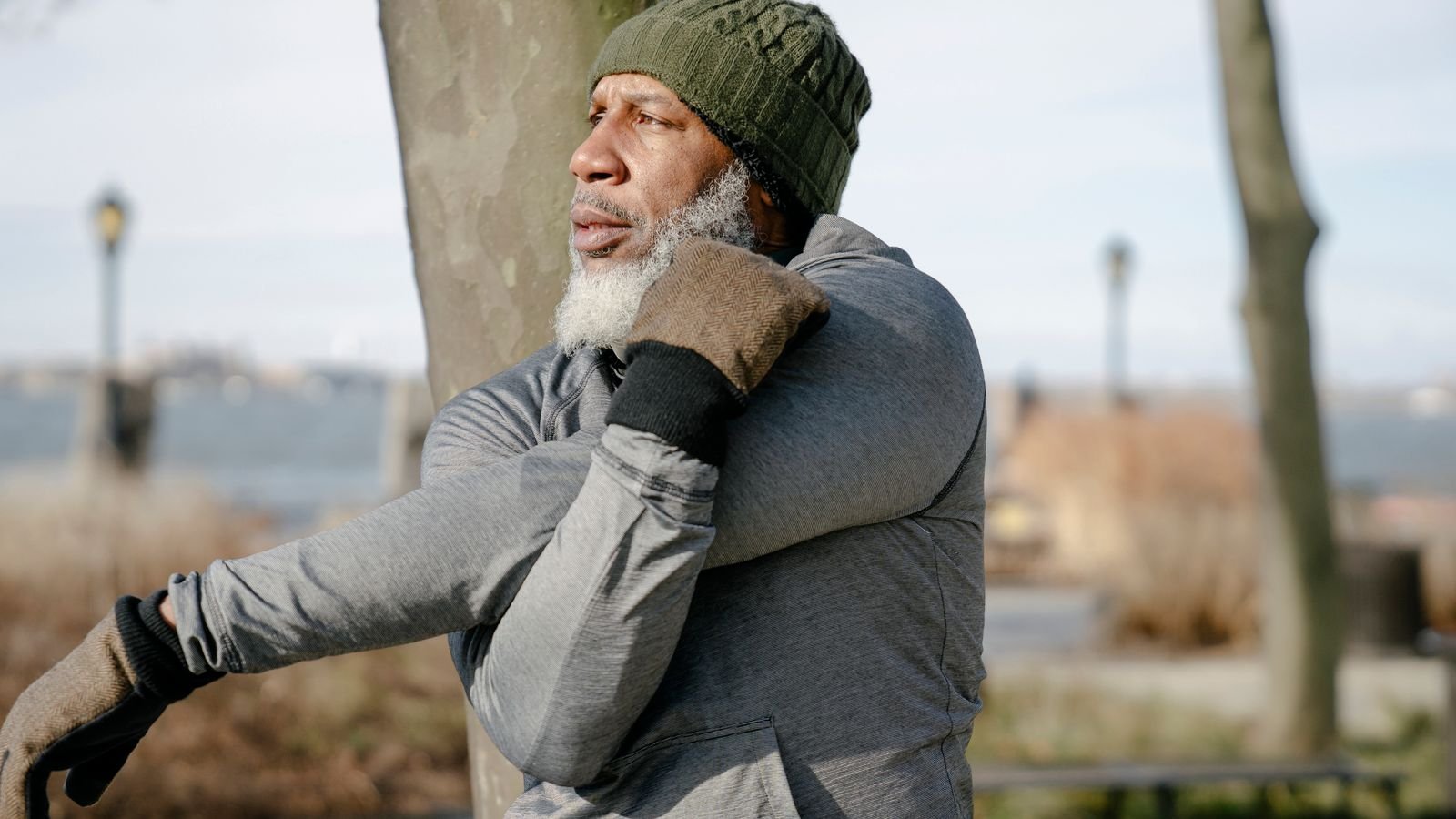
If you exercise in cold weather, give your warm-up more time than you would in summer. Cold muscles work less well and strain more easily, and Harvard Health says plainly that cold muscles carry a greater risk of strains and injuries, so a proper warm-up comes first.
The rest is simple: dress in layers you can peel off, drink water even when you don’t feel thirsty, and know which mornings to move indoors. One of these trips up even regular walkers in Delhi’s park crowd, and it’s not the one you’d guess. That’s in section 4.
⚡ Key takeaways
- Warm up longer: muscle performance drops as muscles cool. A review found short-burst performance improves about 2% to 5% for every 1°C rise in muscle temperature.
- Move, don’t hold: use dynamic moves (marching, arm circles, knee lifts) before you go out, not long static stretches.
- Layer smart: a sweat-wicking base, a warm middle, a wind-blocking outer layer. Skip cotton next to the skin.
- Drink anyway: cold can blunt thirst by up to 40%, so “drink when thirsty” falls short in winter.
- Know your indoor days: on smoggy, bad-AQI mornings, or if you have a heart condition, take the workout inside.
Exercise in Cold Weather: Why Cold Muscles Need More Time
Your muscles are fussy about temperature. When they’re cold, they get stiffer, nerve signals travel more slowly and they can’t produce force as quickly. Warm them up and all of that improves.
Sports scientists have measured this. Sébastien Racinais and Juha Oksa reviewed the research on temperature and the neuromuscular system in the Scandinavian Journal of Medicine & Science in Sports in 2010. They reported that in short bouts of exercise, performance improves by about 2% to 5% for each 1°C rise in muscle temperature.
An earlier review by David Bishop in Sports Medicine (2003) listed the reasons warm-ups help. Most of them come down to temperature: lower muscle stiffness, faster nerve conduction and a better force-velocity relationship. He also noted a mental side, a greater sense of being ready.
What this means on a cold morning
In winter, you start from a colder baseline. A December morning in Lucknow or Ludhiana chills your legs on the walk to the park before you’ve done anything. So the same five-minute warm-up that works in April leaves your muscles cooler in January.
Harvard Health’s guide on winter workouts puts it simply: cold muscles are at greater risk of strains and injuries, so warm up before a cold-weather workout. Its guide for older adults adds that starting with sprints risks muscle injury and heart strain.
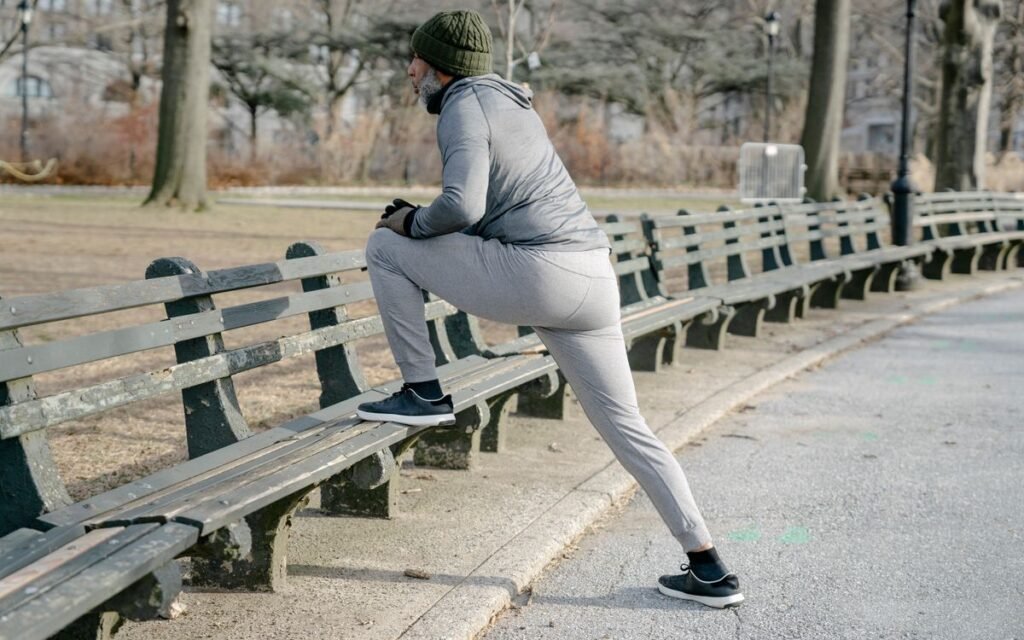
A 10-Minute Winter Warm-Up You Can Do Indoors
Warm up before you step out. Most people do it the other way round, shivering through arm swings at the park gate. Do it in the living room or on the terrace with the door shut against the wind, then walk out already warm.
The NHS has a basic warm-up that takes at least 6 minutes. I’d stretch it to about 10 on a cold morning by adding a few dynamic moves Harvard Health suggests. Stop when you feel warm and slightly out of breath, not tired.
The NHS base routine (about 6 minutes)
- March on the spot, 3 minutes. Swing your arms in time with your steps.
- Heel digs, 60 seconds. Kick each heel out in front, toes pointing up.
- Knee lifts, 30 seconds. Lift alternate knees to touch the opposite hand.
- Shoulder rolls, 2 sets of 10. Five forwards, five backwards, while still marching.
- Knee bends, 10 reps. Shallow ones, lowering no more than about 10 cm.
Add these for the cold (about 4 minutes)
- Arm circles and arm swings, forwards and backwards.
- High steps or slow walking lunges across the room.
- A minute of easy jogging on the spot if you’re about to run.
💡 Pro tip
Save long static stretches (holding a hamstring stretch for 30 seconds) for after the workout. Harvard Health advises against starting with static stretches and recommends stretches that keep you moving, which loosen joints and get blood flowing.
Doing yoga on the terrace? The same logic applies. Start with gentle, flowing movement before you go into deeper holds, and don’t drop straight into a forward bend on a cold mat.
 Also readMorning Walk in Pollution: When to Go Out and When to Stay In
How to Layer When You Exercise in Cold Weather
Most of us overdress for the walk and then sweat through a thick sweater by the second round of the park. That wet layer is what makes you cold on the way home.
Harvard Health’s tip is useful here: dress for a temperature about 10°F (roughly 5°C) warmer than the forecast, because you’ll heat up as you move. You should feel a little cool for the first few minutes.
| Layer | What it does | What to wear | Skip |
|---|---|---|---|
| Base (next to skin) | Pulls sweat away so it dries fast | Thin synthetic sports T-shirt or thermal, e.g. polyester or polypropylene | Cotton vests and T-shirts, which stay wet |
| Middle | Keeps heat in | Fleece, a light sweater or a wool blend | A heavy shawl you can’t take off mid-walk |
| Outer | Blocks wind and drizzle | Light windcheater or breathable jacket | A thick coat that traps sweat |
| Head, hands, feet | Stops cold fingers and ears | Woollen cap or ear band, thin gloves, warm socks | Bare hands on a cold scooter ride to the gym |
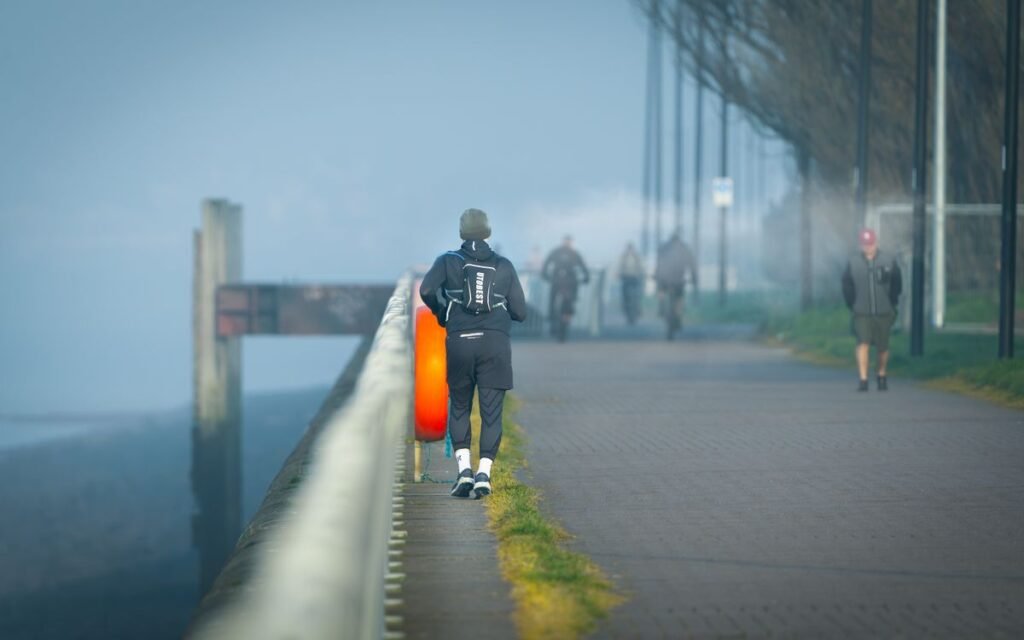
Peel as you warm up
Harvard Health suggests taking off a layer once you’re moving, tying it around your waist or tucking it into a small bag, then putting it back on as you cool down. The idea is to avoid heavy sweating, which can leave you chilled later in the walk.
The American Heart Association gives similar advice: wear layers outdoors and take breaks as you need them. Nothing fancy is needed. A basic polyester sports T-shirt you already own works better as a base layer than your softest cotton one.
The Catch: You Still Lose Water in Winter
This is the one that trips up regular walkers. In summer, you drink because you’re desperate. In winter, the steel bottle sits untouched in the car.
A University of New Hampshire team led by kinesiology professor Robert Kenefick found that cold can reduce thirst by up to 40%. The university’s summary explains why. In the cold, blood vessels near the skin narrow and push blood towards your core, so your brain doesn’t sense a fluid shortfall and the urge to drink drops, even when your body still needs water.
⚠️ Watch out
Feeling no thirst doesn’t mean you’re hydrated. You still sweat under those layers, especially on a brisk walk or a gym session. The American Heart Association says thirst isn’t the best sign that you need to drink.
A simple winter hydration routine
- Before: a glass of water (warm is fine) before you leave home. Chai doesn’t replace it.
- During: carry a small bottle on walks over 30 to 40 minutes and on gym days.
- After: drink again when you get home, even if you don’t feel like it.
- Check: the UNH researchers suggest watching urine colour, which should be pale, close to clear.
Harvard Health’s advice for winter workouts is the same: drink water before, during and after, and set reminders if you need them. We’ve covered the full picture, including how much counts and what counts, in our guide to drinking water in winter.
Morning or Evening: When to Work Out in Winter
There’s no single right answer, but there is a wrong one: dragging yourself out into the coldest, foggiest hour of the day just because that’s when you always went.
Harvard Health’s guide for older adults suggests exercising around midday in winter, when the sun is strongest. The same guide advises older adults to skip outdoor workouts when it’s 0°C or below, which rarely happens in Indian plains cities but does in the hills. It also notes that blood vessels start narrowing to save heat at temperatures of about 15°C and below, which covers a lot of North Indian winter mornings.
What this looks like in an Indian city
- Office-goers: if 6 a.m. is your only slot, keep it. Just do the indoor warm-up first and layer properly.
- Retired parents and older relatives: a mid-morning or lunchtime walk in the sun beats a 6 a.m. walk in fog. The family WhatsApp group may need some convincing.
- Gym people: the gym is warmer, but the scooter ride there isn’t. Keep a jacket on until you’re warmed up inside.
- Short on time: even short bouts help. Our piece on the 4-minute exercise study explains what researchers found about brief vigorous activity.
Then there’s the smog. In North India, cold, still air traps smog, so the hour that feels freshest isn’t always the cleanest. Our explainer on exercise in pollution and AQI goes through the research.
 Also readExercise in Pollution: When Your Morning Walk Stops Helping
When to Move the Workout Indoors
Some mornings, the smart move is to stay inside. You keep your streak going, and you skip the pulled calf and the lungful of smog.
Very poor or severe AQI days
Once the AQI hits the “very poor” band (301 to 400) or “severe” (above 400), I’d move the workout inside. Our guide on morning walks in pollution covers the official health notes for each band, Delhi’s advisory and why there’s no magic clean hour. Check the reading for your nearest station first; this guide explains why AQI apps show different numbers.
Exercising indoors only helps if the indoor air is better. Keep windows shut during the worst hours. Here’s when to open windows in pollution without letting the haze in.
If you have a heart condition or you’re older
The British Heart Foundation explains that in the cold, blood vessels in the skin, fingers and toes narrow to hold heat. That pushes up pressure elsewhere in the circulation, so the heart works harder. In a small BHF-funded study of people with blocked heart arteries, breathing cold air while cycling reduced the heart’s blood supply, and the researchers said more research is needed.
Harvard Health and the American Heart Association both say the same thing in plain words: if you have a heart, lung or balance problem, check with your doctor before exercising outdoors in the cold. The BHF suggests that people with heart conditions exercise indoors on the coldest days. And avoid going from zero to all-out on a cold morning.
Good indoor options
- The NHS warm-up above, followed by 20 minutes of brisk marching, stair walking or a follow-along video.
- Surya namaskar or a yoga routine in a warm room.
- A treadmill or cycle at the society gym.
Our Verdict: Your Winter Workout Checklist
✅ Our verdict
Don’t stop exercising because it’s cold. Exercise in cold weather is fine for most people if you prepare for it. Do a longer warm-up indoors, wear layers you can peel off, drink water on a schedule and move inside on bad-AQI days or the coldest mornings. If you have a heart or lung condition, or you’re older, talk to your doctor before hard outdoor workouts in the cold.
Honestly, the biggest upgrade most people can make is the indoor warm-up. It costs nothing, takes ten minutes and makes the first kilometre feel far less brutal. Here’s the full list to screenshot:
- Check the AQI and the temperature before you decide where to work out.
- Warm up indoors for about 10 minutes with dynamic moves.
- Base layer that isn’t cotton, a warm middle, a light outer layer, cap and gloves.
- Drink a glass of water before you leave and carry a bottle on longer sessions.
- Start easy for the first few minutes, then build up.
- Peel off a layer when you’re warm; put it back on as you cool down.
- Stretch, with longer holds, after the workout.
If cold-weather laziness is the real problem, you’re not alone. Our explainer on winter weight gain looks at why we move less in winter and what helps.
Frequently Asked Questions
Is it good to exercise in cold weather?
For most healthy people, yes. Harvard Health notes that in colder temperatures your heart doesn’t have to work as hard and you sweat less, which can help endurance. The key is a proper warm-up, sensible layers and enough water.
How long should I warm up in winter?
The NHS basic warm-up takes at least 6 minutes. On a cold morning, give it closer to 10 minutes and use moving exercises like marching, knee lifts and arm circles. You should feel warm and a little out of breath before you start the main workout.
Should I stretch before a winter run or walk?
Use dynamic stretches that keep you moving before the workout. Harvard Health advises against starting with static stretches, the kind you hold. Save those for after you’ve finished, when your muscles are warm.
Do I need to drink water if I’m not sweating much in winter?
Yes. Cold can cut your sense of thirst by up to 40%, according to University of New Hampshire research, but you still lose water through sweat and breath. Drink before, during and after exercise, and check that your urine is pale.
Is morning or evening better for exercise in winter?
If you can choose, a sunnier, slightly warmer time of day is easier on the body, and Harvard Health suggests midday for older adults. In North Indian cities, check the AQI too, since the coldest hours are not always the cleanest.
This article is for information only; consult a doctor before starting a new exercise routine, especially if you have a heart, lung or other health condition.
The Bottom Line
You can exercise in cold weather safely and keep your routine going all winter. Cold muscles just need more time to get ready, so warm up longer and indoors. Layer for how you’ll feel ten minutes in, drink water even without thirst and treat bad-AQI days as indoor days.
Next step: tomorrow morning, do the 10-minute warm-up in your room before you step out, and notice how different the first kilometre feels.
Keep reading
 Read nextDrinking Water in Winter: How Much You Need When Not Thirsty
 Read nextWinter Weight Gain Is Real but Small. The Catch Is It Stays
 Read nextSteps Per Day: Do You Really Need 10,000? What Studies Say
Sources
- Racinais & Oksa 2010, Scand J Med Sci Sports: Temperature and neuromuscular function (2% to 5% per 1°C, Europe PMC)
- Bishop 2003, Sports Medicine: Warm up I, potential mechanisms (temperature-related effects, Europe PMC)
- NHS: How to warm up before exercising (at least 6 minutes, routine)
- Harvard Health: The wonders of winter workouts (cold muscles, dynamic stretching, layers, hydration)
- Harvard Health: An older adult’s guide to exercising in cold weather (midday, 0°C and 15°C, check with doctor)
- Harvard Health: How to layer up for walking in cold weather (three layers, dress 10°F warmer, avoid cotton)
- British Heart Foundation: The effect of cold weather on your heart (narrowed blood vessels, cold air and exercise study)
- American Heart Association: Tips for staying healthy during the cold winter months (layers, thirst, ask your doctor)
- University of New Hampshire via Newswise: Why we feel less thirsty in the cold (up to 40%)